
In the dynamic world of interior design, certain pieces transcend trends to become timeless staples. Among these, the humble yet incredibly versatile pouf stands out as a true marvel. Far more than just a decorative accent, a pouf can transform a room, offering both practical utility and a touch of effortless style. From serving as a comfortable footrest after a long day to providing impromptu seating for guests or even acting as a chic side table, poufs are the chameleons of home decor. Their wide array of colors, textures, and styles means there’s a perfect pouf to complement any aesthetic, whether you lean towards bohemian, minimalist, modern, or traditional designs. This comprehensive guide will explore the myriad ways to integrate poufs into your home, offering inspiration and practical tips to unlock their full potential. (Please note: This post includes commissionable links. For more details, refer to our disclosure statement.)
The Unmatched Versatility of Poufs: A Home Decor Essential
Before diving into specific placement ideas, it’s worth understanding why poufs have earned their status as a must-have home accessory. Unlike larger, more permanent furniture pieces, poufs offer unparalleled flexibility. They are lightweight, easy to move, and can effortlessly transition between roles, adapting to your evolving needs and design whims. This adaptability makes them particularly valuable in smaller living spaces where every item must serve multiple functions, but also in larger homes where they can add layers of comfort and style.
Why Poufs Are a Smart Design Choice:
- Space-Saving: Their compact size means they can be tucked away when not in use or easily repositioned.
- Adds Texture and Warmth: Poufs come in diverse materials—from soft knits and luxurious velvets to rugged jute and rich leather—adding tactile interest and coziness to any room.
- Instant Style Update: A well-chosen pouf can introduce a pop of color, a new pattern, or a fresh texture, instantly refreshing your decor without a major overhaul.
- Affordable Luxury: Compared to larger furniture, poufs are generally more budget-friendly, making them an accessible way to elevate your home’s aesthetic.
- Functional & Decorative: They seamlessly blend utility with aesthetic appeal, proving that practical items can also be beautiful.
Poufs as Luxurious Footrests: The Ultimate Comfort Upgrade
Perhaps the most celebrated use for poufs is as a footrest, and for good reason. After a long day, there’s nothing quite like kicking up your feet and relaxing, and a pouf provides the perfect ergonomic solution. Unlike traditional ottomans, poufs often offer a softer, more inviting surface, making them ideal for unwinding. Their portability means you can easily slide one closer to your sofa, armchair, or even a daybed whenever comfort calls. We’ve experienced this firsthand in our bonus room, where a pair of elegant white Moroccan poufs proved to be indispensable companions for lounging on the daybed. Their supple leather and intricate stitching added a touch of exotic charm while providing unparalleled comfort.
When selecting a pouf for footrest duty, consider the height and firmness. Some poufs, particularly those filled with denser materials, offer more support, while softer, beanbag-style poufs conform more to your feet. Materials like durable leather are excellent for longevity and easy cleaning, while knit or fabric poufs lend a cozy, bohemian vibe. Experiment with placement: a single pouf can serve one armchair, or a pair can flank a sofa, creating a balanced and inviting seating arrangement.
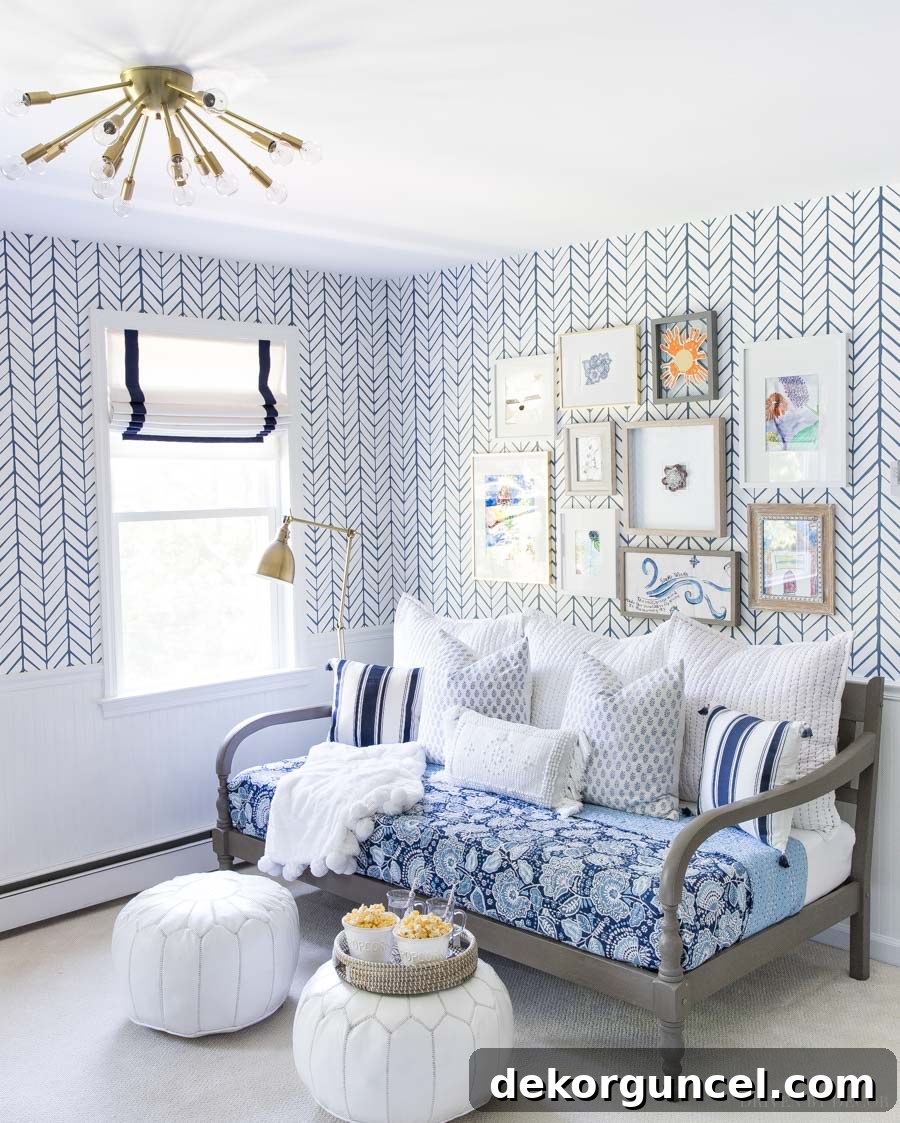
Room Sources: Herringbone wallpaper (denim color) | Daybed | White quilted Euro shams (similar) | Blue & white block print pillow covers (similar) | Long textured lumbar pillow | Cozy pom pom throw (similar) | Brass sputnik flush mount light fixture | Roman shades | White Moroccan leather poufs
Poufs at the Foot of a Bed: A Stylish and Functional Alternative to Benches
Moving beyond the living areas, poufs can bring a fresh perspective to bedroom decor. While traditional benches have long graced the foot of beds, poufs offer a more modern, flexible, and often more comfortable alternative. Their softer edges and inviting textures can create a less formal, more relaxed atmosphere in the bedroom. We’ve creatively utilized the same pair of Moroccan poufs that once adorned our bonus room by placing them at the foot of my daughter’s bed. This simple swap instantly elevated the room’s aesthetic, providing a chic spot for sitting, organizing, or simply adding a decorative flourish.
Using poufs in this way adds both visual interest and practical functionality. They provide a convenient surface for placing clothes, a bag, or a book, or a comfortable perch when getting dressed. The ability to easily move them aside also makes them ideal for smaller bedrooms where a fixed bench might feel too cumbersome. Consider contrasting the pouf’s texture or color with your bedding to create a focal point, or choose a neutral tone for a seamless, understated look. Whether you opt for a single oversized pouf or a symmetrical pair, this placement introduces a touch of softness and style, making the bedroom feel even more like a sanctuary.
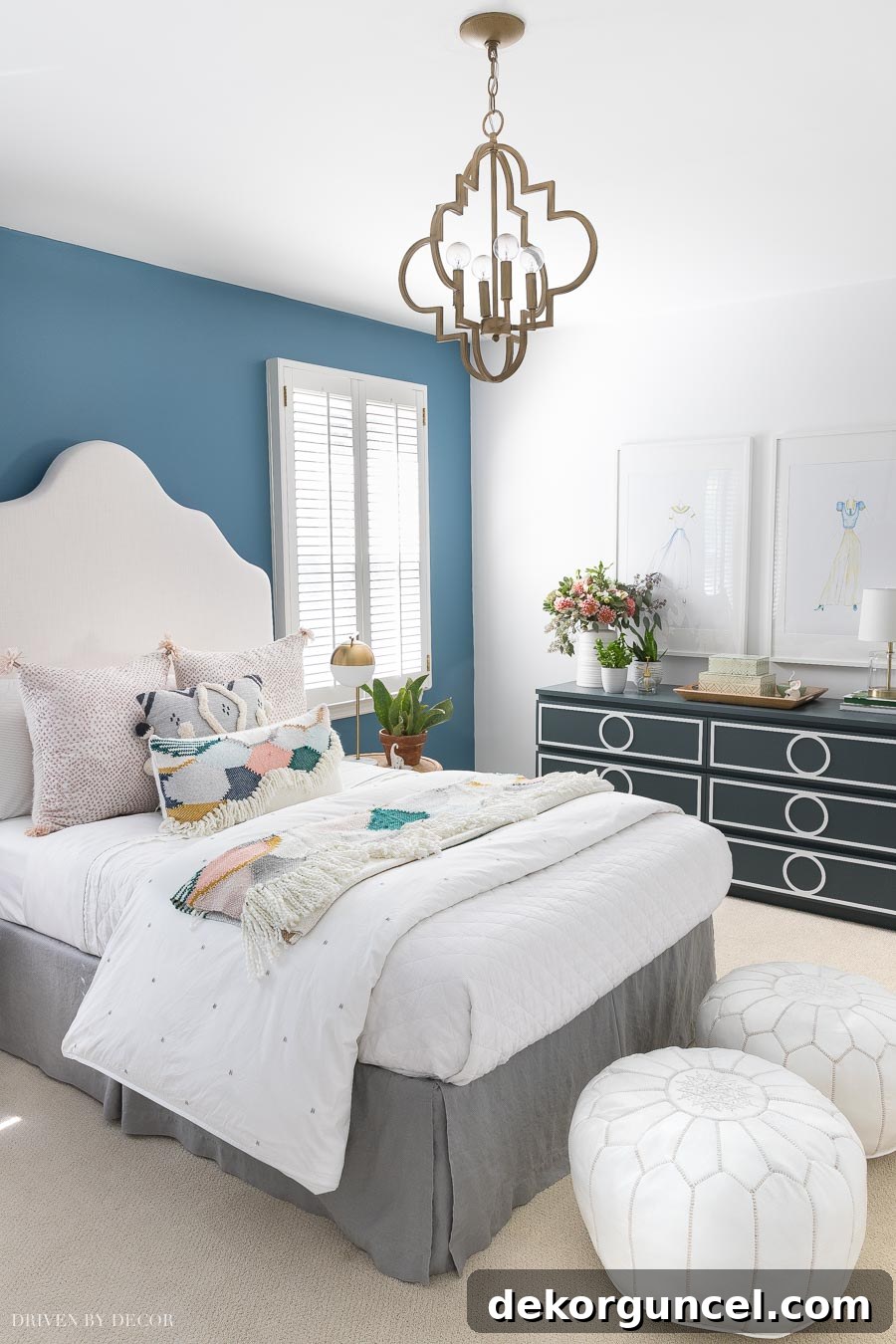
Room Sources: Gold quatrefoil pendant | DIY upholstered headboard | Moroccan leather poufs | White linen quilt | Other sources no longer available
Poufs for Extra Family Room Seating: Flexible and Inviting
The living room, often the heart of the home, benefits immensely from the adaptability of poufs. When entertaining guests, hosting a game night, or simply needing a flexible seating option, poufs rise to the occasion. Instead of bulky armchairs that can clutter a space, a few strategically placed poufs can provide comfortable, casual seating that’s easily rearranged or tucked away when not needed. Imagine gathering around a coffee table; poufs offer a more relaxed, floor-level seating experience perfect for intimate conversations or board games.
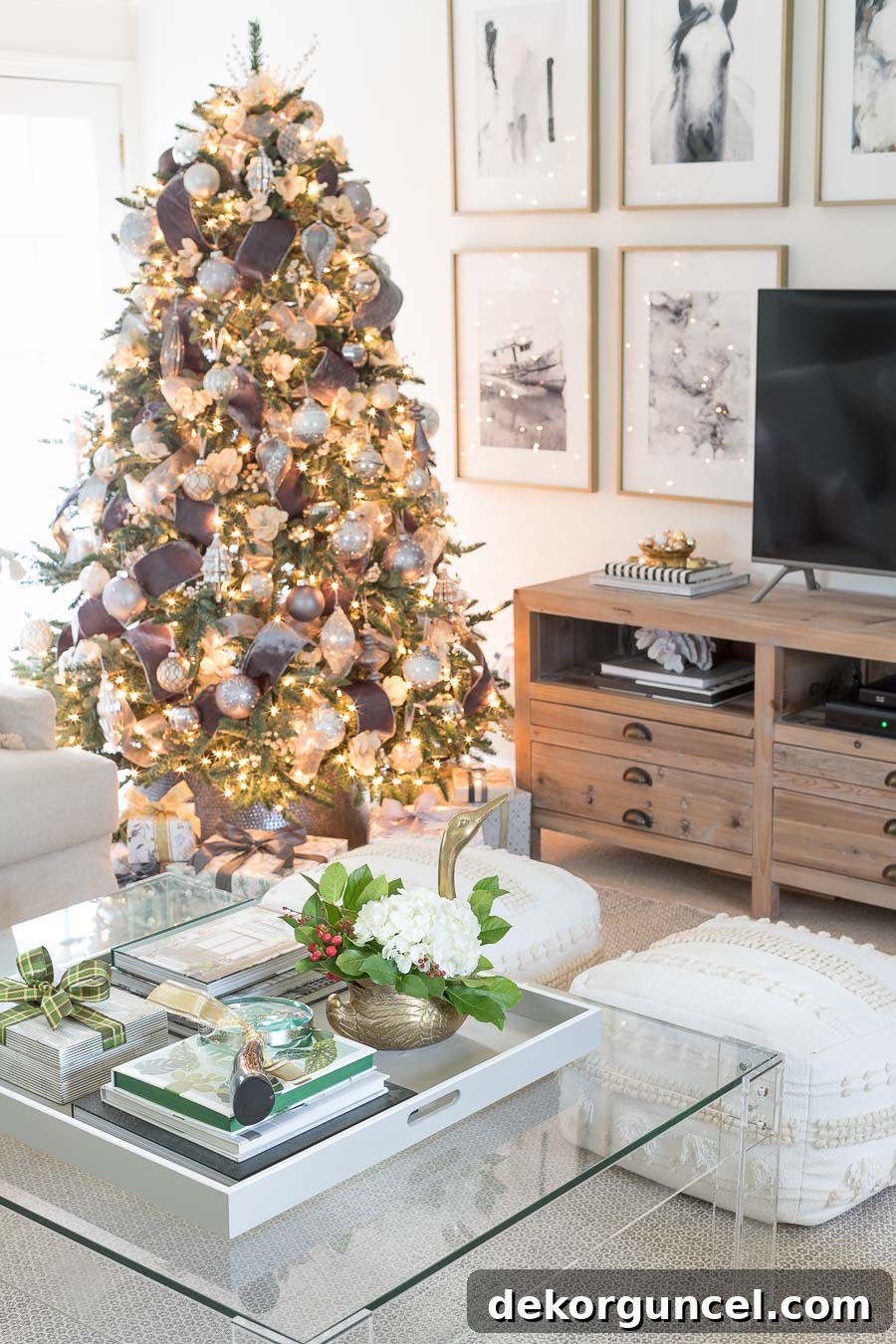
In our own living room, we’ve integrated gorgeous textured poufs that not only complement our existing decor but also provide invaluable extra seating. Their inviting texture adds a layer of warmth and sophistication to the space. When choosing poufs for seating, consider durability and ease of cleaning, especially in high-traffic areas. Knit, woven, or sturdy fabric poufs often work well. You can even use a cluster of two or three firmer poufs as an unconventional coffee table, perhaps topped with a tray for stability, offering a truly multi-functional centerpiece for your living area.
Poufs as a Clever Side Table: Compact and Chic
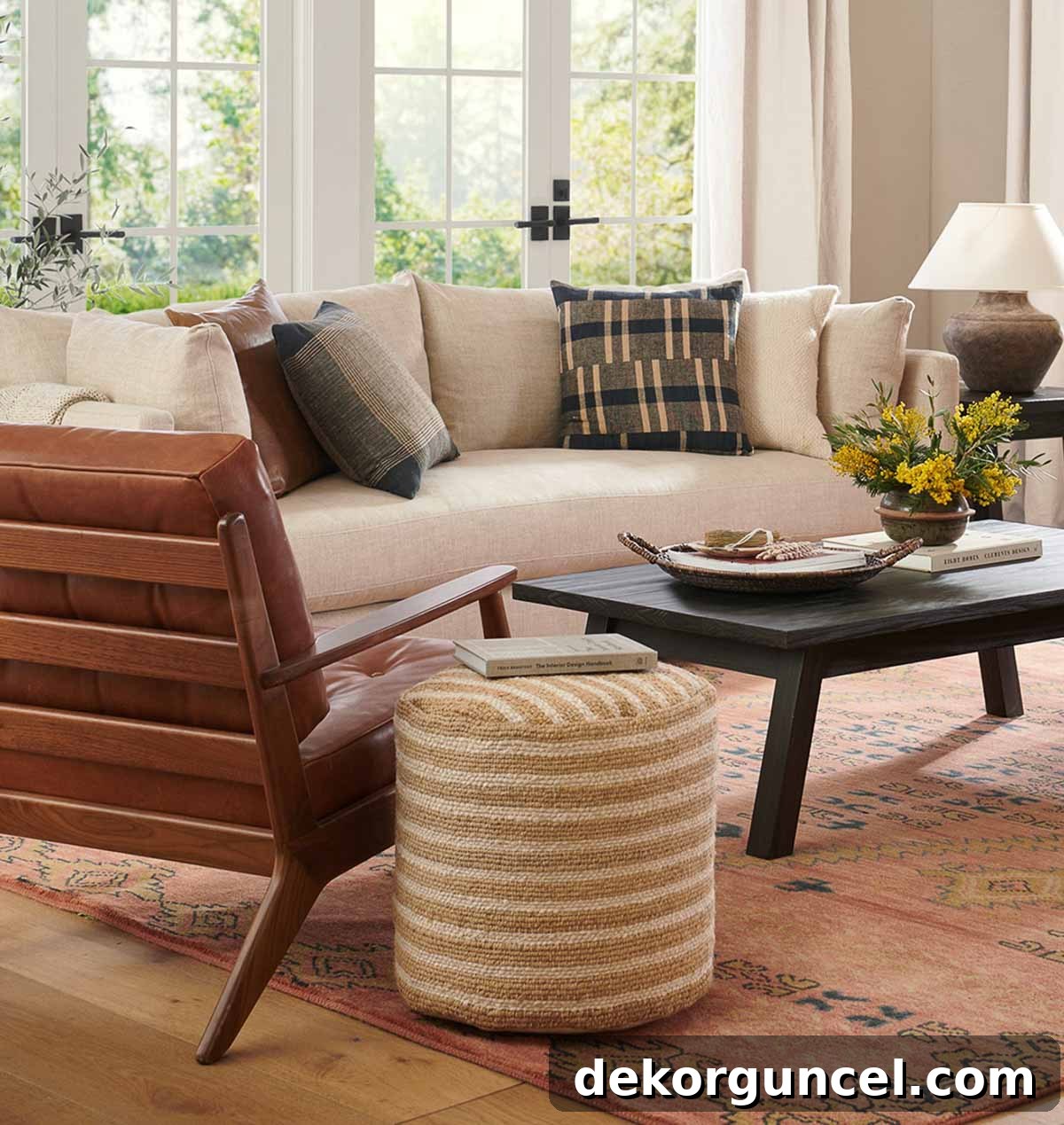
Beyond seating and footrests, poufs possess the remarkable ability to serve as stylish and practical side tables. This is especially true for taller, firmer pouf designs that offer a stable surface. The key is to select a pouf with enough structural integrity to hold items securely. A perfect example is this striped jute pouf, which demonstrates how effortlessly a pouf can perform double duty. Its robust construction makes it an ideal spot for a cup of coffee, a remote control, or a stack of magazines.
To enhance a pouf’s functionality as a side table, consider placing a small, sturdy tray on top. This creates an even more stable and defined surface, preventing items from toppling over while adding another layer of texture or material. This solution is particularly brilliant in small spaces where a traditional side table might feel too bulky, or in arrangements where you desire a softer, more integrated look. Imagine a pouf next to an accent chair, providing just enough surface for your evening tea and a book, without dominating the space.
Poufs Under an Entryway Console: Practical Elegance at the Door
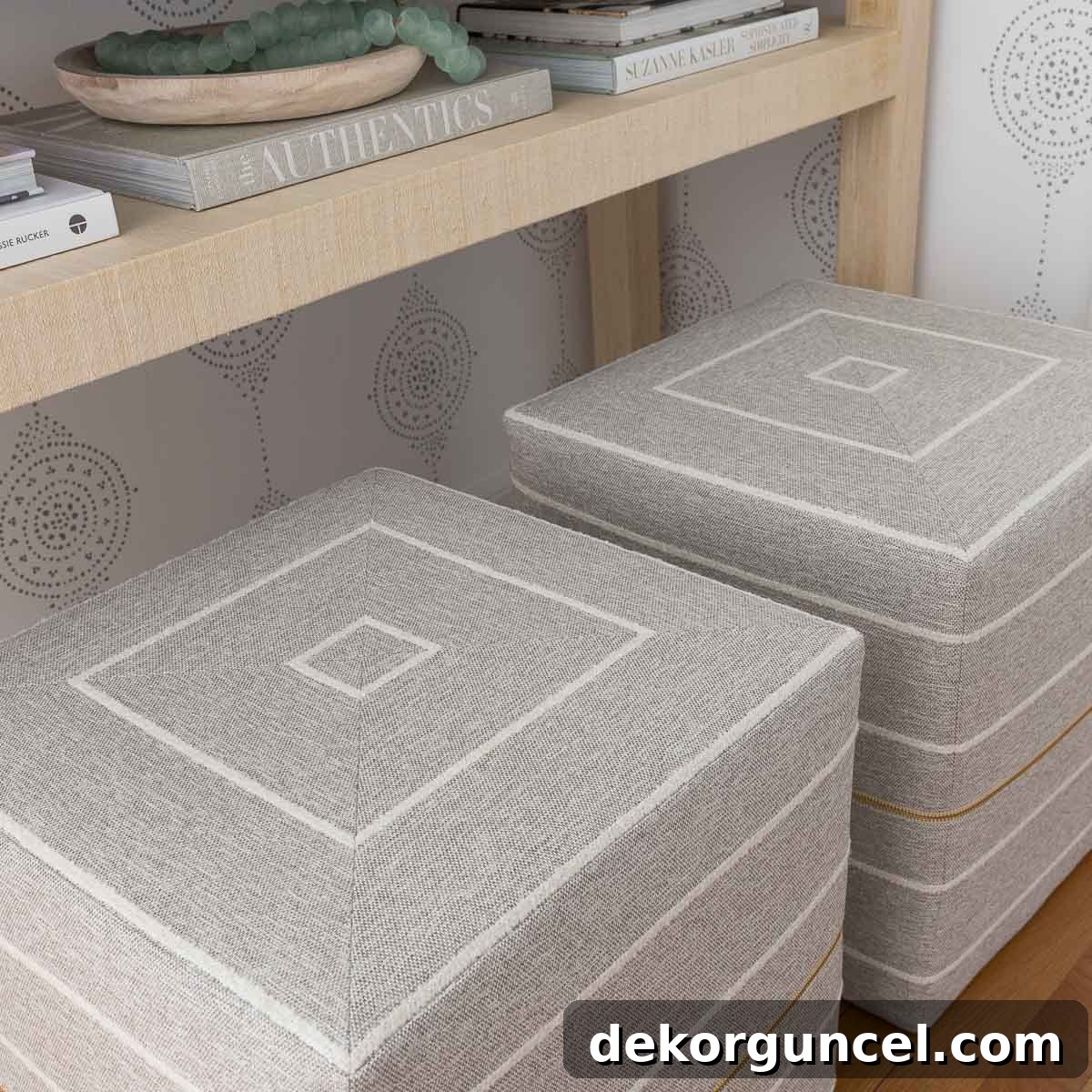
The entryway sets the tone for your entire home, and incorporating poufs here can elevate both its functionality and aesthetic appeal. Placing poufs beneath an entryway console table not only fills what might otherwise be empty space but also provides immediate utility. They are perfect for those moments when you need a quick seat to put on or take off shoes before heading out or after stepping through the door. This simple addition makes the daily ritual of coming and going much more comfortable and convenient.
Our entryway, for instance, features a pair of these inviting poufs, beautifully complementing the console. They are perfectly sized to tuck neatly underneath, maintaining a clean and uncluttered look while being readily accessible. Beyond their practical use, poufs in an entryway contribute to the overall design by adding texture, color, and a sense of inviting warmth. Choose materials that are durable and easy to clean, given the high-traffic nature of an entryway. Leather or sturdy woven fabrics are often excellent choices. This thoughtful placement demonstrates how poufs can seamlessly blend into even the most functional areas of your home, proving that practicality doesn’t have to compromise style.
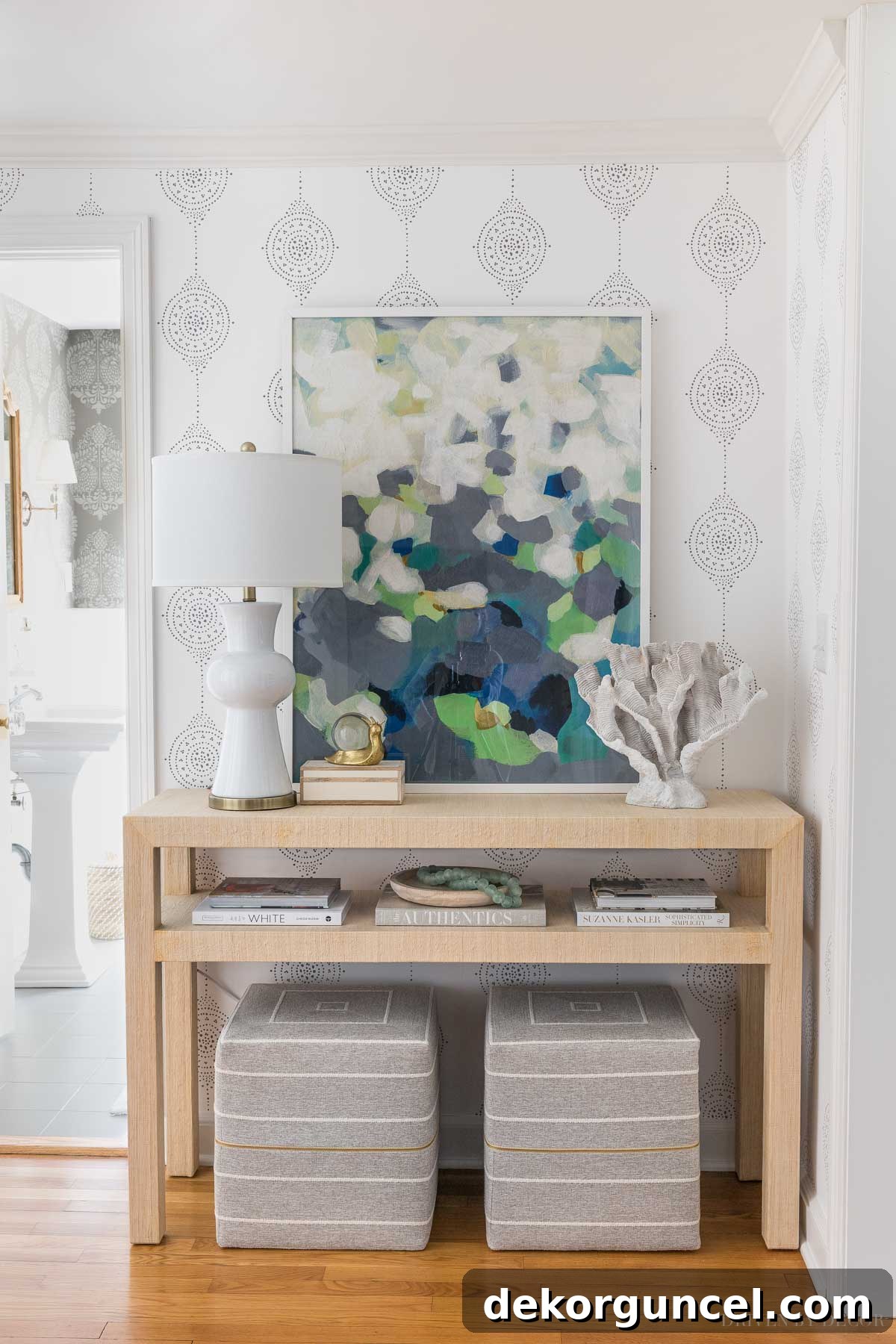
Entryway Sources: Wallpaper | Console (similar) | White table lamp | 30″ x 40″ Framed art print | Decorative snail | Shallow wood bowl | Glass beads | Poufs
Beyond the Basics: Even More Pouf Placement Ideas
The versatility of poufs extends even further, making them suitable for almost any room in your home:
Kids’ Rooms and Playrooms:
Poufs are ideal for children’s spaces. Their soft, often lightweight nature makes them safer than rigid furniture, providing comfortable seating for reading, playing, or quiet time. Many come with washable covers, which is a huge plus for parents. They can add a playful splash of color or a fun pattern, easily moved around for different activities.
Home Offices:
In a home office, a pouf can serve as an ergonomic footrest under your desk, promoting better posture during long work sessions. It can also provide a cozy spot for a quick break, a place to read, or even a casual seat for a visitor.
As Decorative Accents:
Sometimes, a pouf’s primary role is simply to look good! Use them to fill an awkward empty corner, add a layer of texture to a minimalist space, or introduce a vibrant color or pattern that ties the room together. They are excellent for layering different design elements.
Outdoor Living Areas:
With the increasing popularity of outdoor living, many manufacturers now offer weather-resistant poufs made from durable, UV-protected materials. These are perfect for patios, decks, or poolside areas, extending your comfortable living space into the great outdoors.
Choosing the Perfect Pouf for Your Space
With so many options available, selecting the right pouf can seem daunting, but by considering a few key factors, you can find one that perfectly suits your needs and style:
- Material:
- Leather: Durable, classic, and ages beautifully. Ideal for high-traffic areas or a touch of sophistication (e.g., Moroccan poufs).
- Knit/Wool: Adds warmth, texture, and a cozy, bohemian, or Scandinavian feel. Perfect for creating a soft aesthetic.
- Jute/Natural Fibers: Offers an organic, rustic, or coastal vibe. Great for grounding a space and adding natural texture.
- Velvet: Luxurious and adds a touch of glam or vintage elegance. Best for low-traffic areas.
- Cotton/Fabric: Versatile, often comes with removable, washable covers. Available in countless colors and patterns.
- Size and Shape: Round poufs are classic and versatile. Square or rectangular poufs can offer a more defined look and are often better for side table duties. Oversized poufs can act as a mini coffee table or a substantial extra seat. Consider the proportions of your room and existing furniture.
- Style: Match your pouf to your existing decor or use it to introduce a contrasting element. A Moroccan leather pouf pairs beautifully with bohemian or eclectic styles, while a sleek, minimalist pouf can enhance a modern aesthetic.
- Color and Pattern: Poufs are fantastic for adding a pop of color or a subtle pattern without overwhelming a room. Choose a bold color to make a statement, or a neutral tone for seamless integration.
- Filling: The filling impacts the pouf’s firmness and weight. Polystyrene beads offer a softer, more adaptive feel, while foam or recycled materials can provide a firmer, more structured support suitable for seating or side tables.
Caring for Your Poufs: Maintenance Tips
To ensure your poufs remain beautiful and functional for years to come, proper care is essential. Maintenance varies by material:
- Leather Poufs: Regularly dust with a soft cloth. For spills, wipe immediately with a damp cloth and mild soap, then dry. Condition leather periodically to prevent cracking.
- Knit/Fabric Poufs: Vacuum regularly to remove dust and debris. Spot clean with a mild detergent and water for small stains. If covers are removable, follow washing instructions (often cold water, air dry).
- Jute/Natural Fiber Poufs: Vacuum with a brush attachment to clean. Spot clean with water and mild soap, being careful not to oversaturate. Dry completely to prevent mildew.
- General Tips: Rotate your poufs regularly to ensure even wear. Avoid prolonged exposure to direct sunlight, which can cause fading. For stubborn stains or deep cleaning, consult professional cleaners.
Conclusion: Embrace the Pouf Power
It’s clear that poufs are far more than mere decorative elements; they are truly indispensable accessories that bring both style and unparalleled functionality to any home. Their adaptability allows them to seamlessly transition between roles as footrests, extra seating, side tables, and captivating decorative accents. With an incredible array of materials, shapes, and styles available, there’s a perfect pouf waiting to enhance every room, from the cozy corners of your living room to the welcoming embrace of your entryway. By thoughtfully integrating poufs into your decor, you can unlock new levels of comfort, flexibility, and aesthetic appeal, transforming your space with ease and elegance. So, what’s your take on poufs – do you love them as much as I do? It’s time to embrace the pouf power and elevate your home design!
