
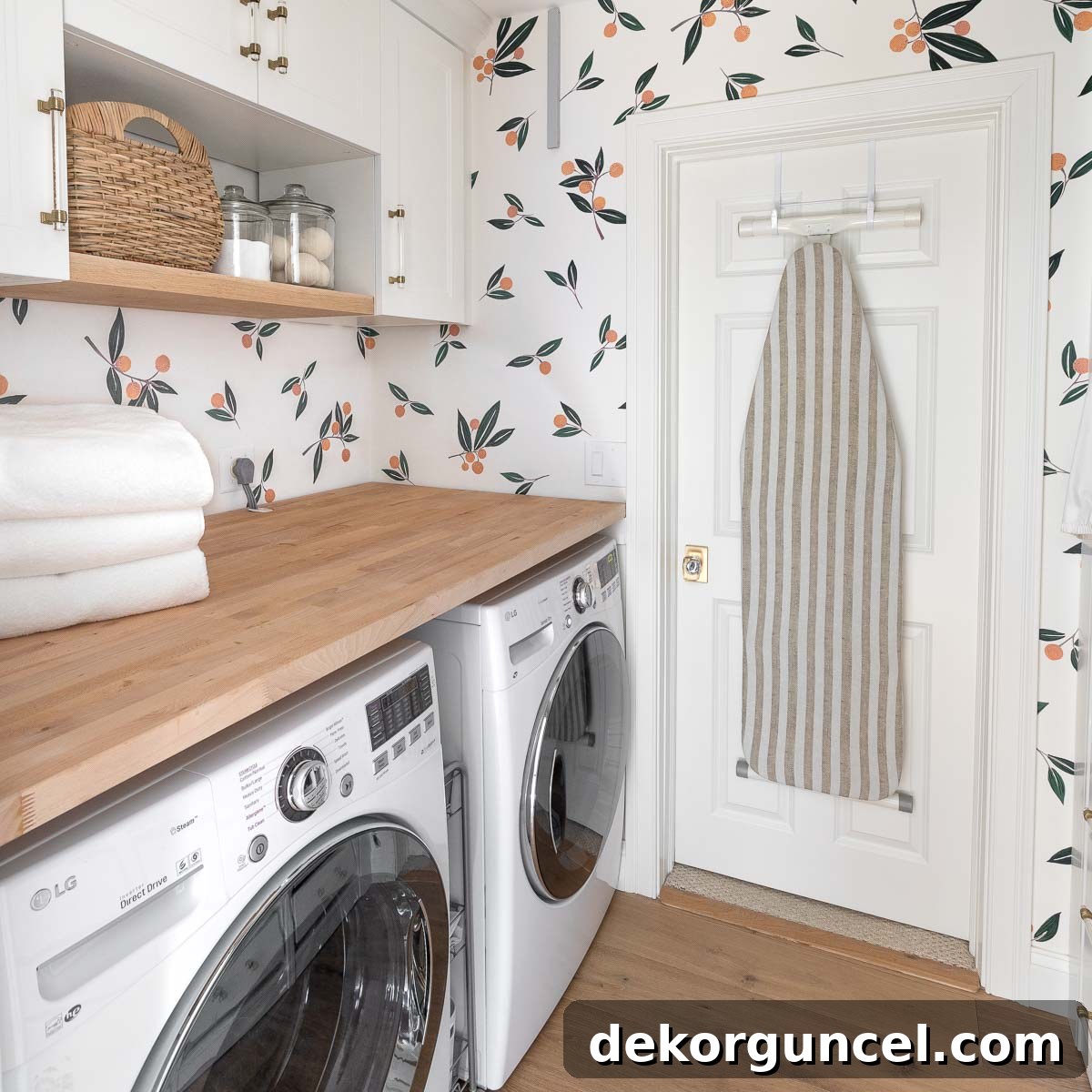
Considering the convenience of an upstairs laundry room? This comprehensive guide explores the advantages and disadvantages, along with essential flood prevention strategies to ensure peace of mind when moving your laundry facilities to the second floor.
The concept of a second-floor laundry room often sparks a spirited debate among homeowners, much like the discussion around open shelving in kitchens. You’ll find staunch advocates on both sides – those who swear by its convenience and those who strongly advise against it. When planning an addition to our Cincinnati home, I received considerable advice to reconsider my intention of relocating the laundry room upstairs. However, after careful consideration, I decided to move forward with the plan. Looking back, I can confidently say it was one of the best decisions we made for our home.
Our family enjoyed the benefits of our upstairs laundry room for approximately four years before we moved. During that time, I gained valuable insights that I believe will be incredibly helpful to anyone contemplating a similar change. This article will share my personal experience, detailing the undeniable pros and the potential cons of an elevated laundry space. Crucially, I’ll also provide vital tips for mitigating the biggest concern associated with second-floor laundry rooms – the dreaded possibility of flooding. Whether you’re embarking on new construction or planning a significant home remodel, I hope this post serves as a valuable resource in your decision-making process. (Please note: this post includes affiliate links, which may earn me a small commission at no extra cost to you. See my full disclosure statement here.)
Second Floor Laundry Room: Unpacking the Pros
A second-floor laundry room can significantly streamline your household chores and improve daily living. Let’s explore the key advantages that make this layout a preferred choice for many modern homeowners.
1. Say Goodbye to Lugging Laundry Up and Down Stairs!
This is arguably the most compelling benefit and often the primary reason homeowners consider moving their laundry upstairs. Think about it: a vast majority – easily 95% or more – of dirty clothes, sheets, and towels are generated in bedrooms and bathrooms, which are typically located on the second floor. Having your laundry room on the same level eliminates the tedious and physically demanding task of carrying heavy, cumbersome laundry baskets up and down stairs multiple times a week. This convenience translates into less physical strain, particularly for those with mobility issues, and frees up valuable time and energy that can be better spent elsewhere. It’s a simple change that makes a profound difference in the daily rhythm of a household.
2. Reclaim Space: Eliminate Hampers in Bedrooms and Closets
Many older homes, like ours, often feature smaller bedroom closets where every inch of space is precious. Introducing a second-floor laundry room, especially one centrally located, allows for a fantastic organizational hack: dedicated laundry hampers within the laundry room itself. Instead of having individual hampers cluttering up bedrooms or infringing on limited closet space, all dirty clothes can be directly deposited into these central hampers. This not only frees up valuable real estate in private spaces but also eliminates the need to trek from room to room collecting laundry before starting a wash cycle. It’s a smart, efficient way to manage household linens and personal garments, making the entire process more organized and less intrusive.
3. Experience Unprecedented Laundry Efficiency
Building upon the previous points, the cumulative effect of eliminating stair-lugging and centralizing hamper collection is a significant reduction in the time spent on laundry tasks. When the process is streamlined – from collection to washing, drying, and even putting away – laundry becomes less of a dreaded chore and more of a manageable part of the weekly routine. For busy individuals and families, this time-saving aspect is a monumental advantage. Could there be a bigger “pro” than reclaiming precious moments in your day?
Second Floor Laundry Rooms: Exploring the Cons
While the benefits are clear, it’s equally important to consider the potential drawbacks of an upstairs laundry room. Understanding these challenges can help you plan effectively and implement solutions to minimize their impact.
1. Potential for Increased Heat in Summer Months
Running a dryer, especially during the peak of summer, generates heat. If your laundry room is on the second floor, this heat can potentially contribute to warmer temperatures upstairs and lead to a higher air conditioning bill. However, I found this issue to be easily manageable. By diligently keeping the laundry room door closed while the dryer is in operation, the heat is contained within that specific space, preventing it from permeating the rest of the upstairs living areas. Modern dryers are also becoming increasingly energy-efficient, producing less residual heat. Consider a well-ventilated laundry room design to further mitigate this concern.
2. Noise from Appliances Can Disturb Light Sleepers
The operational noise from washing machines and dryers, particularly during spin cycles, is a valid concern for some households. While I was fortunate to have children who were deep sleepers, meaning this was never an issue for us, it’s a critical consideration for families with infants, young children, or light sleepers. If nap times or nighttime laundry are part of your routine, the sound could be disruptive. Solutions include choosing quieter, modern appliances (many manufacturers now emphasize low-noise operation), strategic placement of the laundry room away from bedrooms, or incorporating soundproofing materials into the walls and doors during construction or renovation. Scheduling laundry during active hours can also effectively address this.
3. Elevated Risk of Catastrophic Flood Damage
This is undeniably the most significant concern and the primary fear associated with upstairs laundry rooms. A washing machine overflow, a burst hose, or a malfunctioning appliance on the second floor can cause far more extensive and costly damage compared to a ground-floor or basement incident. Water will follow gravity, cascading through ceilings, walls, and floors below, potentially ruining multiple levels of your home, including structural elements, electrical systems, and personal belongings. The good news is that with a few simple, yet critical, preventative measures, this risk can be significantly minimized, transforming a major fear into a manageable probability.
4. Managing Washing Machine Vibration
Front-loading washing machines, especially older models, were notorious for producing significant vibration during high-speed spin cycles. This vibration could sometimes lead to the machine “walking” across the floor. While modern front-loaders have vastly improved, with manufacturers incorporating advanced suspension systems and balancing technologies, vibration can still be a consideration. Some homeowners opt for traditional top-loading washers on the second floor to avoid this concern entirely. If you’re purchasing a new washer and dryer for an upstairs laundry room, thoroughly review product specifications and user feedback regarding vibration levels. Look for models specifically designed for quiet operation and stability. Should vibration still be an issue, specialized anti-vibration pads (such as these) placed under the appliance feet can be remarkably effective at absorbing shock and preventing movement. I’ve used them myself and can attest to their efficacy.
Essential Flood Prevention for Second Floor Laundry Rooms
Given the potential for significant damage, implementing robust flood prevention strategies is paramount for any upstairs laundry room. These measures are not merely suggestions; they are crucial investments in protecting your home and providing invaluable peace of mind.
1. Install an Easily Accessible Water Shut-Off Valve
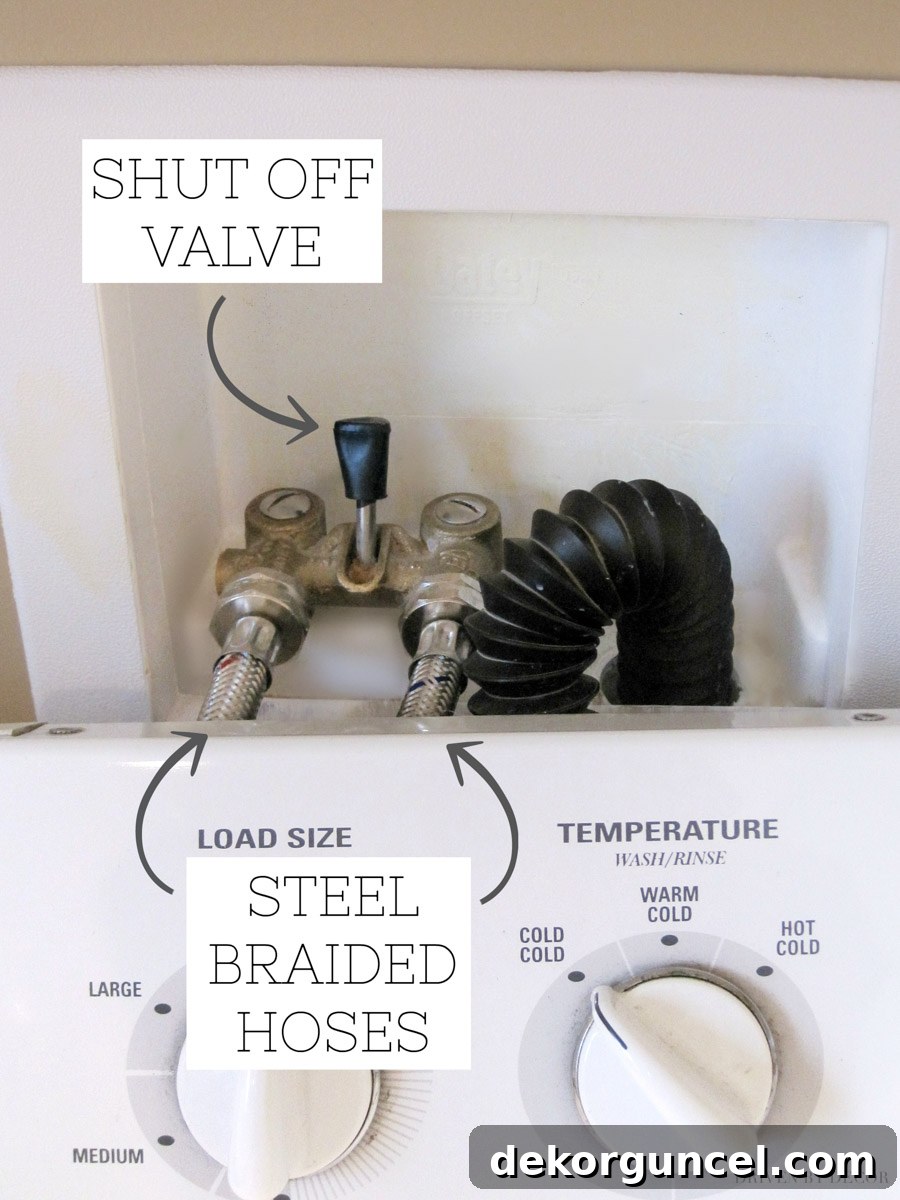
One of the simplest yet most effective flood prevention methods is to manually turn off the water supply to your washing machine when it’s not in use. This completely eliminates the risk of a burst hose or internal leak causing a flood while you’re away or asleep. Ensure your laundry room is equipped with a clearly marked and easily accessible manual shut-off valve for the washer supply lines. For an even greater layer of protection and convenience, consider installing an automatic electronic valve shut-off kit, such as Floodstop (available here). These innovative systems feature a water sensor that you strategically place under or near your washing machine. Should the sensor detect any water from a leak or overflow, it automatically triggers the valve to cut off the water supply to the washer, preventing catastrophic damage. This offers superior peace of mind, especially for those who travel frequently or simply want an extra layer of automated security.
2. Upgrade to Durable Steel Braided Washer Hoses
The standard rubber hoses that often come with washing machines are a common point of failure. Over time, they can weaken, crack, or burst under water pressure, leading to significant leaks. Investing in high-quality steel braided washer hoses (like these) is a smart and relatively inexpensive upgrade. These hoses are constructed with a durable rubber core reinforced by a layer of braided stainless steel, making them far more resistant to kinking, punctures, and bursting than their standard counterparts. The small additional cost for this enhanced durability is absolutely worth it, regardless of your laundry room’s location. For optimal safety, it’s also recommended to inspect and replace all washer hoses every five to seven years, even the steel braided ones, as part of your home maintenance routine.
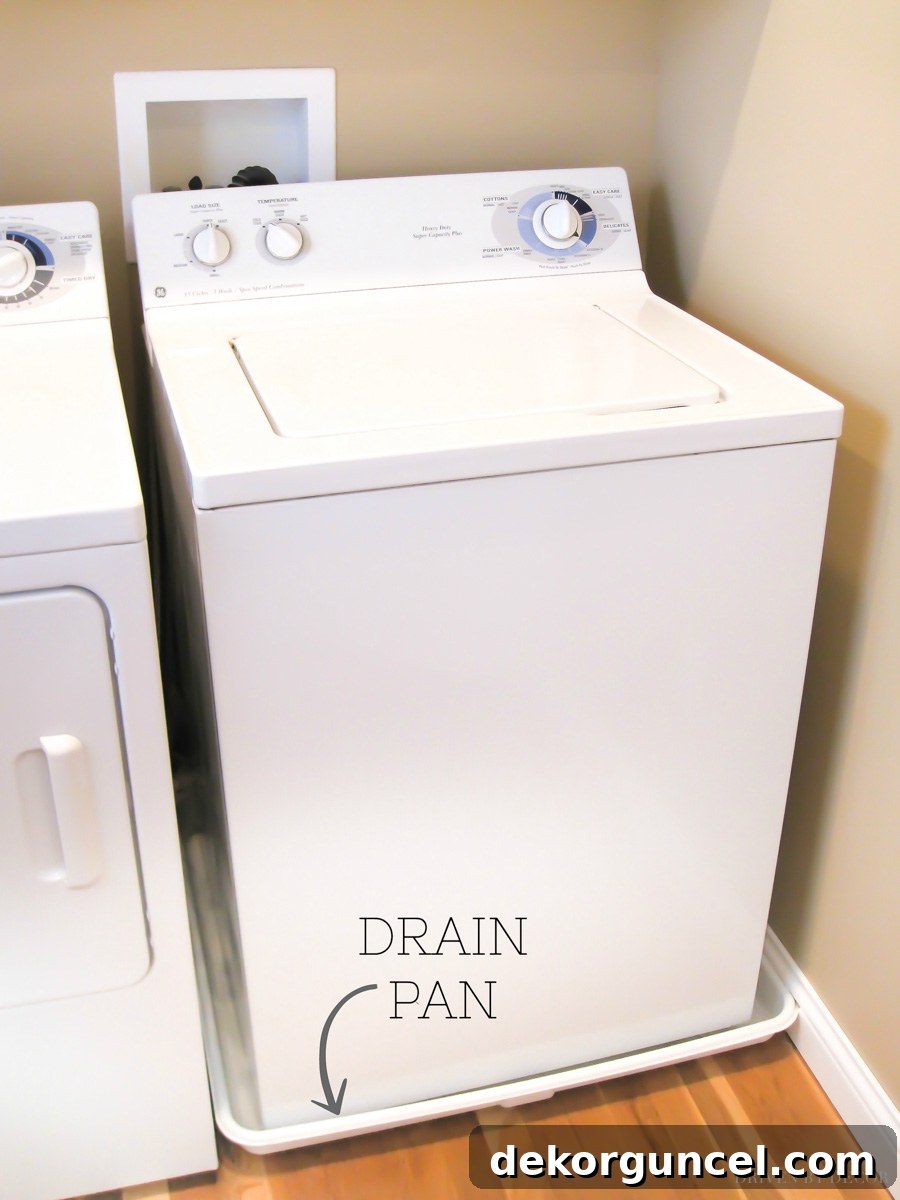
3. Install Your Washing Machine in a Drain Pan
A washing machine drain pan (sometimes called a drip pan or laundry tray) is a non-negotiable component for any upstairs laundry room. This simple yet highly effective device is designed to catch any overflow or minor leaks from your washing machine. The pan typically sits underneath the washer, and if water were to escape the machine, it would be directed down the sides of the appliance into the pan. Crucially, these pans are connected to a dedicated drainpipe, which routes the collected water safely away, usually into a nearby utility sink or directly into your home’s drainage system. This prevents water from seeping into your subfloor and causing widespread damage below, providing a critical layer of protection against upstairs floods. Ensure the pan is properly installed and connected to a functioning drain.
4. Integrate a Smart Leak Detector System
In the absolute worst-case scenario, where a leak or flood does occur despite other precautions, a smart leak detector can be a homeowner’s best friend. These devices are designed to sense the presence of water and alert you to the problem immediately, allowing for a swift response before the damage becomes extensive. Modern leak detectors, such as {this smart leak alert device}, go a step further by offering Wi-Fi connectivity. This means they can send real-time alerts directly to your smartphone via email or push notification, ensuring you’re informed even when you’re not at home to hear an audible alarm. I personally have one of these placed near our water heater, and although we thankfully haven’t needed it for an actual emergency, I’ve tested it, and it works flawlessly. Placing one strategically in your second-floor laundry room is a small investment that offers substantial protection and peace of mind.
Having experienced laundry rooms on every level of a home – from the dreaded basement (which I truly disliked!) to the main floor and now the second floor – I can unequivocally state that an upstairs laundry room is my preferred location. The convenience, time savings, and overall improved household flow it offers are simply unmatched. I’d love to hear about your experiences! If you’ve had laundry facilities on both the first and second floors, which do you prefer, and why?
Seeking more inspiration for your laundry room design or organization? Explore these highly-rated posts for fresh ideas:
Innovative Laundry Room Storage Ideas to Maximize Your Space
Discover Our Budget-Friendly IKEA Laundry Room Cabinets
Unlock the Secret to Brighter Whites with This Effective Laundry Stripping Recipe
