
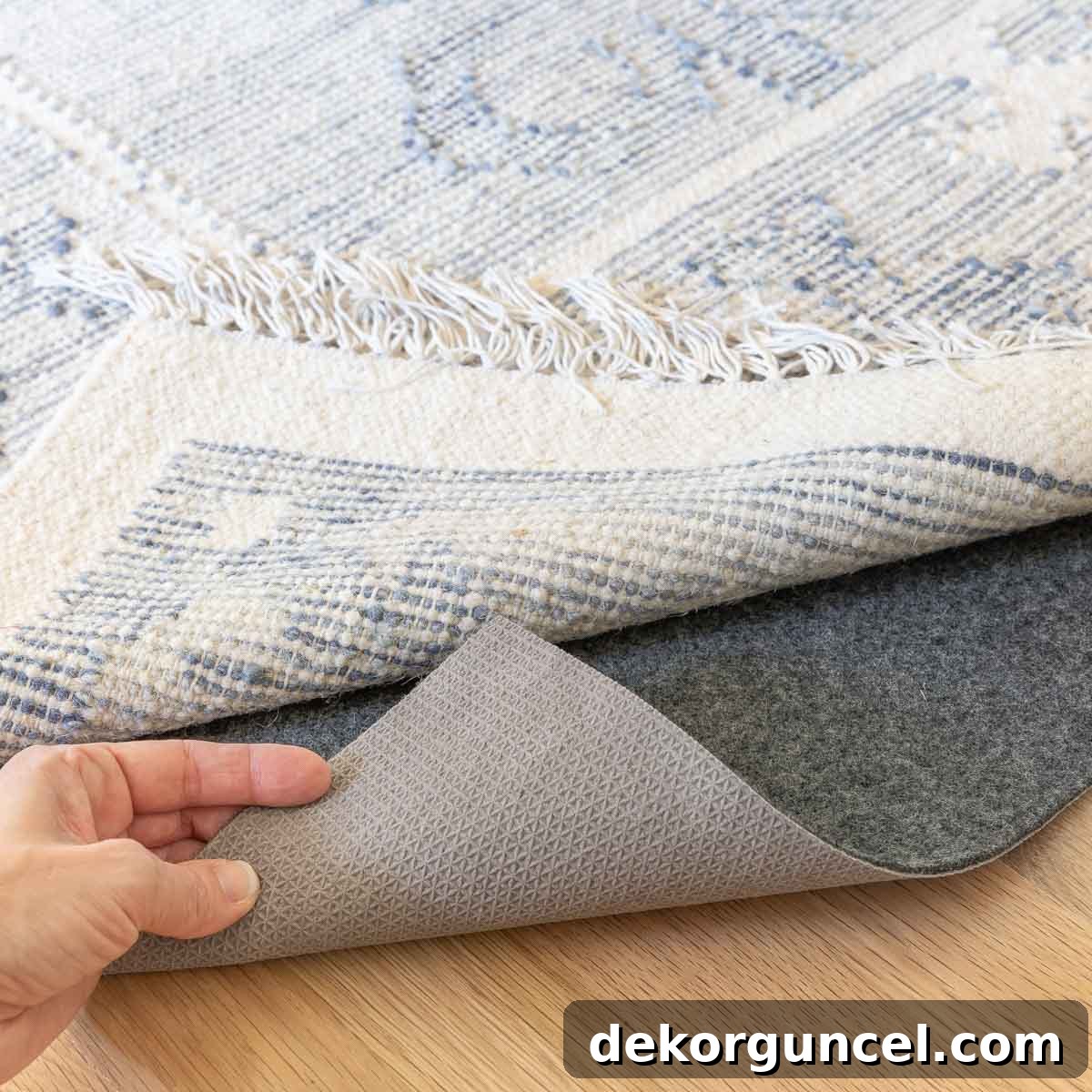
Are you tired of constantly battling a rug that slips and slides across your beautiful floors? Do you long for a softer, more luxurious feel underfoot when you walk across your area rugs? Or perhaps you’re concerned about the potential damage the abrasive backing of your rug might inflict upon your pristine hardwood or delicate LVP flooring. The solution to all these common household dilemmas is simpler than you might think: a high-quality rug pad.
Today, we’re diving deep into the essential world of rug pads. This comprehensive guide will equip you with all the knowledge needed to select the perfect rug pad for every space in your home. We’ll explore the compelling reasons why a rug pad is an indispensable accessory, examine the diverse types available (and highlight those to avoid), demystify the process of measuring and sizing your rug pad for a perfect fit, and share expert installation tips. Get ready to transform your rugs from mere floor coverings into secure, comfortable, and protected elements of your home décor. Let’s get started on finding your ideal rug pad! (This post includes affiliate links; a full disclosure statement is available {here})
Do I Really Need a Rug Pad? The Indispensable Benefits Explained
The short answer is a resounding YES, you absolutely DO need a rug pad! Far from being an optional accessory, a rug pad serves multiple critical functions that enhance safety, prolong the life of your rugs and floors, and significantly improve your home’s comfort and acoustics. Here’s a detailed look at the transformative benefits a good rug pad provides:
1. Enhance Safety by Preventing Slips, Slides, and Bunches: One of the most immediate and critical benefits of a rug pad is its ability to anchor your rug securely to the floor. Without a proper pad, rugs, especially lightweight or synthetic ones, are prone to shifting, sliding, and bunching up. This isn’t just an annoyance; it creates a significant tripping hazard, particularly for children, the elderly, and even pets. I experienced this firsthand with our dining room rug (purchased here) before I invested in a quality rug pad:
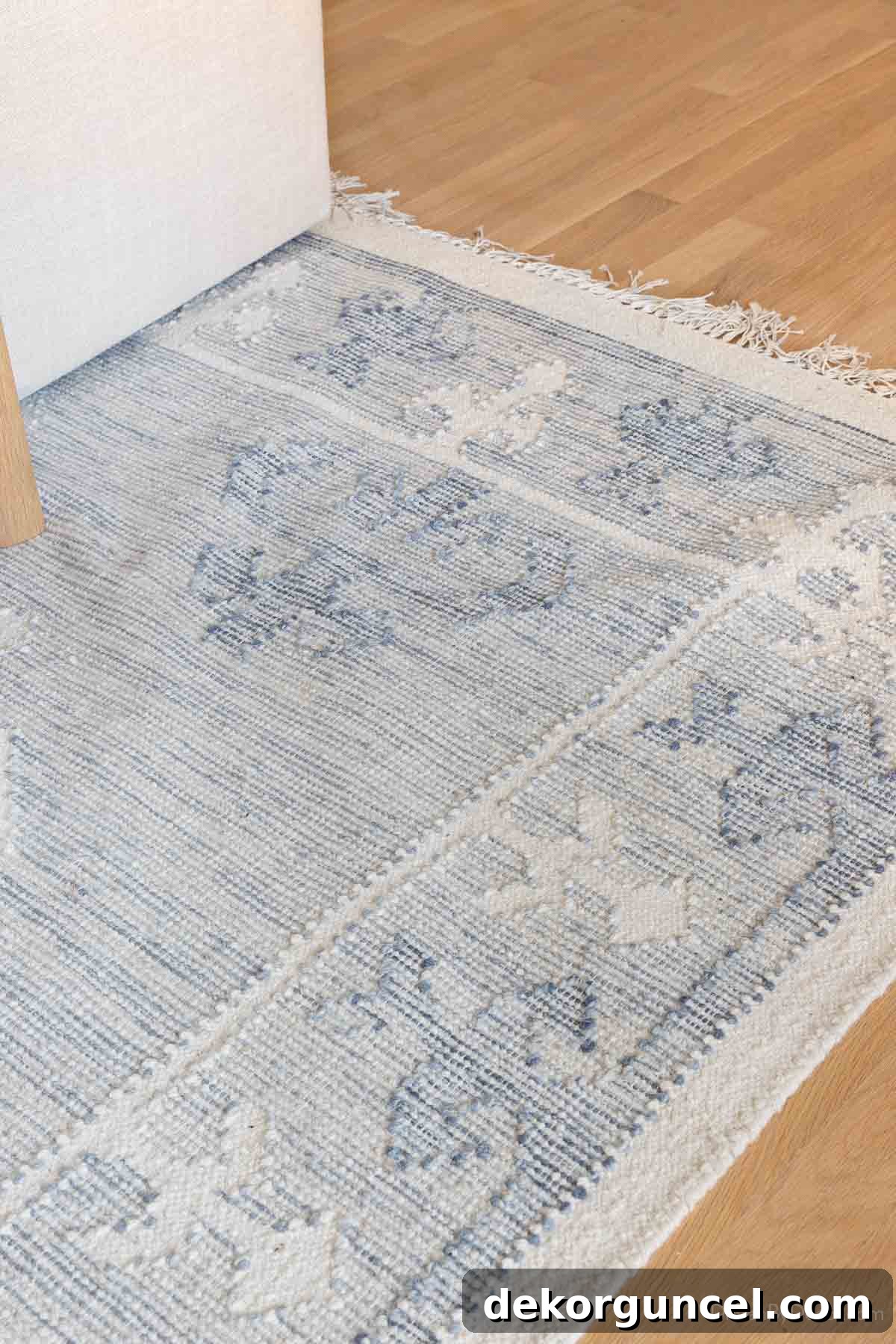
Initially, I worried that a rug pad might hinder the smooth movement of our rolling dining chairs. However, the opposite proved true! The rug pad eliminated the frustrating bunching, allowing the chairs to glide effortlessly. This particular rug pad (I purchased this specific model) not only secured the rug but also improved the functionality of our dining space:
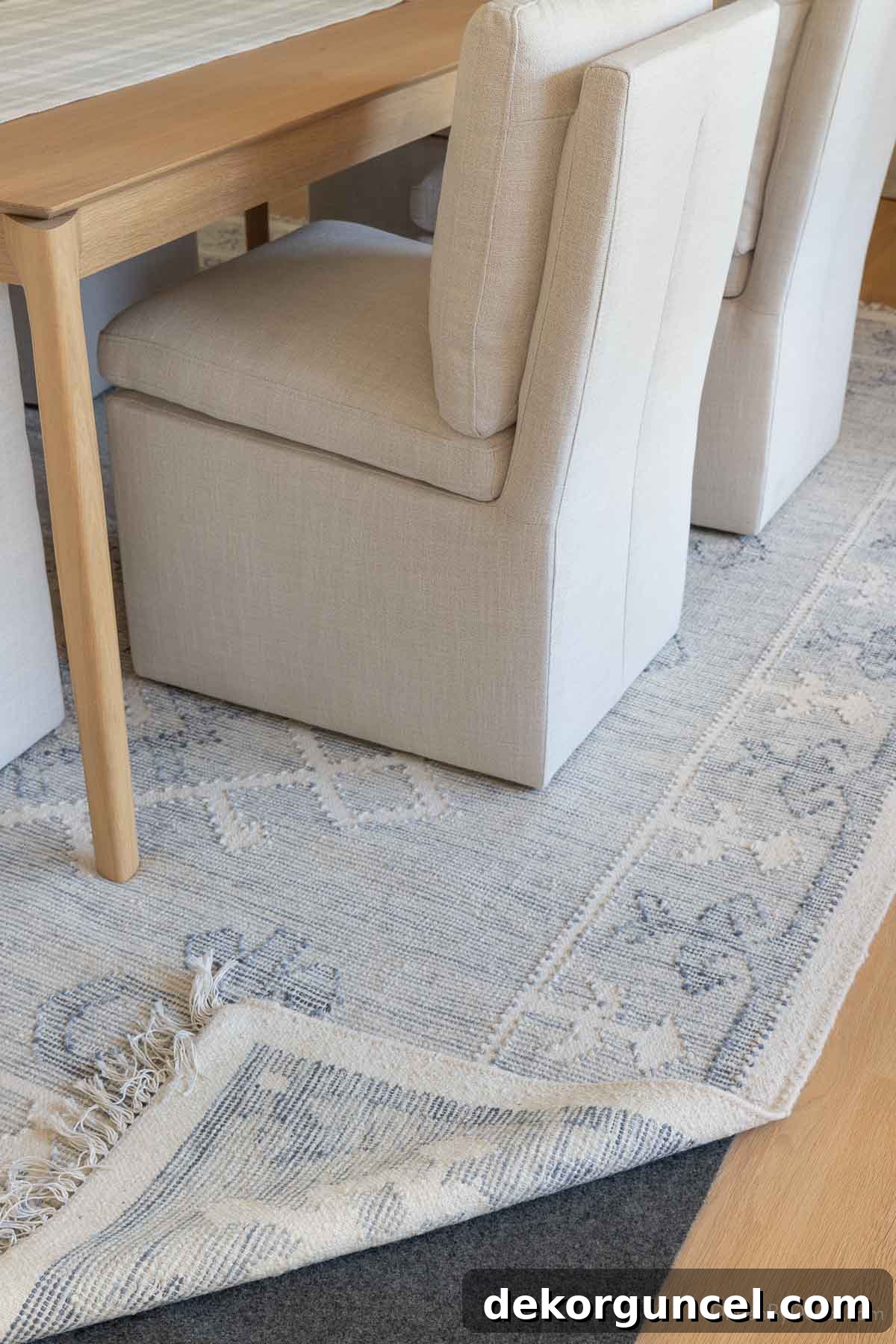
Sources: Dining Room Rug | Dining Table | Dining Chairs
2. Extend Your Rug’s Lifespan and Preserve Its Beauty: A rug is an investment, and a rug pad acts as a protective shield, significantly extending its life. By providing a cushioned layer, the pad absorbs the impact of foot traffic, reducing stress on the rug’s fibers and backing. Without a pad, the constant friction between your rug and the hard floor beneath causes premature wear and tear, leading to thinning spots, unraveling, and overall degradation. This shock absorption also helps prevent the crushing of rug fibers, particularly in high-traffic areas, maintaining the rug’s original plushness and appearance for much longer.
3. Significantly Reduce Noise and Enhance Acoustics: Do you live in a multi-story home or an apartment where noise travels easily? Rug pads are excellent sound dampeners. They absorb impact and vibrations, dramatically reducing noise transmission, especially from footsteps or dropped items on upper floors. This creates a quieter, more serene living environment, making your home feel more peaceful and comfortable for everyone.
4. Protect Your Precious Flooring from Damage: Your floors are a major component of your home’s value and aesthetic. A rug pad forms a vital barrier, protecting your flooring from various potential damages. Firstly, it acts as a buffer against potential moisture and spills. While not fully waterproof, a good pad can slow down the penetration of liquids, giving you precious time to clean up before damage occurs. Secondly, microscopic dirt and debris that inevitably get trapped beneath a rug can act like sandpaper, slowly scratching and wearing away at your floor’s finish over time. A rug pad creates a protective layer, lifting the rug slightly and preventing this abrasive contact.
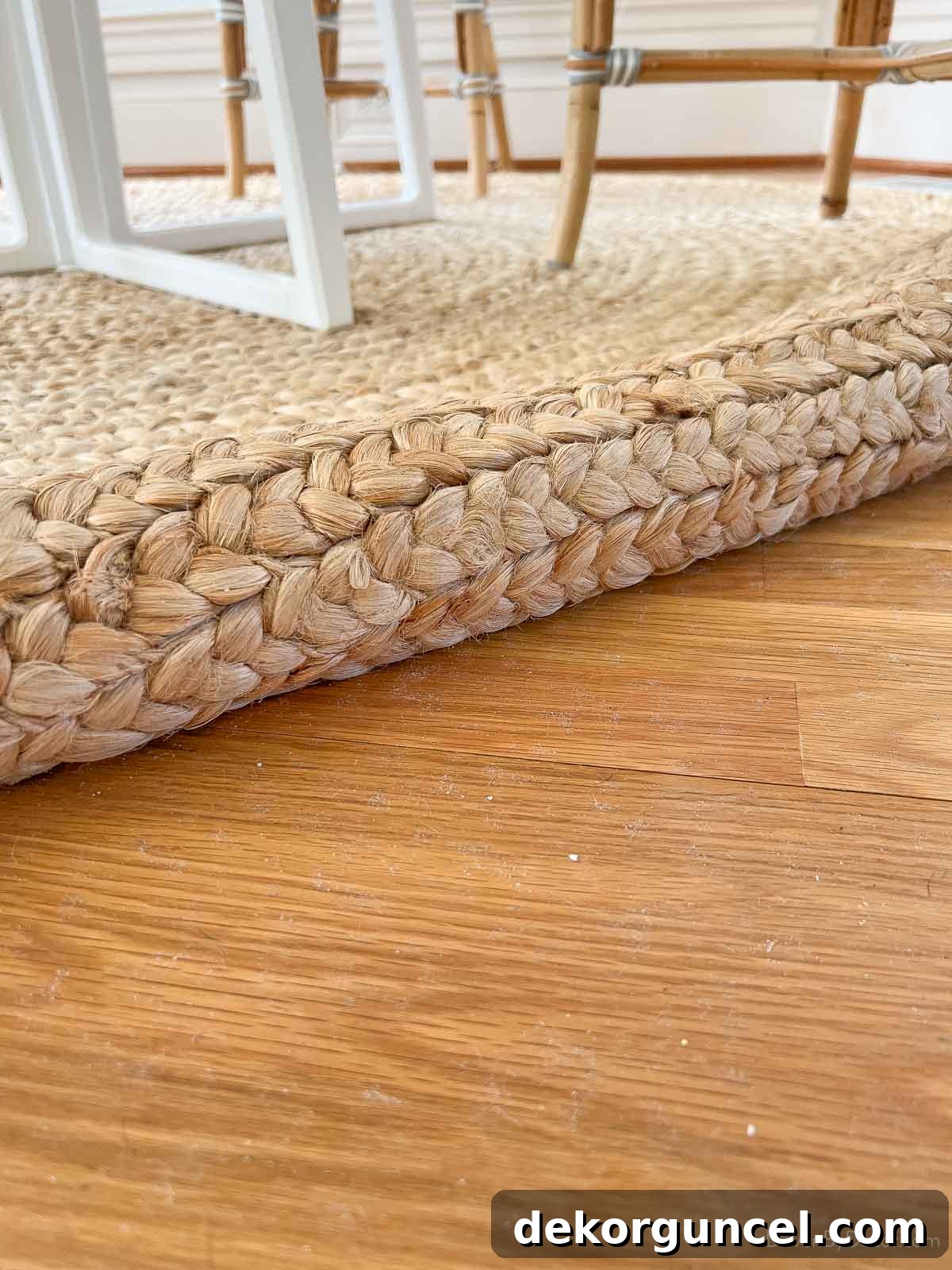
The importance of a rug pad for floor protection is amplified when you have rugs made from natural fibers like jute. Jute rugs are known for shedding a considerable amount of fine debris and natural fibers, which, when trapped between the rug and a hardwood floor, can significantly abrade the surface over time. This image illustrates the type of debris that can accumulate:
5. Indulge in Enhanced Comfort and Cushioning Underfoot: For many, the added comfort is a primary motivation for choosing a rug pad. Thicker rug pads transform the feel of any rug, providing a luxurious layer of extra support and cushioning. This makes walking on your rug feel incredibly plush and soft, reducing foot fatigue and elevating the overall comfort of your living space. It’s like giving your feet a gentle hug with every step.
What’s the Best Rug Pad for Hardwood Floors?
When it comes to safeguarding and enhancing hardwood floors, selecting the right rug pad is paramount. For optimal performance and protection, hybrid rug pads featuring felt on one side and natural rubber on the other are an unparalleled choice. The felt side delivers exceptional cushioning, imbuing your rug with a soft, plush, and luxurious feel underfoot. Conversely, the natural rubber backing ensures superior non-slip grip, preventing your rug from shifting, sliding, or bunching. Crucially, always seek out rug pads made with natural rubber, as it is significantly safer and more benign for your hardwood finishes compared to synthetic or artificial rubber, which can react with floor sealants and cause discoloration or damage over time.
Based on personal experience and extensive research, I highly recommend this Gorilla Grip hybrid rug pad. I utilize the ⅛″ thick option under our dining room rug, and it performs admirably in both grip and cushioning:
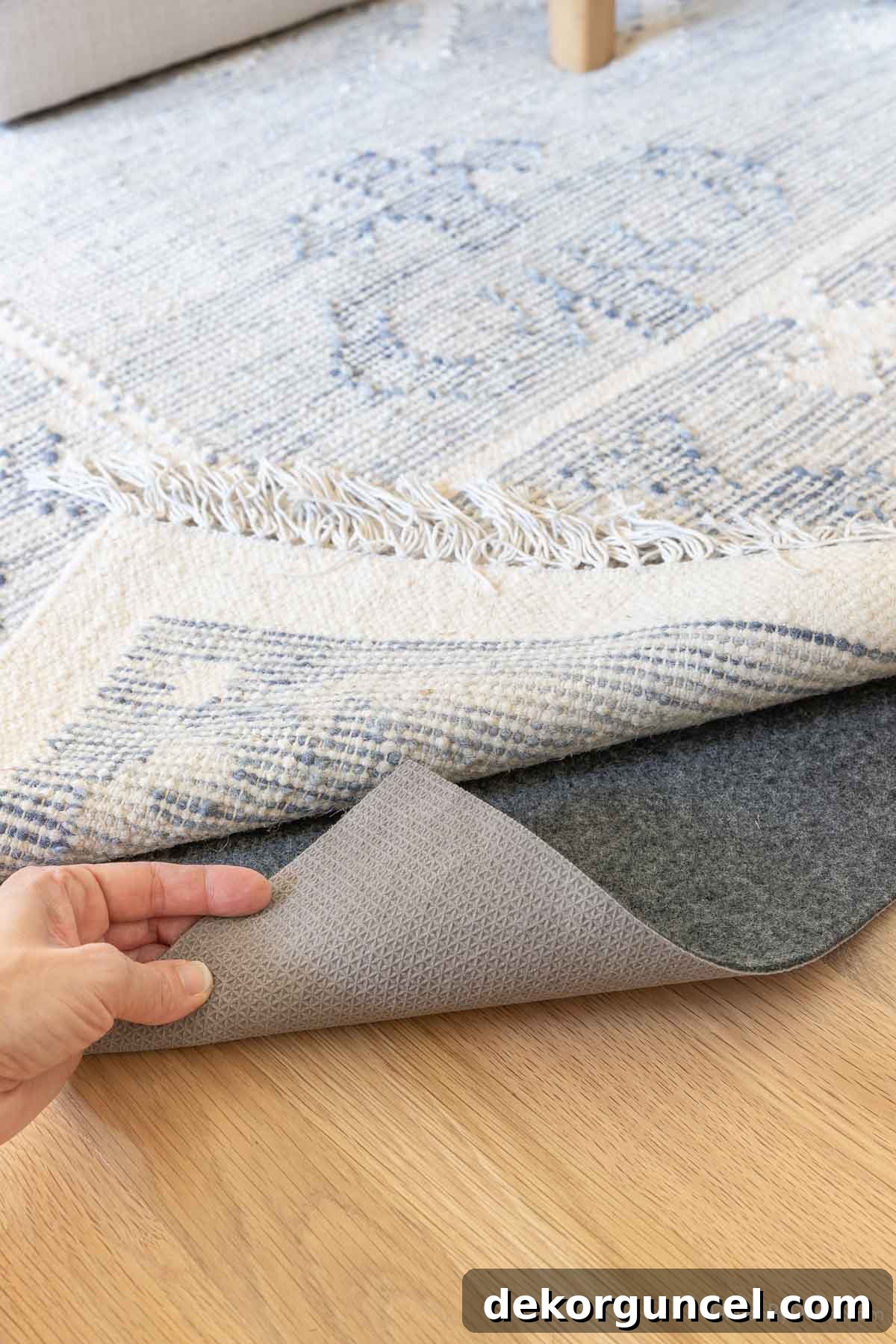
Another excellent and highly-rated option to consider is this dual surface pad from Rug Pad USA, which offers very similar benefits and is available in a wider range of thickness options to suit your specific needs.
For scenarios where superior grip isn’t the primary concern, a rug pad composed of 100% felt can be an outstanding choice for hardwood floors. This type of pad is ideal for spaces where your rug is already securely anchored by heavy furniture, or if you possess a particularly heavy rug that naturally stays in place. A felt-only pad provides luxurious cushioning and acts as an excellent barrier against floor abrasion. My sister personally uses and highly recommends this felt rug pad under her dining room rug, testifying to its comfort and protective qualities:
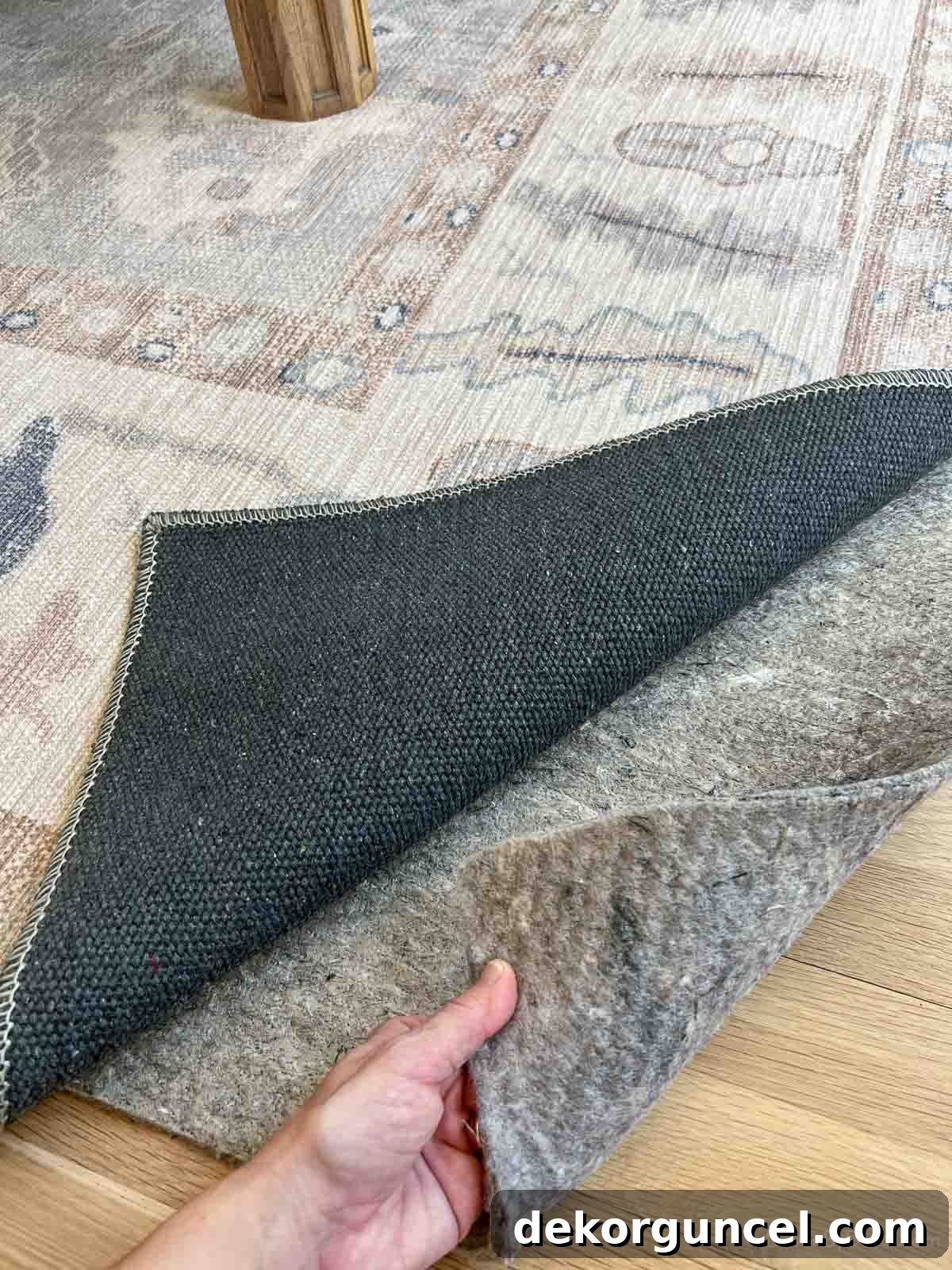
IMPORTANT TIP: Exercise extreme caution when placing ANY rug pad on newly refinished hardwood floors. It is imperative to consult with your hardwood floor refinisher regarding the recommended wait times. These timelines are critical and depend on the specific curing time of the products (e.g., polyurethane, sealants) used during the refinishing process. Generally, if an oil-based polyurethane was applied, you should wait at least 30 days before replacing rugs and rug pads. For water-based polyurethane, a waiting period of 1-2 weeks is typically sufficient. Placing a rug pad too soon can trap moisture, impede proper curing, and potentially cause permanent damage or discoloration to your newly treated floors.
What’s the Best Rug Pad for Luxury Vinyl Plank (LVP) Flooring?
Luxury Vinyl Plank (LVP) flooring requires a unique approach when selecting a rug pad, as certain materials can cause irreversible damage. It is crucial to be extremely careful, as conventional rubber and latex pads can react chemically with the LVP’s finish, leading to permanent staining, discoloration, or even etching of the planks. To avoid such costly damage, you have specific, safe options. A 100% felt rug pad, such as the one mentioned previously, is a safe and effective choice for LVP, providing cushioning and floor protection without the risk of chemical reactions. Alternatively, if your space demands a rug pad with a reliable grip, this Vinyl Lock rug pad, featuring a ribbed EVA (ethylene-vinyl acetate) backing, is an excellent solution. It is specifically engineered to be safe for vinyl flooring, formulated not to stain or discolor, while still offering the necessary non-slip properties.
What’s the Best Rug Pad for Tile Floors & Other Hard Surfaces?
Tile floors, along with other polished hard surfaces like marble or concrete, are notoriously slippery, causing rugs to shift much more readily than on hardwoods. Therefore, when choosing a rug pad for these surfaces, a strong, reliable grip is your top priority to prevent frustrating movement and potential tripping hazards. Either of the high-quality felt/natural rubber hybrid rug pads discussed earlier, specifically this Gorilla Grip rug pad and this dual surface pad from Rug Pad USA, would perform exceptionally well on tile and similar hard surfaces. These pads offer the dual benefit of firm grip and enhanced cushioning. If your primary need is solely for grip, and added cushioning isn’t a priority, a thin, 100% natural rubber pad is an ideal, minimalist choice. Consider this thin natural rubber pad for effective non-slip performance without adding bulk.
What’s the Best Pad for a Rug On Top of Carpet?
Placing a rug over existing carpet presents a unique set of challenges. Without proper intervention, the rug is highly likely to bunch, wrinkle, and “creep” across the carpeted surface, creating an untidy appearance and, more importantly, a significant tripping hazard. For this specific application, you need a specialized non-slip pad that not only secures the rug but also protects the carpet underneath from wear and tear. After extensive research and testing of various rug pad options for carpeted floors, I’ve found that this highly-rated double-sided gripper pad stands out as the most effective solution.
The innovative design of this pad involves two distinct sides. You first position the side with a mildly adhesive surface directly onto your carpet. One reviewer aptly described its stickiness as similar to a Post-It note – enough to create a gentle, yet secure, bond without damaging or leaving residue on your carpet fibers. Once you’ve smoothed it down and ensured it’s flat, you then peel away the clear protective film from the opposing side. This side features a much stronger, more aggressive adhesive that firmly grips the back of your area rug.
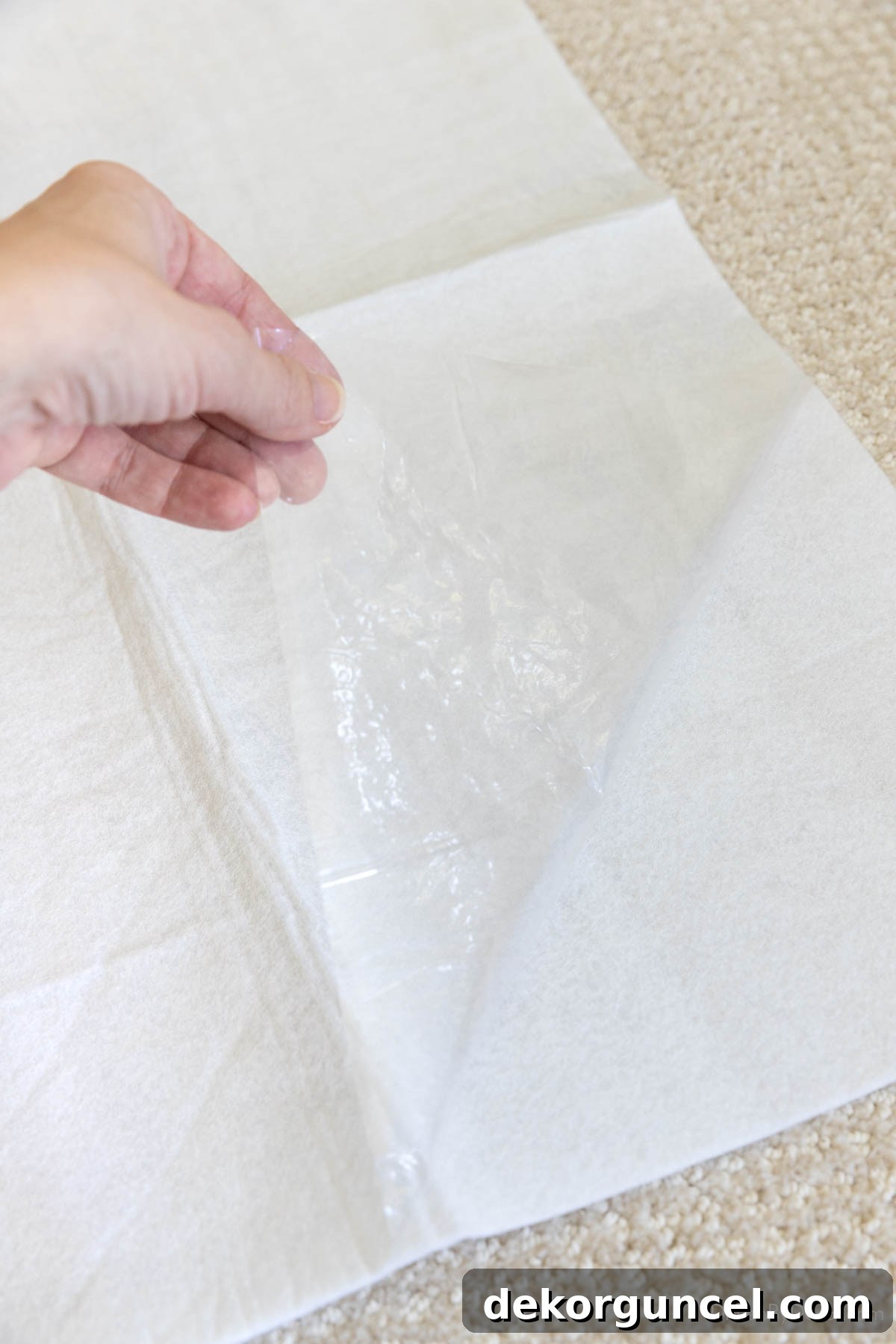
After removing the film, carefully lay your rug down directly on top of the exposed, stickier surface:
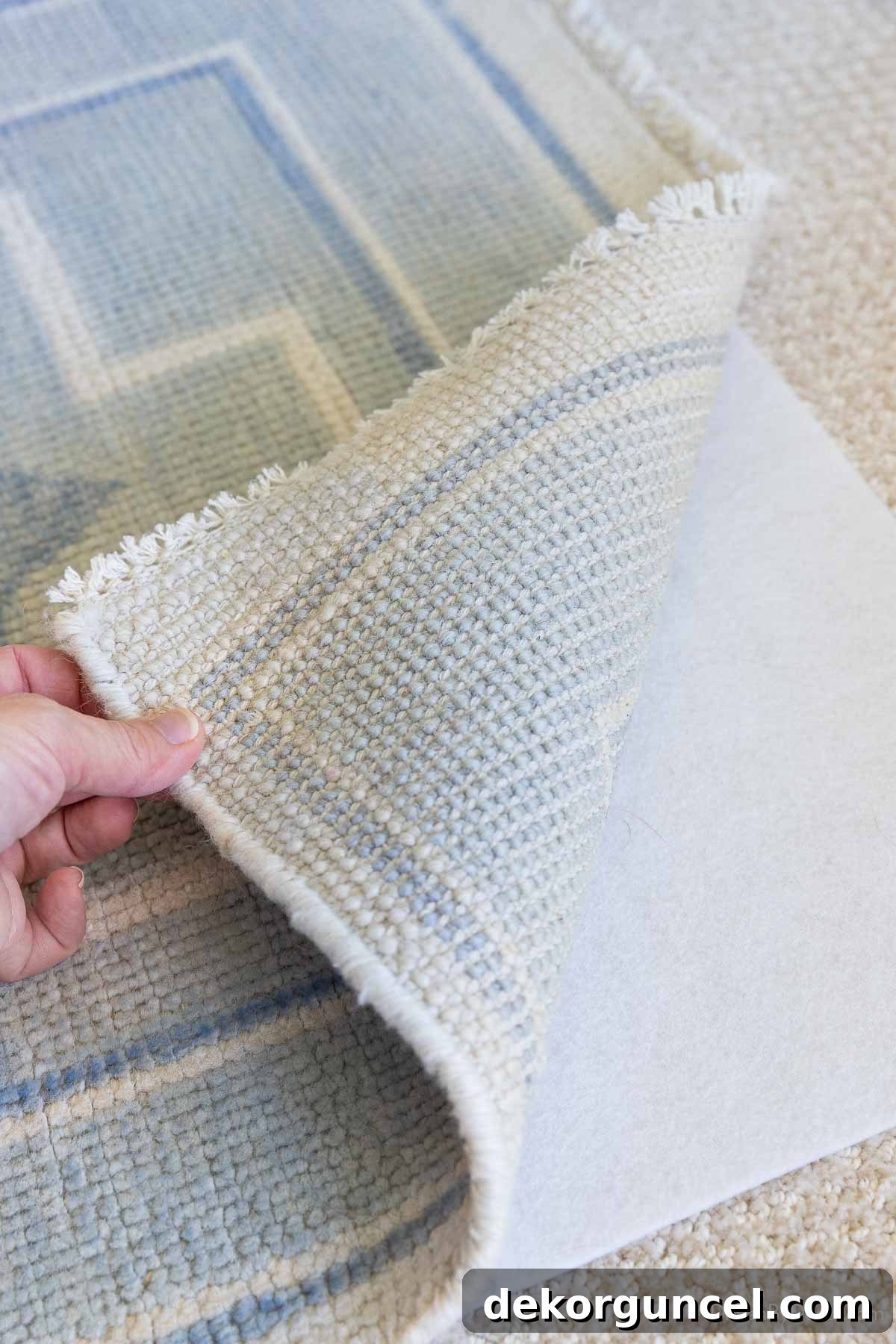
This method proved highly effective in preventing the rug on our carpet from shifting around, maintaining its pristine position. A key benefit I appreciated was that the carpet-facing side of the pad was adhesive enough to secure the rug without being so sticky that it raised concerns about transferring residue or causing damage to the carpet itself.
What Rug Pads Should You NOT Buy? (And Why)
While the market is flooded with various rug pad options, it’s crucial to understand that not all are created equal, especially when it comes to quality, safety, and longevity. A significant number of rug pads, particularly lower-cost options often identifiable as thin, open-weave “waffle” pads, are manufactured using PVC (polyvinyl chloride) or similar synthetic plastic materials. For indoor use, I strongly advise against purchasing PVC rug pads, and here’s why:
- Chemicals and Staining: PVC rug pads frequently contain harmful adhesives, plasticizers, and other chemicals that can react with the finishes of your flooring. This reaction can lead to permanent staining, discoloration, or even etching on expensive hardwood, LVP, or laminate floors. These marks are often irreversible.
- Indoor Air Quality Concerns (VOCs): Many synthetic pads, including those made from PVC, are known to emit volatile organic compounds (VOCs). These airborne chemicals can degrade indoor air quality and may pose health risks, contributing to respiratory issues, headaches, and other symptoms, particularly in sensitive individuals.
- Rapid Degradation and Poor Durability: While initially less expensive, PVC rug pads tend to degrade much more quickly than their natural rubber or felt counterparts. Over time, they can become brittle, crumble, and leave a sticky residue on your floor, necessitating premature replacement. This ultimately makes them a less cost-effective choice in the long run.
The only exception where I would even consider a PVC rug pad is for use under an outdoor rug in specific circumstances. Their inherent moisture resistance makes them a practical, albeit limited, choice for exterior applications (though I personally have never felt the need to use a rug pad under our outdoor rugs, like those beneath these lounge chairs):
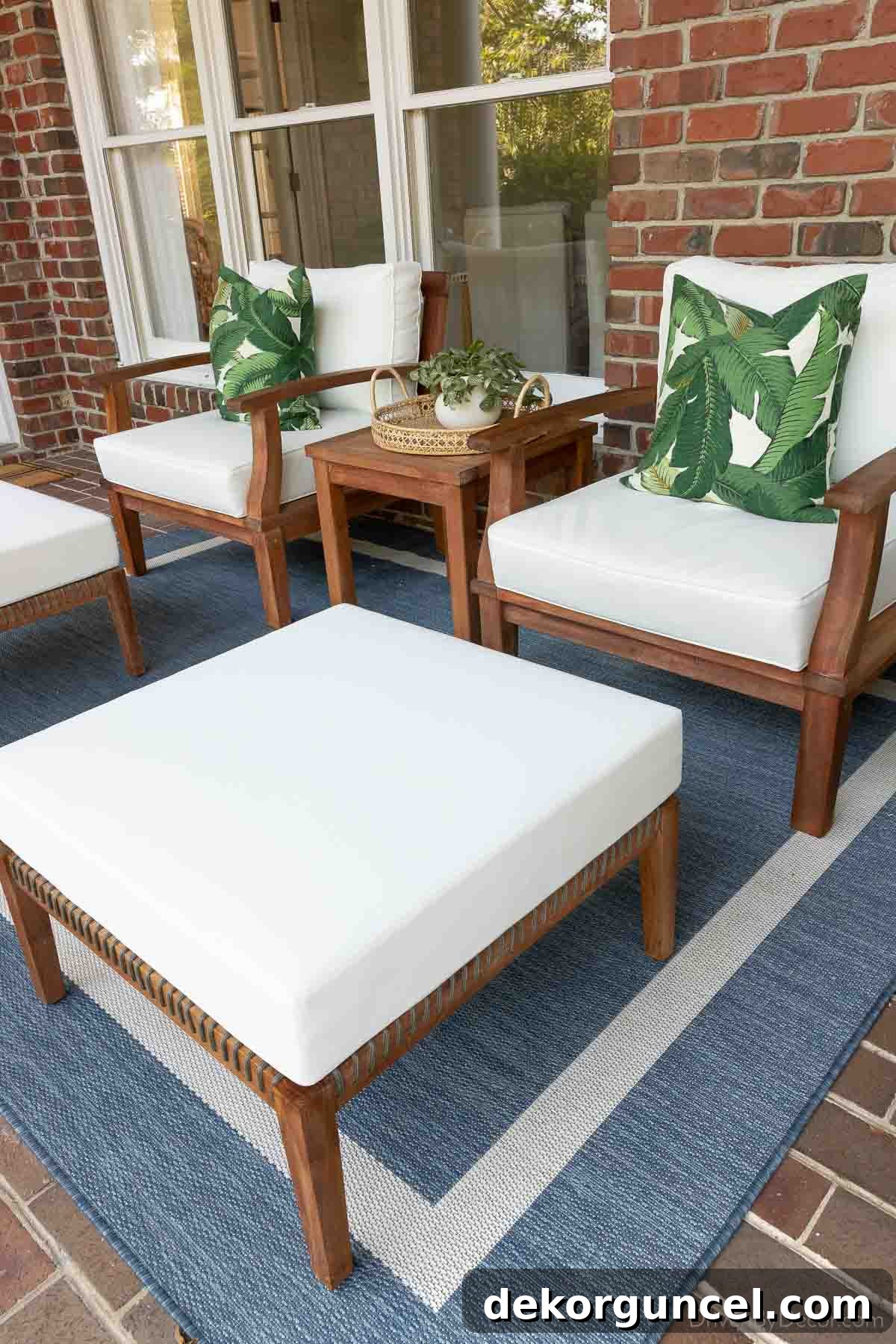
However, for any indoor rug, prioritizing natural and floor-safe materials is always the superior and safer choice.
What Rug Pad Thickness Should I Choose?
The ideal rug pad thickness depends largely on the specific needs of your space, the type of rug, and personal preference. Here’s a guide to help you make an informed decision:
- Thinner Rug Pads (⅛″): Opt for a thinner rug pad in high-traffic areas where a low profile is essential. This thickness is also ideal for entryways or any area where a door swings over the rug, preventing it from catching and ensuring smooth clearance. Our entryway, with its hardwood floors and swinging door, is a perfect example where a thinner pad is crucial to avoid obstruction:
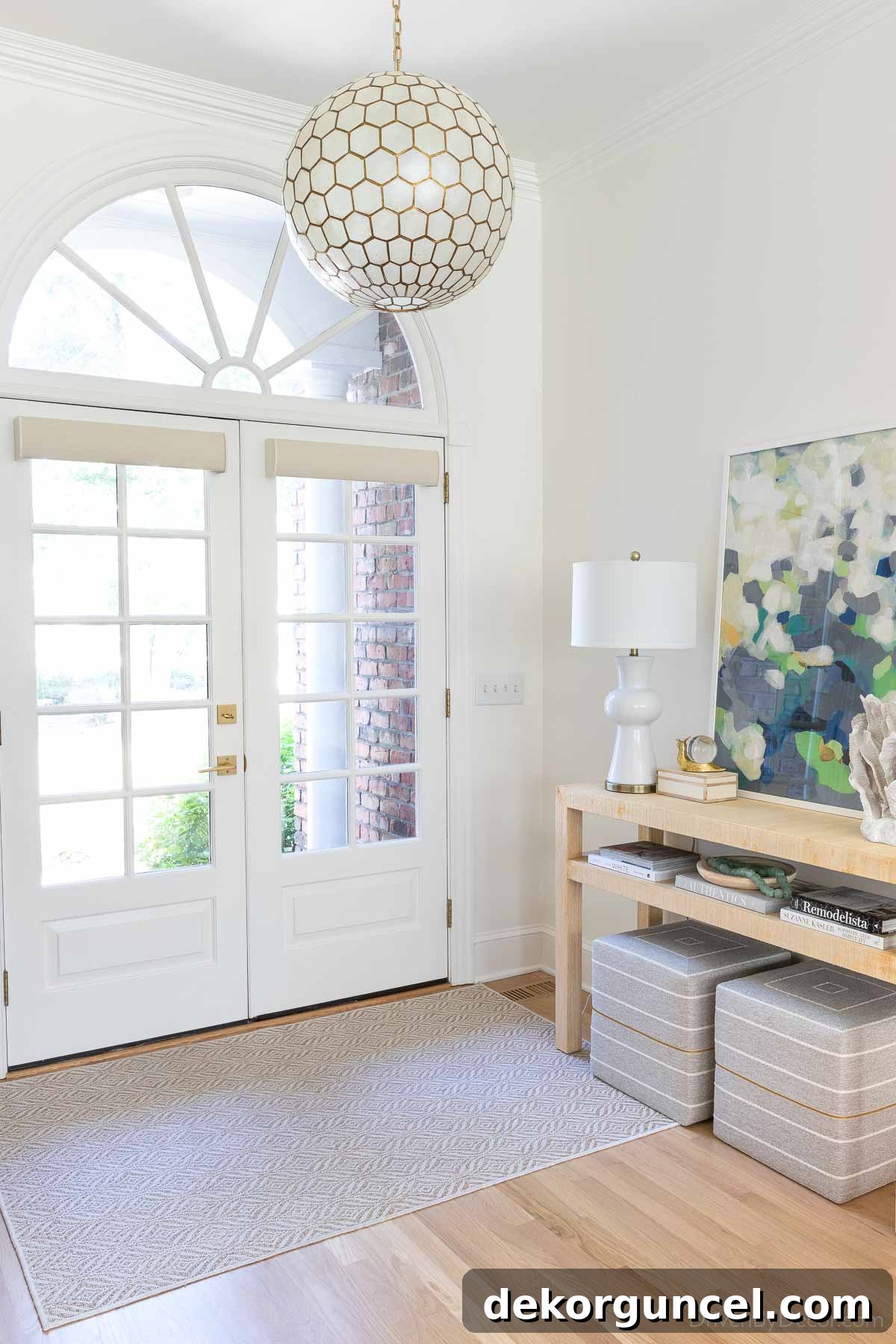
Entryway Sources: Serena Smart Shades on entry doors | Capiz chandelier (22.5″) | Entryway Rug | Raffia console table | White table lamp | 30″ x 40″ Framed art print | Decorative snail sculpture | Wave coral – HomeGoods | Decorative clam shell | Shallow wood bowl | Glass beads | Cube ottomans
A thinner rug pad is also a pragmatic choice for dining rooms, as thicker pads can impede the smooth movement of chairs being pulled in and out from the table. Furthermore, if your rug itself is thin or has a low pile, a thinner pad will complement its aesthetic without creating an overly elevated or disproportionate look.
- Thicker Rug Pads (¼″ – ⅜″): When your priority is a luxurious, plush feel and maximum cushioning underfoot, a thicker rug pad is the way to go. These pads provide superior comfort, making any rug feel more decadent and inviting. A thicker pad is also an excellent pairing for thick, high-pile rugs, as it enhances their natural cushioning and prevents them from compacting over time. It also offers enhanced insulation, contributing to a warmer room during colder months and potentially reducing energy costs.
How to Measure for Your Rug Pad: Achieving the Perfect Fit
A perfectly sized rug pad is crucial for both aesthetic appeal and functionality. The general rule of thumb is that your rug pad should be slightly smaller than your rug. This ensures the pad remains discreetly hidden, preventing any visible edges that could detract from your rug’s appearance or, more importantly, create a tripping hazard. To achieve this ideal fit, subtract approximately 2 inches from both the length and width of your rug. This measurement strategy results in the pad sitting approximately 1 inch in from each of the four edges of your rug. For instance, if you have an 8-foot x 10-foot rug, your ideal rug pad size would be 7 feet 10 inches x 9 feet 10 inches.
PRO TIP: Even if you know the advertised dimensions of your rug, it’s always best practice to physically measure it before purchasing a pad. Due to manufacturing variations, rugs often measure an inch or two smaller or larger than their listed size. This simple step ensures a truly custom and perfect fit for your rug pad.
How to Install Your Rug Pad: A Step-by-Step Guide
Installing a rug pad is a straightforward process that can be easily accomplished with a few simple tools and techniques. Follow these steps for a perfect installation:
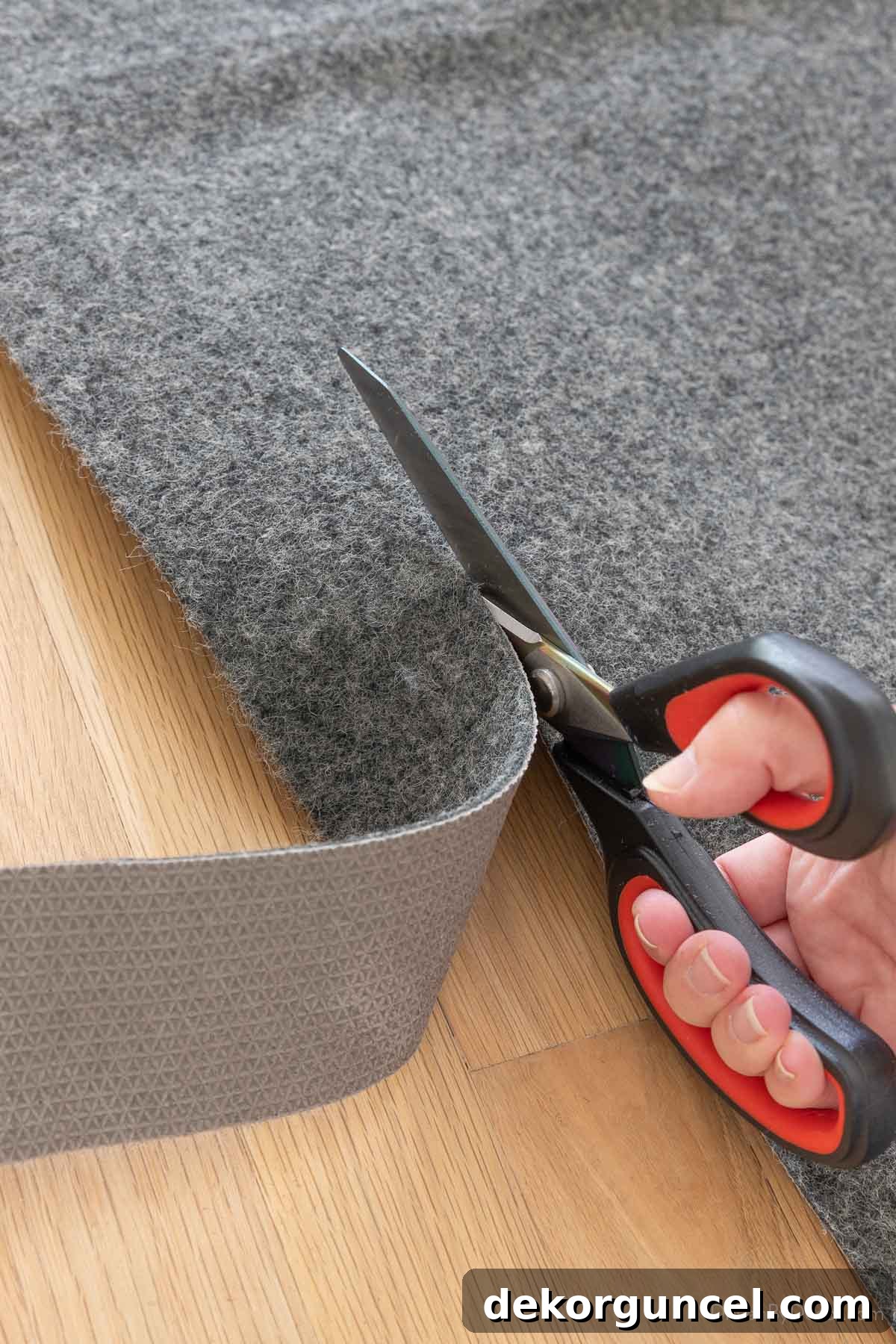
- Trim Your Rug Pad to Size: Once you have your rug pad and its determined size (following the 1-inch-in-from-each-edge rule), you’ll likely need to trim it. Lay the rug pad flat on the floor. Using a long straight edge (like a yardstick or a level) and a marker or chalk, carefully draw precise lines along the edges of the rug pad, marking the exact dimensions you need to cut. For accurate and effortless trimming, make sure you have a pair of sharp, heavy-duty scissors, such as this pair, which makes cutting through dense rug pad material surprisingly easy:
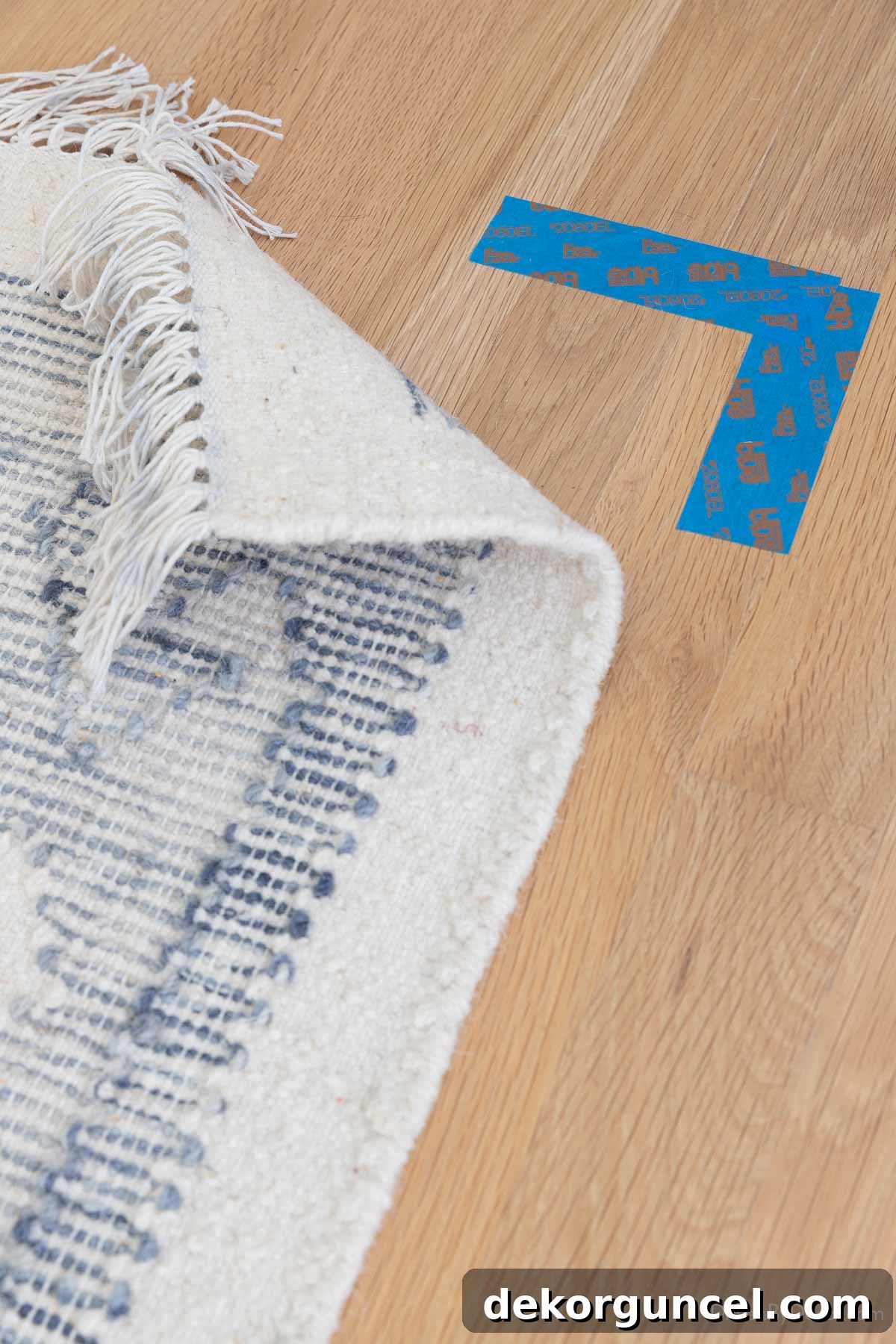
2. Prepare for Existing Rugs: If you are adding a rug pad under a rug that is already in place, preparation is key for precise placement. Before rolling up your existing rug, use delicate surface painter’s tape to mark all four corners directly on your floor. This creates a clear boundary that ensures your rug pad will be perfectly centered and aligned when you lay it down:
3. Position the Rug Pad: Once your rug is rolled away and your corners are marked, unroll and carefully place your trimmed rug pad within the taped area. Smooth out any wrinkles or bumps to ensure it lies completely flat on the floor.
4. Place the Rug: Finally, carefully unroll your rug back over the rug pad, aligning its edges precisely with the taped corners. Take your time to center it perfectly. Once in place, smooth out the rug from the center outwards to eliminate any remaining wrinkles or air pockets. You’ll immediately notice the enhanced grip, cushioning, and stability.
And with that, our comprehensive guide to rug pads is complete! I understand that rug pads might not be the most glamorous topic in home décor, but their practical benefits are immense and enduring. Investing in the right rug pad is a small decision that yields significant improvements in safety, comfort, and the longevity of both your rugs and floors. I sincerely hope this detailed guide has provided you with valuable insights and empowers you to make the best choice for your home. Happy decorating!
XO,
