
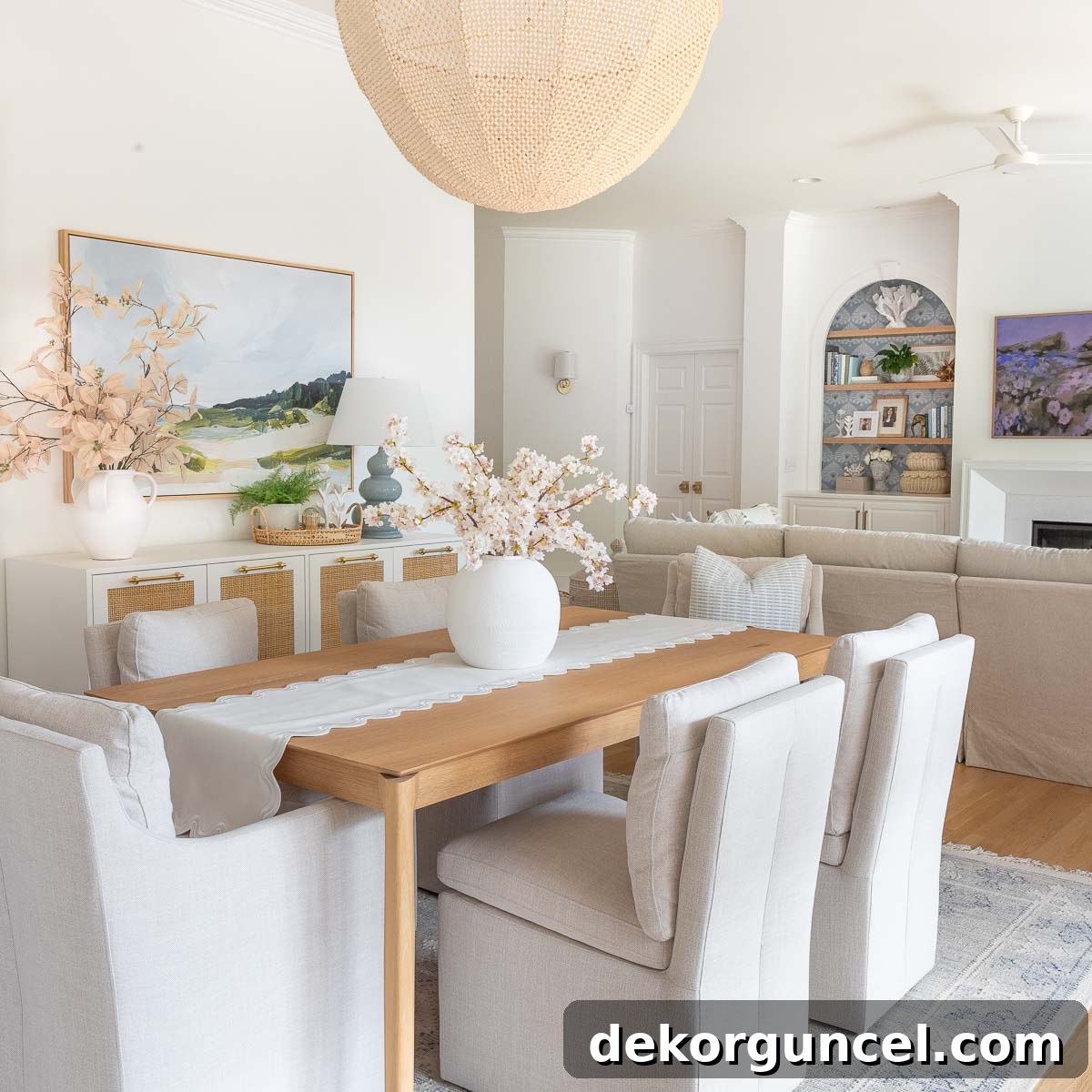
Welcome to a journey of transformation! Our dining room makeover has been a labor of love, a gradual yet incredibly rewarding project that unfolded over time. From the initial vision of an open, inviting space to the final touches of carefully selected furniture and accessories, every step has brought us closer to achieving our dream dining area. After diligently tearing out dated architectural elements, meticulously refinishing the floors, and thoughtfully curating new lighting, furniture, and decorative accents, it’s finally complete! We’re thrilled to invite you in for a comprehensive tour and share all the details of this stunning renovation.
Beyond the visual tour, today’s post also serves a dual purpose. I’m excited to expand my popular series of sizing guides, offering an in-depth resource dedicated to helping you select the perfect dining room area rug. This guide will equip you with all the essential knowledge to ensure your rug not only complements your aesthetic but also functions flawlessly within your space. So, let’s delve into the details and discover how thoughtful design choices can transform a room! (Please note: This post includes commissionable links. For more information, you can review my full disclosure statement here.)
Missed our previous design guides? Explore some of our most popular resources, including our comprehensive coffee table size guide, essential light fixture sizing tips, critical must-have bathroom measurements, and a practical guide on how to measure for curtains. These guides are packed with expert advice to help you achieve your home decor goals!
Dining Room Makeover: A Before and After Story
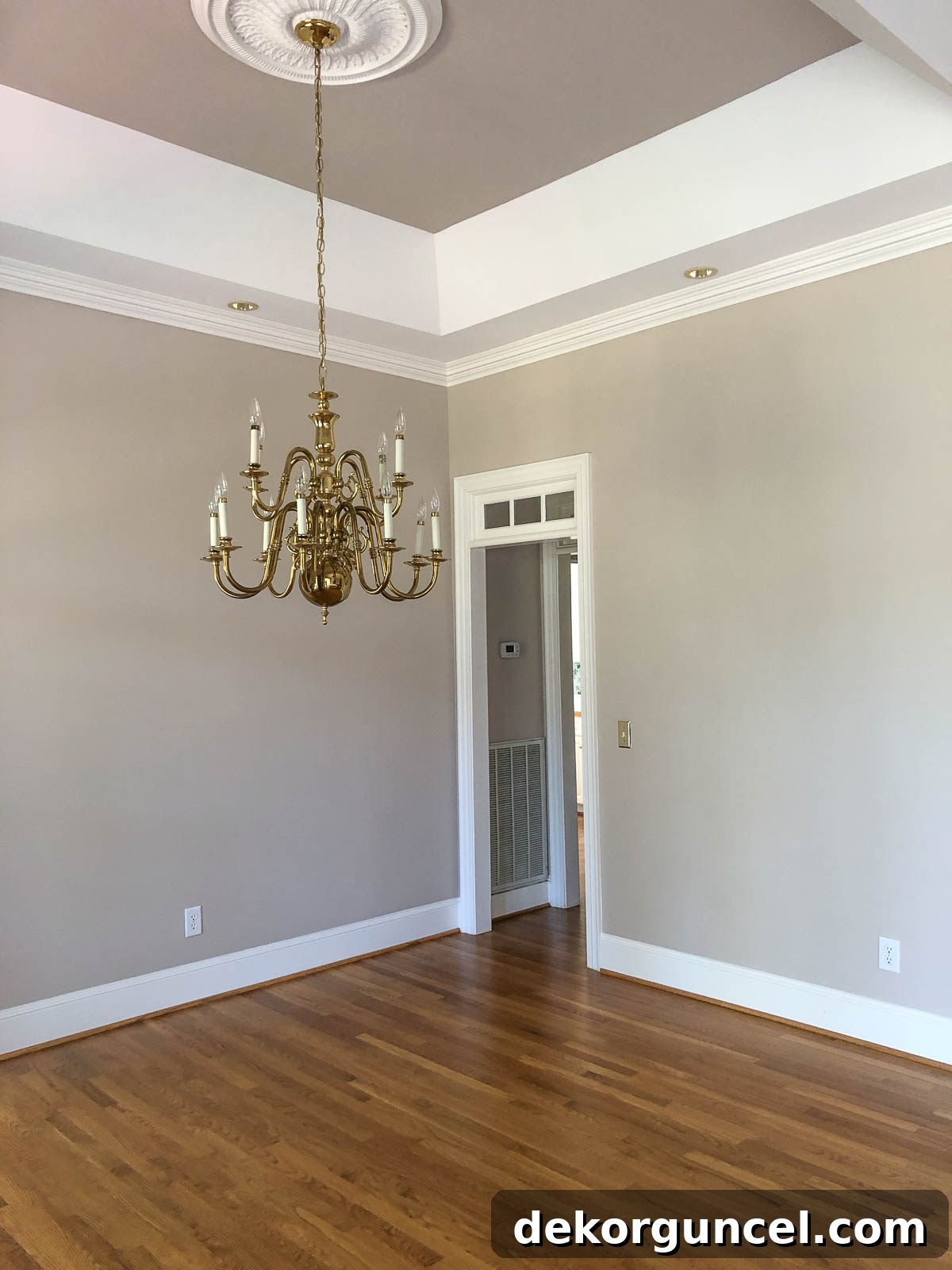
Every transformation begins with a “before.” When we first purchased our home, the dining room presented a classic case of dated architecture and design. It was a space that held potential but was visually constrained and didn’t align with our modern aesthetic. Here’s how it looked:
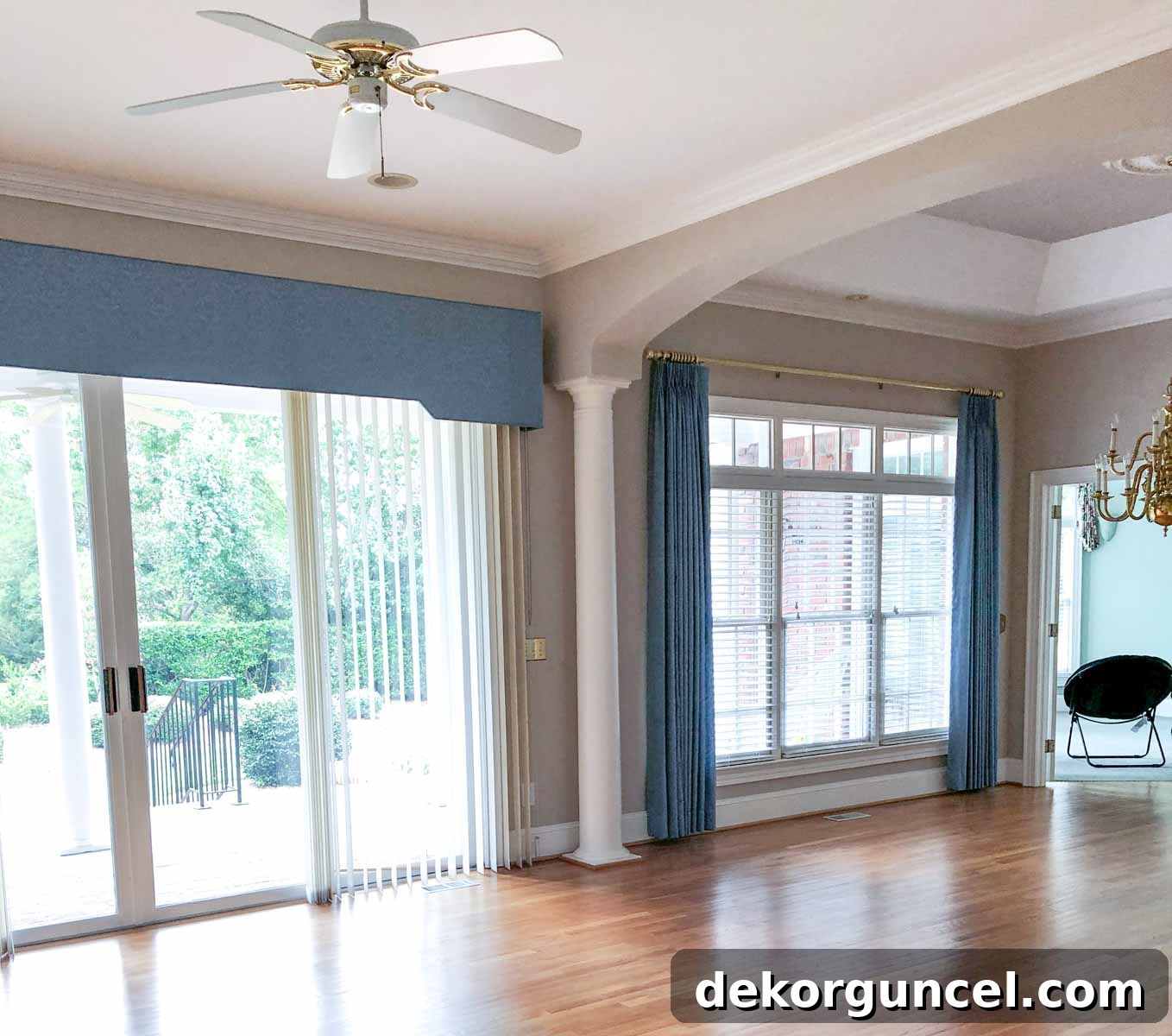
Our goal was to create an open-concept flow between the dining room and the adjoining family room. This vision necessitated significant structural changes before we even moved in. The most impactful renovation involved the removal of these visually heavy, dated columns and the arched divider that sectioned off the space. This single change dramatically opened up the floor plan, allowing for better light distribution and a more cohesive living area:
In addition to the structural modifications, we undertook several other crucial updates. We revitalized the entire room with a fresh coat of Simply White paint on the walls, trim, and ceiling, instantly brightening the space. The existing hardwood floors were expertly refinished, restoring their natural beauty and adding warmth to the room (you can find all the details on our hardwood floor refinishing process here). We also stripped away all outdated elements, including heavy drapes, blinds, the old chandelier, and a decorative ceiling medallion, preparing for a completely fresh start.
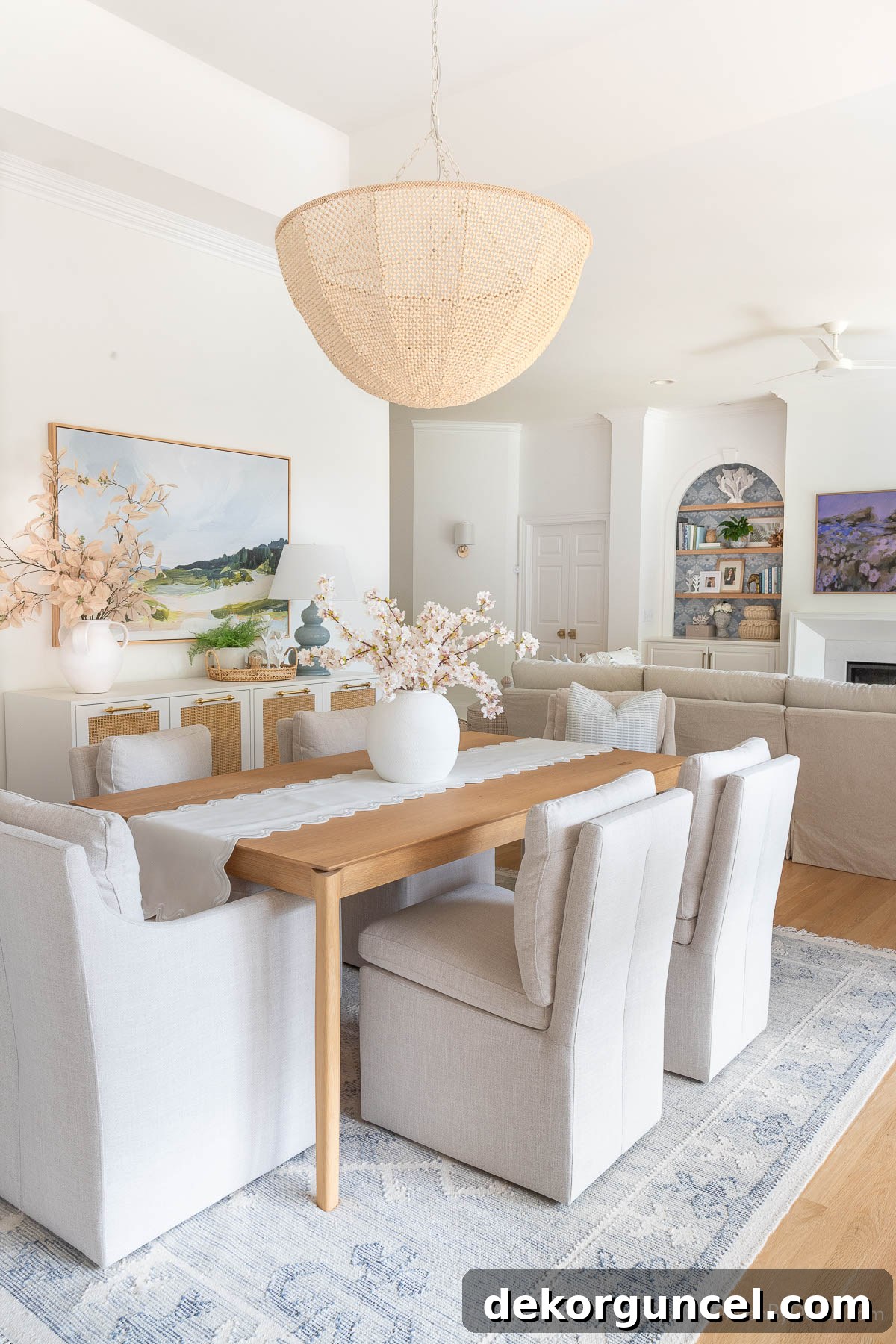
With a pristine, clean slate, the exciting part of decorating could begin. Our focus shifted to selecting new lighting, furniture, art, and accessories that would define the room’s character. The aim was to create a functional, stylish, and inviting dining space. Fast forward to today, and here’s a glimpse of that same view, now transformed into a sophisticated and welcoming area:
Maximizing Space with Thoughtful Furniture Choices
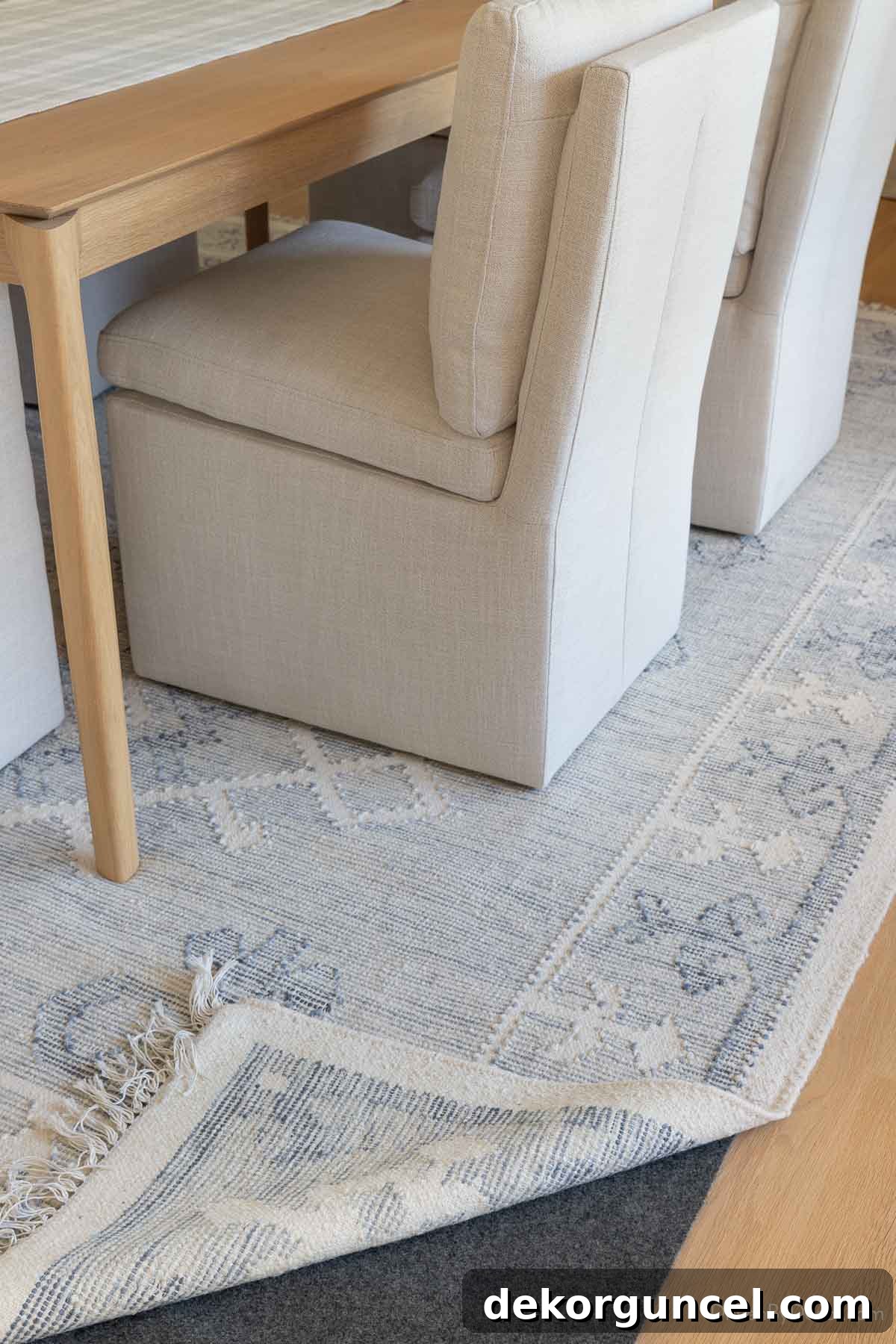
Given that our dining room is on the cozier side, the process of finding furniture and accessories that genuinely maximized the available space was a thoughtful and deliberate one. Each piece needed to serve a purpose and contribute to an open, uncluttered feel. Ultimately, I opted for {this elegant minimalistic wood dining room table}. Its clean lines and understated design are perfect for preventing the room from feeling overwhelmed. Complementing the table, I introduced {this stunning blue and white flatweave rug}, which I absolutely adore. The pattern adds visual interest without being too busy, and the flatweave construction is ideal for a dining area, allowing chairs to glide easily.
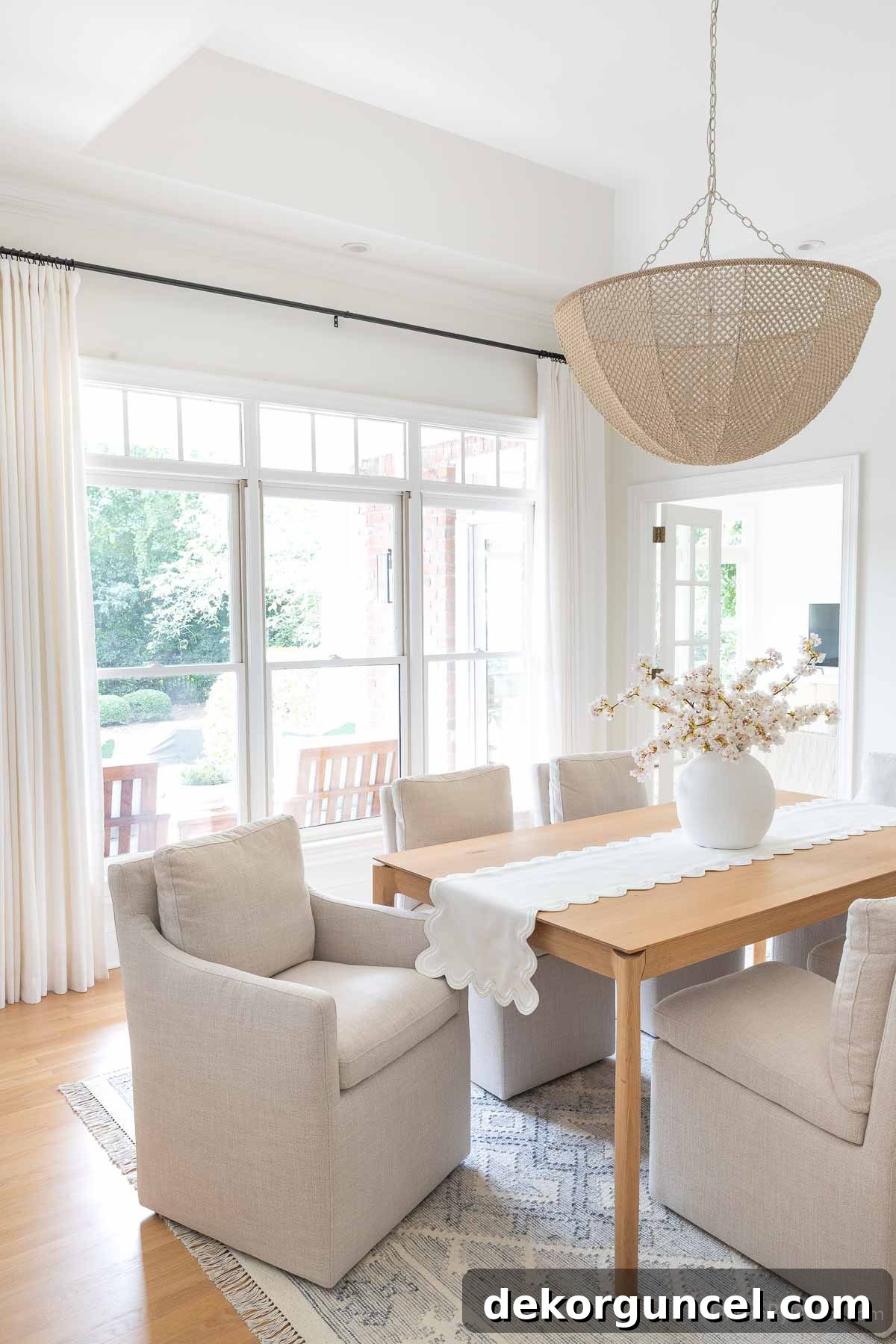
For seating, I selected these gorgeous upholstered dining chairs. Beyond their aesthetic appeal, they are incredibly comfortable, making long dinners a pleasure. A key functional feature is their casters, which allow them to be effortlessly moved back and forth from the table, enhancing both convenience and protecting the rug from unnecessary wear.
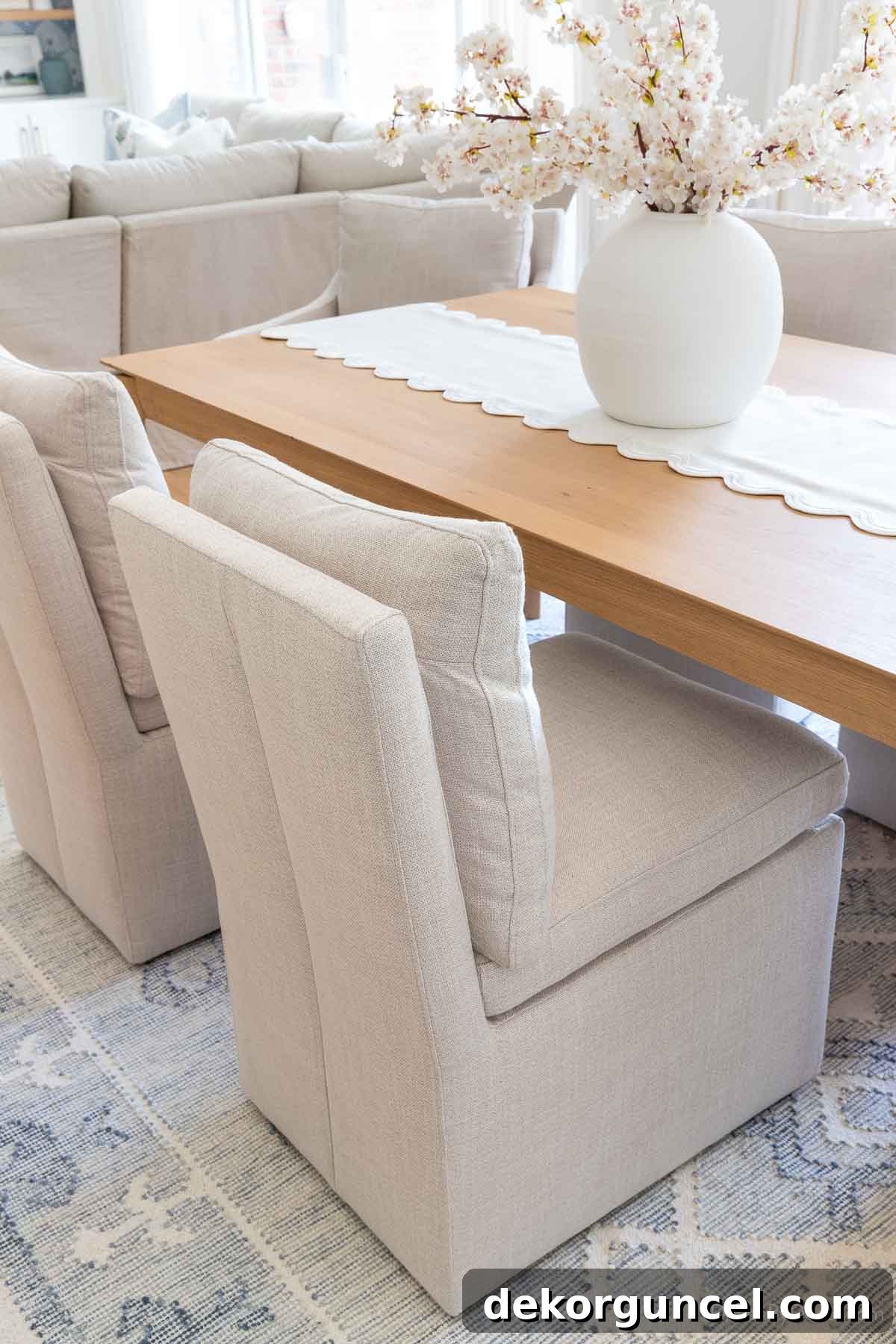
While my exact chairs have been discontinued, I’ve found nearly identical versions that offer the same blend of style and practicality. You can find similar side chairs {here} and {here}, and comparable armchairs {here} and {here}, ensuring you can replicate this look in your own home.
The Impact of Lighting and Window Treatments
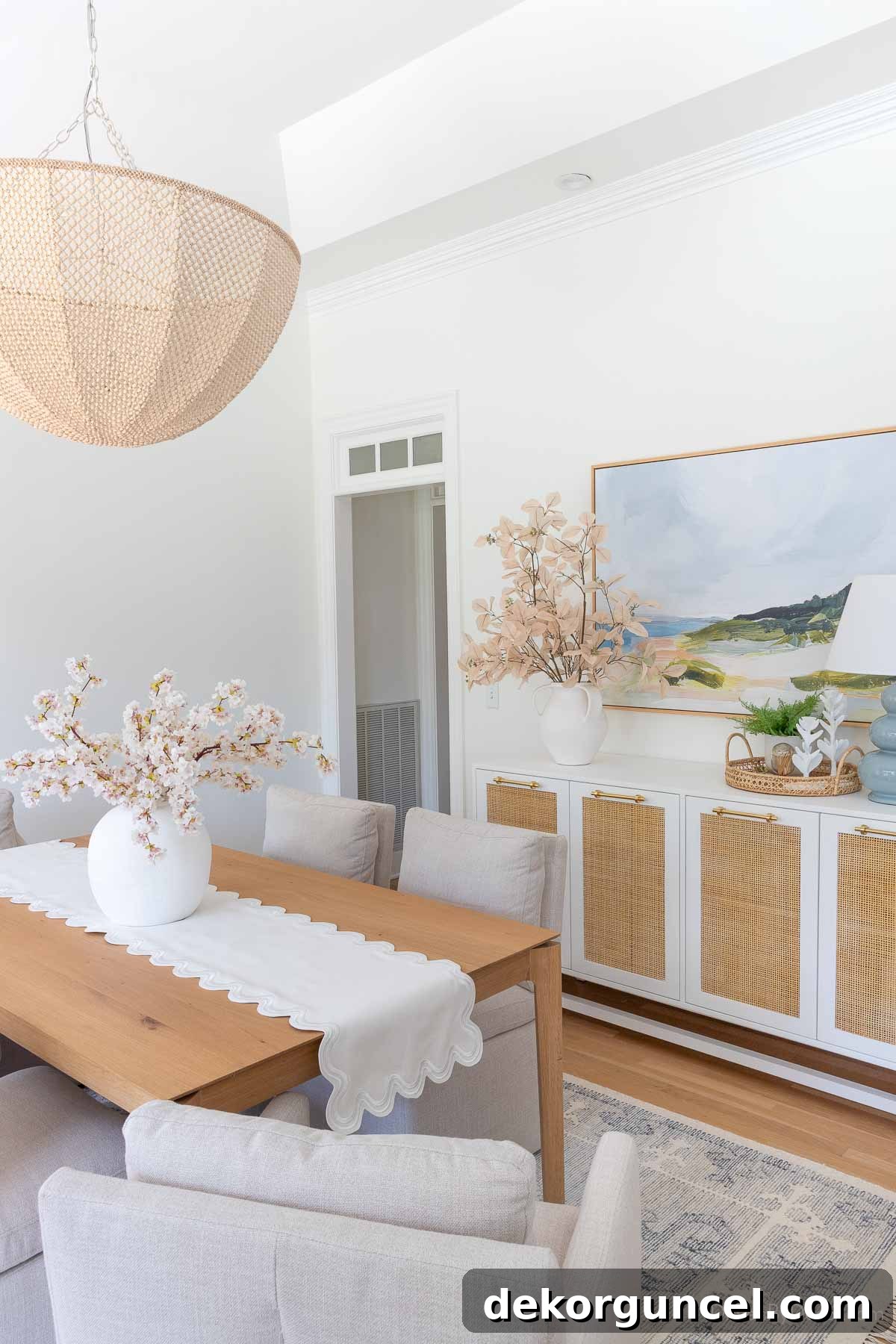
Lighting plays a pivotal role in setting the ambiance of a dining room. We replaced the old, dated brass light fixture with {this stunning large beaded light fixture} positioned elegantly above our dining table. This piece serves as a striking focal point, casting a warm and inviting glow:
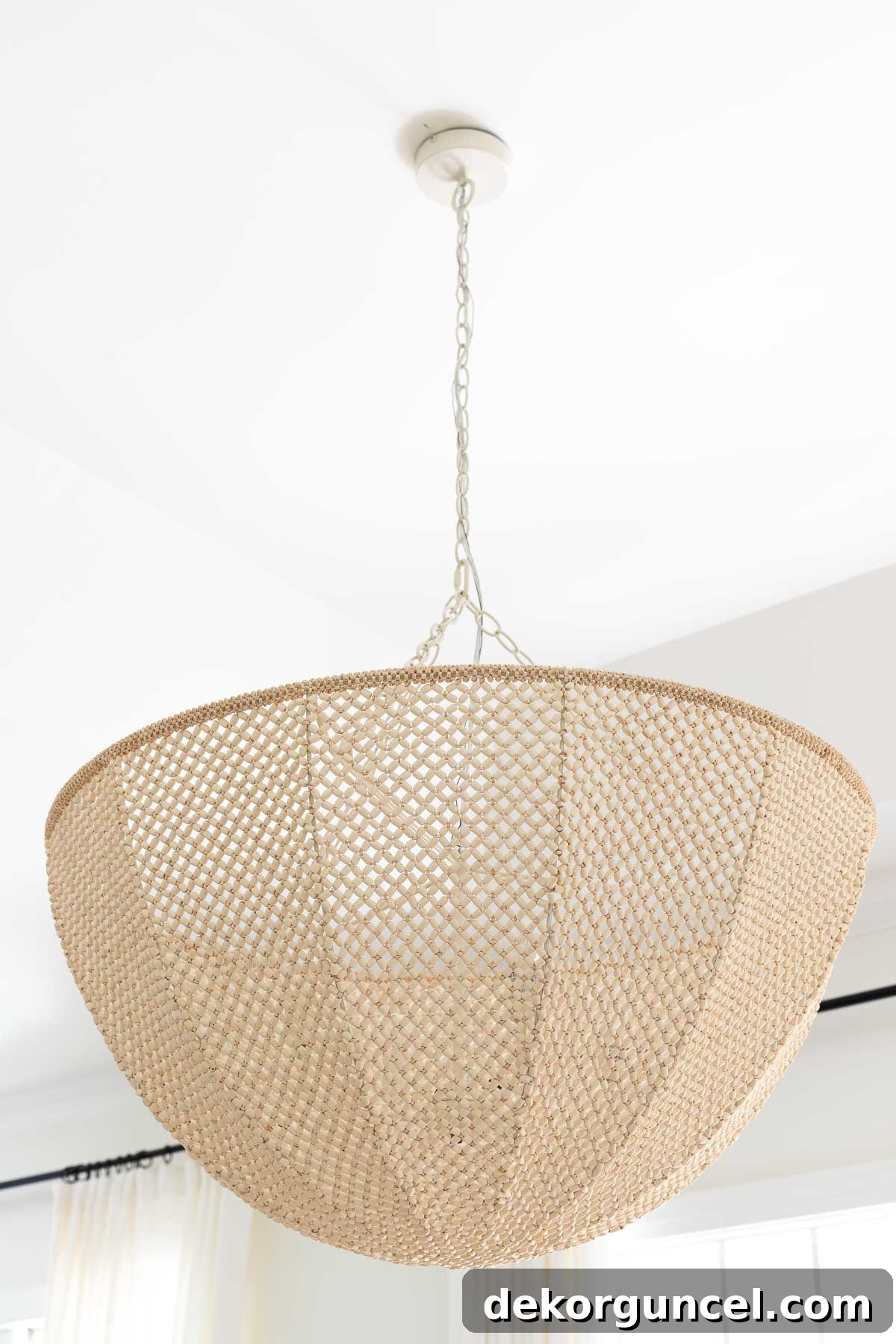
I genuinely consider it my absolute favorite light fixture in the entire house. Its unique design and the beautiful play of light it creates are simply captivating. In fact, I love its aesthetic so much (and given how much its price has soared since our purchase!), I’ve seriously considered taking it with us if we ever move.
To enhance the wall of windows overlooking our back patio, we installed {these crisp white drapes}. They are hung on {these stylish curtain rods}, secured with {these elegant rings}. The strategic placement of these window treatments significantly impacts the room’s perception of height and light:
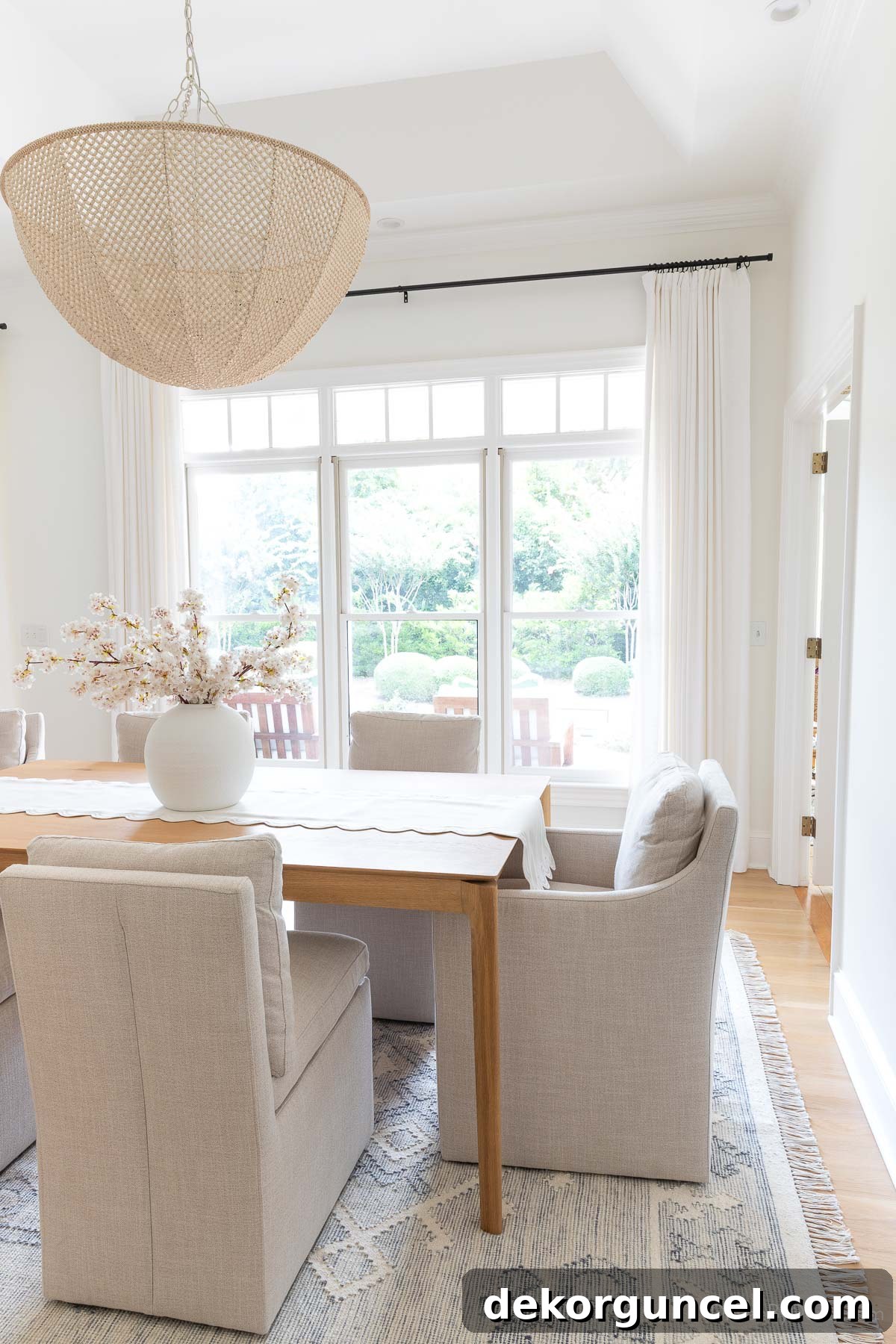
Previously, the curtains were positioned lower, creating a less expansive feel. By raising the height of the curtain rod and extending it significantly beyond the window frame, we achieved a more dramatic effect. This simple yet impactful change tricks the eye into perceiving larger windows and higher ceilings, as illustrated by the “before” shot of our old curtains:
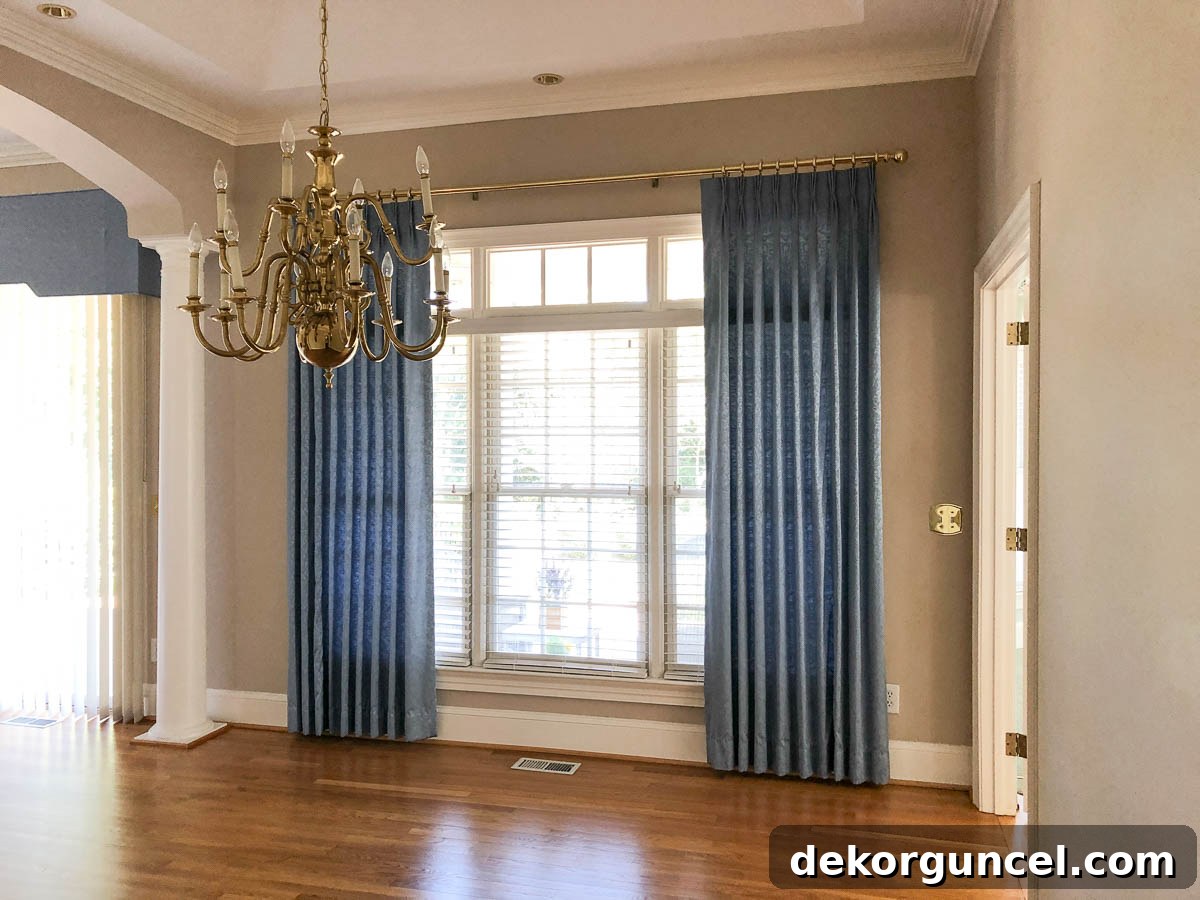
This adjustment not only opened up the window visually but also allowed natural light to flood the room, creating a brighter and more airy atmosphere, which is essential for any dining space.
Functional Decor: The Console and Accessories
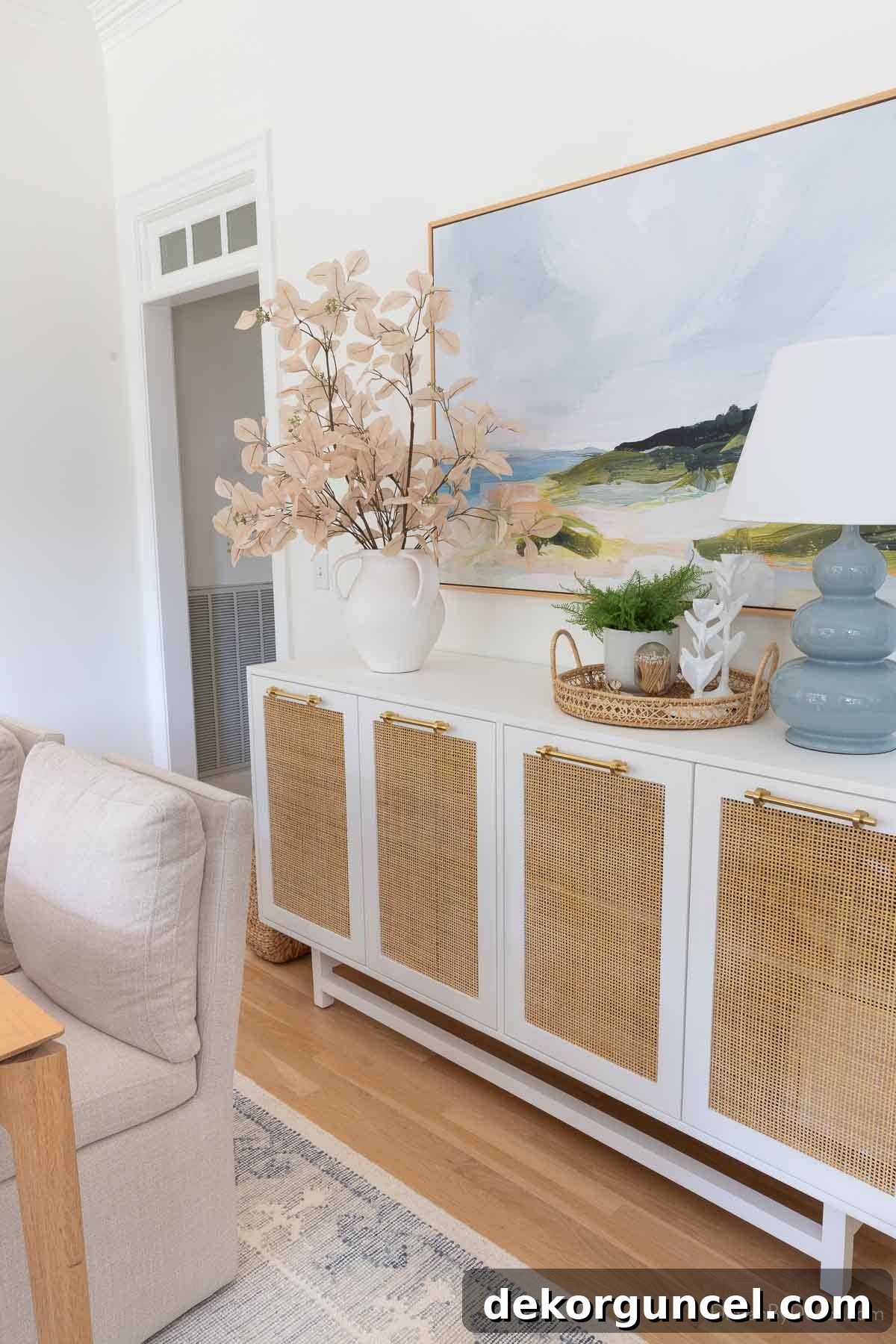
On the wall opposite our large window, I introduced {this beautiful console with woven doors}. This piece serves as a powerful anchor for the wall, providing both visual balance and an impressive amount of hidden storage. The woven texture adds a touch of organic warmth and sophistication to the room:
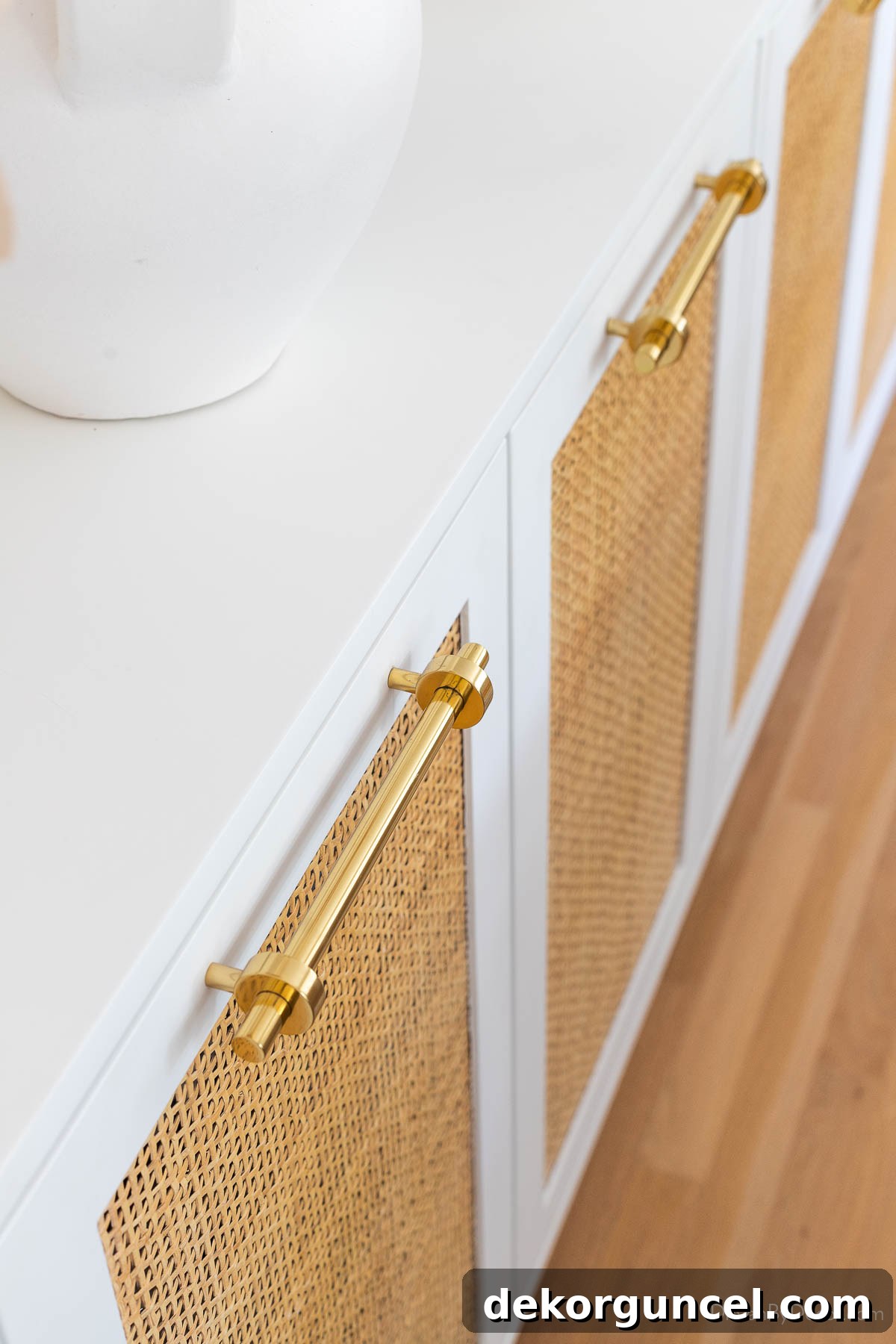
I particularly appreciate the elegant brass hardware, which adds a subtle gleam. For those who prefer a different metallic accent, it’s also available with a sleek nickel hardware option, offering versatility to match various decor schemes:
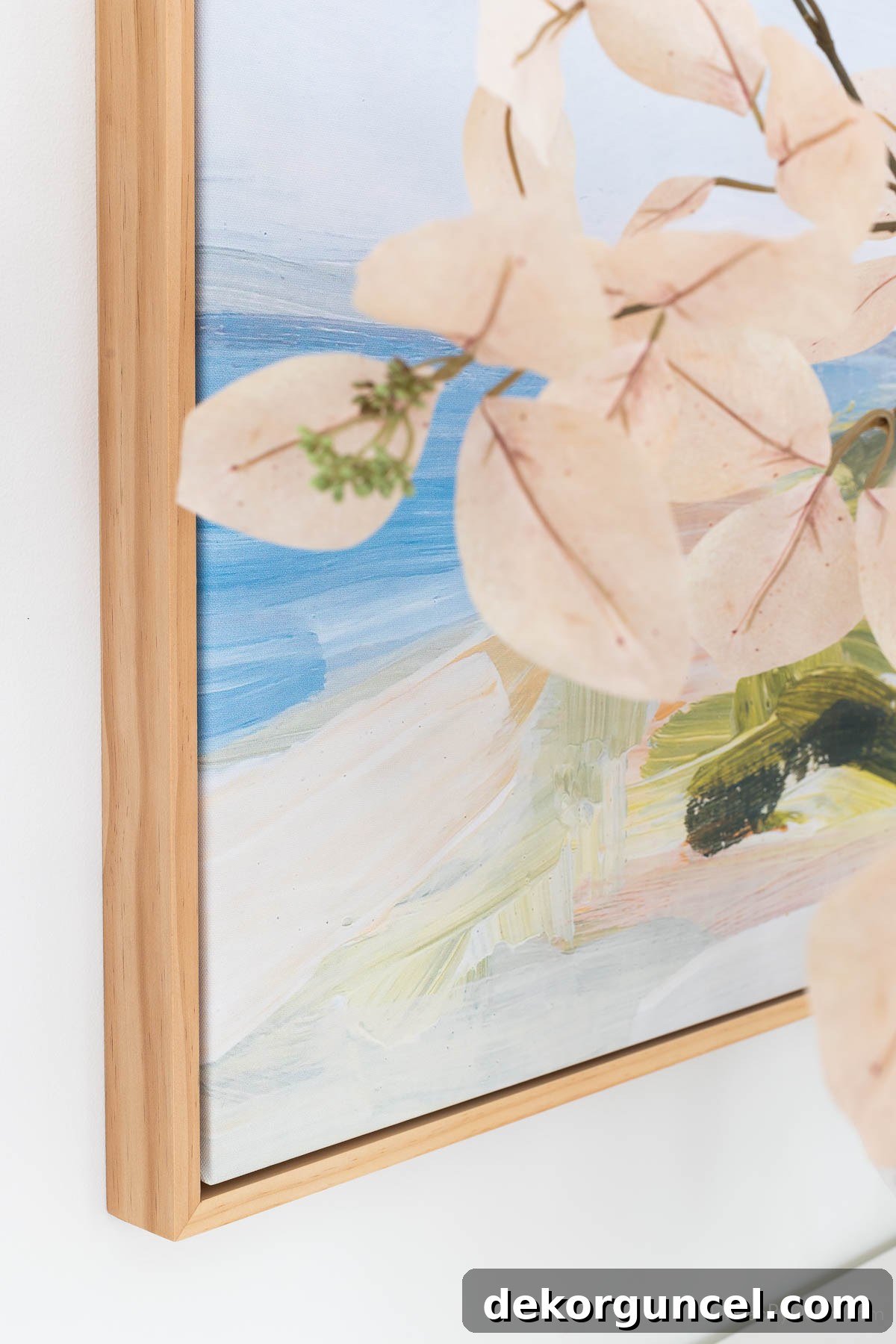
Above the console, I hung {this captivating canvas print}. To give it a custom, elevated look, I meticulously stretched it onto {these sturdy stretcher bars} and then encased it in {this modern floating frame}. This technique creates a gallery-like effect, making the art piece truly stand out:
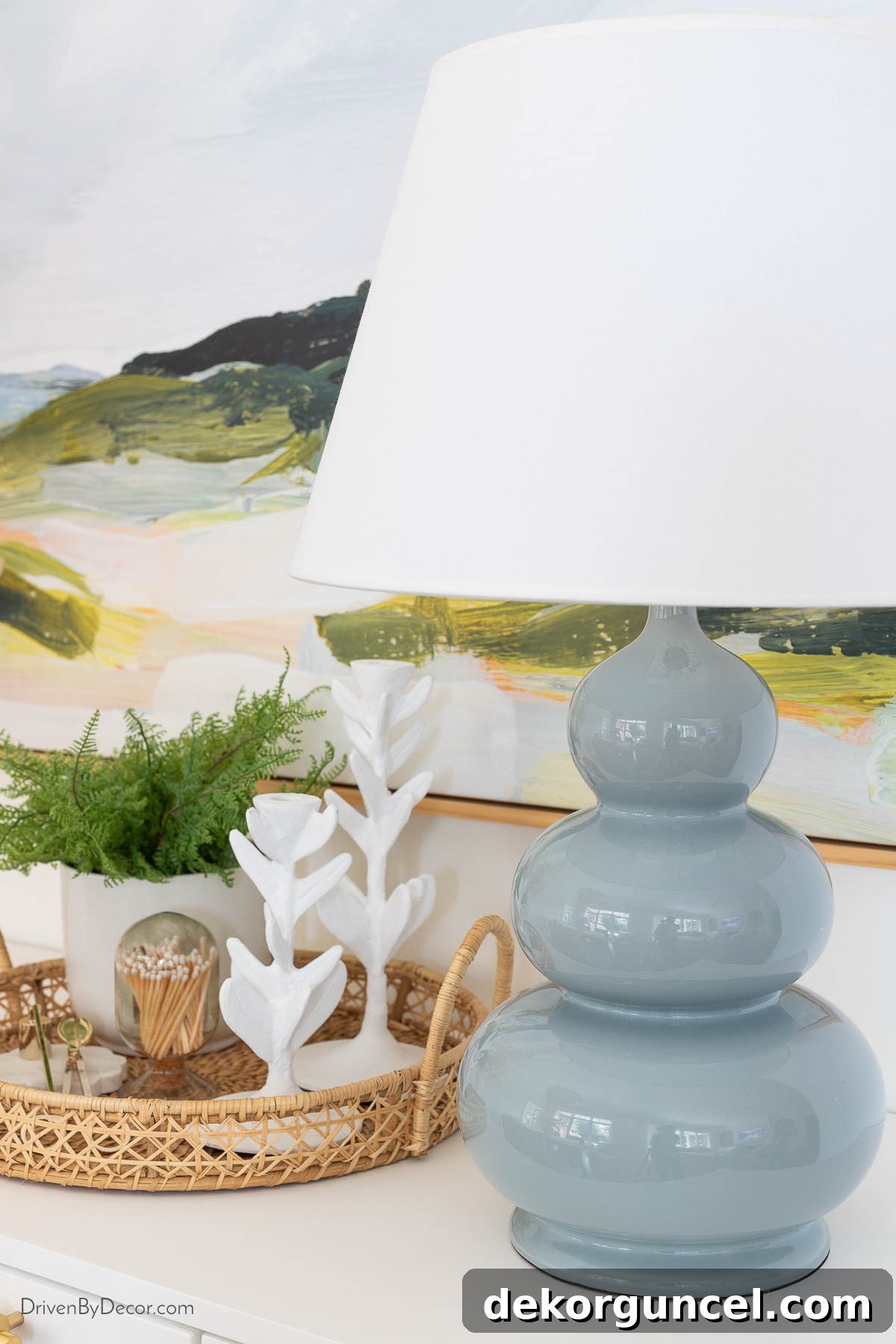
The console table itself is adorned with a carefully curated selection of accessories that add warmth and personality. These include {this beautiful blue gourd lamp}, which provides soft ambient lighting, and a charming round woven tray, similar to {this versatile option}. Each item is chosen to contribute to a cohesive and inviting display:
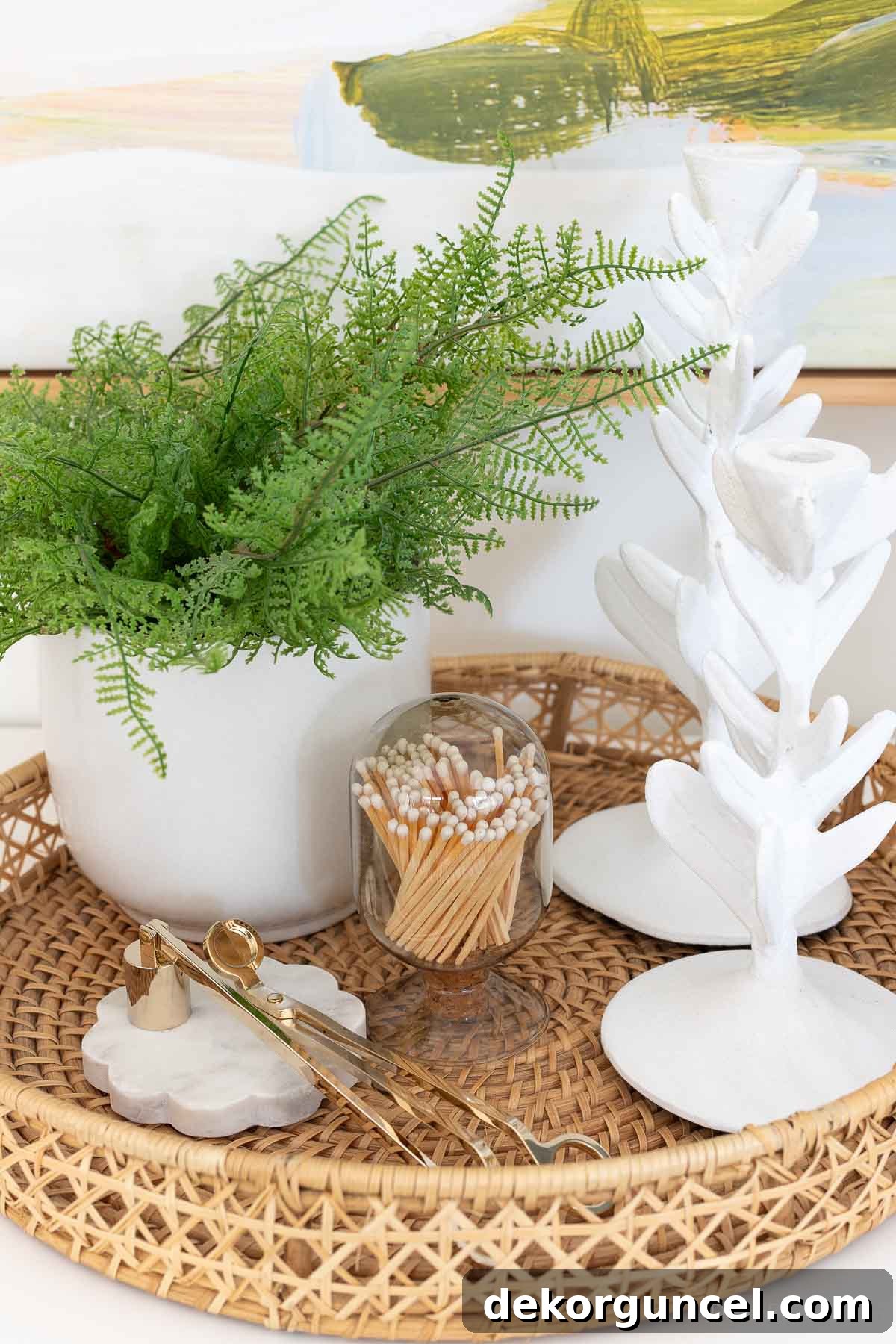
The woven tray is thoughtfully styled with a faux fern, similar to {this lifelike one}, adding a touch of greenery without the upkeep. It also holds a pair of elegant white floral candlesticks, {this chic smoke gray matches cloche} for a sophisticated touch, and {this practical candle wick trimmer and snuffer set}. These small, functional items rest gracefully on one of {these charming scalloped marble coasters}, completing a refined vignette:
On the opposite side of the console, a carefully placed {this elegantly handled ceramic vase} holds two stems of {these realistic faux branches}. This arrangement adds height, texture, and a natural element, further enhancing the room’s connection to the outdoors and contributing to a serene atmosphere:

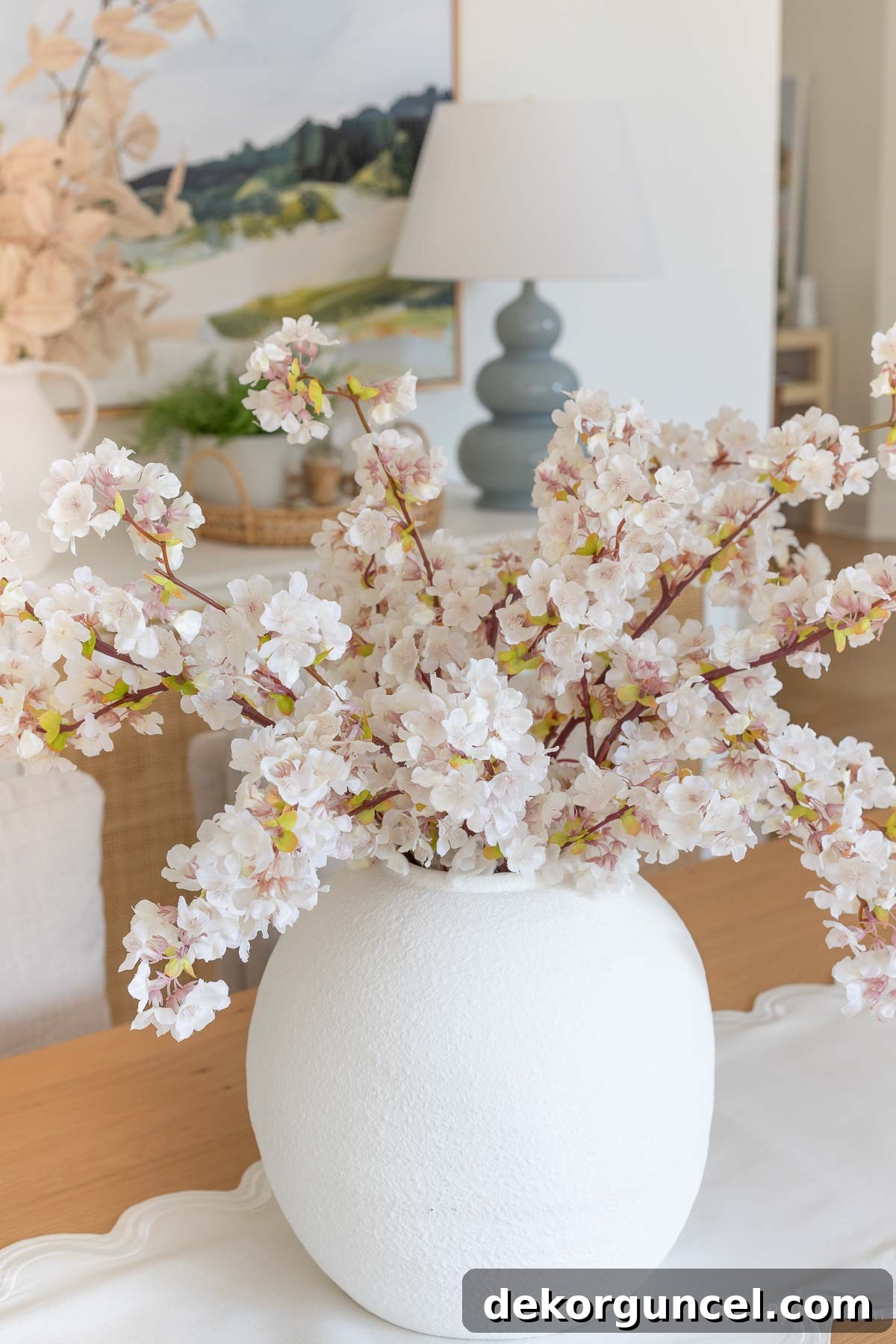
Our dining table itself is beautifully dressed with {this charming scalloped table runner}, which adds a subtle layer of texture and definition. As a centerpiece, {this striking round concrete vase} is filled with two sets of {these exquisite faux cherry blossoms}. The delicate blossoms introduce a touch of springtime beauty and softness, creating a welcoming and visually appealing focal point for family meals and entertaining:
That concludes our detailed tour of our recently transformed dining room! We hope you’ve enjoyed seeing the journey from its initial state to the inviting space it is today. Now, let’s transition from inspiration to practical application with our essential guide on choosing the perfect dining room rug.
The Ultimate Guide: Choosing Your Dining Room Area Rug
Selecting the right area rug for your dining room is more than just a decorative choice; it’s a crucial design decision that impacts comfort, aesthetics, and functionality. A well-chosen rug can define the dining space, add warmth, reduce noise, and protect your floors. While a common size like 9′ x 12′ often comes to mind for dining rooms, it’s paramount to consider the unique dimensions and shape of your dining table and the overall room layout to ensure a perfect fit. Let’s explore the key factors.
Consider the Size and Shape of Your Dining Table
The most critical factor in rug selection is your dining table. A good rule of thumb is to ensure your rug extends at least 24 inches (or 2 feet) beyond each side of your dining table. This crucial buffer space allows dining chairs to remain comfortably on the rug even when pulled out for seating, preventing them from snagging on the rug’s edge or getting caught between the rug and the bare floor. This “24-inch rule” ensures smooth chair movement and a seamless dining experience.
Therefore, to determine the minimum appropriate size for your dining room rug, you should add 4 feet to both the length and width of your dining table measurement. For instance, if you have a rectangular table that is 60 inches long and 36 inches wide, your rug should be at least 108 inches (9 feet) long and 84 inches (7 feet) wide. For round tables, measure the diameter and add 4 feet to determine the minimum diameter for a round rug. This simple calculation provides a solid foundation for your search.
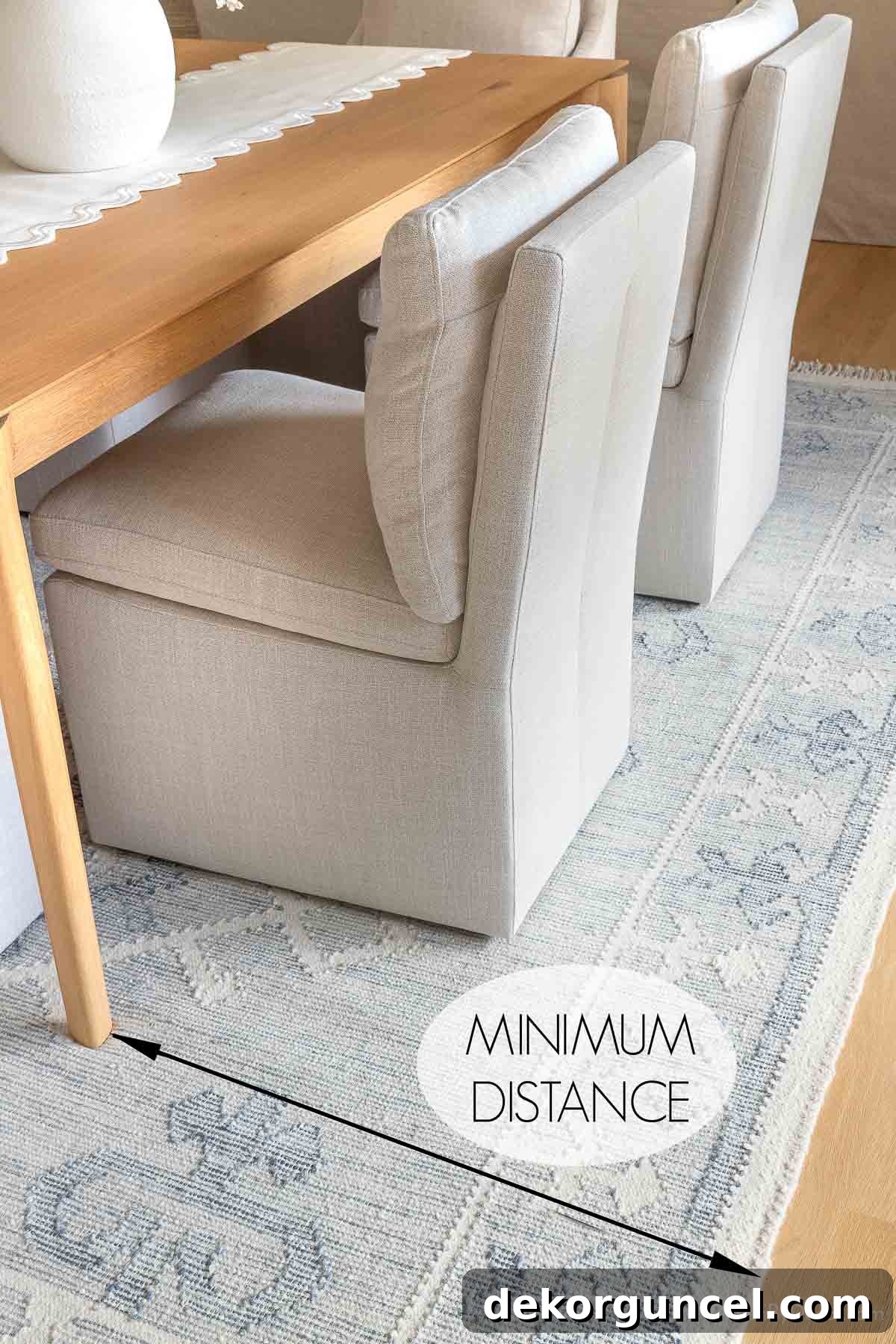
Adhering to this guideline ensures that your dining chairs can be easily pushed back from the table without falling off the rug. This not only enhances comfort for diners but also contributes to the longevity of your rug and the overall polished look of your dining space.
Let’s use our own dining room as a practical example. Our dining table measures 36 inches by 71 inches (equivalent to 3 feet by 5 feet 11 inches). Applying the “add 4 feet” rule, our rug needed to be at least 7 feet by 9 feet 11 inches. After careful consideration, we chose {this 8′ x 10′ rug}, which perfectly accommodates the table and chairs within our space, providing ample clearance on all sides:
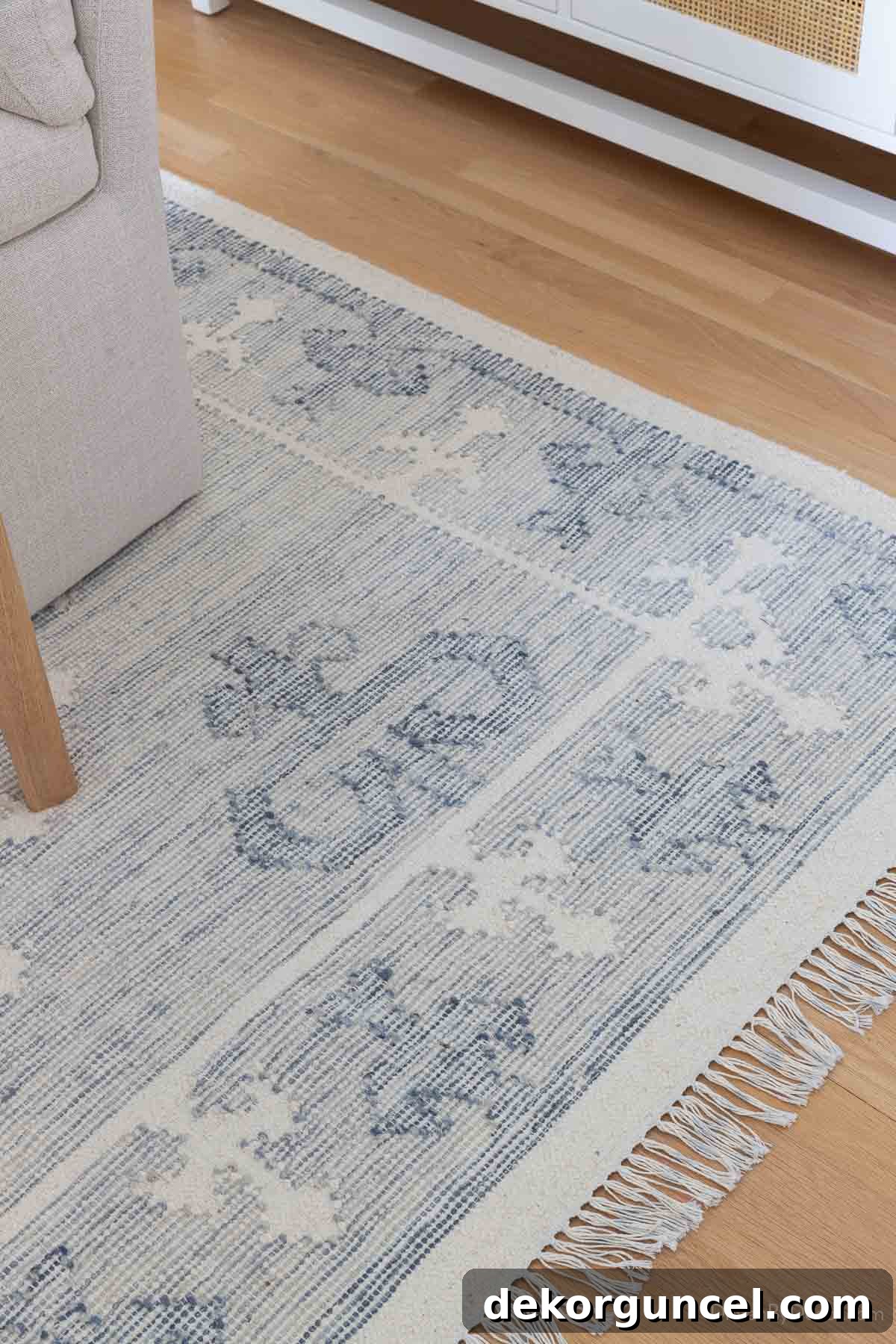
Pro Tip: When you’re in the market for an area rug, always scrutinize the product details for the exact dimensions. A rug listed as “8′ x 10′” might actually vary by several inches, being either slightly longer/wider or shorter/narrower. These minor differences can significantly impact how the rug fits your specific space, so always measure twice!
Harmonizing with Room Size and Other Furniture
Now that we’ve established the minimum size for your dining room area rug, let’s consider the maximum size. Often, the dimensions of your room itself will dictate the largest appropriate rug size. A key design principle is to maintain several inches of exposed flooring between the edge of your rug and the walls of your room. This creates a visual border, preventing the rug from looking like wall-to-wall carpeting and giving the room a more refined, finished appearance.
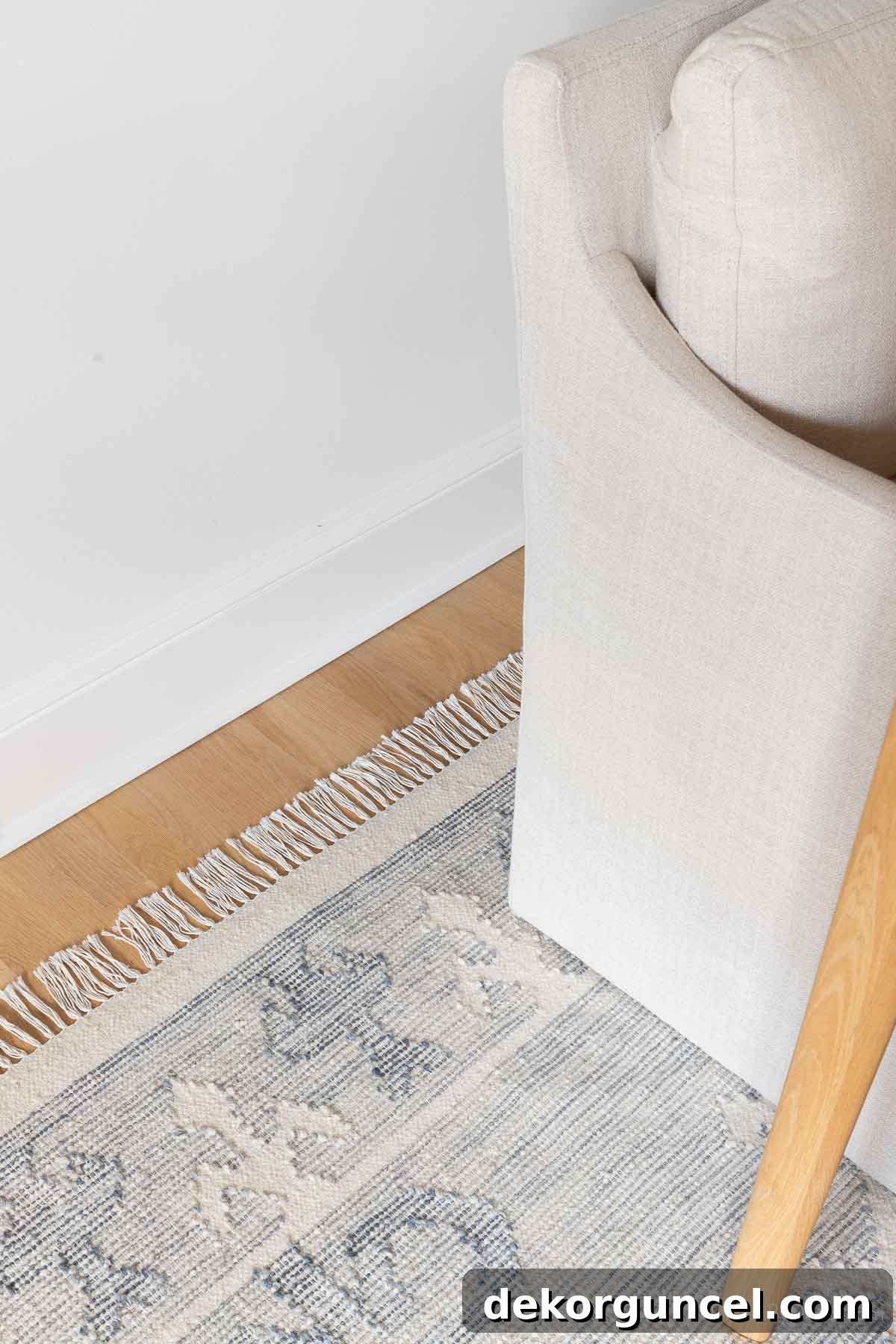
Even if a large 9′ x 12′ rug meets the minimum size standards for your table, if it extends almost to the wall – leaving only an inch or two of exposed floor – it might make the room feel cramped and less intentional. In such cases, opting for a slightly smaller rug (as long as it still meets the critical 24-inch table-to-rug clearance) will likely result in a more balanced and aesthetically pleasing outcome.
Furthermore, consider any other furniture pieces in your dining room, such as a buffet, console table, or hutch. Ideally, you want to avoid having the legs of these pieces situated too close to the rug’s edge. A well-proportioned rug will either end several inches in front of or several inches behind the front legs of these supplementary furniture items, creating a clear and uncluttered visual pathway and maintaining a sense of order in the room.
Helpful Hint: If you find yourself torn between two different rug sizes, a simple yet effective trick is to outline the exact dimensions of each rug on your floor using painter’s tape. This visual aid will provide an accurate, real-world sense of how each rug size will fit within your space and interact with your existing furniture, helping you make a confident decision.
Selecting the Ideal Weave and Material for Durability
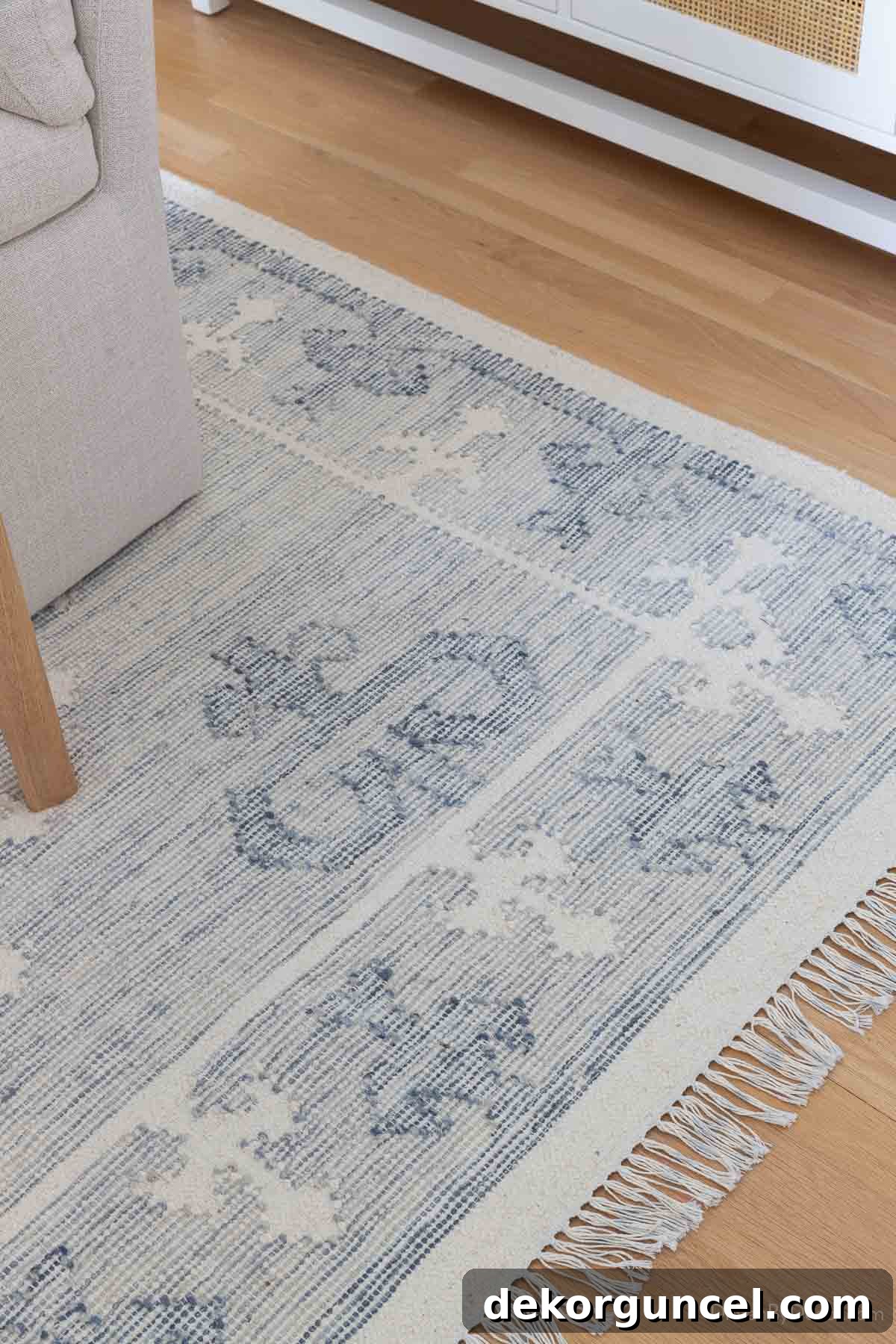
The weave and material of your dining room rug are just as important as its size, significantly impacting both functionality and longevity. For dining areas, flatweave or low-pile rugs are typically the superior choices. Their construction allows dining chairs to slide back and forth with ease, preventing frustrating snags and making it simple to get in and out of your seat. In our dining room, with chairs on casters, a flatweave construction was a non-negotiable must-have, ensuring maximum glide and minimal friction:
Beyond the weave, the material itself demands careful consideration, especially if you have children or simply anticipate the occasional spill. Wool is an excellent natural fiber known for its remarkable durability, natural stain resistance, and luxurious feel. It naturally repels liquids, making cleanup easier. Synthetic fibers like nylon or polypropylene are also fantastic choices for a dining room due to their exceptional durability, high stain resistance, and often more budget-friendly price point. These materials are designed to withstand heavy foot traffic, resist spills, and endure frequent cleaning, making them ideal for high-use areas where messes are inevitable. Prioritizing these characteristics ensures your rug remains beautiful and functional for years to come.
Searching for a top-notch rug and carpet cleaner that delivers exceptional results? I personally swear by Folex (available {here}) for its incredible effectiveness on rugs, carpet, and upholstery. It’s a game-changer for tackling spills and stains!
The Unsung Hero: Don’t Forget the Rug Pad
After all the careful consideration in selecting the perfect rug, don’t overlook its essential companion: the rug pad! This often-forgotten accessory is a critical investment that offers a multitude of benefits. A high-quality rug pad significantly extends the life of your rug by providing a protective layer that absorbs impact and reduces wear and tear. More importantly, it prevents your rug from shifting, sliding, and bunching up, ensuring safety and maintaining a neat appearance.
Furthermore, rug pads create a crucial barrier against spills, preventing liquids from seeping through and causing potential damage to your hardwood or other flooring beneath. They also add an extra layer of cushioning, making your rug feel more luxurious and comfortable underfoot. To help you navigate the options, refer to my comprehensive post on the best rug pad for every floor type. For our dining room, I use {this reliable Gorilla Grip rug pad}, which provides excellent grip and protection:
And with that, our detailed dining room tour and comprehensive rug sizing guide come to a close!
XO,
