
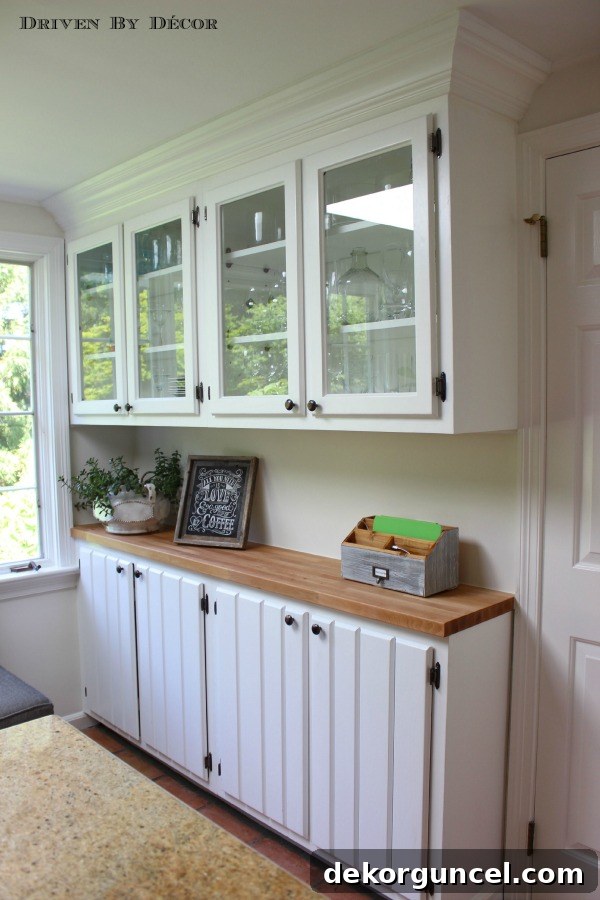
The concept of a built-in desk within the kitchen often feels like a design aspiration – a feature many homeowners dream of having, only to discover its potential for becoming a household’s biggest clutter magnet. It’s a classic “grass is always greener” scenario. For some, the closest approximation is a small nook with shallow cabinetry and a countertop, destined to collect unread mail, house a family charging station, or eventually evolve into a dedicated coffee bar. While these spots offer a touch of convenience, they rarely provide the functional workspace needed for focused tasks like bill paying, tackling paperwork, or a quick laptop session.
The irony is that while many yearn for a kitchen desk, those who possess them frequently find them underutilized. Instead of serving as a productive hub, they often become a default dumping ground for mail, keys, and miscellaneous items. This common conundrum was perfectly encapsulated in an email from a reader named Susan, who reached out for advice on transforming her neglected kitchen desk area into something more purposeful.
Susan shared her challenge: “We live in a ‘Cape’ style home built in 1985. Typical of its era, our kitchen features a desk located in the breakfast nook area, distinct from the main kitchen space. Much like everyone else I speak to who has this feature, it goes largely unused and, with two small children, inevitably becomes a collector of all things. It’s a real eyesore, and I’m at a loss as to what to do with it. Have you encountered this issue before, and if so, what would you suggest?”
Her experience resonates with countless homeowners grappling with the same design challenge. A dedicated kitchen desk, while seemingly a brilliant addition, can quickly devolve into a source of frustration if not intentionally designed and maintained. The key lies in understanding its potential and implementing strategic solutions to ensure it serves a genuine purpose within the heart of your home.
So, how can you transform your dust-collecting, clutter-prone kitchen desk into a highly functional, organized, and aesthetically pleasing workspace? Let’s explore practical and stylish strategies to reclaim this valuable area. (This post includes affiliate links – full disclosure available {here})
1. Invest in the Right Desk Chair: Comfort Meets Style
The most fundamental step in making your kitchen desk truly usable is to provide a comfortable and appropriate place to sit. Without a dedicated chair, the desk will likely remain an upright perch for quick tasks or, more commonly, a horizontal surface for accumulating clutter. Choosing the right chair is paramount – it should not only be ergonomically sound for the tasks you’ll perform but also visually integrate with your kitchen’s overall aesthetic.
Unlike selecting dining chairs where uniformity is often desired, a kitchen desk typically requires only a single chair. This presents a fantastic opportunity to splurge on that one distinctive piece you’ve always admired but couldn’t justify buying in a set of four or six. Look for a chair that adds a pop of personality, a touch of elegance, or a unique design element to your kitchen. Pay close attention to the back of the chair, as this is the side that will be most visible when tucked under the desk. A beautifully designed back can elevate the entire look of your kitchen nook.
When selecting a chair, consider both comfort and practicality. Ensure the chair’s height is appropriate for your desk, allowing you to work comfortably. If the desk is situated in a high-traffic area, consider a chair without arms or one with arms low enough to slide completely underneath the desk when not in use. This prevents it from obstructing pathways and maintains a clean, unobstructed flow in your kitchen. An alternative space-saving option could be an X-bench or a low stool that can be fully tucked away, offering flexible seating without visual bulk. Prioritizing comfort will encourage you to actually sit down and utilize the space for its intended purpose, making your kitchen desk a truly productive command center.
2. Install a Large, Functional Bulletin Board: Your Kitchen’s Command Center
One of the primary reasons kitchen desks become overwhelmed with paper clutter is the lack of a designated vertical organization system. A large bulletin board installed on the wall above your desk can instantly solve this problem, transforming the space into an organized command center for your household. Bulletin boards are surprisingly easy and often inexpensive to customize to fit your specific space and style preferences.
You can opt for a classic cork board, left plain for a minimalist look, as seen in {this gorgeous kitchen}, or elevate its appearance by covering it with a fabric that complements your kitchen’s decor. Adding nailhead trim, as demonstrated in {this pretty kitchen}, can give it a more refined and finished look. For an even simpler DIY approach, find an attractive frame that fits your space, cut a piece of cork board to size, cover it with your chosen fabric, and adhere it to the frame (a detailed tutorial can be found {here}).
Once you have a bulletin board in place, you’ll wonder how you ever managed without it. It’s the perfect spot for pinning up essential items that often get lost in the shuffle: outgoing mail, bills to pay, school permission slips, coupons, takeout menus, appointment reminders, or even inspirational quotes and photos. This vertical organization frees up valuable desk surface area, keeping your workspace clear and tidy. It also provides a visual reminder system, ensuring important tasks aren’t overlooked. A well-utilized bulletin board makes your kitchen desk a hub of information and efficiency.
3. Optimize Open Shelving with Storage and Style
If your kitchen desk area includes open shelving, these spaces offer a prime opportunity for both practical storage and decorative display. Instead of allowing them to become dusty repositories for forgotten items, transform them into organized and visually appealing elements of your kitchen. The key is to combine functional storage with accessories that bring personality and charm to the space.
Incorporate stylish baskets or storage boxes to contain clutter and organize smaller items. These can be made from various materials like woven rattan, wire, or fabric, allowing you to match your kitchen’s aesthetic. Use these containers to store anything from office supplies (pens, notebooks, envelopes) to small kitchen gadgets that don’t have a permanent home. For a cohesive and intentional look, draw inspiration from well-styled living room shelves, where a mix of decorative objects and concealed storage creates a balanced display.
Specifically, if your kitchen lacks other dedicated open shelving for culinary items, these desk-side shelves are ideal for housing your favorite cookbooks, kept neat and accessible in a few sturdy baskets or decorative bookends. You could also dedicate a basket to frequently used spices, particularly if your cooking often happens nearby. Adding a few beloved accessories, such as a small plant, a framed photo, or a decorative object, will personalize the space and make it feel more inviting and less purely utilitarian. Think of these shelves as an extension of your kitchen’s personality, blending functionality with a touch of curated beauty.
4. Incorporate Stylish Desk Accessories That Inspire
The small details on your desk can make a significant difference in how you perceive and use the space. Adding stylish desk accessories that genuinely make you smile can transform a mundane workspace into an inviting area where you actually enjoy spending time. These aren’t just decorative elements; they are functional tools that contribute to a more organized and pleasant work environment.
Think beyond basic office supplies. Opt for a beautiful pen holder, a chic paper tray, or a small, elegant task lamp that provides focused light. A decorative coaster for your coffee mug or a small catch-all dish for keys and loose change can add a touch of sophistication. Consider incorporating a small, aesthetically pleasing planner or notebook that encourages you to jot down ideas or schedule tasks. Personal touches, such as a favorite small plant or a framed photograph, can further enhance the area, making it feel less like an obligation and more like a cherished corner of your home.
Choosing accessories that are both functional and visually appealing ensures that your desk remains clutter-free while reflecting your personal style. For some of my top recommendations and inspiration on combining organization with elegance, you can refer to {this post}. These thoughtful additions contribute significantly to making your kitchen desk a place you’re drawn to, rather than one you avoid.
5. Establish a Centralized Family Charging Station
In today’s digitally connected world, a kitchen desk is the perfect location to establish a centralized family charging station. This dedicated spot can help manage the inevitable tangle of cords and devices that often migrates to kitchen counters, creating a more organized and efficient home. By centralizing where phones, tablets, and other portable electronics are charged, you can minimize clutter and ensure devices are always ready for use.
There are several ingenious ways to integrate a charging station seamlessly into your kitchen desk area. One popular approach is to create a hidden charging station within a drawer. By adding a power strip to the back of a drawer, you can plug in multiple devices, keeping them out of sight while they charge. This method, often seen in beautifully organized kitchens like {this example}, is ideal for maintaining a clean and uncluttered desktop.
Alternatively, if a drawer modification isn’t feasible, you can create a stylish desktop charging station using a decorative box or a purpose-built charging caddy. These solutions keep devices neatly organized and hide unsightly cables. Many tutorials are available to guide you through creating your own desktop charging station, such as the one found {here}. Regardless of the method you choose, a well-planned charging station will bring order to your family’s digital life and ensure your kitchen desk truly serves the modern household’s needs.
Beyond the Basics: Further Considerations for Your Kitchen Workspace
Transforming your kitchen desk from a clutter haven to a functional command center often involves more than just the five steps outlined above. To truly maximize its potential and ensure long-term usability, consider these additional elements:
Adequate Lighting
Good lighting is crucial for any workspace. If your kitchen desk lacks sufficient overhead light, consider adding a small task lamp directly on the desk or installing under-cabinet lighting above it. Proper illumination reduces eye strain and makes the area more inviting for detailed tasks like reading recipes, sorting mail, or working on a laptop. A well-lit desk is a desk that gets used.
Power Outlets and Connectivity
Ensure that your desk area has easy access to enough power outlets. If it doesn’t, consider having an electrician install additional outlets, perhaps even ones with built-in USB ports. For older homes, this might involve a bit of renovation, but the convenience of readily available power for charging devices or powering a laptop is invaluable. A hidden power strip (as mentioned in the charging station tip) can also be a game-changer.
Ergonomic Setup
While the kitchen desk might not be your primary office, ensuring an ergonomic setup is still important, especially if you plan to spend more than a few minutes there. Adjust your chair height so your feet are flat on the floor (or a footrest) and your arms are comfortable when typing. Position your monitor (if you use one) at eye level to prevent neck strain. Even small adjustments can make a big difference in comfort and productivity.
Regular Decluttering System
Even with the best organization tools, clutter can creep back. Implement a simple, regular decluttering routine. This could be a quick 5-minute tidy-up each evening, or dedicating a specific day each week to process mail and papers. Having a “home” for every item, whether it’s the bulletin board, a storage basket, or the charging station, makes putting things away much easier and prevents accumulation.
Alternative Uses: Thinking Outside the Box
If, after all these efforts, a traditional “desk” function still doesn’t quite fit your lifestyle, consider alternative uses that cater to your family’s specific needs. This area could become a dedicated craft station for kids, a homework zone, a planning hub for meal prep and grocery lists, or even a compact baking station. Some homeowners transform it into a small coffee or tea bar, or a charming display area for plants and decorative kitchen items. The goal is to make the space work for you, not the other way around.
Ultimately, transforming an underutilized kitchen desk is about intentional design and practical solutions. By focusing on comfort, organization, and personalized touches, you can reclaim this valuable real estate and turn it into a highly functional and attractive asset in your home.
I’d love to hear your thoughts on having a desk in your kitchen – do you find it indispensable or a source of frustration? What clever solutions or creative ideas have you implemented to make your kitchen desk work for you? Please share any tips or advice you’d like to offer Susan or anyone else grappling with a kitchen desk that’s currently collecting more dust than producing work!