
Mastering Under-Sink Organization: Turn Kitchen Chaos into Calm
The under-sink cabinet – often the black hole of the kitchen. It’s a space notorious for its disarray, a jumble of cleaning supplies, stray sponges, mountains of trash bags, and the ever-present, space-hogging plumbing. But fear not! With the right strategies and organizers, you can tame this beast and create a functional, even visually appealing, storage area.
This guide provides a comprehensive approach to conquering under-sink clutter. We’ll cover everything from protecting your cabinet from leaks to maximizing space with smart organizers, ensuring a system that’s not only neat but also easy to maintain. Get ready to transform that neglected space into an organized asset!
Let’s dive into creating an under-sink oasis that’s practical, aesthetically pleasing, and, most importantly, easy to maintain.
1. Lay the Foundation: Protecting Your Under-Sink Cabinet
Before you even think about organizers, prioritize protecting the base of your cabinet. The under-sink area is particularly vulnerable to water damage from plumbing leaks and spills. Investing in a protective liner or waterproof mat is a simple yet effective way to prevent costly damage and unsightly stains.
A waterproof silicone liner with a raised lip is an excellent choice. These liners are specifically designed for sink cabinets and provide a barrier against leaks and spills, containing messes and preventing them from seeping into the cabinet’s wood. Cleanup becomes a breeze – simply wipe down the liner or remove it for rinsing.
Consider these options:
- Silicone Liner with Lip: Offers excellent protection against leaks and spills.
- Waterproof Cabinet Liner: Another great option for containing spills.
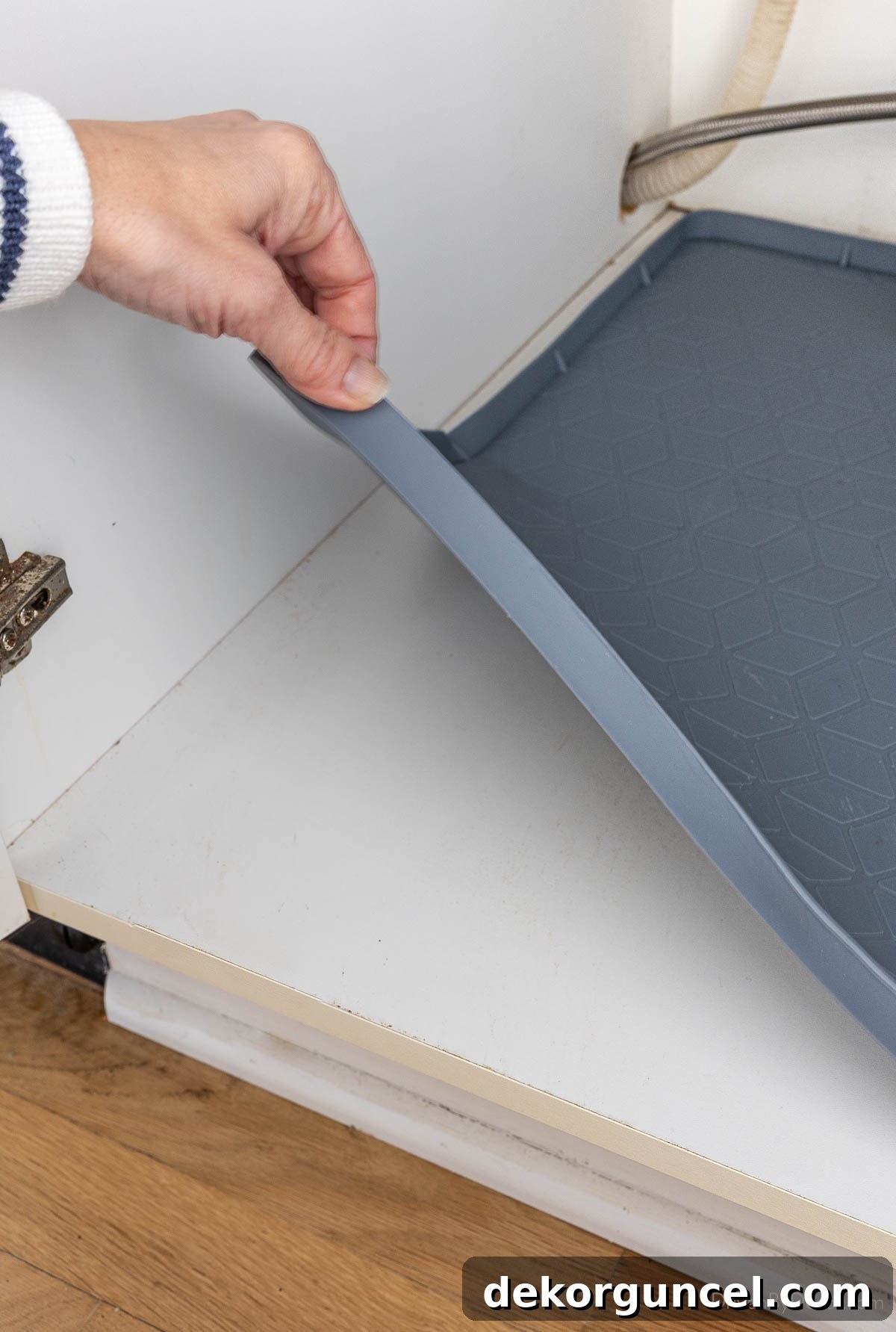
If you have plumbing that comes up through the bottom of your cabinet, you can easily cut holes in the liner to accommodate the pipes. Choose a flexible liner for easier customization.
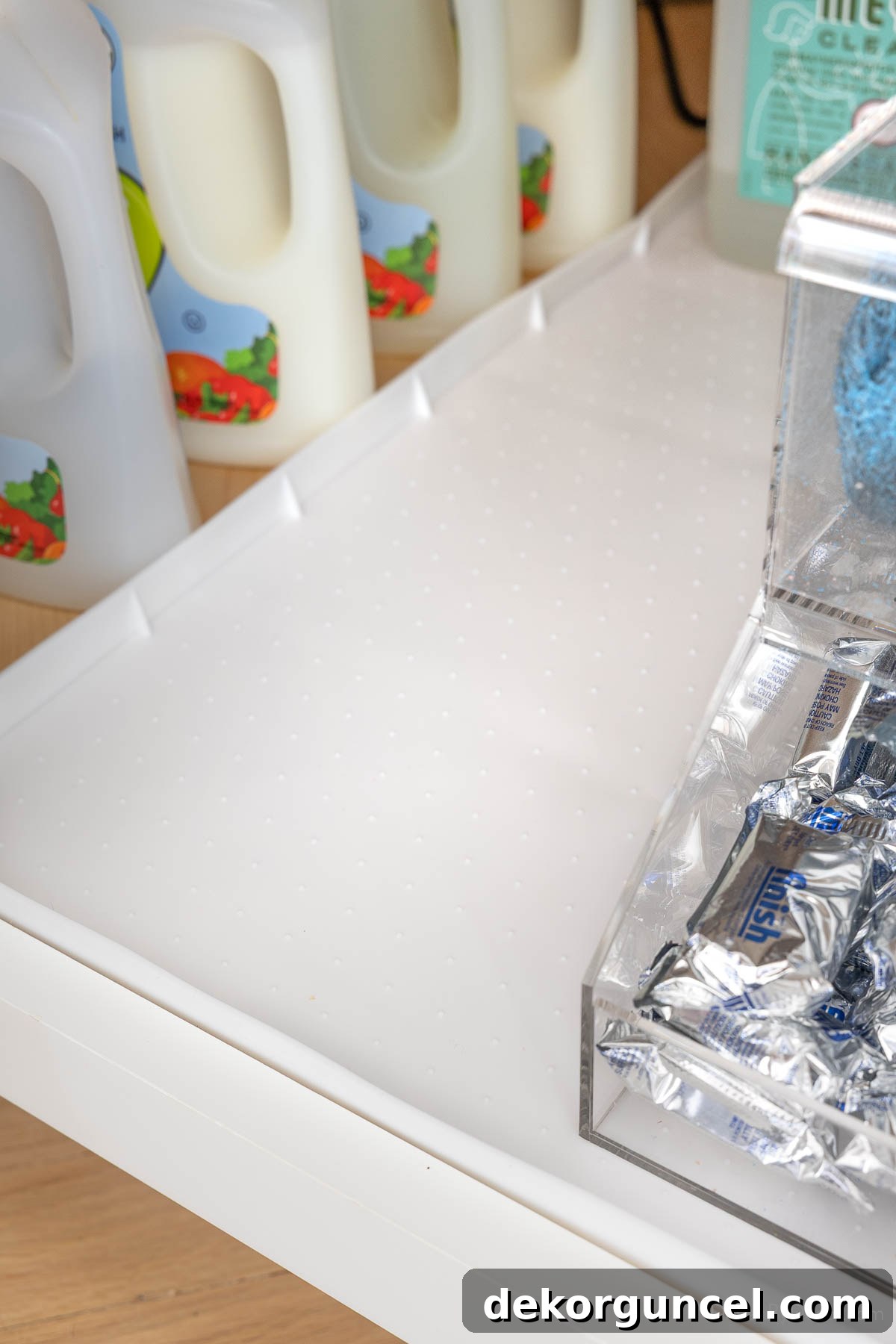
Important Note: If you plan on using rolling organizers, opt for a silicone liner with a minimal pattern. A heavily textured surface can hinder the smooth movement of the organizers.
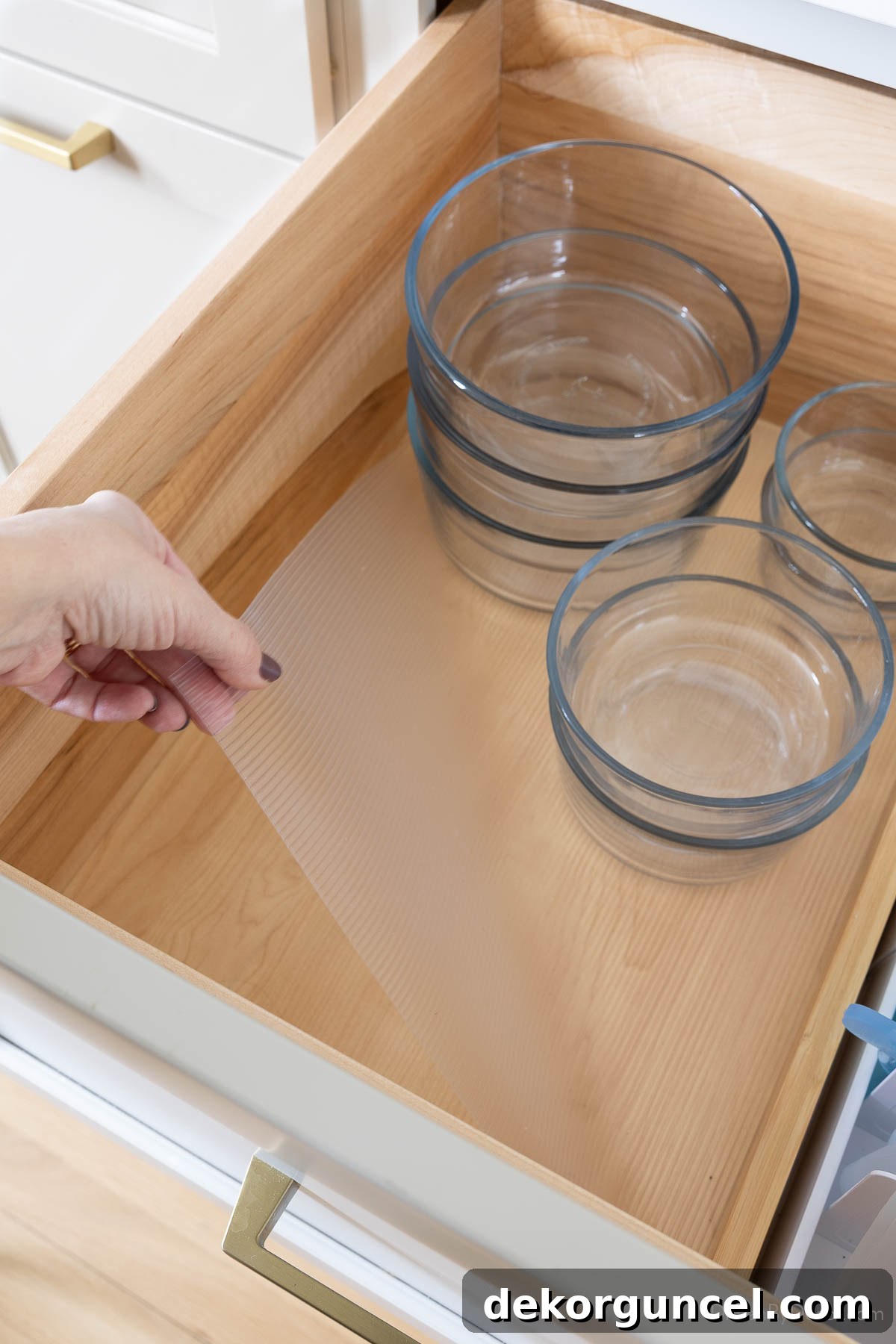
Alternative options include waterproof shelf liners like clear ribbed liners or absorbent, waterproof liners. While they lack the raised lip for containing major spills, they are more budget-friendly and can be easily cut to fit non-standard cabinet sizes and shapes.
2. Declutter and Edit: The Essential First Step
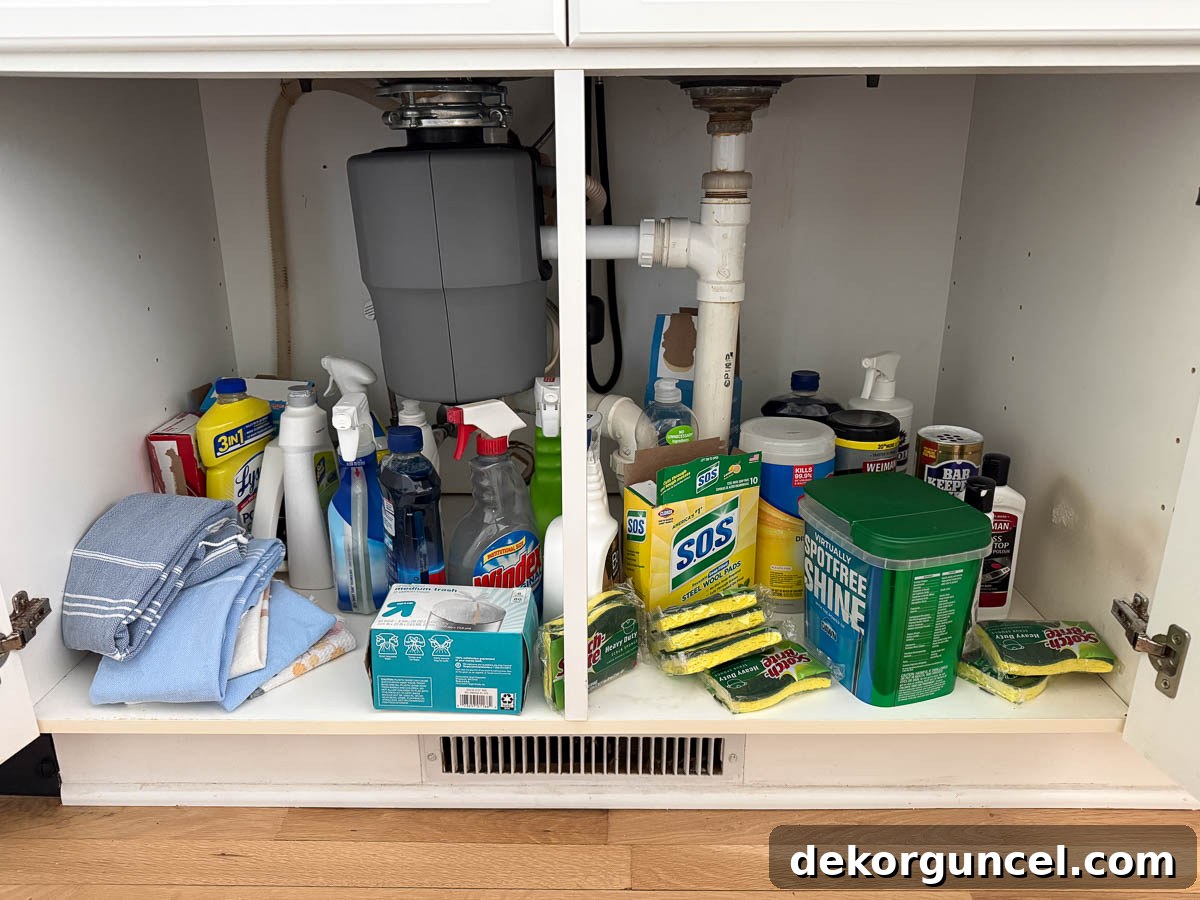
Before you start organizing, it’s crucial to declutter. This involves a thorough purge of the under-sink area. Toss out empty bottles, expired cleaners, and duplicates you don’t need. Relocate items that don’t truly belong there.
The under-sink cabinet should be reserved for everyday kitchen essentials: cleaning sprays, dish soap, trash bags, dishwasher detergent, and sponges. The less you store, the easier it will be to maintain an organized space. Consider alternative storage solutions for items that aren’t used daily.
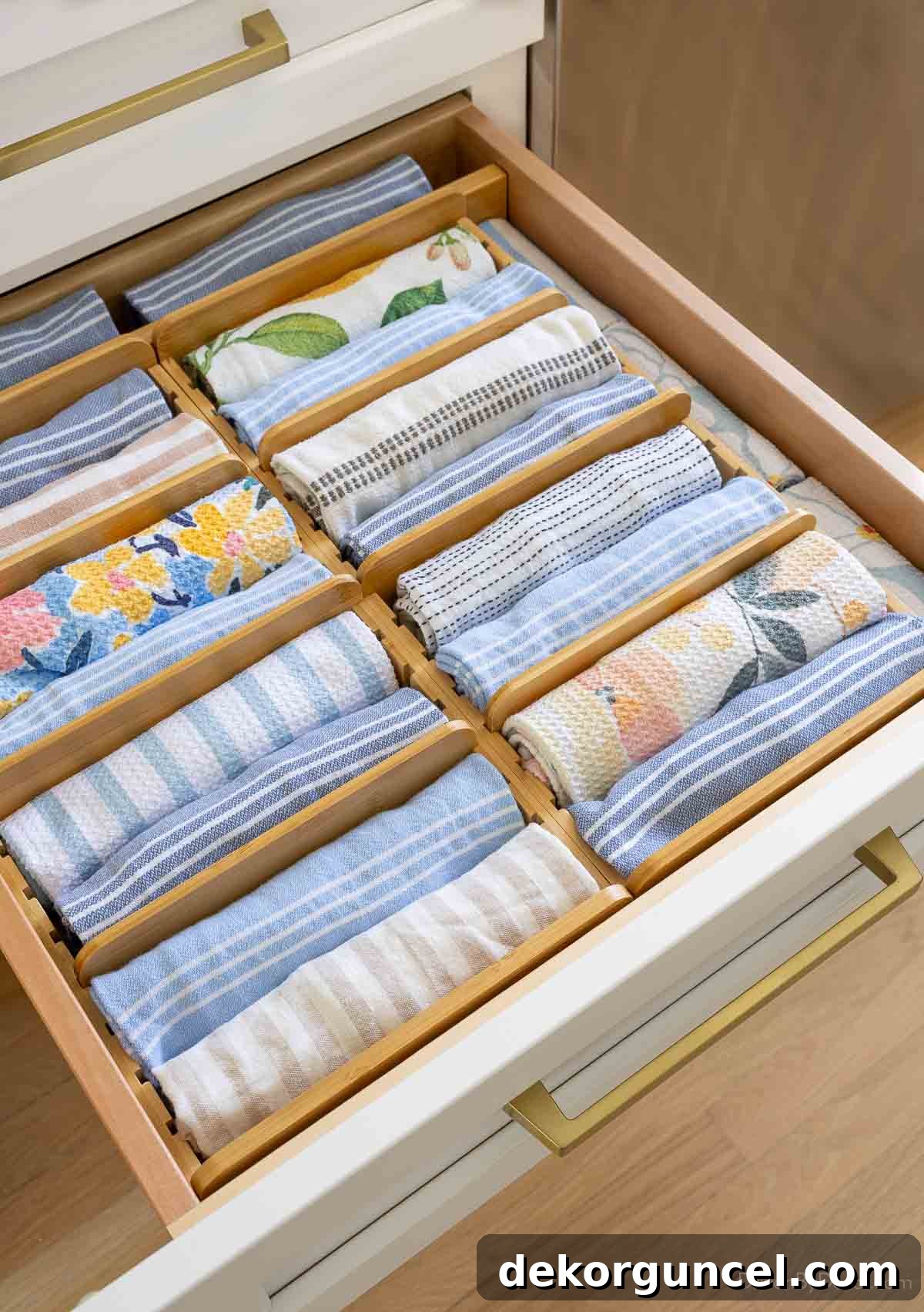
Freeing up under-sink space can be as simple as relocating dish towels to a drawer. Using bamboo kitchen towel organizers allows you to neatly roll and store towels in a drawer, maximizing usable space under the sink.
Ultimately, effective under-sink organization revolves around functionality. Store frequently used items front and center for easy access. Less-used supplies can be placed towards the back or higher up. If you find yourself constantly reaching for a specific item, ensure it’s easily accessible without rearranging the entire cabinet.
3. Embrace Specialty Organizers: Working Around the Plumbing
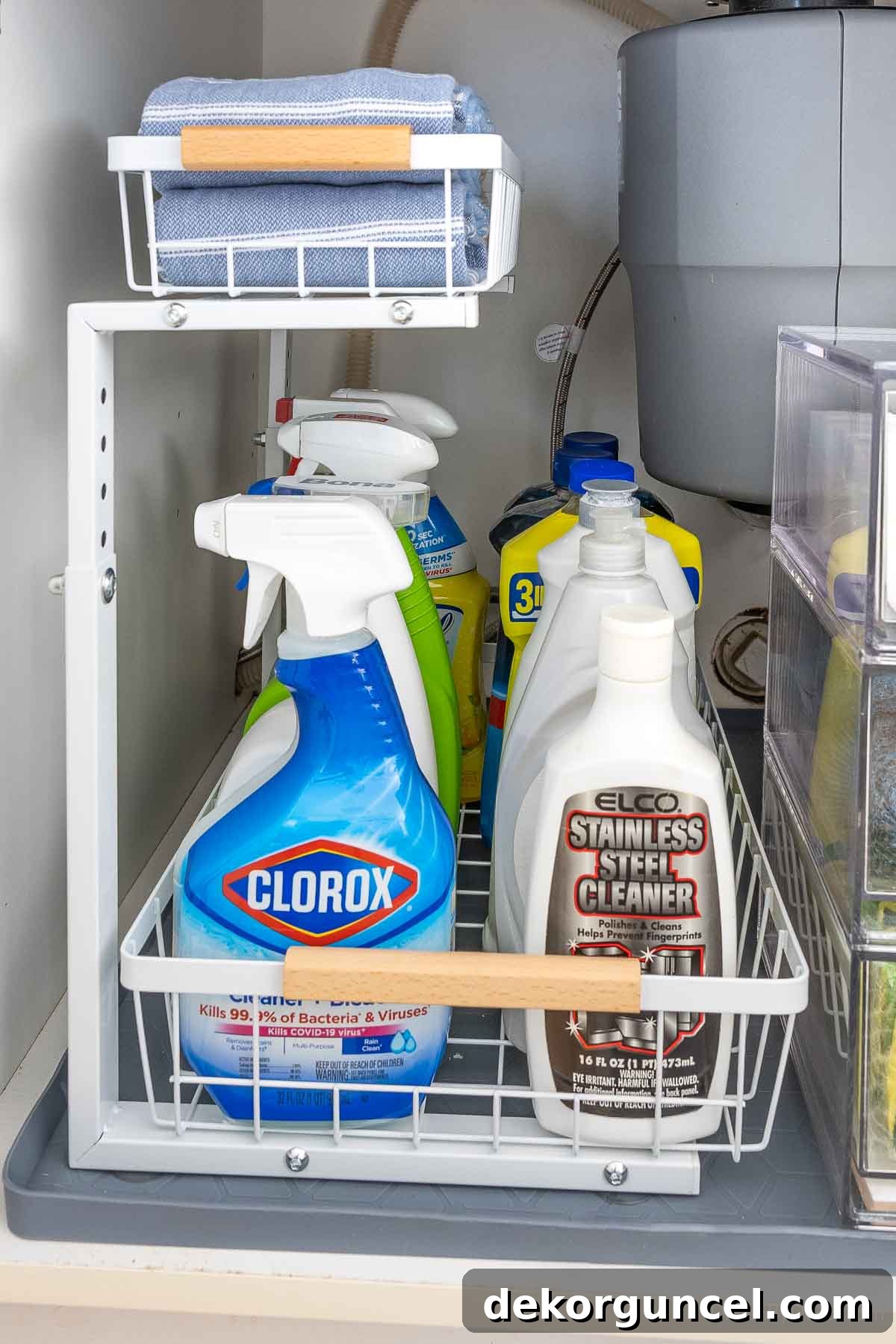
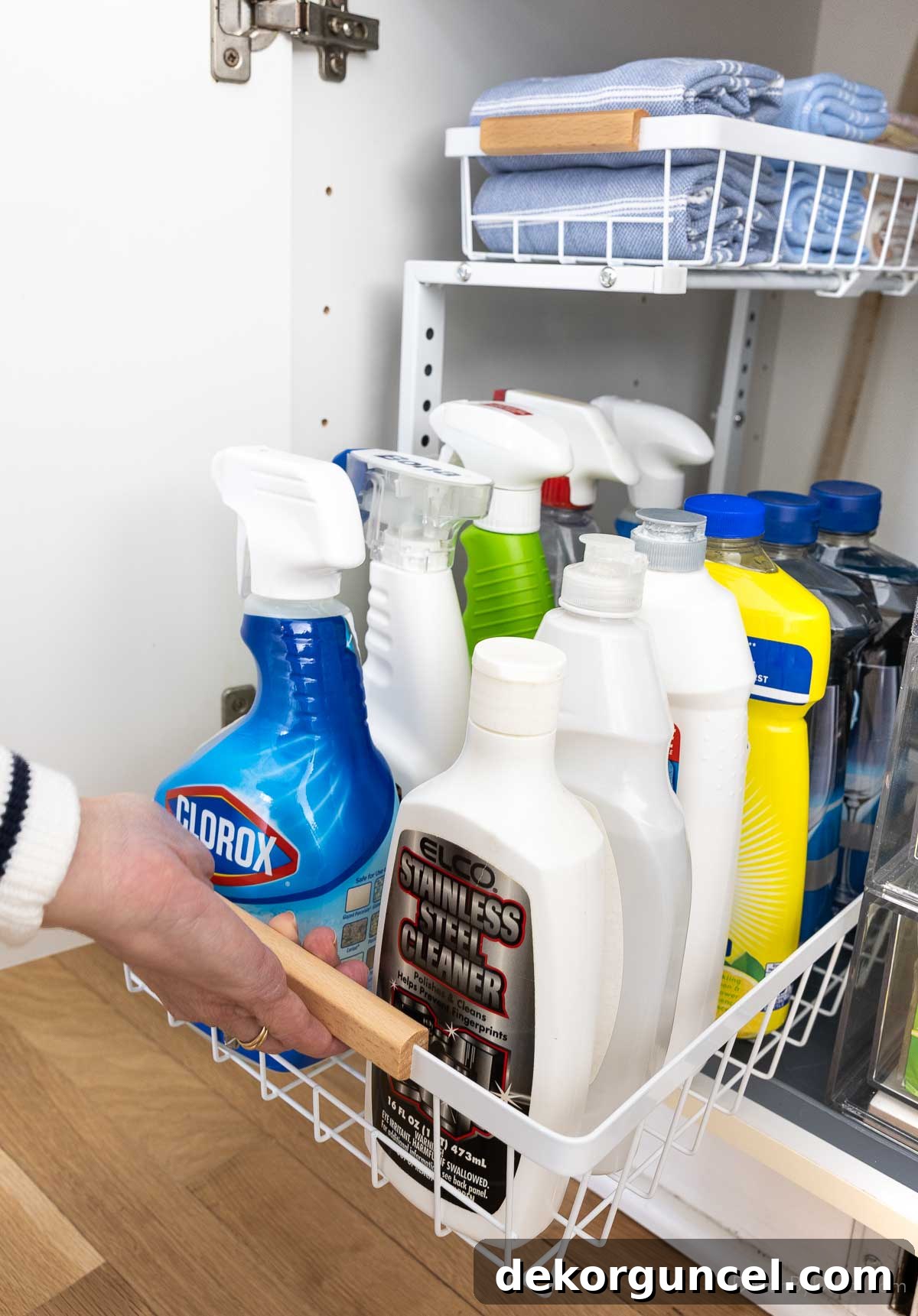
The plumbing – the garbage disposal and sink pipes – is the biggest challenge when organizing under the sink. Instead of fighting it, choose organizers designed specifically for these awkward spaces. A popular choice is a two-tier adjustable-height organizer. These organizers feature pull-out drawers that allow you to store items around the plumbing, maximizing vertical space.
Use the bottom drawer for larger items like cleaning sprays and the top drawer for smaller items like dish towels.
4. Contain Cleaning Pods: Streamline Storage
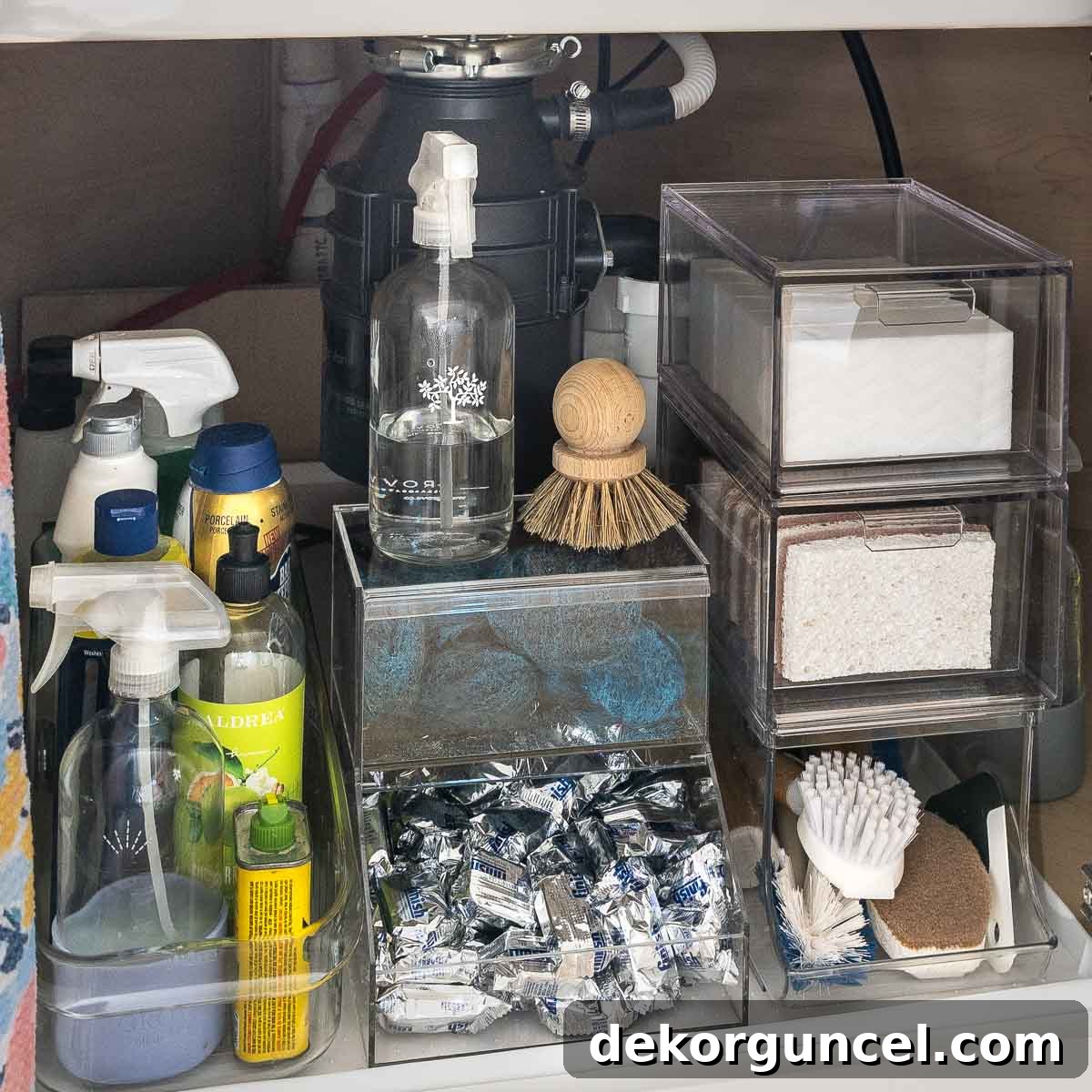
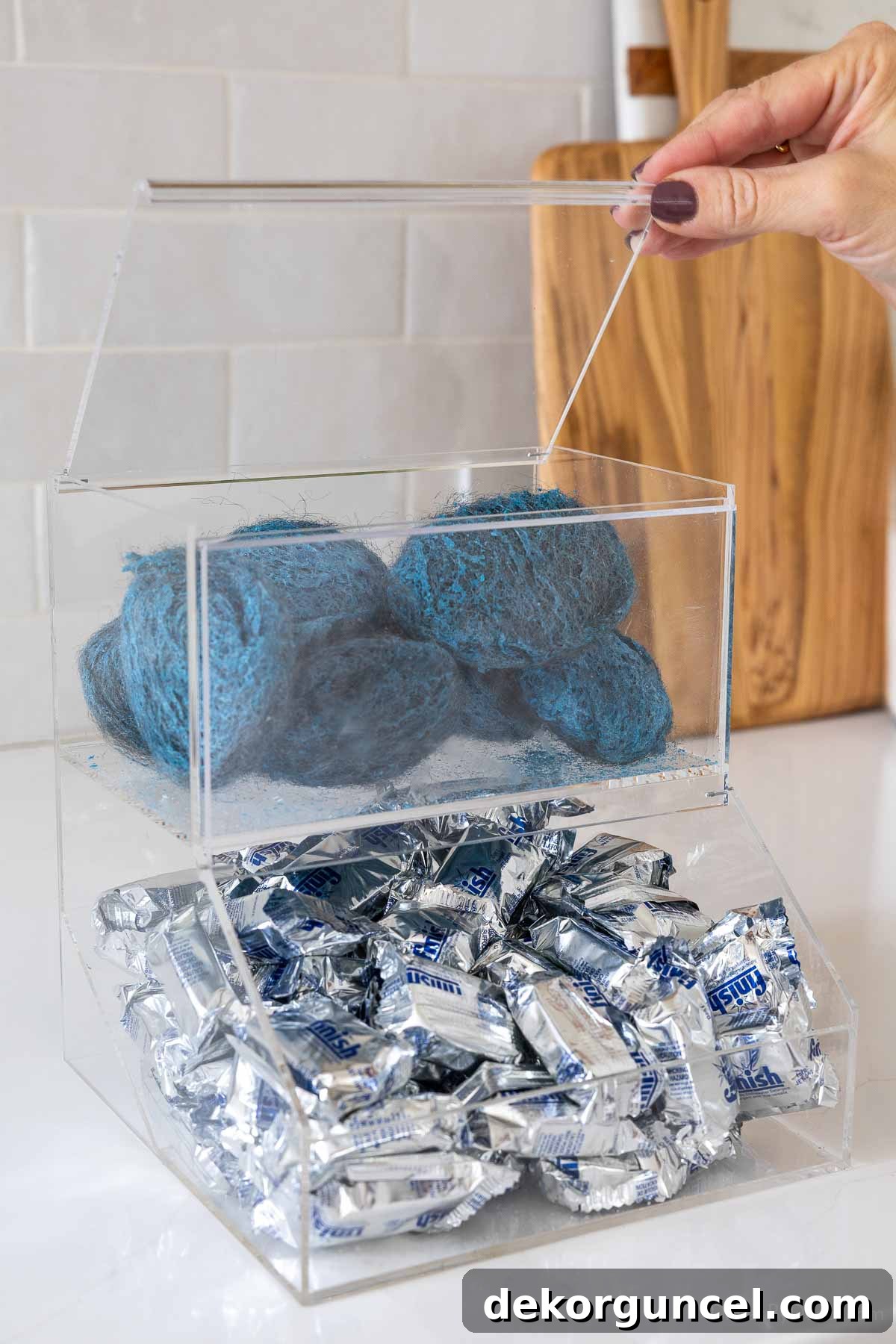
Ditch the bulky packaging and transfer your dishwasher pods into a simpler organizer. This saves valuable space and keeps your pods neat and easily accessible. A simple acrylic organizer is perfect for storing dishwasher pods and other small items like steel wool soap pads or sponges. Consider a clear organizer to easily see when you’re running low.
For those who store trash bags under the sink, consider an organizer that can hold both dishwasher pods and trash bags. This maximizes space and keeps everything in one convenient location. Check out this clear organizer for a solution.
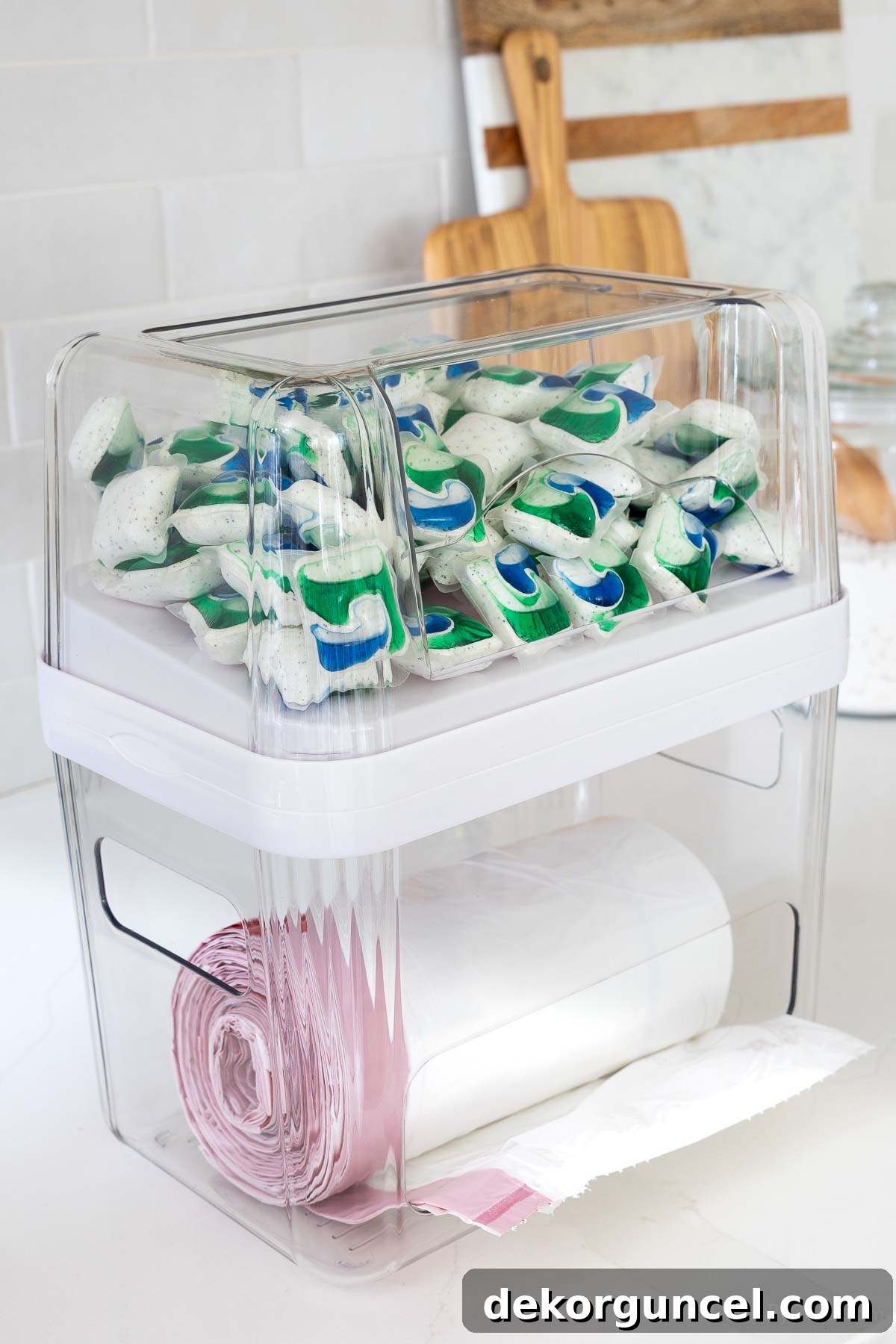
Another option is an organizer with containers for pods and other kitchen essentials that sits on top of a trash bag dispenser. Check out this organizer for a multi-functional storage solution.
5. Rolling Organizers: End the Digging Game
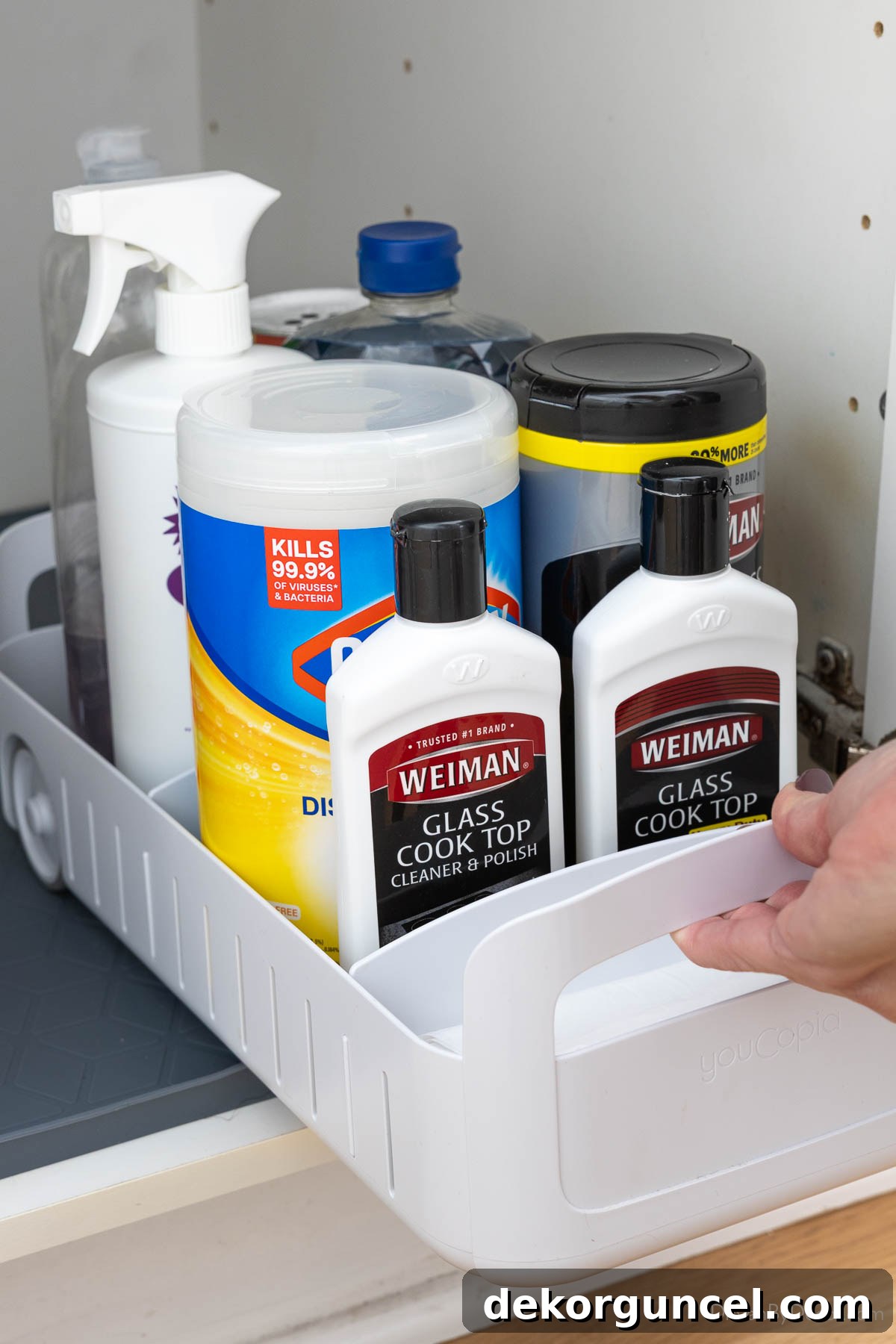
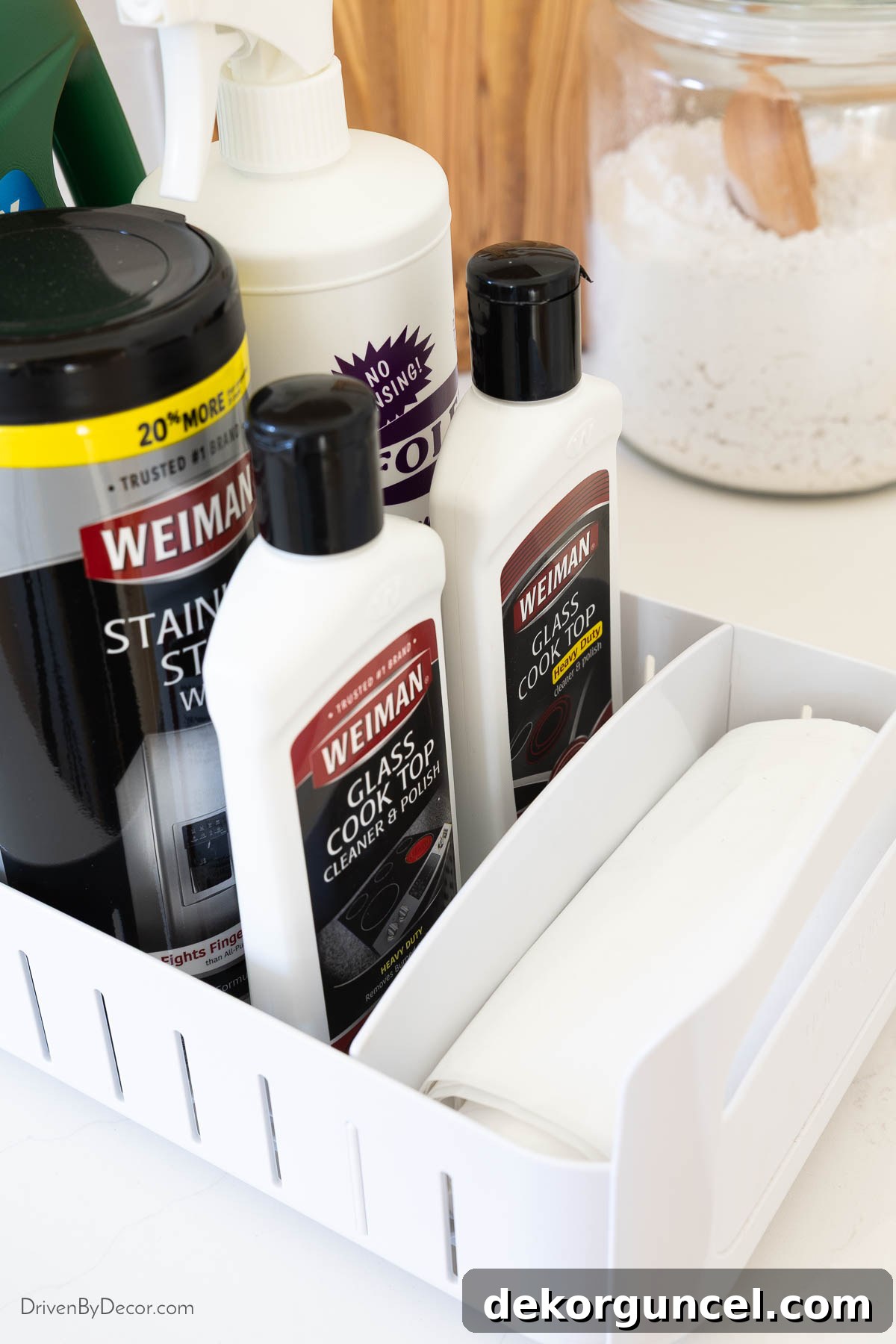
Maximize the depth of your cabinet with rolling organizers. These allow you to easily access items at the back without having to rummage through everything in front. Choose a rolling organizer to hold dishwashing supplies and cleaners, making it easy to grab what you need.
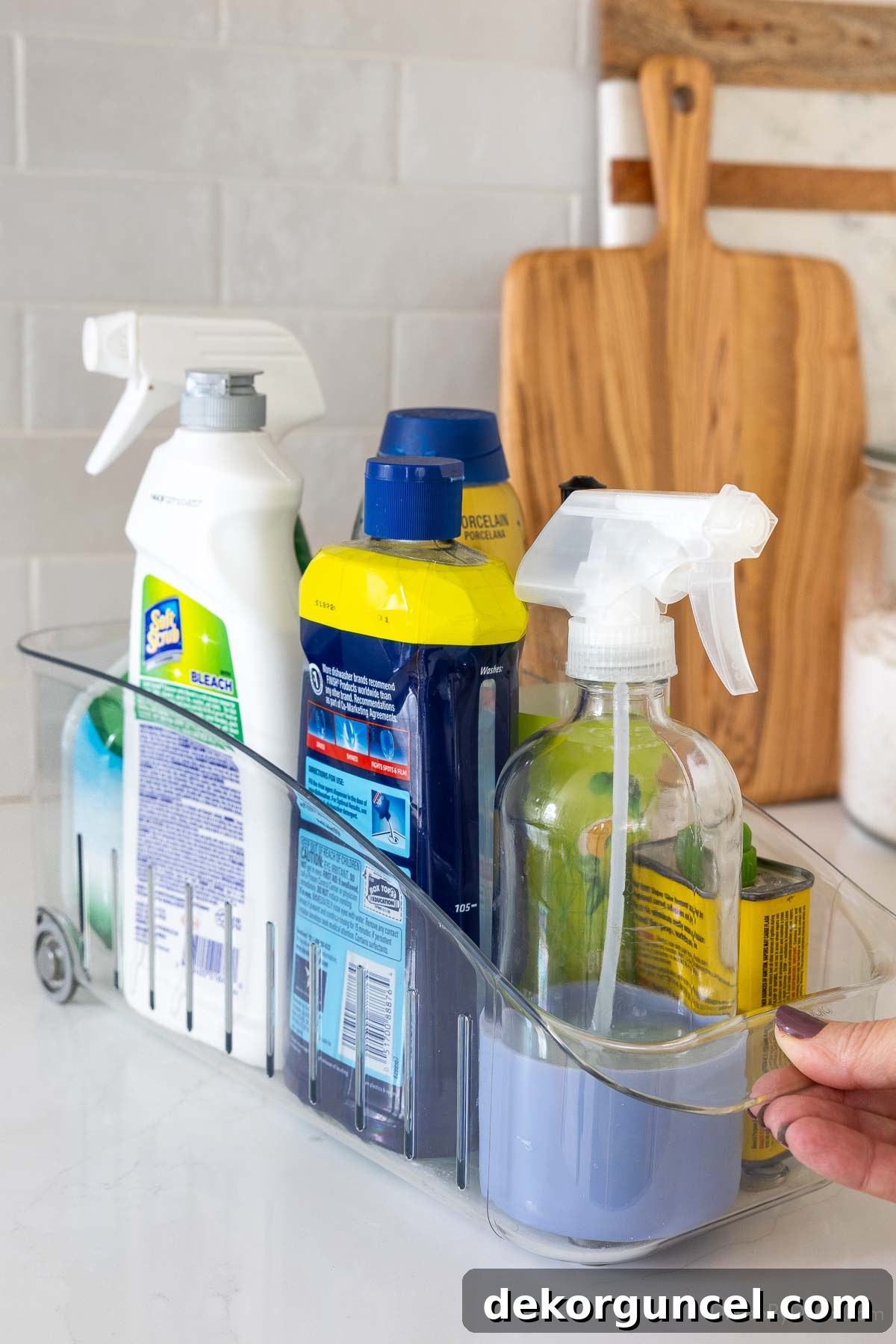
Consider a smaller rolling organizer for smaller spaces. Look for organizers with adjustable dividers to create designated spots for different items and prevent them from shifting when you pull the organizer out.
6. Customize Your Organization: Think Outside the Box
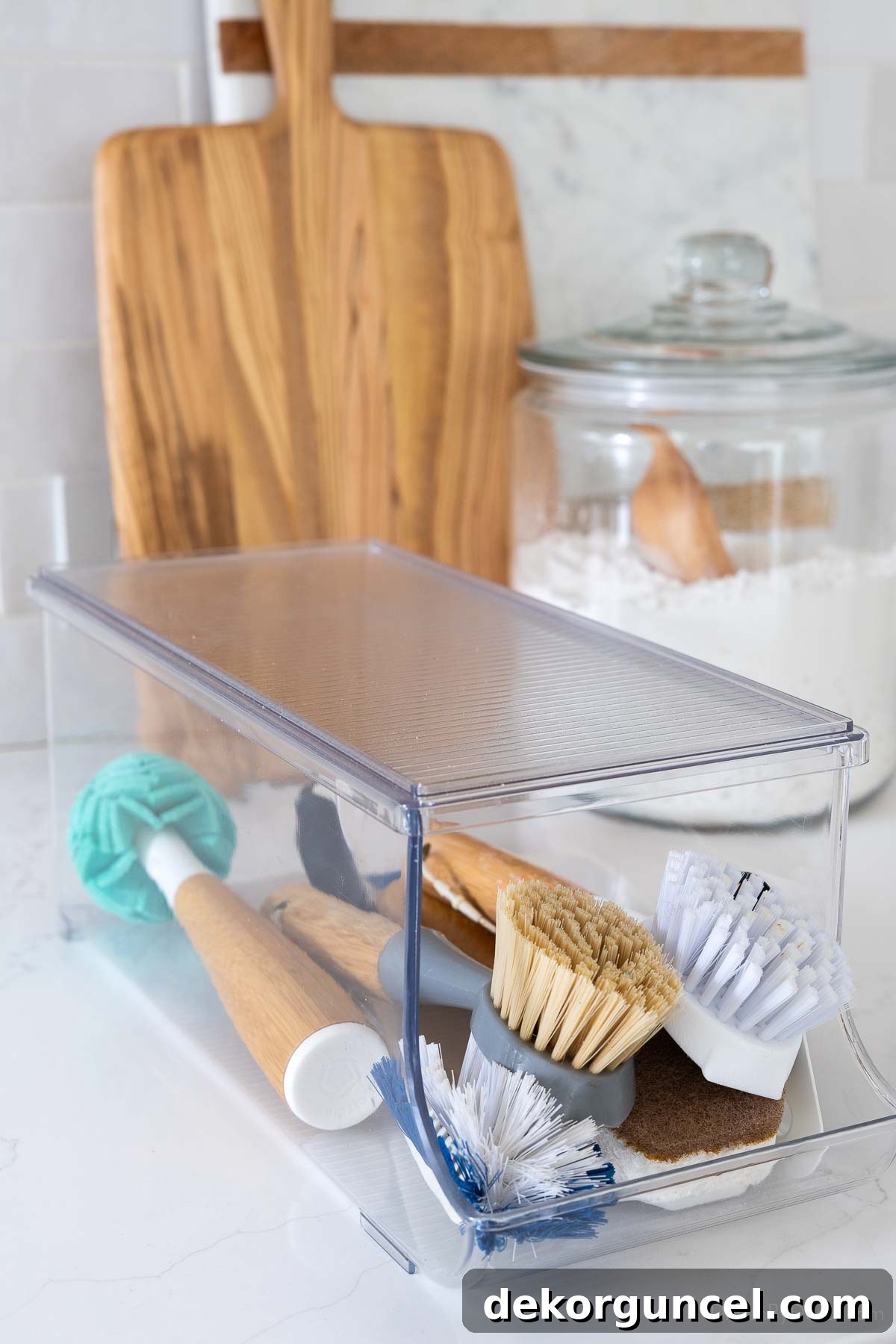
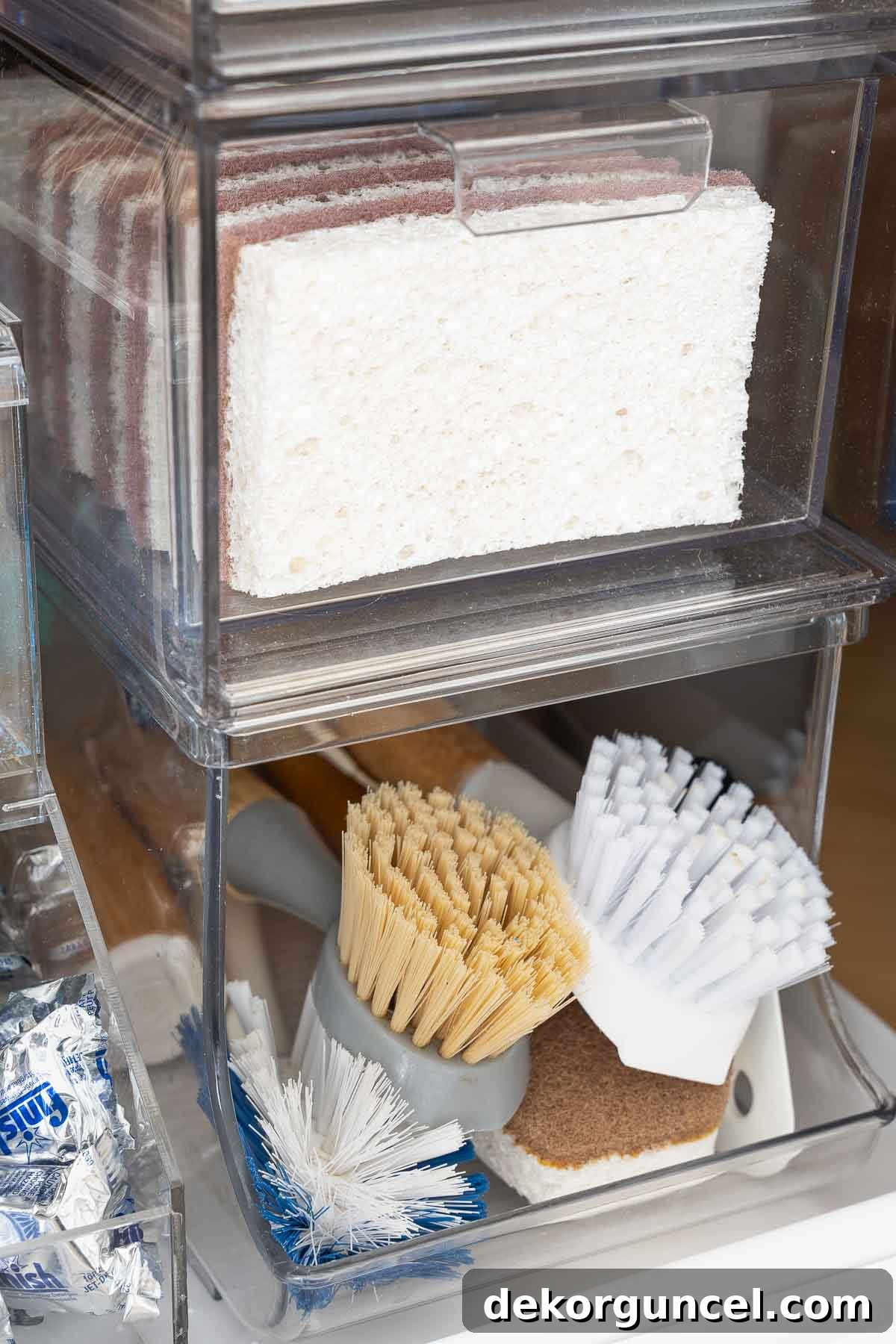
Don’t feel restricted by the intended use of organizers. Think creatively about how you can repurpose them to fit your specific needs. For example, a soda can holder can be used to neatly store scrub brushes under the kitchen sink. This solution is waterproof, long enough for long scrubbers, and has a flat top for stacking other organizers.
If you reuse plastic grocery bags, a slim, spring-loaded bag dispenser can keep them organized and easily accessible.
7. Vertical Storage: Stackable Drawers to the Rescue
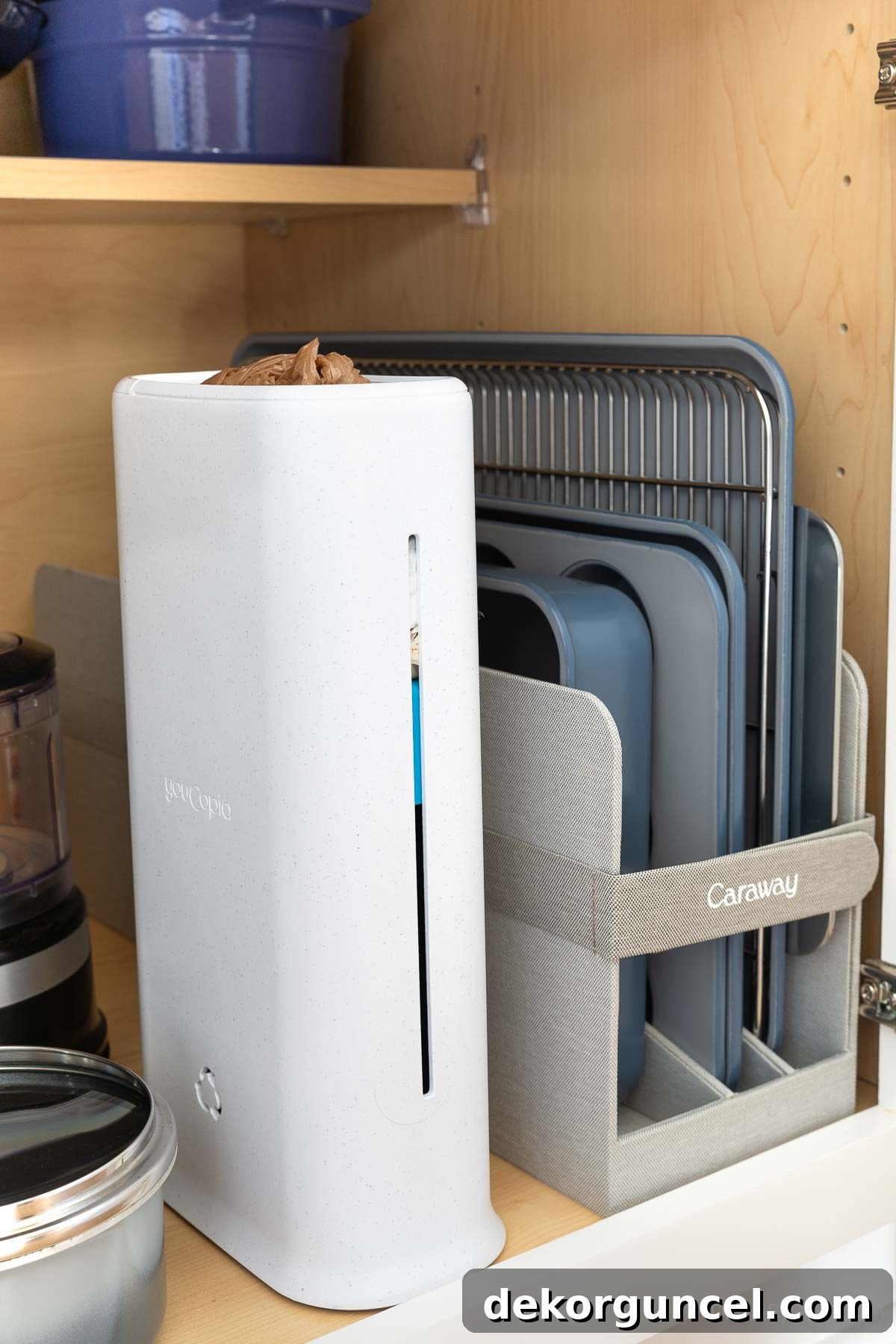
Maximize vertical space with clear, stackable drawers. These allow you to utilize the full height of the cabinet while keeping everything visible and easily accessible. Use stackable acrylic drawers to store sponges, steel wool soap pads, and magic erasers.
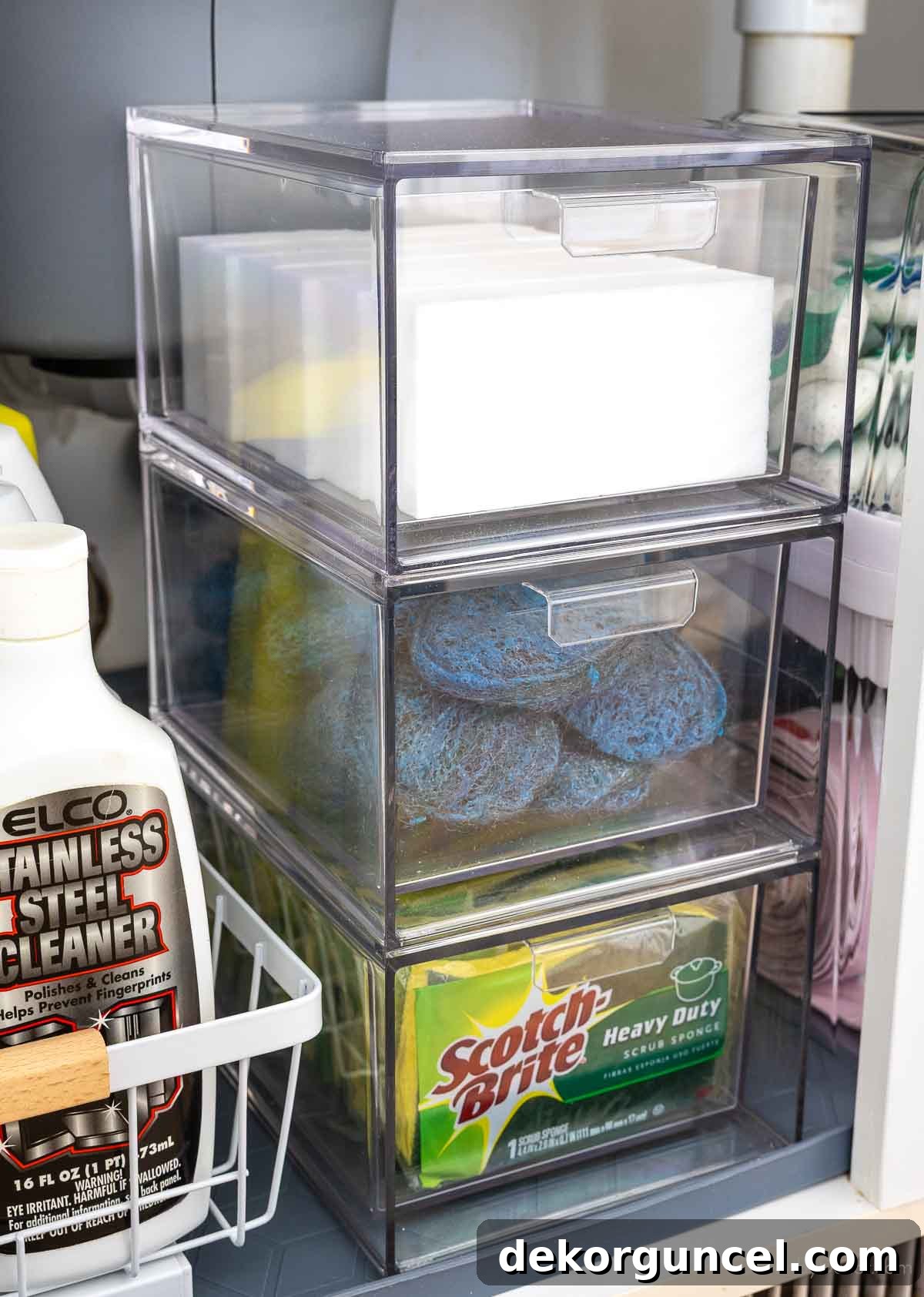
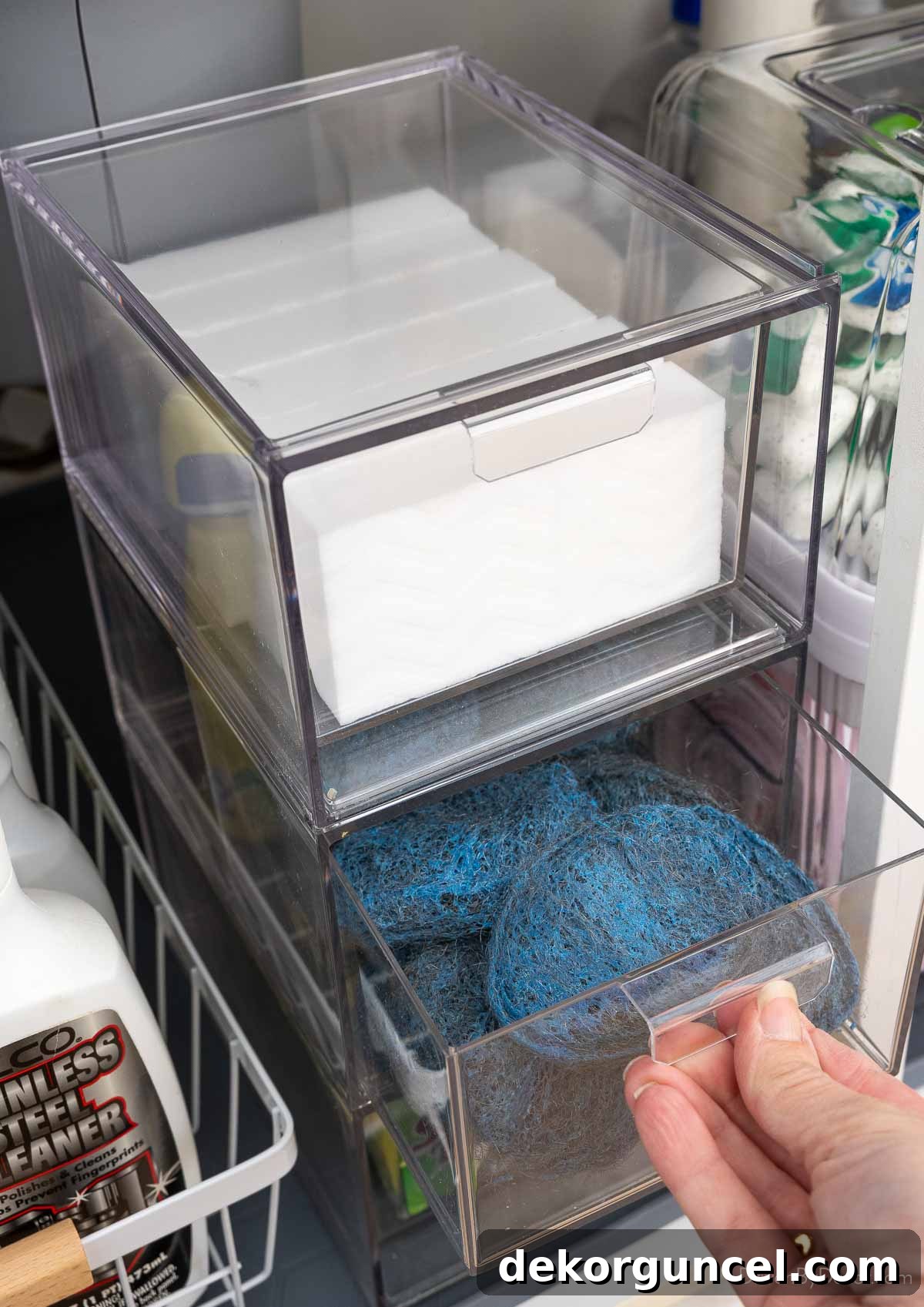
Clear bins allow you to see what you have at a glance, reducing the likelihood of overbuying or forgetting what you already own.
8. Don’t Forget the Doors: Cabinet Door Organization
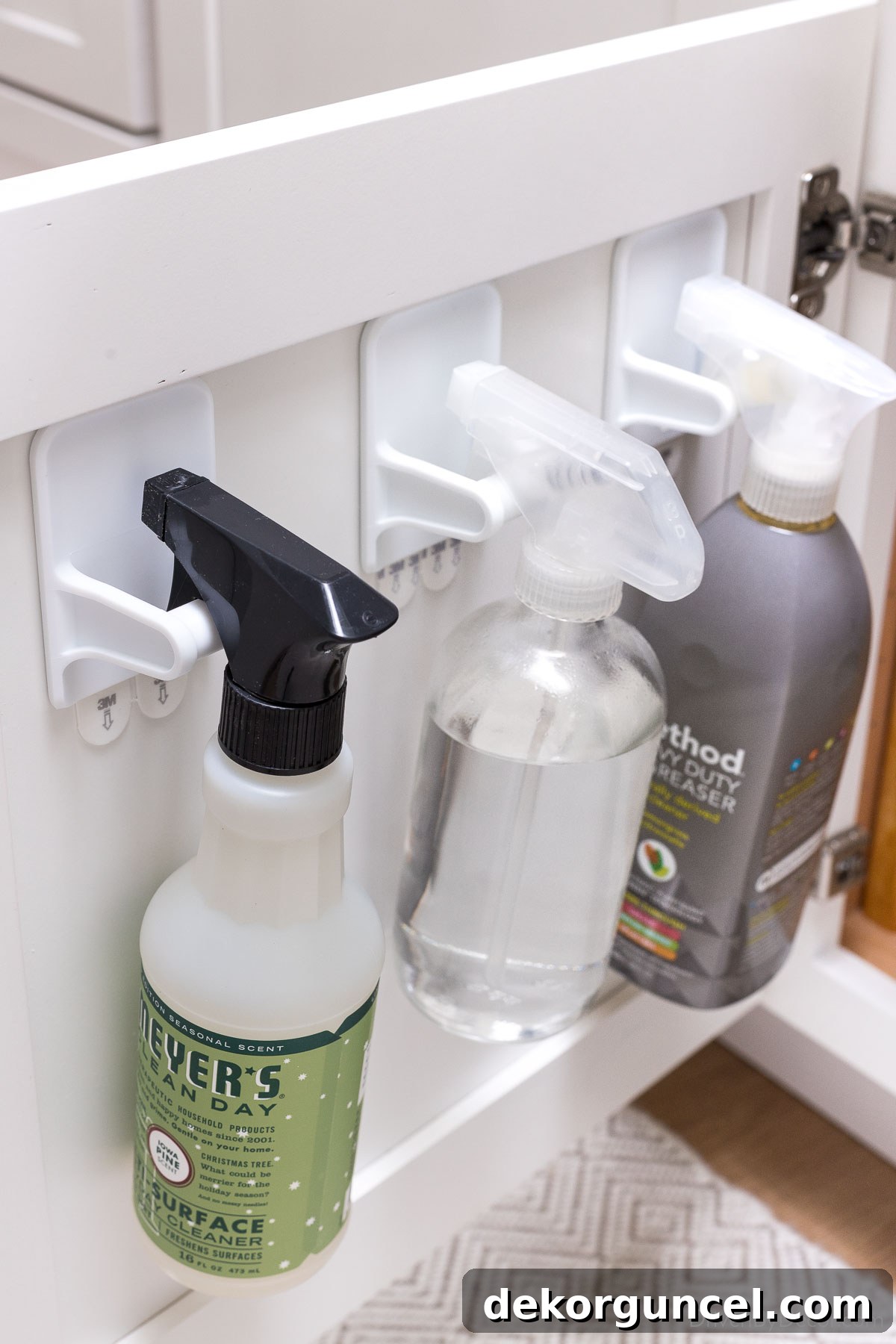
The back of your cabinet doors offers valuable storage space that’s often overlooked. Adding door-mounted organizers can free up space inside the cabinet while keeping everyday items within easy reach. Spray bottle hangers are perfect for storing your most-used cleaners, keeping them off the cabinet floor and within easy reach.
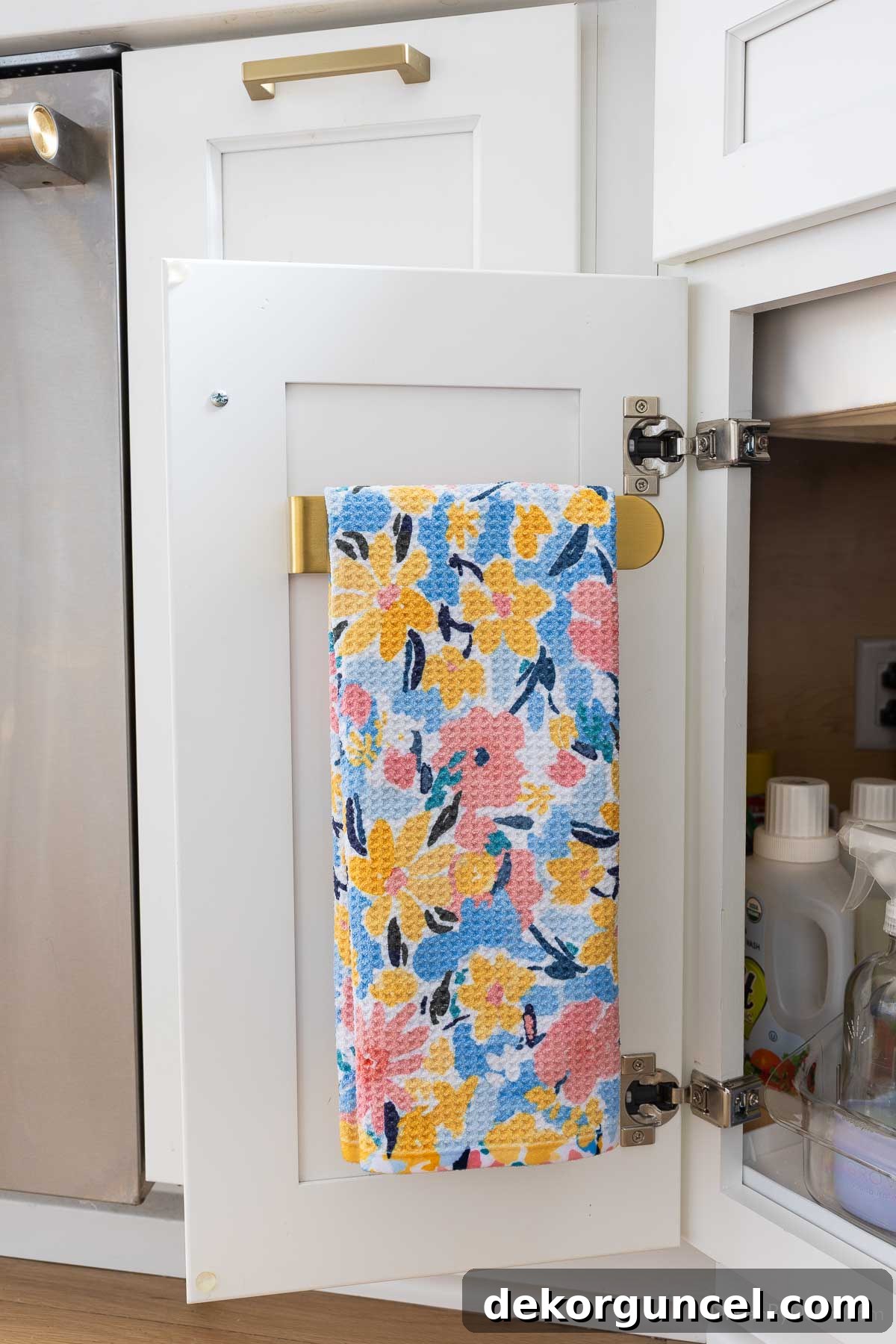
Install a slim towel bar to hold your dish towel when it’s not in use. A towel bar is a simple addition that keeps your towel clean and out of the way.
Consider adding an adhesive or suction cup hook for hanging dishwashing gloves or a wall-mount grocery bag dispenser.
Here’s the final result!
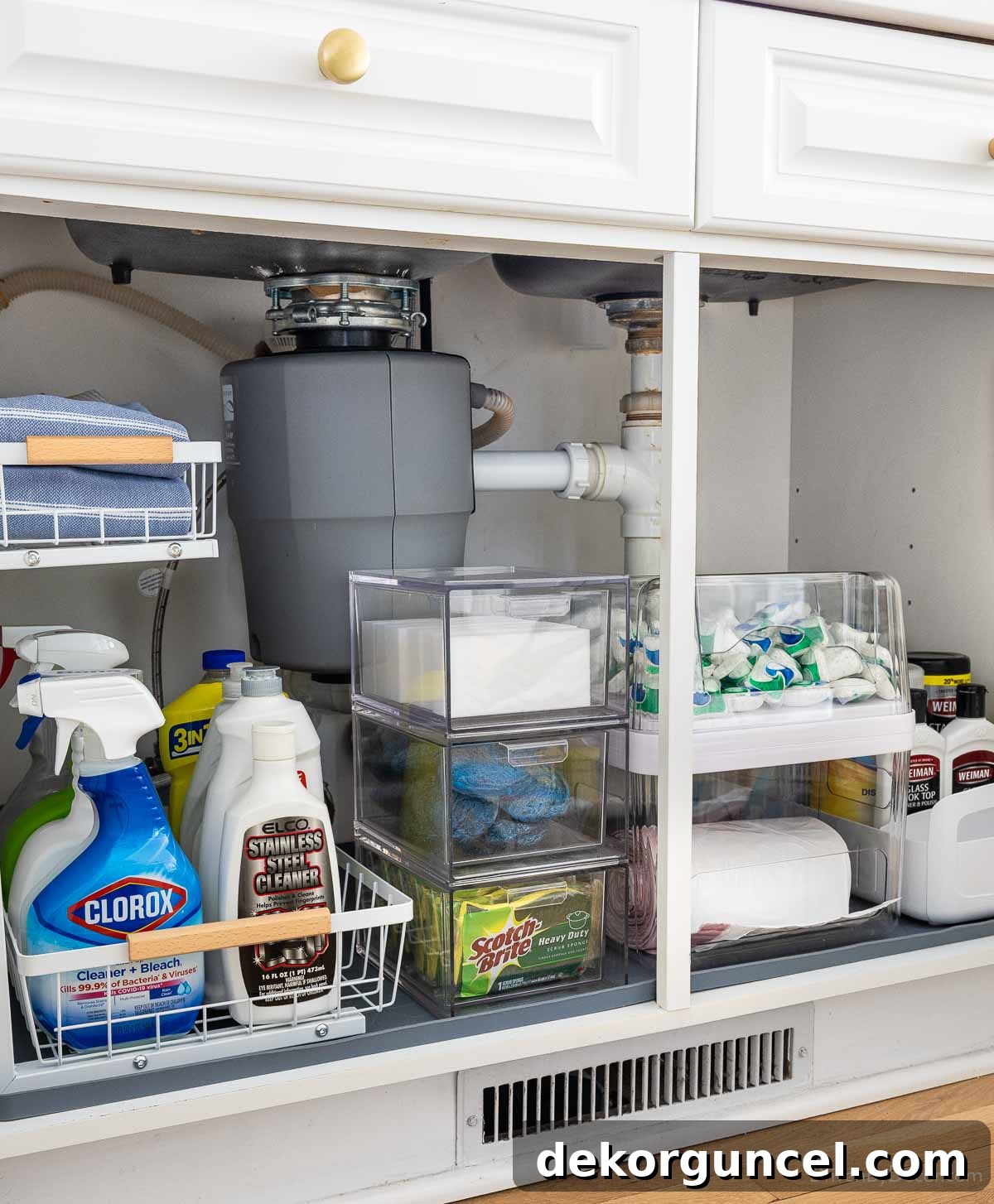
Everything is easy to see and grab at a glance. There is even extra space for bulk purchases!
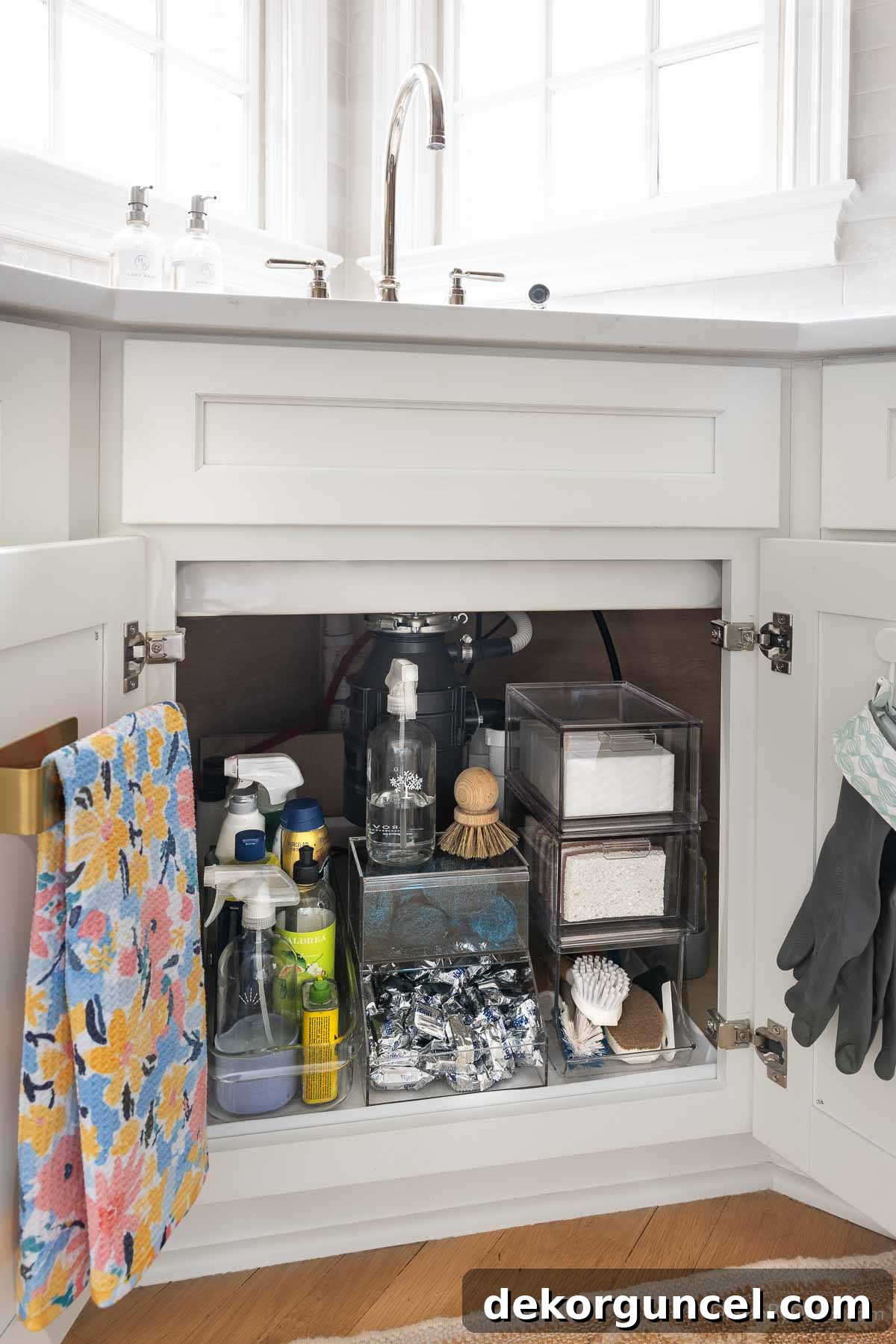
Just like the previous example, everything is easily accessible.
9. Maintenance is Key: A Quick Monthly Reset
Once you’ve completed your organizing project, maintain it with a quick monthly reset. Take just a few minutes each month to put rogue items back in their designated spots and wipe down the mat if needed. This simple habit will prevent the space from reverting to chaos.
If you’re inspired to organize other areas of your kitchen, check out these helpful resources:
- Kitchen Drawer Organizer Ideas
- Kitchen Cabinet Organization Ideas
- Pantry Organization Ideas
- Budget Friendly Kitchen Organization Ideas
Happy Organizing!