

Unlock the secrets to pristine stainless steel! Discover the best techniques to not only clean your appliances but also achieve a lasting, smudge and streak-free brilliance.
Stainless steel appliances are a cornerstone of modern kitchen design, offering a sleek, professional aesthetic. However, maintaining their pristine appearance can often feel like an uphill battle. Fingerprints, smudges, water spots, and grease can quickly diminish their shine, leaving many homeowners frustrated with ineffective cleaning products and methods. While the market is flooded with various stainless steel cleaners and DIY solutions, not all deliver the sparkling, streak-free results we truly desire.
In the past, I, like many others, relied on conventional spray cleaners. While they offered a basic level of cleanliness, they often came with a strong, unpleasant chemical odor and, most disappointingly, left behind noticeable streaks and residues. This experience solidified my resolve to find truly effective solutions. After undertaking a complete kitchen remodel, complete with brand-new stainless steel refrigerator, dishwasher, and range, I was determined to keep them looking showroom-new. This led me on a mission to rigorously test the most popular and promising methods for cleaning stainless steel appliances. Today, I’m thrilled to share the tried-and-true techniques that consistently delivered the best results, transforming dull surfaces into gleaming reflections. Let’s dive into making your stainless steel shine! (Please note: this post contains affiliate links, and I may earn a small commission if you make a purchase through them. For full disclosure details, please see {here}).

Essential Stainless Steel Cleaning Tips for Flawless Results
Regardless of the specific cleaning product or method you choose, two fundamental principles are paramount for achieving impeccable results and protecting your stainless steel surfaces. Adhering to these tips will not only enhance the effectiveness of your cleaning but also help maintain the longevity and beauty of your appliances.
The first crucial tip is to always clean with the grain of the stainless steel. Stainless steel, despite its smooth appearance, actually has a subtle grain that runs in a particular direction. Cleaning parallel to this grain, rather than against it or in circular motions, prevents tiny scratches, ensures a more thorough removal of dirt and grime, and helps achieve a consistent, polished finish. Observe your appliance closely; you’ll typically notice faint lines indicating the grain’s direction. Always follow these lines as you wipe.
Secondly, never allow your stainless steel cleaners to air dry. This is a common mistake that often leads to unsightly water spots and streaks, undoing all your hard work. The secret to a truly streak-free finish lies in immediate and thorough drying with a high-quality microfiber cloth. I highly recommend using a dedicated set of microfiber cloths such as {these}. When drying, continue to wipe with the grain of the metal to enhance the polish. Microfiber cloths are vastly superior to paper towels because they are incredibly absorbent, leave no lint behind, and are gentle on surfaces, preventing scratches. Furthermore, they are environmentally friendly, as they can be washed and reused countless times, making them a cost-effective and sustainable cleaning tool.
Now, equipped with these foundational tips, let’s explore the most effective methods for cleaning your stainless steel appliances and restoring their brilliant shine.
1. The Power of Specialized Store-Bought Cleaners
For those who prefer the convenience and targeted formulation of commercial products, specialized stainless steel cleaners can deliver outstanding results. After testing numerous options, my top recommendation for a store-bought solution is Weiman Stainless Steel Cleaner & Polish, readily available {here}. This product stands out for its ability to not only clean but also polish and protect the surface, leaving a beautiful, lasting shine.
To achieve the best results with Weiman, always apply it with a clean microfiber cloth. Spray a small amount directly onto your appliance surface, then wipe diligently in the direction of the grain. This technique is crucial for lifting away fingerprints, smudges, and stubborn stains without leaving behind any residue. Once you’ve thoroughly cleaned the surface, take a separate, clean, and dry microfiber cloth to buff the stainless steel. Continue buffing with the grain until the surface gleams with a brilliant, streak-free shine. Weiman also offers {convenient stainless steel wipes}, which are perfect for quick touch-ups and maintaining everyday sparkle between deeper cleans.
If you lean towards more natural, plant-based cleaning solutions, Therapy Stainless Steel Cleaner & Polish is an excellent alternative. You can find it {here}. This product has garnered an impressive reputation, boasting over 90% 4-5 star reviews from more than 15,000 users. Its appeal lies in its plant-based, solvent-free formula, which utilizes a coconut oil base. This natural composition ensures effective cleaning without harsh chemicals, making it a safer choice for your home and the environment, while still delivering a beautiful, polished finish.
2. White Vinegar: Your Natural, Everyday Cleaner
For those seeking an eco-friendly and budget-conscious cleaning solution using ingredients likely already in your pantry, white vinegar is an incredibly versatile and effective option. This natural acidic cleaner excels at breaking down grease, grime, and even light mineral deposits, making it a fantastic choice for regular stainless steel maintenance.
To use white vinegar, simply pour undiluted white vinegar into a clean spray bottle. Lightly mist your stainless steel refrigerator, dishwasher, or range with the vinegar solution. Immediately after spraying, take a clean microfiber cloth and gently rub the surface, always moving with the grain of the metal. You’ll notice how easily fingerprints and smudges begin to disappear. For tougher spots, a bit more “elbow grease” might be required, but the natural cleaning power of vinegar will get the job done. Once you’ve cleaned the entire surface, take a second, clean, and dry microfiber cloth to thoroughly dry and buff your appliances, ensuring no streaks or water spots are left behind. While this method is highly effective and natural, remember the importance of immediate drying, especially if you have hard water, to prevent any new water spots from forming.
3. Gentle Cleaning with Simple Dish Soap
Wondering how to tackle everyday smudges and greasy fingerprints on your stainless steel appliances in a straightforward, accessible manner? Look no further than mild dish soap. This method is exceptionally effective for dissolving oily residues and general grime, making it perfect for routine cleaning.
To apply this simple technique, mix a few drops of mild dish soap into a bowl of warm water. Dampen a soft cloth (a microfiber cloth works wonderfully here) with the soapy solution. Gently wipe down your stainless steel appliance, paying particular attention to areas with greasy smudges or prominent fingerprints. The mild detergent in the dish soap will cut through the grease, lifting it from the surface. Once you’ve cleaned the entire area, it’s crucial to rinse away any soap residue thoroughly. You can do this by dampening a clean cloth with plain water and wiping down the appliance again. Finally, and most importantly, use a clean, dry microfiber cloth to dry and polish the stainless steel, moving with the grain to achieve a brilliant, streak-free finish.
A word of caution: if you live in an area with hard water, this water-based cleaning method might leave behind mineral spots or streaks. To counteract this, consider using distilled water instead of tap water for your dish soap solution and rinse. Distilled water lacks the minerals found in tap water, significantly reducing the likelihood of water spots and ensuring a cleaner, clearer finish.
4. WD-40: The Unexpected Shine Booster (with Caution!)
Years ago, an appliance repair technician shared a surprising secret with me: they often keep WD-40 on hand specifically for cleaning stainless steel appliances, claiming it works better than almost anything else. Intrigued, I decided to put this unconventional method to the test recently, and I was genuinely impressed. WD-40 did an exceptional job of cleaning and, more notably, left my stainless steel appliances with a remarkable, deep shine.
To use WD-40, apply a very light spray directly onto a clean microfiber cloth, rather than spraying it directly onto the appliance. Then, wipe the stainless steel surface with the grain. A little goes a long way. This method effectively removes smudges, fingerprints, and even light scuffs, leaving a protective, glossy finish.
However, it’s crucial to address the significant downsides and safety considerations. The most prominent issue is the smell; WD-40 has a distinct, somewhat industrial odor that can linger, which some might find unpleasant. More importantly, WD-40 is flammable. Extreme caution must be exercised, and it should absolutely never be used near an open flame, such as an active gas range. Ensure your kitchen is well-ventilated when using this product. While effective for an unparalleled shine, due to its odor and flammability, I recommend using WD-40 sparingly, perhaps for very stubborn grime or when you desire an exceptional, long-lasting polish, always prioritizing safety.
5. The Ultimate Combo: Bar Keepers Friend & Mineral Oil for Deep Clean & Shine
For what I consider to be the most effective, comprehensive, and satisfying method for cleaning and restoring stainless steel appliances, the combination of liquid Bar Keepers Friend and mineral oil is unparalleled. This two-step process tackles everything from ingrained dirt to minor rust spots, leaving your appliances impeccably clean and beautifully polished.
First, begin with liquid Bar Keepers Friend (available {here}). Apply a small amount to a damp cloth. With gentle pressure, wipe your stainless steel appliance, always following the grain. You will be genuinely astonished at the amount of dirt, grime, and hidden residue that transfers onto your cloth, even if you previously thought your appliance was relatively clean! Bar Keepers Friend is a mild abrasive cleaner renowned for its ability to cut through tough stains, grease, and even light rust marks without scratching the delicate stainless steel finish. If you have an older appliance exhibiting a few minor rust spots, Bar Keepers Friend works wonders in gently lifting and removing them, restoring the surface’s original luster.
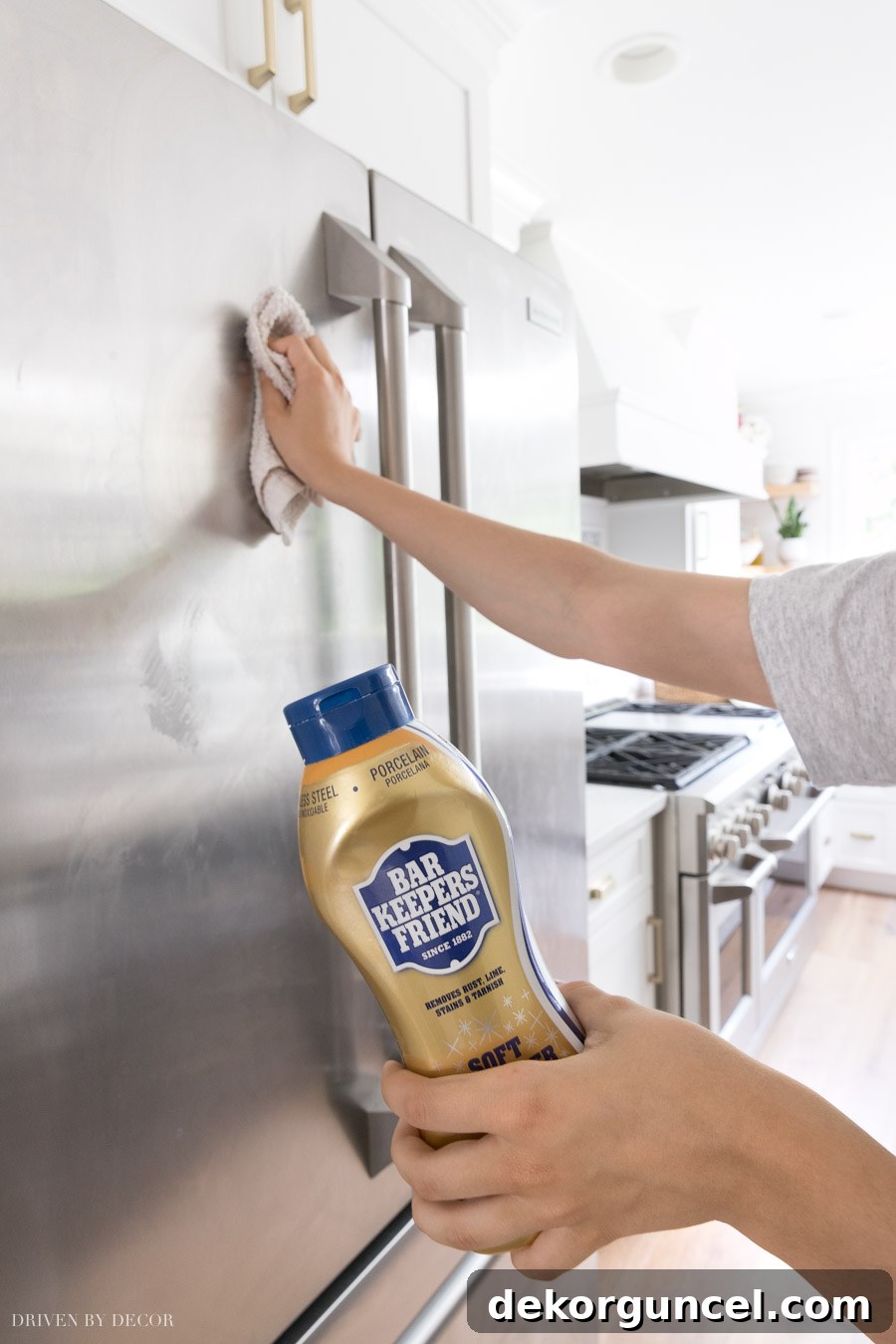
As an alternative to liquid Bar Keepers Friend, many users have reported excellent results with liquid Soft Scrub (ensure it’s the version without bleach). It offers a similar gentle abrasive action and cleaning power, making it another viable option for deep cleaning.
After you’ve thoroughly cleaned the surface with Bar Keepers Friend and witnessed the removal of grime, it’s time to rinse. Take the backside of that same cloth (or a new damp cloth) and thoroughly wipe down the appliance to remove all traces of the cleaner. It’s crucial to ensure no white residue remains. Next, grab a clean, dry microfiber cloth and dry your stainless steel appliance, again following the grain, to remove any moisture and begin to bring out the shine.
The final step, and arguably the secret to a long-lasting, fingerprint-resistant shine, is the application of mineral oil. If you notice any faint streaks or simply want to enhance the protective barrier, apply a very light application of olive oil or mineral oil. Place a few drops on a clean, dry microfiber cloth, then gently wipe down the stainless steel, always moving with the grain. The key here is “light application” – you only need a thin, almost invisible layer. The oil acts as a conditioner for the metal, creating a barrier that repels fingerprints and smudges, while simultaneously deepening the shine and making future cleaning easier. After applying, use a clean part of the cloth to buff away any excess oil until the surface is uniformly brilliant and streak-free.
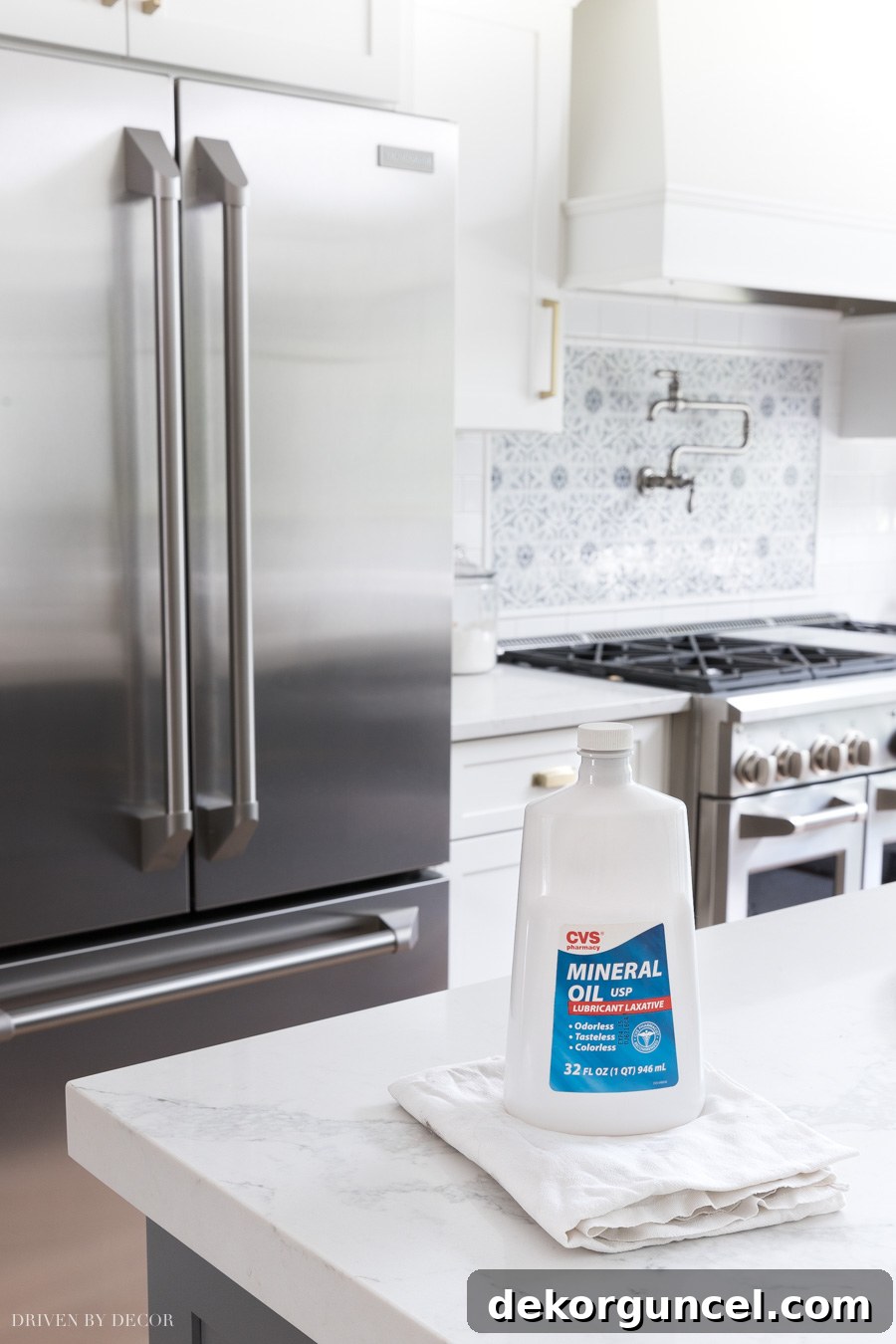
Regular mineral oil is widely available at most grocery stores, drug stores, and online {here}. This powerful two-step combination not only works beautifully but also has virtually no odor, making it a pleasant and highly effective cleaning experience.
6. The Norwex Cloth: Water-Only Cleaning Power
A method that has gained significant traction and fervent testimonials from many of my readers involves the Norwex EnviroCloth. Numerous individuals swear by this ingenious cleaning tool, claiming they use nothing but a damp Norwex cloth and achieve impeccable results on their stainless steel appliances. The appeal of the Norwex cloth lies in its advanced microfiber technology, which is designed to physically remove dirt, grease, and up to 99% of bacteria from surfaces using just water. This eliminates the need for chemical cleaners, making it an incredibly eco-friendly and safe option for homes with children or pets.
While Norwex cloths are certainly an investment, often considered pricey (you can purchase them online {here}), their reputation for exceptional cleaning performance and durability is impressive. The idea of achieving a pristine, streak-free shine with just water and a specialized cloth is incredibly intriguing. I’ve personally ordered one and am eager to put it to the test to see if it lives up to the widespread hype. I promise to follow up with my honest review and experience after I’ve had a chance to thoroughly evaluate its effectiveness on my own stainless steel appliances.
Crucial: What NOT To Use On Your Stainless Steel Appliances
Understanding what to avoid is just as critical, if not more so, than knowing how to clean stainless steel appliances. Using the wrong products or tools can irreparably damage the finish, dull its shine, and even make it more susceptible to future stains and corrosion. To preserve the beauty and integrity of your stainless steel, keep these items off your cleaning list:
- Abrasive Pads and Sponges: This category includes items like Magic Erasers, steel wool, scouring powders, and any scrub pads with a rough texture. While Magic Erasers are fantastic for many cleaning tasks, they act like very fine sandpaper on stainless steel. All these abrasive materials can cause microscopic scratches on the surface, which over time will dull the finish, making it appear cloudy and significantly more prone to catching dirt, fingerprints, and smudges. Once scratched, these marks are incredibly difficult, if not impossible, to remove.
- Bleach and Chlorine Products: Bleach and other chlorine-based cleaners are highly corrosive and can cause permanent discoloration, pitting, and even rust on stainless steel surfaces. They break down the passive layer of chromium oxide that protects stainless steel from corrosion. Therefore, if you opt to use a product like Soft Scrub, always ensure it is the version explicitly labeled “without bleach.”
- Ammonia-Based Cleaners: Most glass cleaners, such as Windex, contain ammonia. While they might seem harmless, ammonia-based products can leave streaks on stainless steel and, with repeated use, can potentially etch or dull the surface over time. They are designed for glass, not for the unique composition of stainless steel, and can strip away any protective oils or polishes you’ve applied.
By consciously avoiding these harmful cleaners and abrasive tools, you can ensure your stainless steel appliances remain beautiful, scratch-free, and gleaming for years to come.
And with that, I wish you a sparkling clean kitchen and a wonderful rest of your weekend! If you’re looking for more expert cleaning advice, you might also enjoy these other favorite cleaning posts:
Comprehensive Spring Cleaning Tips for a Fresh Home
Expert Guide on How to Clean Hardwood Floors Effectively
Discover the 12 Best Deep Cleaning Tools Every Home Needs
Simple Steps: How to Clean Your Washing Machine for Optimal Performance
XO,
