
Embarking on a bathroom renovation, especially for a master suite, presents a myriad of design choices that can feel overwhelming. Among the most significant decisions I grappled with during the planning stages of our previous home’s master bathroom was the choice of tiling material. The timeless elegance of natural marble tile was undeniably captivating, but it came with inherent questions about its upkeep compared to more forgiving options like ceramic or porcelain. The allure of marble’s unique beauty was strong, yet the potential for extensive maintenance and susceptibility to staining gave me pause.
After considerable contemplation, I ultimately decided to embrace the luxury and distinctive character that marble offers. This article delves into my firsthand experience with marble in a high-use area like a bathroom, sharing practical tips, maintenance insights, and my overarching conclusion on whether I would choose marble again for future bathroom projects. (Please note: This post includes commissionable links. For more information, refer to my full disclosure statement here.)
Integrating Marble Tile: Key Areas in Our Bathroom Design
Our master bathroom design thoughtfully incorporated marble in three distinct zones, each chosen to maximize its aesthetic impact while considering practical maintenance. The careful placement allowed us to enjoy the luxurious appeal of marble without undue stress.
Area #1: The Bathtub Accent Wall – A Statement of Serenity
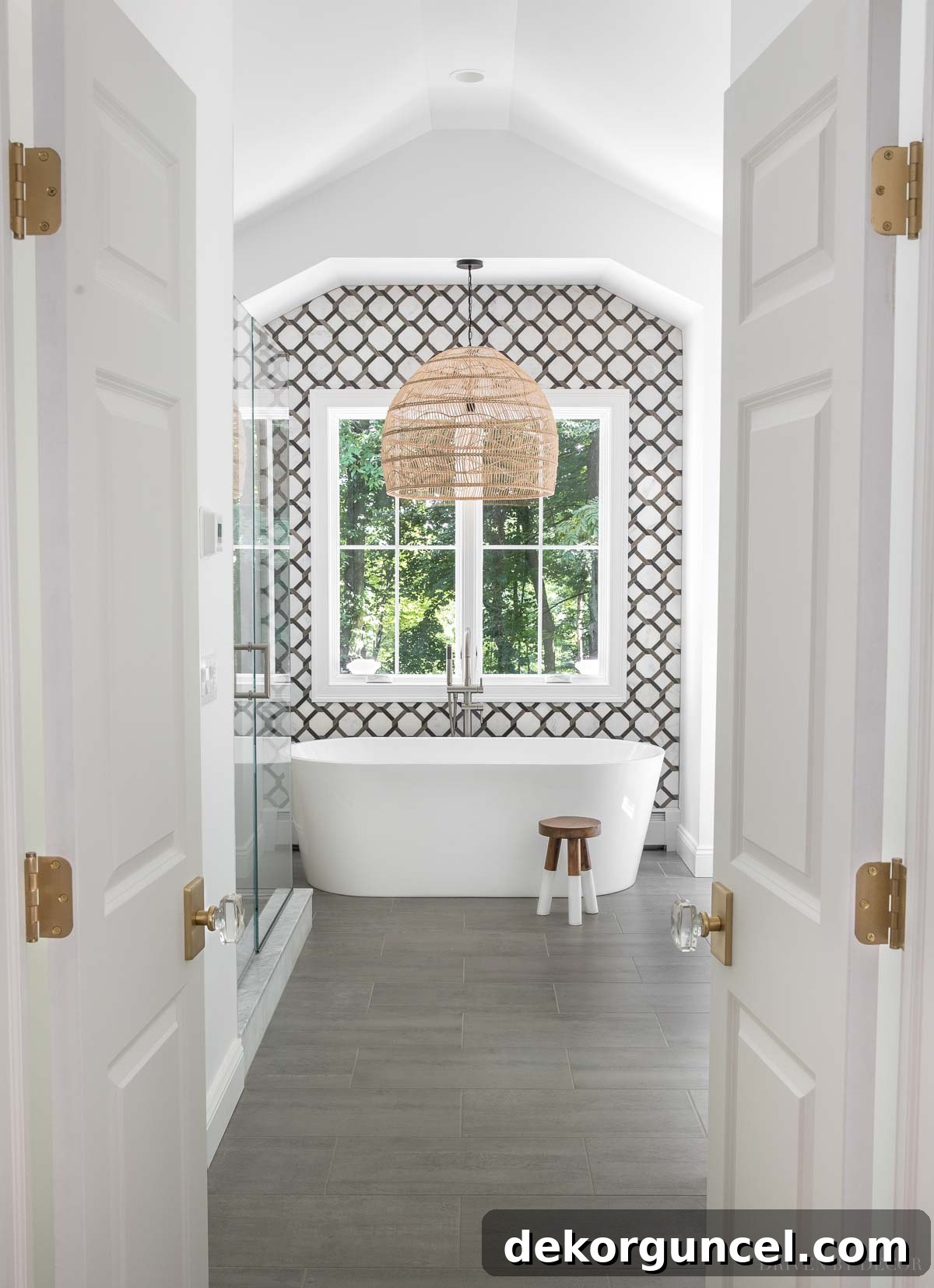
The first striking application of marble was on the accent wall behind our freestanding bathtub. Here, we selected a exquisite Walker Zanger mosaic tile, which features a harmonious blend of porcelain and natural marble. This choice was almost instinctual. Located in a spot where it’s primarily exposed to occasional water splashes rather than direct, heavy use, it presented an ideal canvas for marble’s delicate beauty. This accent wall isn’t just a backdrop; it’s a focal point that instantly elevates the entire bathroom, establishing a sophisticated and spa-like ambiance. The subtle veining and natural variations in the marble pieces within the mosaic add depth and visual interest, making this area truly captivating and a testament to marble’s unparalleled charm.
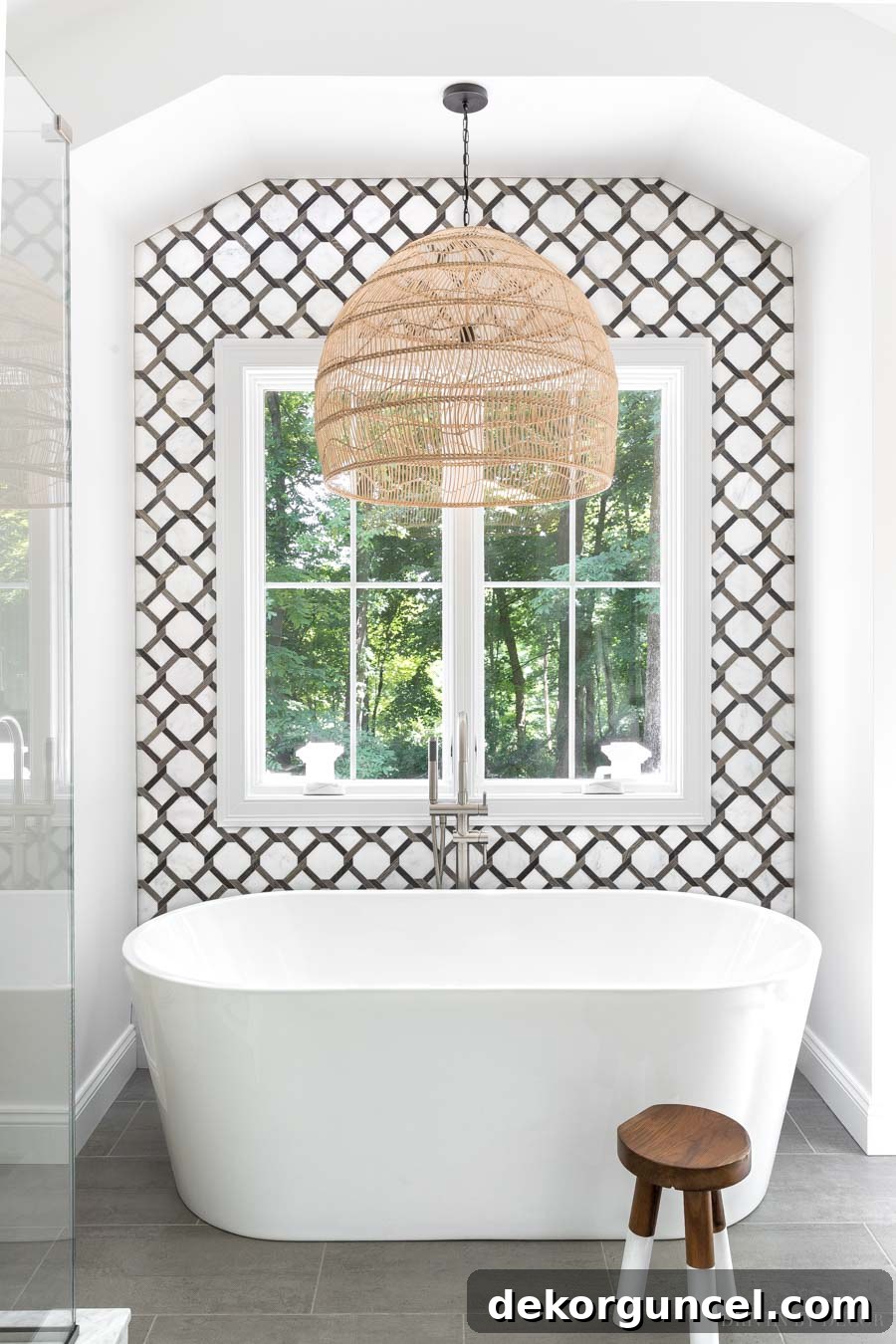
Sources: Rattan pendant (also available here) | Bathtub | Tub filler | Stool
Area #2: The Indulgent Marble Shower – A True Spa Experience
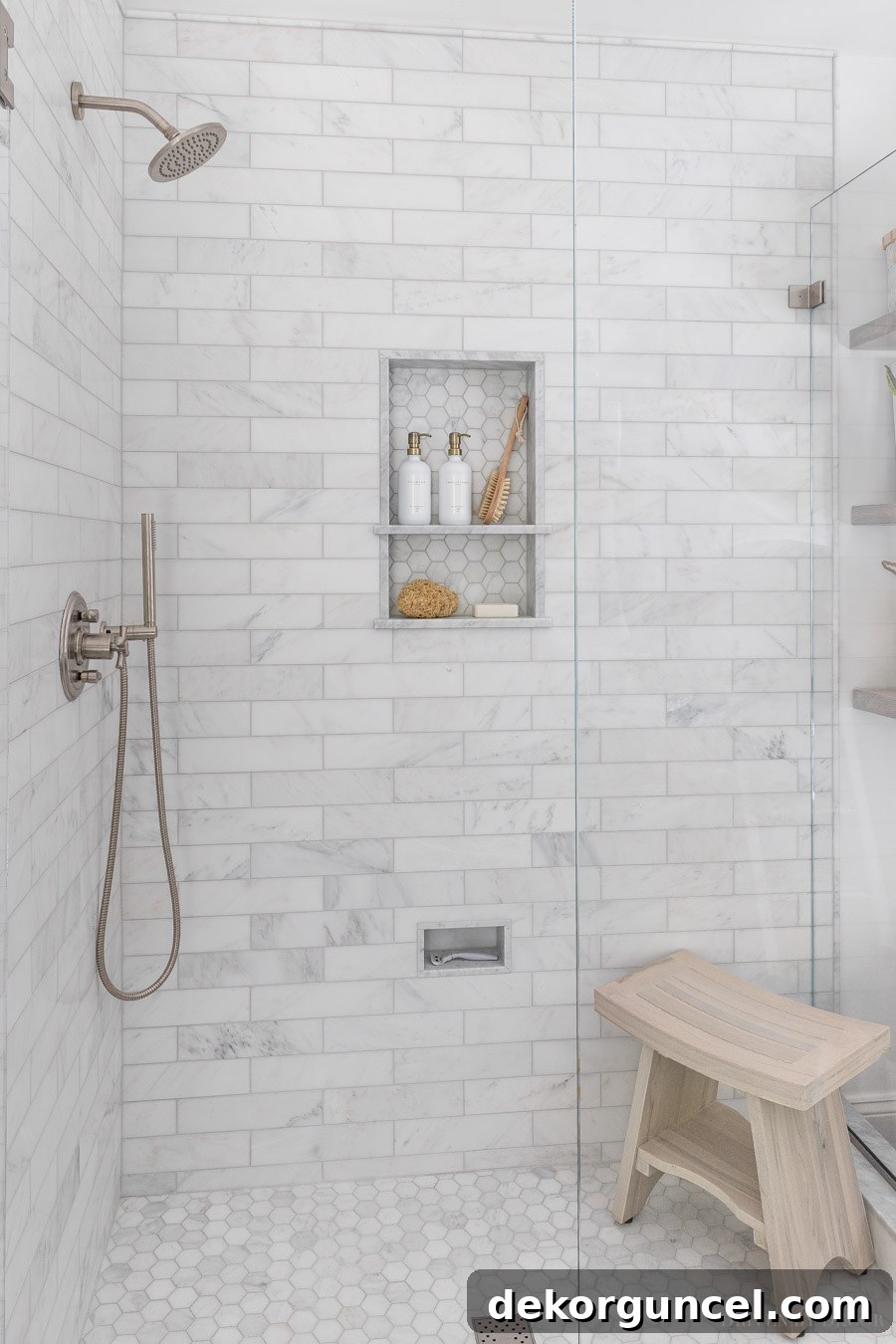
Our second and most extensive use of marble was within the shower enclosure. Here, we committed to a full marble immersion, with every surface – from the shower floor and walls to the accent in the niche and even the shower curb – being adorned in exquisite marble tile. For the shower walls, we chose the refined Walker Zanger 3″ x 12″ Bianco Bello tile, known for its elegant white background and delicate grey veining. To add textural contrast and enhance safety, the shower floor and niche featured the complementing Bianco Bello 2″ hexagon tile. This comprehensive application created a truly luxurious and cohesive spa-like environment, where the natural beauty of the stone envelops you. The varied tile sizes contribute to a sophisticated design, ensuring the shower is not just functional but a highlight of the bathroom’s overall aesthetic.
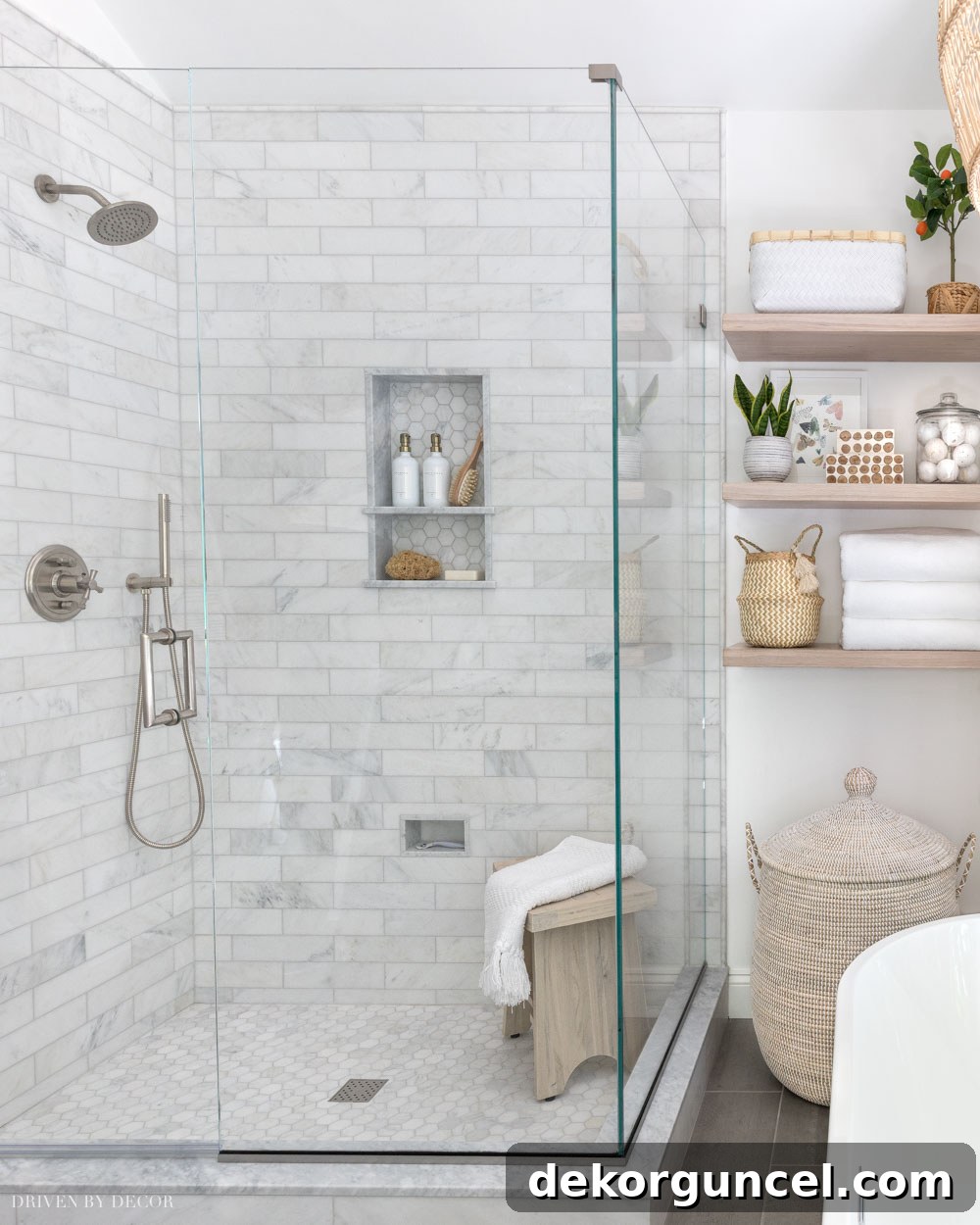
Shower sources: Pump bottles (16 oz white/gold) | Body brush | Sea sponge | Stool | Shelf sources: Floating shelves | White woven basket (medium) | Kumquat tree – no longer available | Colorful moth art print | Glass canister (1 gallon size) | Bath bombs | Belly basket with tassel (similar) | Favorite bath towels | Large lidded basket for hamper
Area #3: The Vanity Countertop – Everyday Luxury and Practicality
The third area featuring marble was our double vanity countertop. This unit, which we purchased here, was a comprehensive package including the vanity base, sinks, and, of course, the beautiful marble countertop. While the upfront cost of integrated vanities might seem substantial, it often presents a cost-effective solution when weighed against the expenses of purchasing separate cabinetry and sinks, followed by the fabrication and installation of custom countertops. The marble vanity top instantly infused a sense of refined luxury into the daily routine. Its smooth, cool surface and unique veining patterns make it a stunning focal point, blending functionality with high-end design. While marble countertops require attention, their visual impact in a bathroom environment is undeniably impressive and contributes significantly to the overall aesthetic appeal of the space.
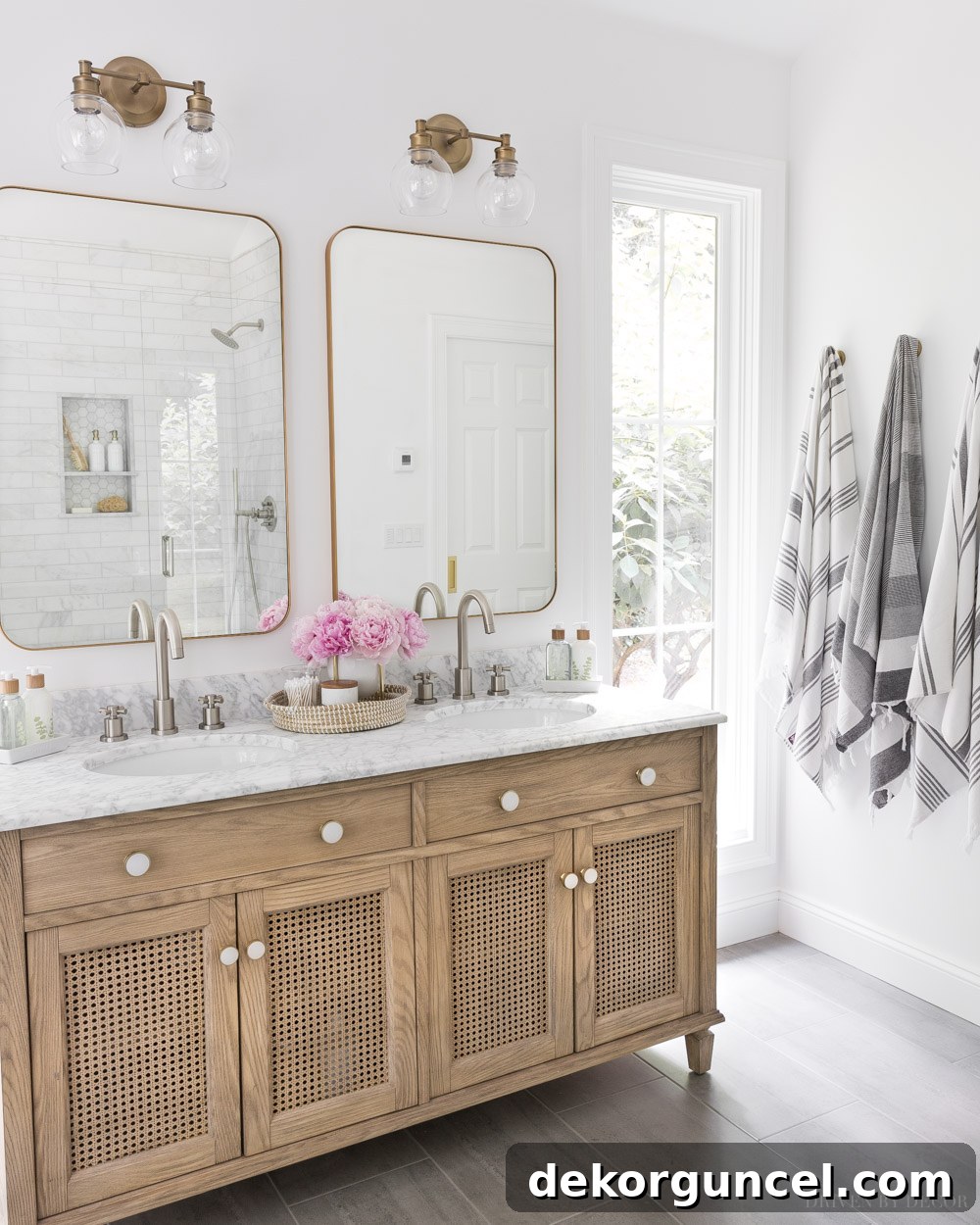
Sources: Wood & rattan double vanity | Vanity knobs | Bathroom faucets (similar) | Vanity lights | Vanity mirrors – gold | Woven seagrass tray on vanity (similar) | Marble stacking dishes | Soap & lotion sink set with tray | Gray & white striped towels | Robe hooks – golden champagne
Essential Marble Protection: How We Sealed Our Bathroom Marble
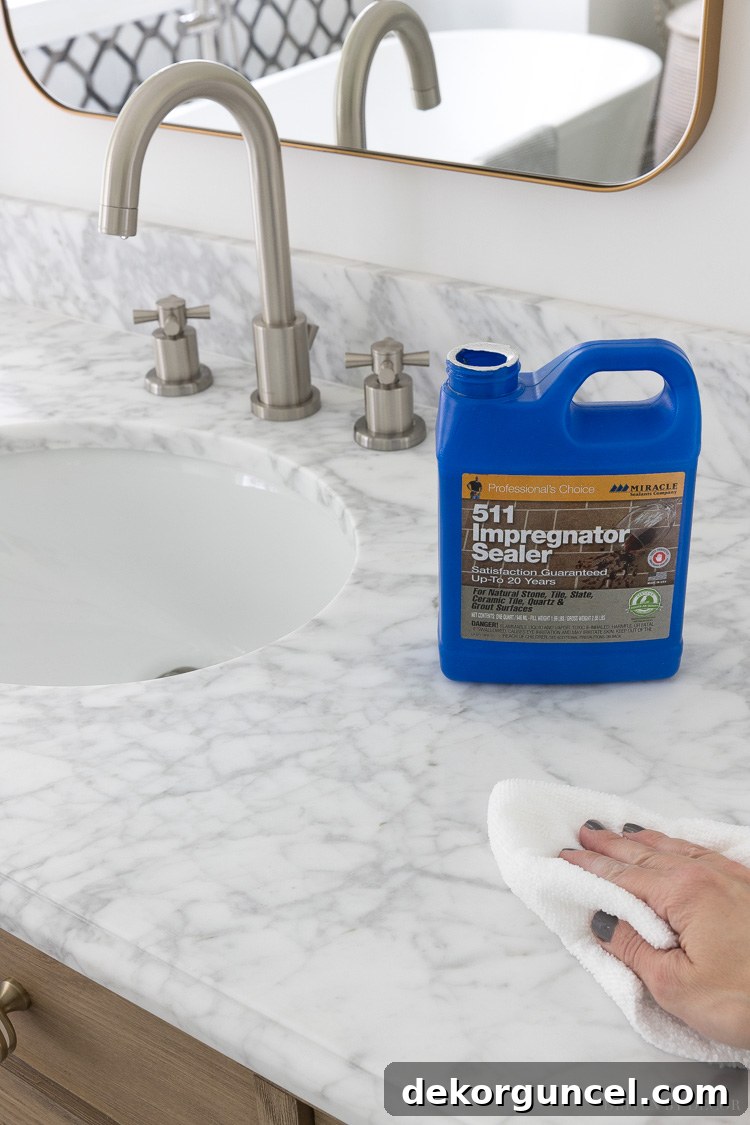
To ensure the longevity and pristine appearance of our marble, proper protection was paramount. We meticulously sealed every inch of our marble surfaces, including the grout lines, using a high-quality impregnator sealer. Unlike topical sealers that merely sit on the surface, impregnator sealers penetrate deep into the pores of the marble. This deep penetration creates a barrier against stains and moisture while crucially allowing the stone to breathe. This breathability is vital for natural stone like marble, preventing moisture from becoming trapped beneath the surface, which can lead to other issues. My professional tile installers handled the sealing of the shower and tub wall tiles immediately after installation, and I personally took on the task of sealing our marble vanity countertop.
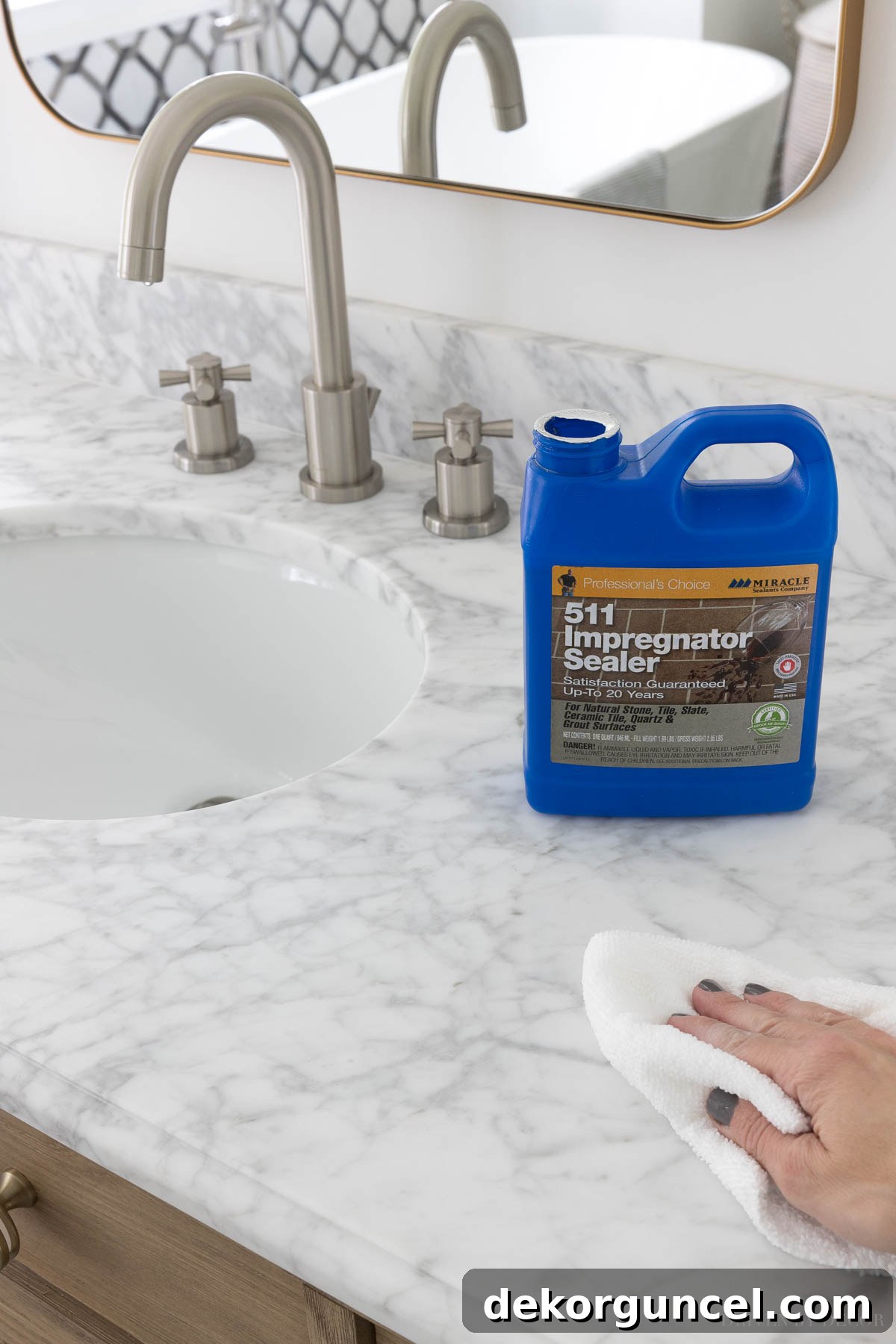
The application process for an impregnator sealer is surprisingly straightforward. First, ensure the marble surface is clean and completely dry. Then, apply the sealer evenly using either a clean paint brush or a soft white towel, ensuring consistent coverage. Allow the sealer to penetrate for approximately 3-5 minutes, giving it time to soak into the stone. Before it dries completely, use another clean, dry white towel to thoroughly buff away any excess product from the surface. For highly porous marble, like our vanity countertop which visibly absorbed the first application, a second coat may be beneficial to ensure maximum protection. After application, it’s crucial to allow the sealer to cure undisturbed for 1-3 days. You might notice a slight darkening of the marble’s appearance immediately after application, but this is temporary; the color will gradually lighten back to its original tone as the sealer fully cures.
While sealing marble is generally highly recommended by tile professionals for all installations (we also sealed the marble mosaic behind our kitchen range), it’s always wise to consult with your specific installers for their expert advice. There are occasional “horror stories” circulating about sealers reacting adversely with certain cleaning chemicals or unique mineral components within the stone itself. To prevent any unforeseen issues, I always advocate for an essential step: conduct a patch test. Apply the sealer to a small, inconspicuous area of the surface you intend to seal, or use a leftover tile sample. This simple precaution ensures compatibility and provides peace of mind before proceeding with the full application, safeguarding your beautiful marble investment.
Maintaining Brilliance: How We Clean Our Bathroom Marble Tile
Cleaning marble tile requires a more specific approach than its ceramic or porcelain counterparts due to its delicate nature. Marble is a natural stone composed primarily of calcium carbonate, making it highly susceptible to etching and damage from acidic substances. Therefore, common household cleaners like vinegar, bleach, most generic tub and tile cleaners, and even many glass cleaners are absolute no-gos. These harsh chemicals can permanently dull the marble’s finish or create visible etch marks by dissolving its surface. The golden rule for cleaning marble is to always opt for products that are mild, non-abrasive, and, critically, pH-balanced.
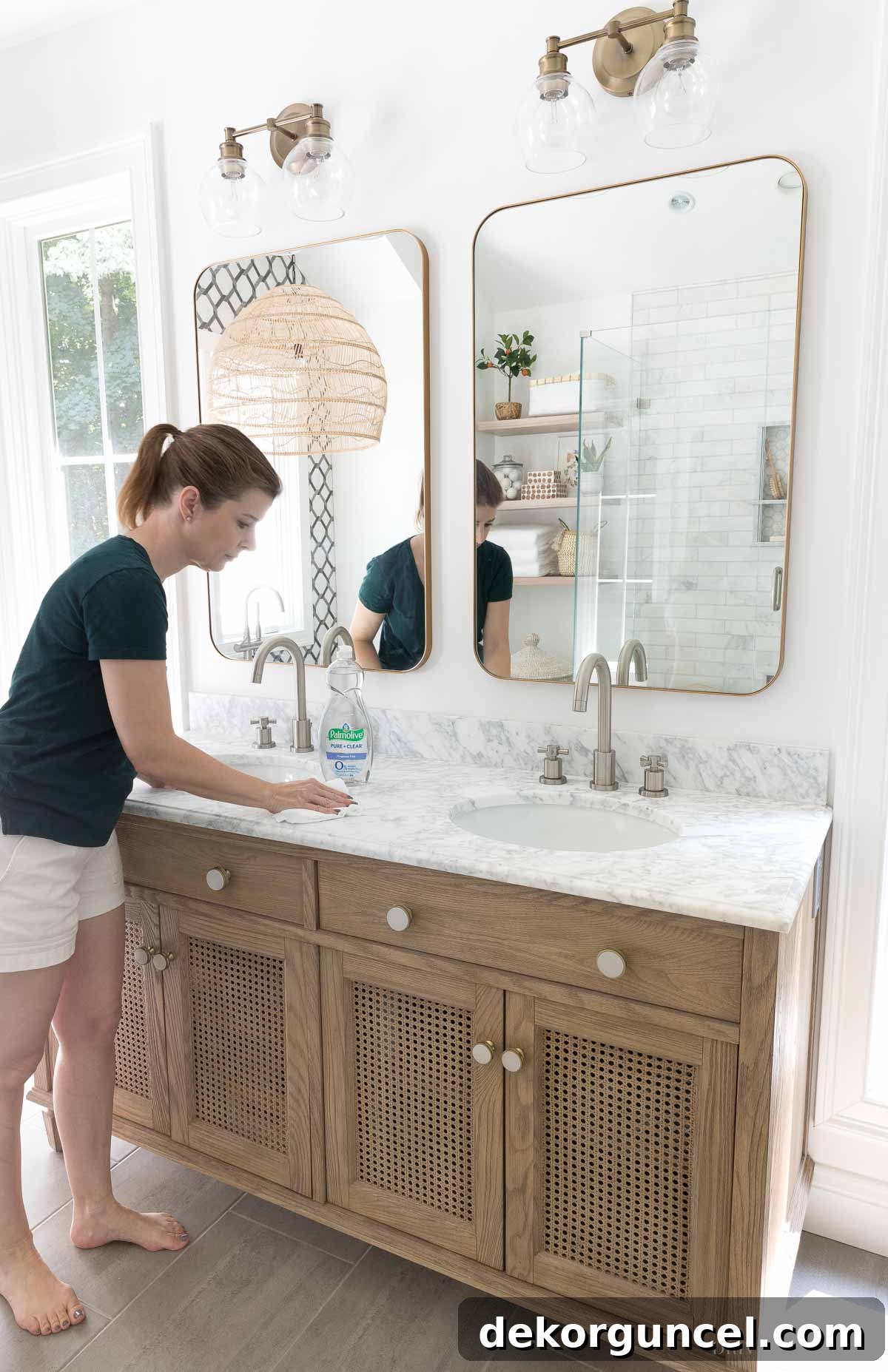
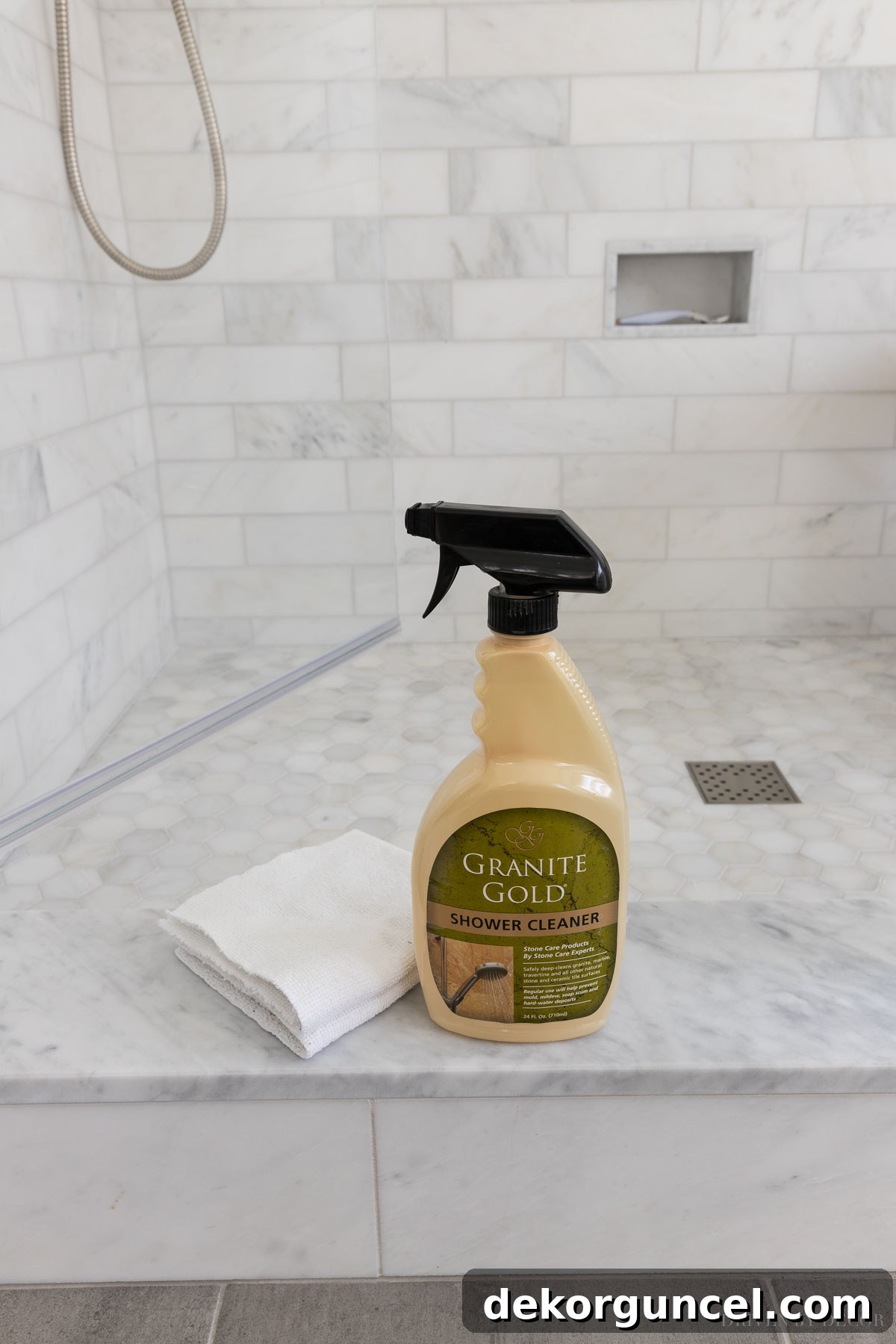
A simple, effective, and readily available option for daily cleaning is a mild, clear dish soap, such as this one I’ve used, diluted in warm water. This gentle solution effectively lifts grime without harming the stone. For targeted cleaning or if you prefer a spray, specialized marble and stone cleaners are excellent choices. We’ve had great success with Granite Gold shower cleaner, which is specifically formulated to be pH-balanced and free of phosphates and ammonia. An added benefit of such specialized cleaners is their ability to help prevent soap scum and hard water deposits with regular use, minimizing the need for more intensive cleaning later on.
However, beyond choosing the right cleaning products, the true secret to keeping marble sparkling clean, especially in a shower environment, lies in proactive prevention. My ultimate cleaning tip is to prevent mold and mildew from ever taking hold. This is achieved through simple, consistent daily habits. We keep this 10-inch squeegee conveniently placed on a small shelf within our shower bench.
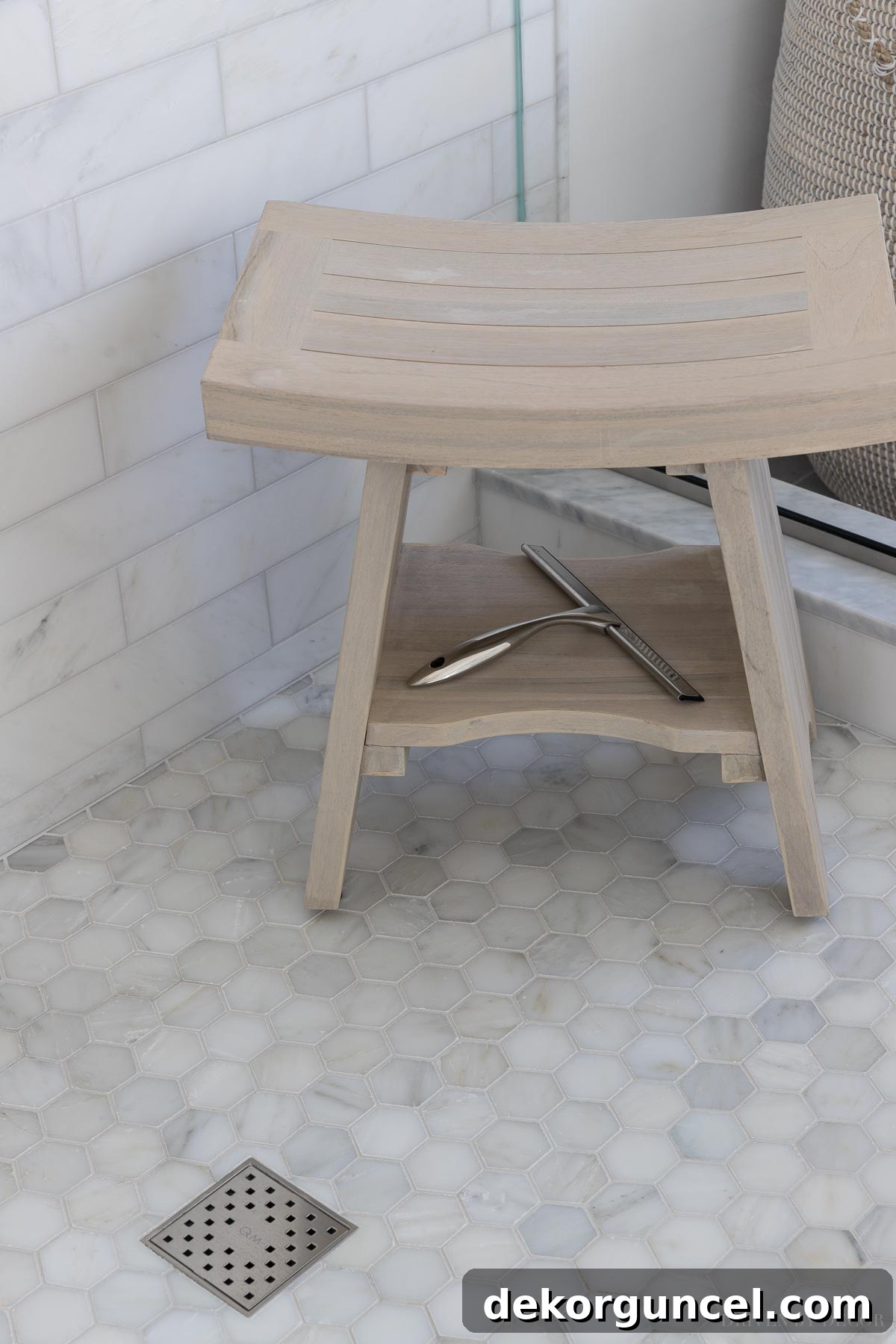
After the last person showers for the day, we use it not only on the shower glass but also on the marble walls and floor. This practice quickly removes excess water, which is the primary breeding ground for mold and mildew. Following the squeegee, I do a quick wipe-down of all surfaces, including shower hardware, with a microfiber cloth. This entire routine, from squeegeeing to wiping, takes a mere three minutes. While it might sound like an extra step, this consistent effort completely eliminates the need for time-consuming, deep-cleaning sessions later. Our master bathroom, completed over a year ago, remains entirely free of mold and mildew because the tile and grout are never left wet for extended periods. Truly, a squeegee is an invaluable tool and a marble shower’s best friend for maintaining its pristine condition.
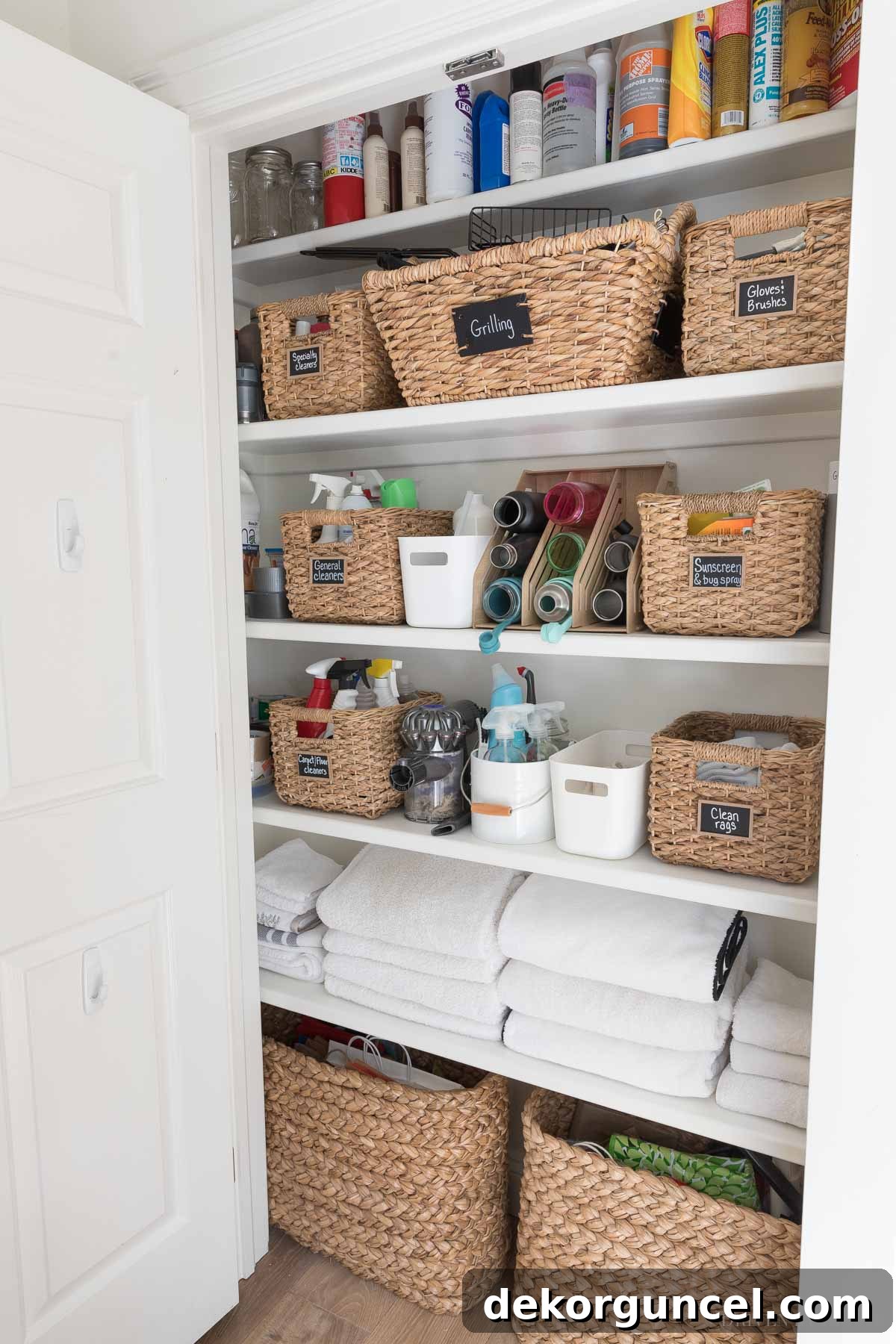
For an elevated cleaning experience, I enthusiastically recommend investing in this pack of 50 high-quality cleaning cloths. These microfiber cloths are not just superior for your marble shower but will revolutionize your entire household cleaning routine, regardless of your surfaces. Once you experience their effectiveness – how they absorb without streaking and pick up grime far better than paper towels – you’ll find yourself never going back. To keep them organized and within easy reach, I store our clean cloths in this stylish woven basket, conveniently placed on a shelf in our shallow storage closet. This ensures they are always accessible for a quick wipe-down or a more thorough clean, promoting a consistently tidy home.
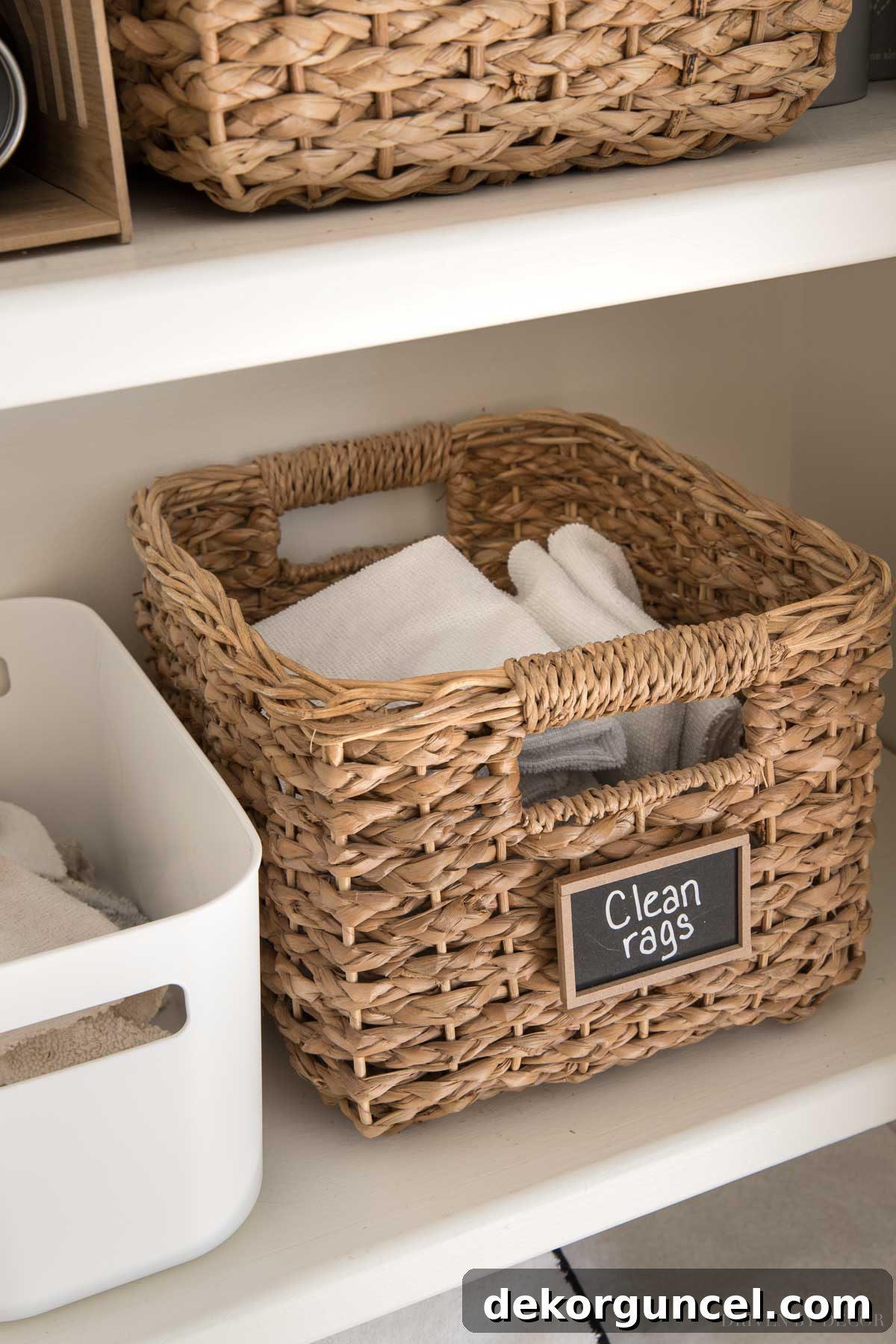
Adjacent to the basket of clean cloths, I keep one of these practical white bins. This designated bin serves as a collection point for all the dirty cloths after use. Once the bin is full, or I’ve accumulated a substantial number of used cloths, I simply toss them into the washing machine. It’s important to wash them separately from other laundry items and to avoid using fabric softener, as it can diminish their absorbency and effectiveness. After a cycle in the washer and dryer, they emerge fresh, clean, and ready to be used again, making this system both efficient and eco-friendly.
The Ultimate Verdict: Would I Use Marble Tile in a Bathroom Again?
Having lived with marble in our master bathroom and experienced its beauty and maintenance requirements firsthand, I can confidently say that I have absolutely zero regrets about our decision. The elegance and unique character that marble brought to the space were simply unparalleled. Therefore, my overall answer is a resounding yes: I would definitely choose to incorporate marble into a bathroom design again. However, this isn’t a blanket endorsement for every surface in every type of bathroom. My experience has provided valuable insights into where marble truly shines and where alternative materials might be a more practical choice. Let’s delve into the specifics of my recommendations for different areas.
Marble on a Bathroom Tile Floor: A Practical Consideration
Despite my deep appreciation for marble, I personally would NOT choose to install marble on the floor of a bathroom. This decision stems purely from practical considerations related to hygiene and cleaning. In areas surrounding a toilet, especially in a busy family bathroom, maintaining absolute sanitation is a top priority. In the unfortunate event of a toilet overflow or any accidental spills, my preference is to be able to thoroughly disinfect the area with strong cleaning agents like bleach. Cleaning such situations with only mild soap, as required for marble, simply wouldn’t provide the level of sanitization I’d be comfortable with. Furthermore, the thought of potential staining or etching from urine spots around the base of the toilet on delicate marble is a significant deterrent. Natural stone is porous and reactive to acids, making it a high-risk material for floor areas where hygiene and robust cleaning are paramount. For our bathroom floor, I opted for a simple, durable ceramic tile. This choice offered excellent practicality and ease of maintenance, all while coordinating beautifully with the luxurious marble used in other areas of the bathroom, achieving both aesthetic harmony and functional peace of mind.
Marble in a Bathroom Shower: Balancing Beauty and Effort
When it comes to the shower, I would absolutely use marble again for my own personal use. There is truly nothing that compares to the exquisite beauty and luxurious feel of natural marble in a shower. The way light reflects off its veining, the cool, smooth touch underfoot, and the spa-like atmosphere it creates are simply unmatched. For me, the reward of this unparalleled aesthetic is worth the small investment of time required for daily maintenance. I am dedicated to spending those few extra minutes to squeegee and wipe down the surfaces after each use, as I’ve described. This routine has proven incredibly effective in preventing mold, mildew, and hard water buildup, keeping the marble looking pristine.
However, I must emphasize that marble in a shower is not for everyone. If the idea of daily squeegeeing and wiping sounds like an onerous chore, and you’re more inclined to delay cleaning until your shower shows visible signs of mold and grime before attempting a deep clean, then I would strongly advise against marble. Once marble becomes deeply soiled, especially with soap scum and mineral deposits, it can be extremely challenging, if not impossible, to restore it to its original cleanliness without professional intervention or the risk of damage from inappropriate cleaners. For this very reason, I would never recommend marble for a children’s bathroom, where consistent daily maintenance is unlikely to happen.
Furthermore, my experienced tile installers, who possess a vast history of installing marble tile, offered a crucial piece of advice. They warned that marble tile on a shower floor, particularly, can develop a “mottled” or inconsistent appearance over time. This phenomenon occurs because certain areas of the floor may be more constantly exposed to water than others, leading to differential absorption and drying patterns which can alter the stone’s look. While I have fortunately not encountered this issue with our shower floor, they strongly encourage homeowners to consider an alternative, less porous material for the shower floor if they are not comfortable with this potential outcome. This valuable insight is something I’ve definitely filed away for any future renovation projects, highlighting the importance of understanding the long-term behaviors of natural stone in high-moisture environments.
Marble on a Bathroom Vanity Top: Elegance with Practical Alternatives
Our bathroom vanity came pre-fitted with a beautiful marble top, and having had other marble-topped vanities in previous homes, I have no regrets about these purchases. Marble counters, while still susceptible to etching and staining, generally present less of an issue in a bathroom setting compared to kitchen countertops. The bathroom typically sees less acidic food and beverage spills, and less intense cooking activity that can lead to rapid deterioration of marble’s surface. The inherent elegance and luxurious feel that a marble vanity top brings to a bathroom are undeniable, making it a popular choice for those seeking a high-end aesthetic.
That being said, if I were designing a bathroom from scratch with custom cabinetry and had the freedom to select any material for a custom vanity top, I would most likely opt for quartzite or quartz over marble. While marble is stunning, modern engineered stones like quartz and natural stones like quartzite offer comparable beauty with significantly enhanced durability and ease of maintenance. For instance, we previously had Caesarstone quartz in Statuario Maximus in our kitchen. This particular quartz perfectly mimics the sophisticated look of high-end marble, complete with intricate veining, yet it was an absolute breeze to maintain. Quartz is non-porous, meaning it never needs sealing, is highly resistant to stains and etching, and can withstand common household cleaners without damage. This makes it an incredibly practical choice for vanity tops, especially for busy households or those who prefer minimal upkeep without compromising on a luxurious appearance.
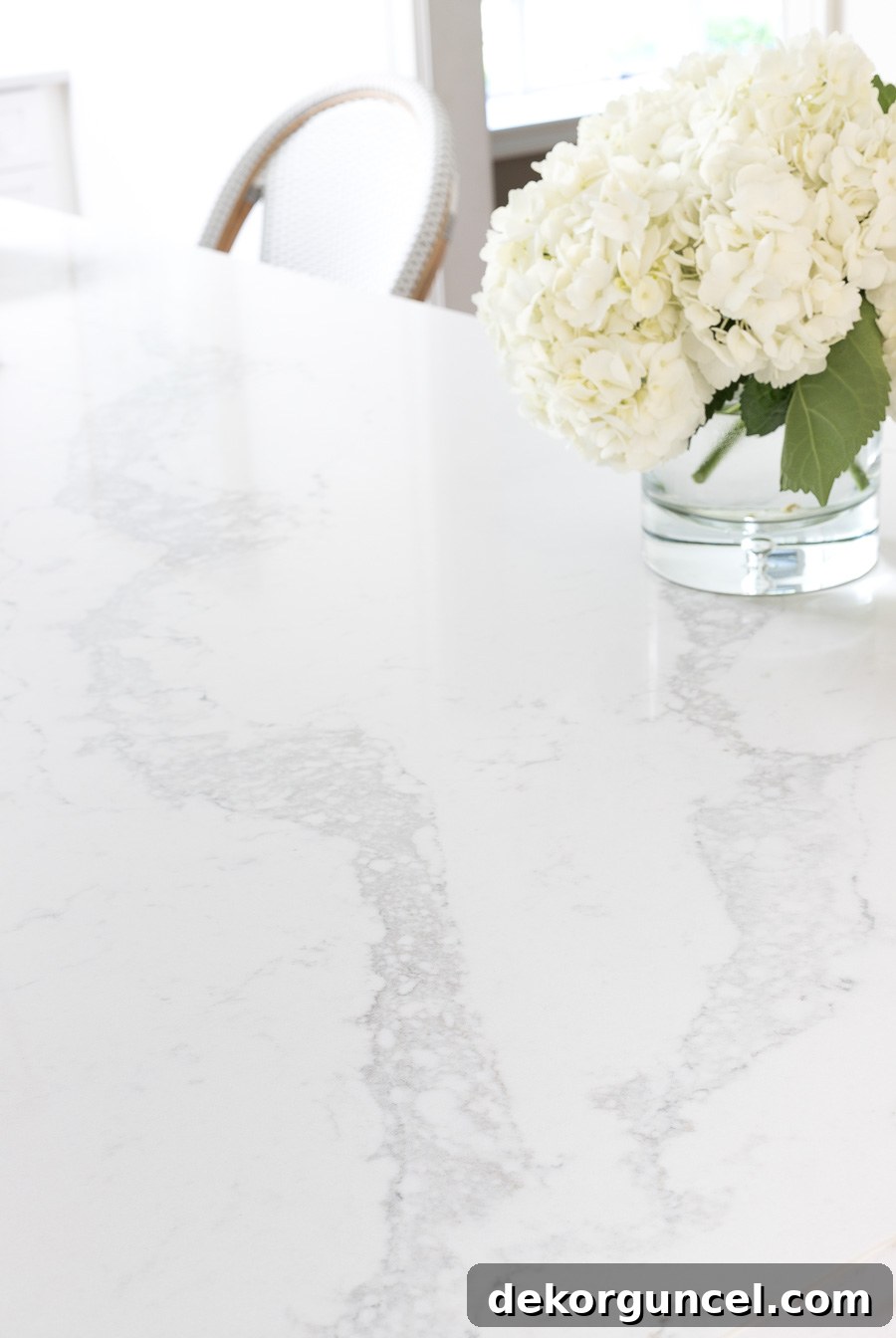
Ultimately, the decisions I’ve made for my bathroom are deeply personal and may not align with everyone’s preferences or lifestyle. It’s crucial to understand that there isn’t a single “right” answer when choosing materials for your home. For example, while I know myself well enough to understand that marble kitchen counters are not for me – the thought of etching and the constant fear of stains would frankly drive me nuts – I have numerous friends who absolutely adore their marble kitchen countertops. And I must admit, I love seeing them in their homes; they are undeniably gorgeous! The key lies in self-awareness: knowing your own habits, priorities, and tolerance for maintenance. By thoroughly understanding the ins and outs of each material option, you can make informed choices that best suit your individual needs, aesthetic desires, and practical considerations, ensuring lasting satisfaction with your home’s design.
