
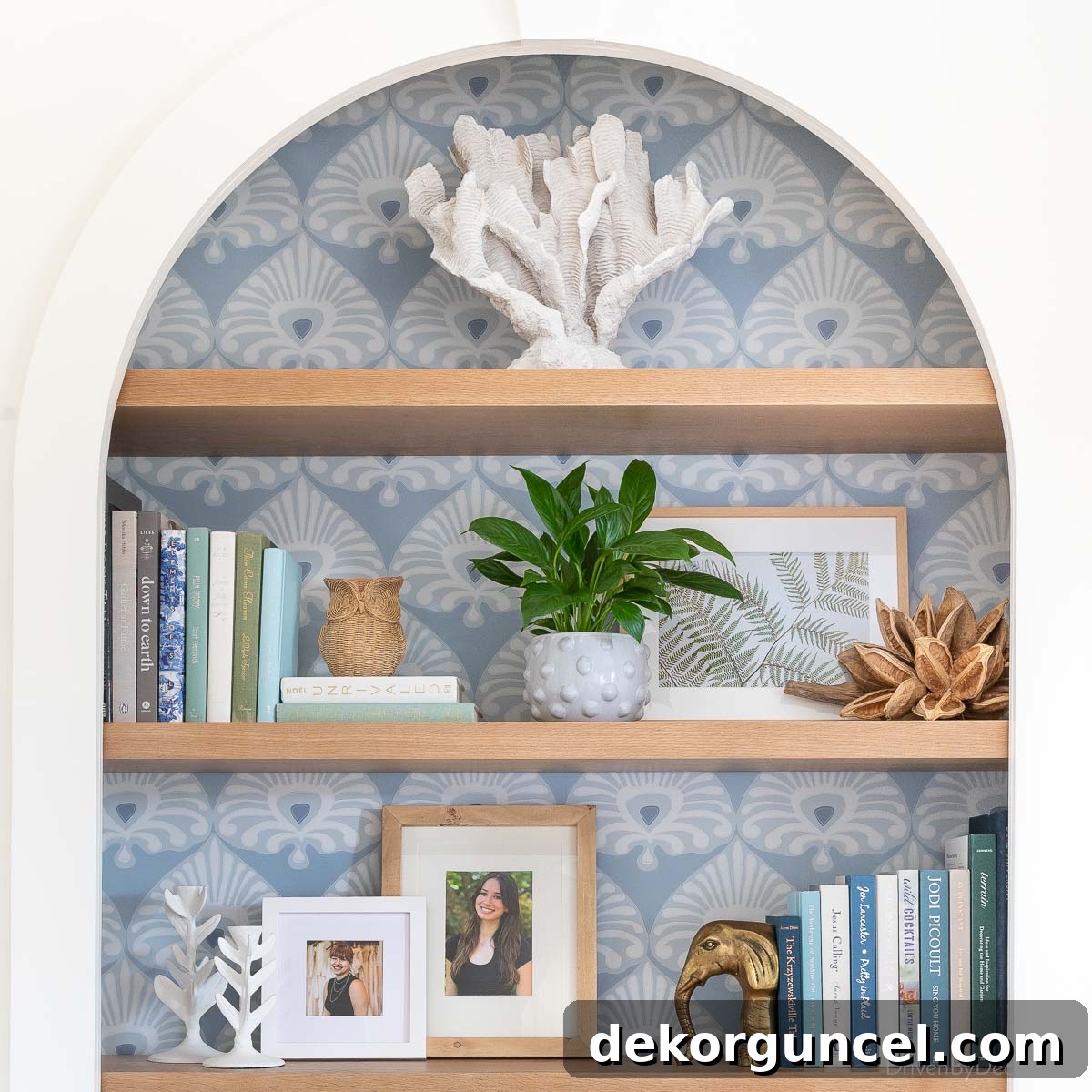
Are your bookshelves looking a little bare or uninspired? Discover ten simple, tried-and-true shelf decorating formulas that effortlessly transform any space!
Many homeowners find themselves adept at selecting key furniture pieces, yet struggle with the crucial art of accessorizing, especially when it comes to styling bookshelves. While shelf styling can seem like an elusive art form, it doesn’t have to be. We’ve distilled it into a series of foolproof techniques that anyone can master. This guide presents ten straightforward formulas designed to help you decorate a bookshelf with confidence and flair. If you have any bare shelves giving you the “stink-eye,” prepare to find the inspiration and practical know-how to finally bring them to life and infuse your home with personality. (Please note: This post includes affiliate links. For a full disclosure statement, click here).
Before we dive into our ten innovative bookshelf decor formulas, let’s establish a few fundamental principles of effective shelf styling. These foundational tips will serve as your guiding compass as you embark on your decorating journey:
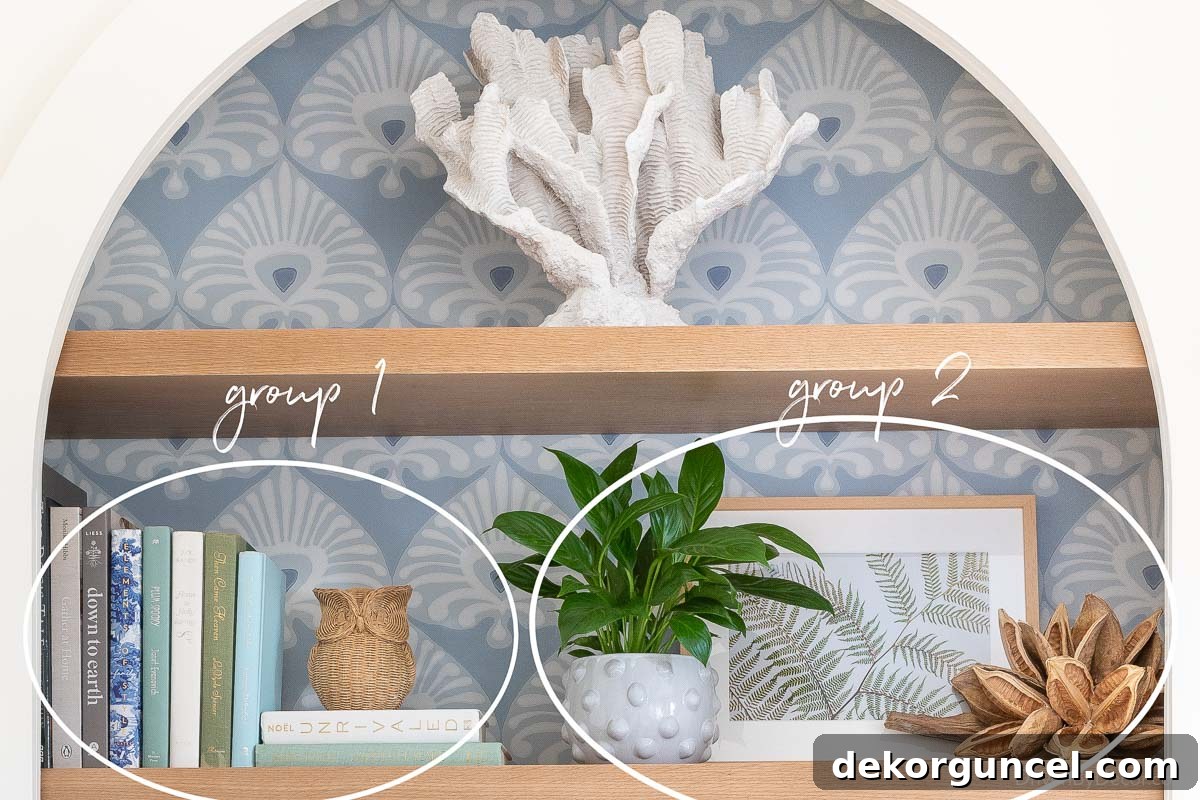
- Think in Groupings, Not Lines: Instead of arranging individual objects in a monotonous line, visualize your shelf as segments for distinct groupings. For most standard-length shelves, aiming for two to three well-curated groupings of accessories will create visual balance and interest. For instance, on the shelf below, the collection of books paired with a charming decorative owl forms one cohesive grouping, while the vibrant plant, a stylish frame, and an intriguing star pod create a second, complementary arrangement. This approach prevents a cluttered look and guides the eye through the display.
- Stagger Heights for Dynamic Interest: Within each grouping, consciously vary the heights of your objects. A flat, uniform line of accessories can appear static and uninteresting. Introducing different heights adds visual rhythm and dimension, making your display more engaging and professional. Think of it as creating a mini skyline on your shelf.
- Vary Colors, Finishes, and Textures: To maintain visual excitement and depth, incorporate a diverse range of colors, finishes, and textures. Mix glossy ceramics with matte wood, soft textiles with hard metals, or smooth glass with rough stone. This interplay of elements adds sophistication and prevents your shelves from looking one-dimensional.
- Inject Personal Charm: Ultimately, shelf styling is an opportunity for self-expression. Don’t shy away from displaying cherished family photos, unique keepsakes, or any items that genuinely bring a smile to your face. These personal touches transform a mere display into a reflection of your life and passions, making your home truly yours.
With these foundational principles in mind, let’s explore my ten proven formulas for how to decorate a bookshelf, beginning with several techniques I applied when styling these beautiful oak shelves in our family room. For more details on this transformation, you can refer to my recent post on mounting a TV above our fireplace:
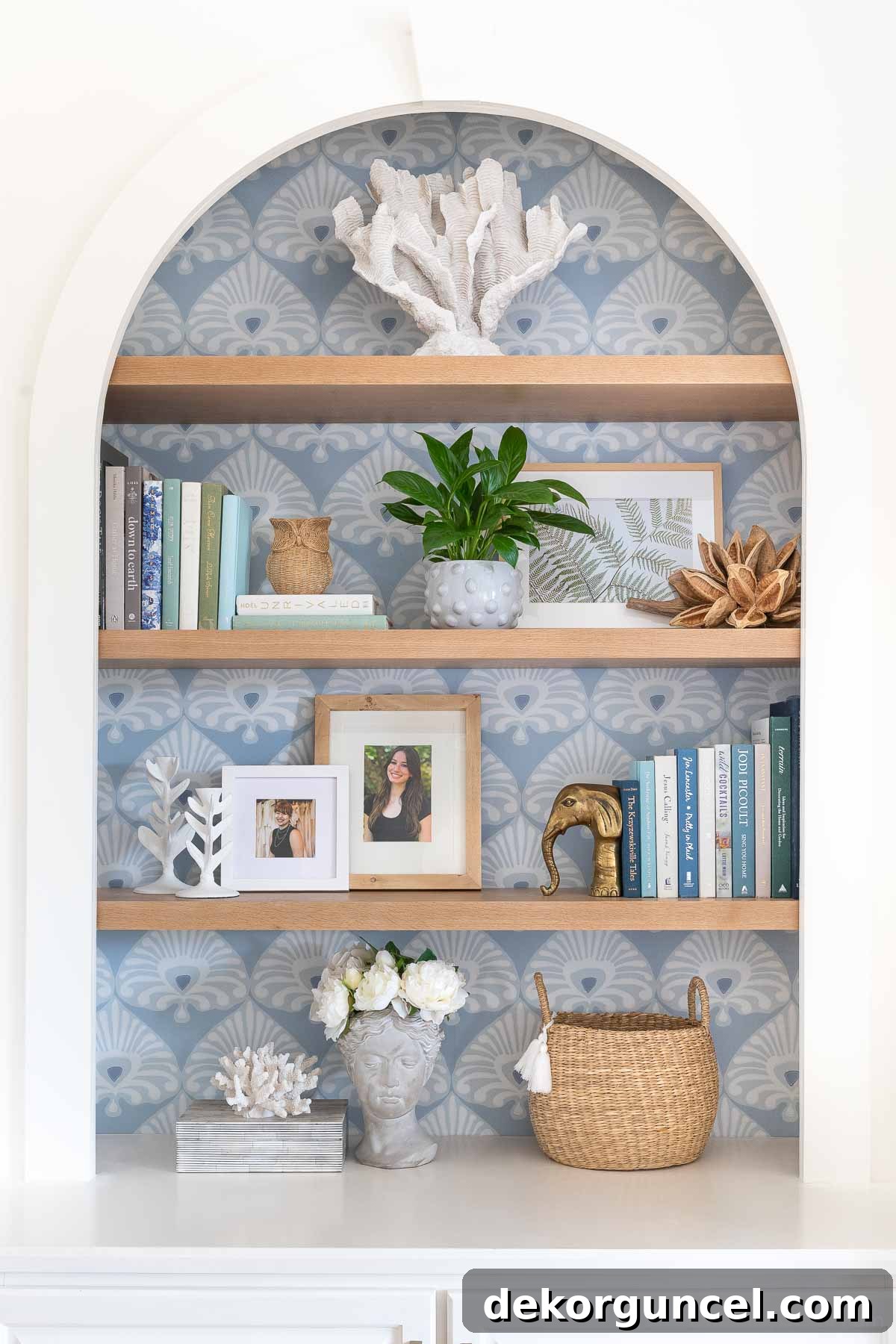
Sources: Wallpaper | Oak shelves (Nature finish) | Large faux coral (similar) | White bubble planter | Fern art | Star pod | White candlesticks | White square frame (8.3″ x 8.3″) | Burlwood frame (11″ x 13″) | Elephant bookend | Decorative black & white box | Coral “topper” (similar) | Bust planter | Round basket
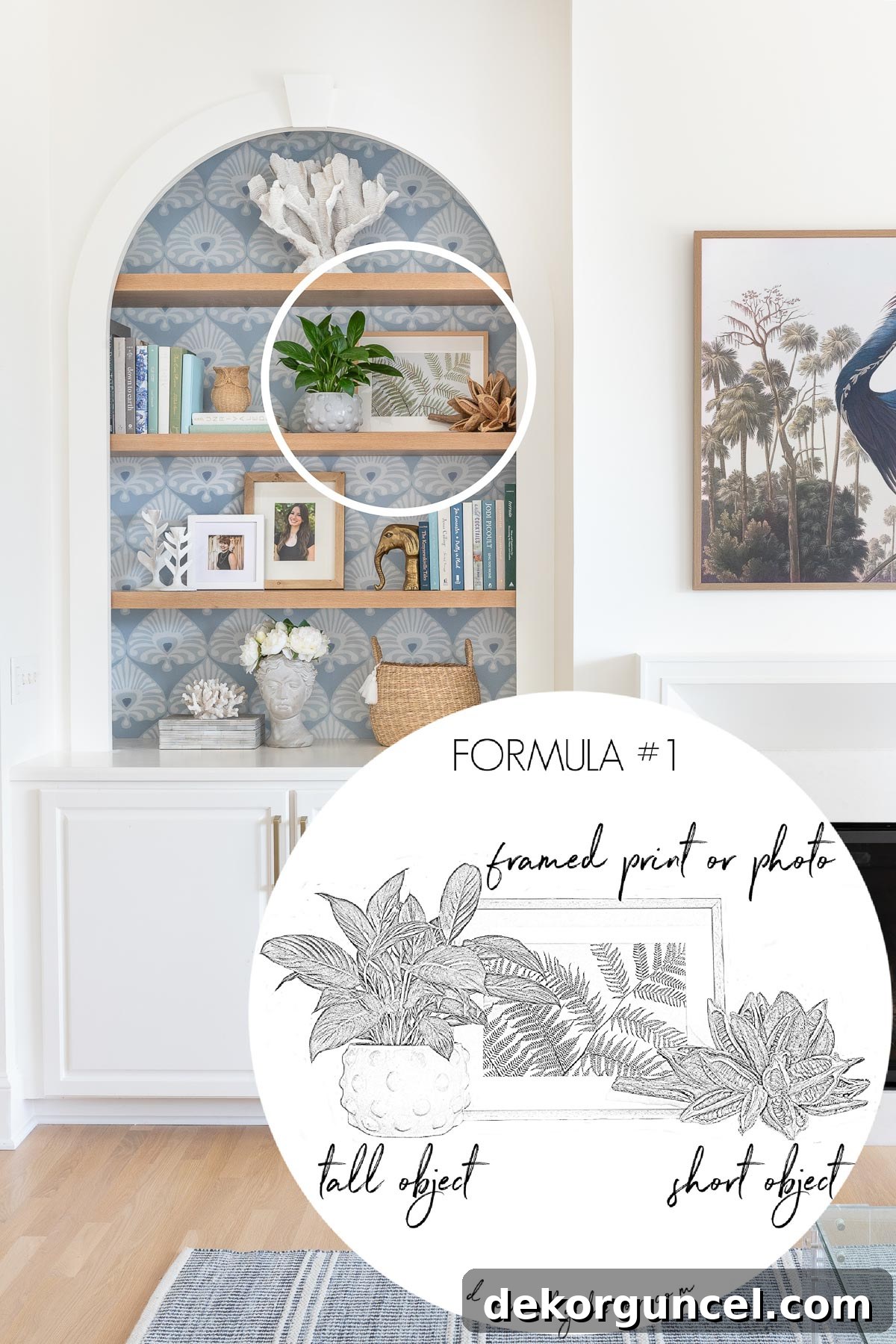
1. Tall Plant + Framed Print + Short Object
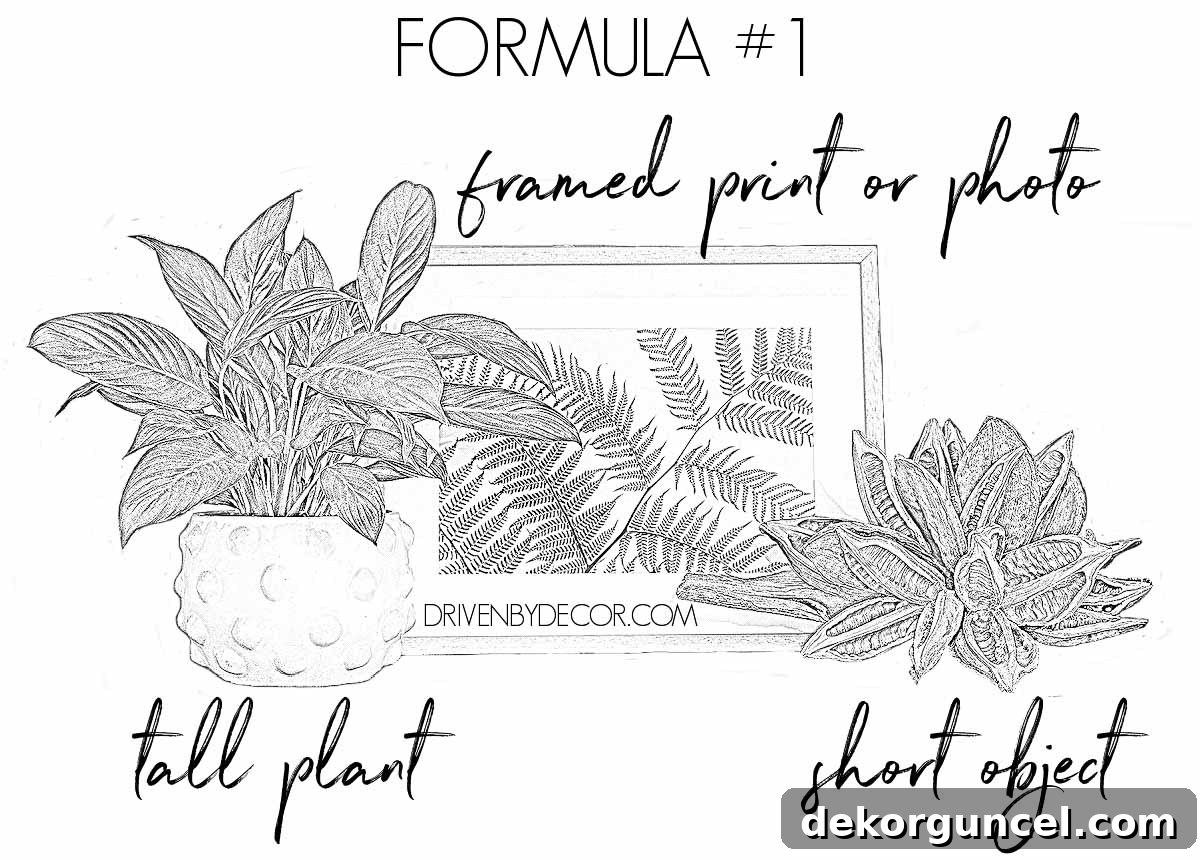
Our first foolproof formula for shelf styling involves creating a dynamic grouping of three objects, each intentionally chosen for its varying height. Begin with a striking tall plant nestled in a beautiful decorative planter, which provides natural texture and a touch of life. Next, introduce a framed print or a cherished photograph; this can be horizontally, vertically, or squarely oriented, adding visual interest and personal expression. Finally, complete the trio with a third, shorter accessory. The key here is to ensure that the objects at the ends gracefully overlap the edges of the frame, creating a cohesive and intertwined look. Remember, the goal is distinct height variation – no two objects should be precisely the same height, as this creates a static appearance. This formula, when applied, ensures a balanced and visually appealing display, drawing the eye naturally across the shelf.
2. Books Standing Up + Books Lying Down + Topper
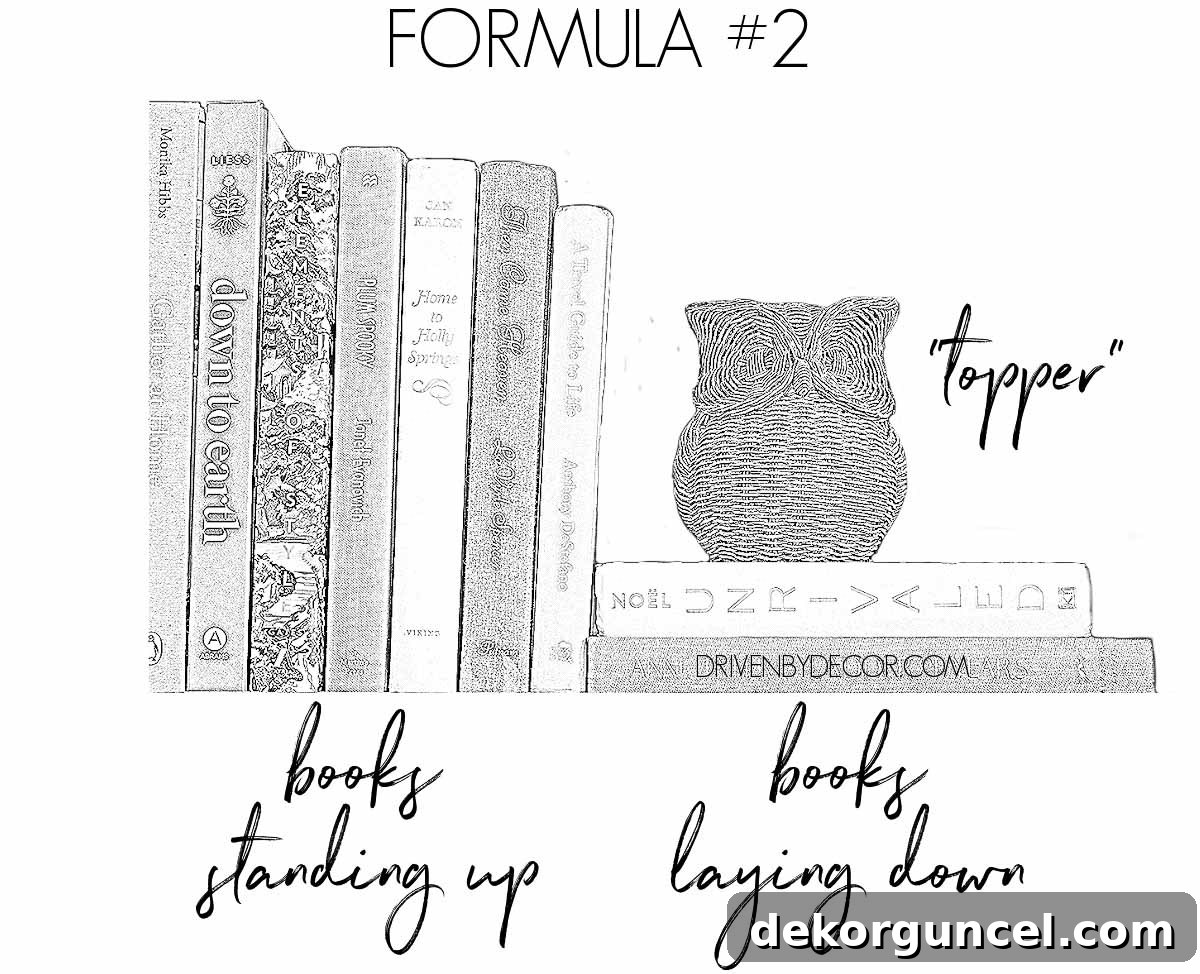
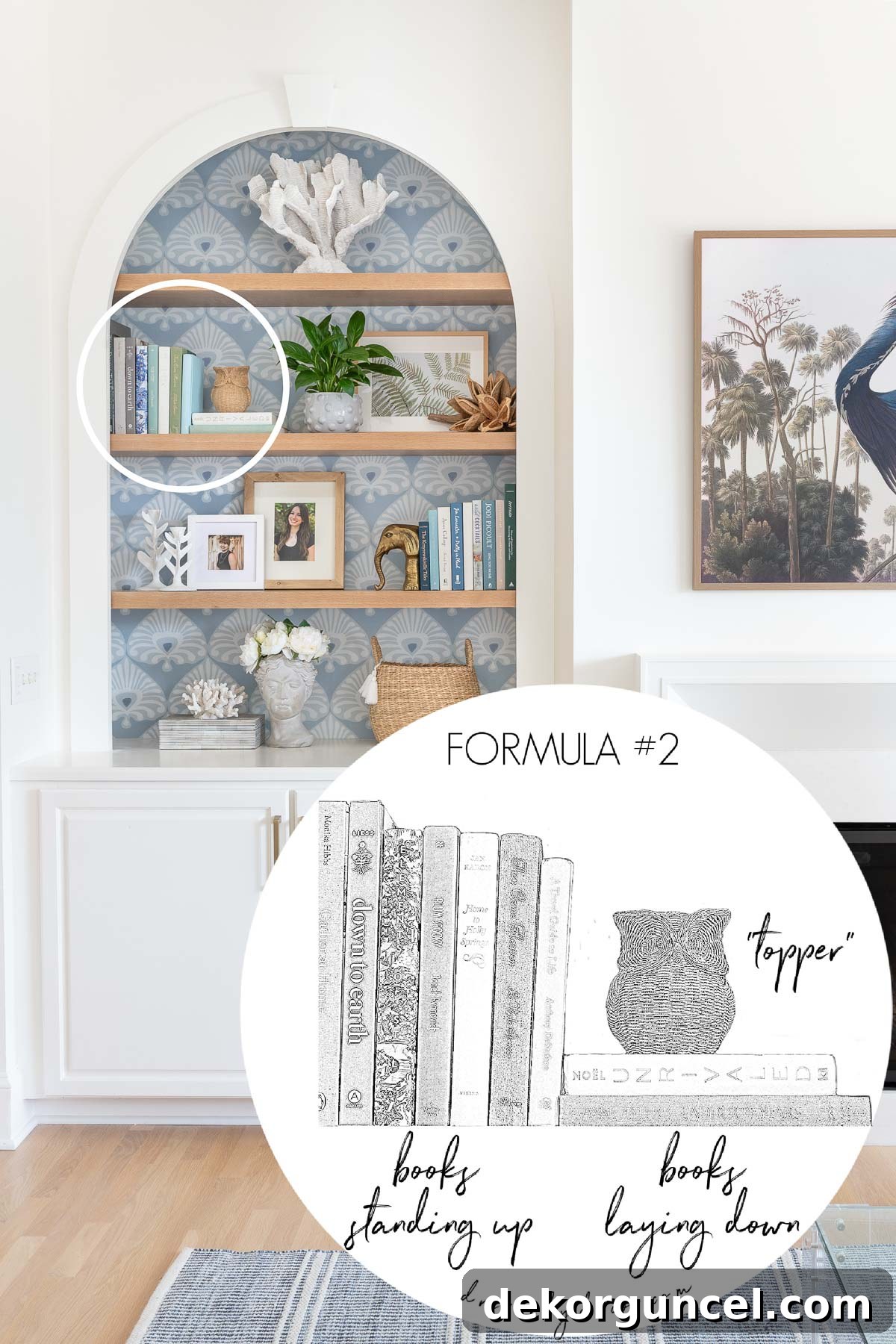
This is arguably one of the simplest yet most effective bookshelf styling formulas, a technique I frequently employ for its effortless charm. Start by arranging several books upright at one end of your shelf, ideally ordered by height to create a neat, graduated look. Immediately adjacent to them, stack two or three books horizontally. This combination of vertical and horizontal lines adds visual interest and breaks up the monotony often associated with rows of books. The final touch is a “topper” – a small, decorative accessory placed atop the stacked horizontal books. These toppers are perfect for adding personality and can also be used when styling coffee tables or decorative boxes.
A wide array of small objects can serve as an excellent topper: a whimsical sculpture, your child’s latest clay creation, a delicate small framed photo, or an elegant decorative bowl. The key is to select an item that is shorter than the shortest standing book and narrower than the widest lying-down book, ensuring it complements the books without overwhelming them. For instance, the endearing woven owl I chose adds a playful and unique touch, demonstrating how even a small accessory can make a big impact on your bookshelf decor.
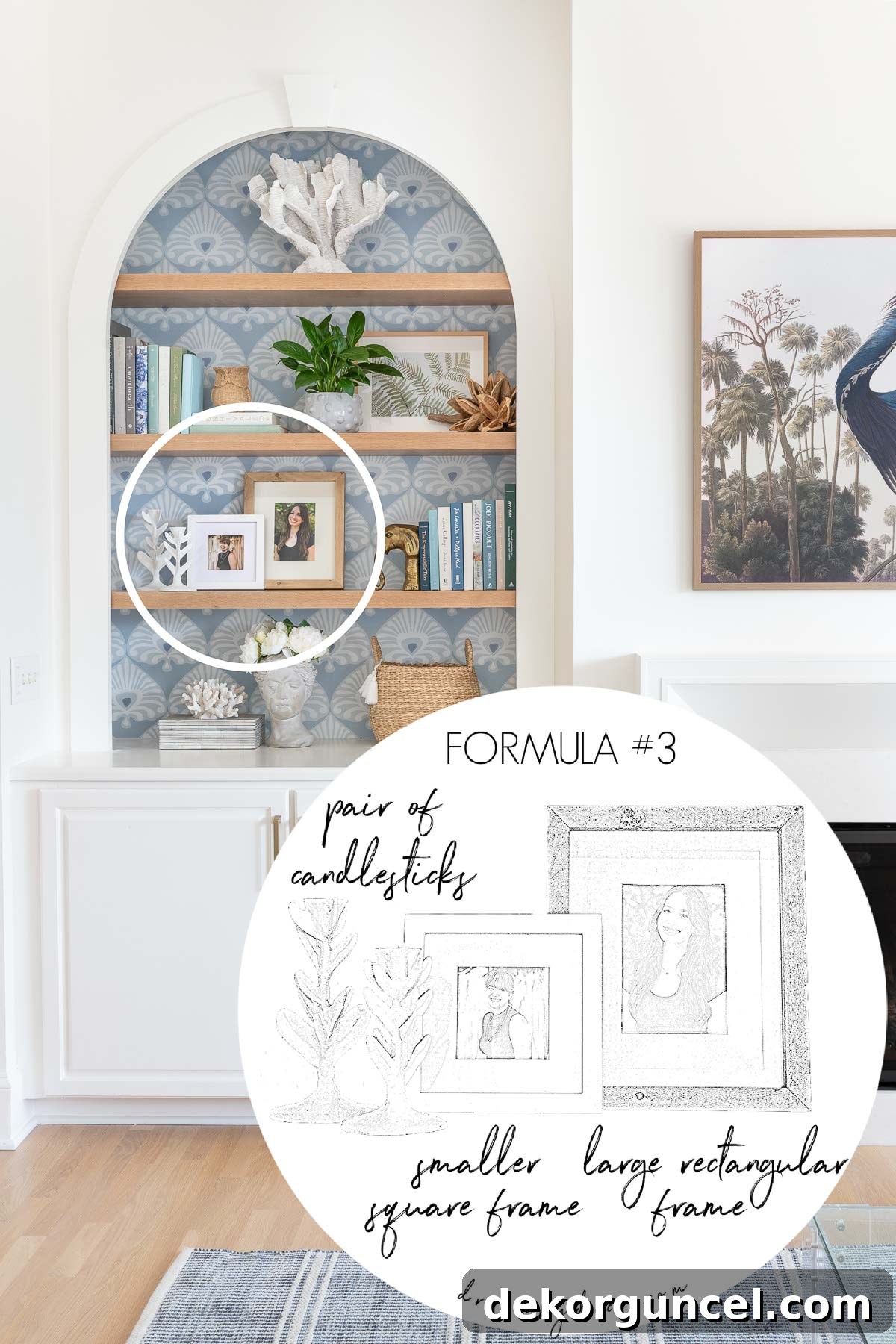
3. Candlesticks + Small Square Frame + Larger Rectangular Frame
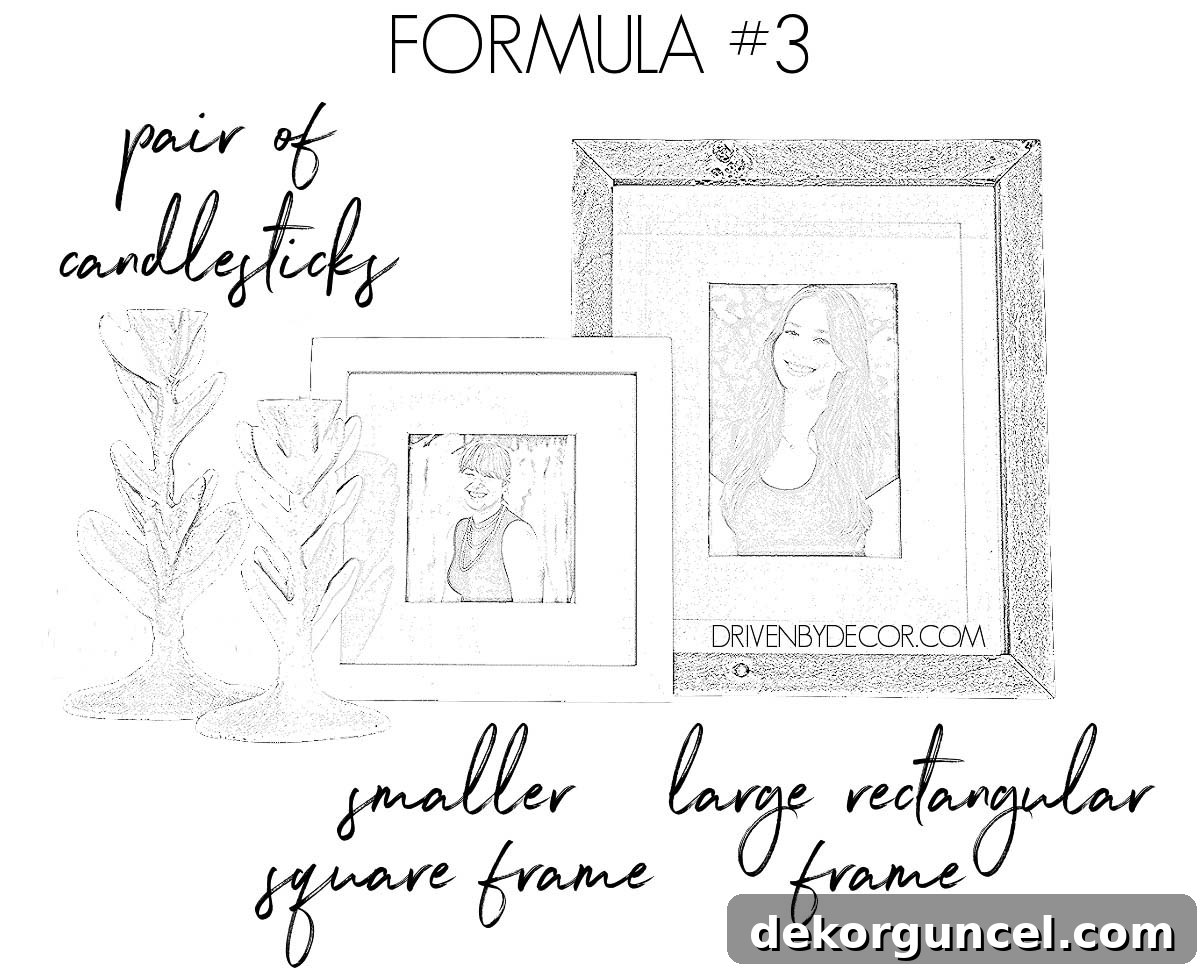
Integrating personal elements like family photos into your bookshelf decor adds warmth and character, and Formula #3 provides a perfect framework for doing just that! This elegant arrangement involves layering a pair of candlesticks with two frames of contrasting sizes and orientations. Begin by placing a set of candlesticks, which can vary in height and material to add visual interest, on one side of your grouping. Next, layer a smaller square frame in front of or slightly overlapping a larger rectangular frame. This layering technique creates depth and a sophisticated visual narrative.
While the exact sizing of the frames can be adapted to suit your specific items and shelf dimensions, the general rule is to ensure the smaller frame is at least a few inches shorter than the larger one to achieve that desirable layered effect. On our family room shelves, for instance, I opted for an 11″ x 13″ burlwood frame as the backdrop, with a crisp white 8.3″ x 8.3″ square frame positioned in front. This combination not only highlights cherished memories but also adds an artistic and structured touch to your bookshelf styling, making it a focal point in any room.
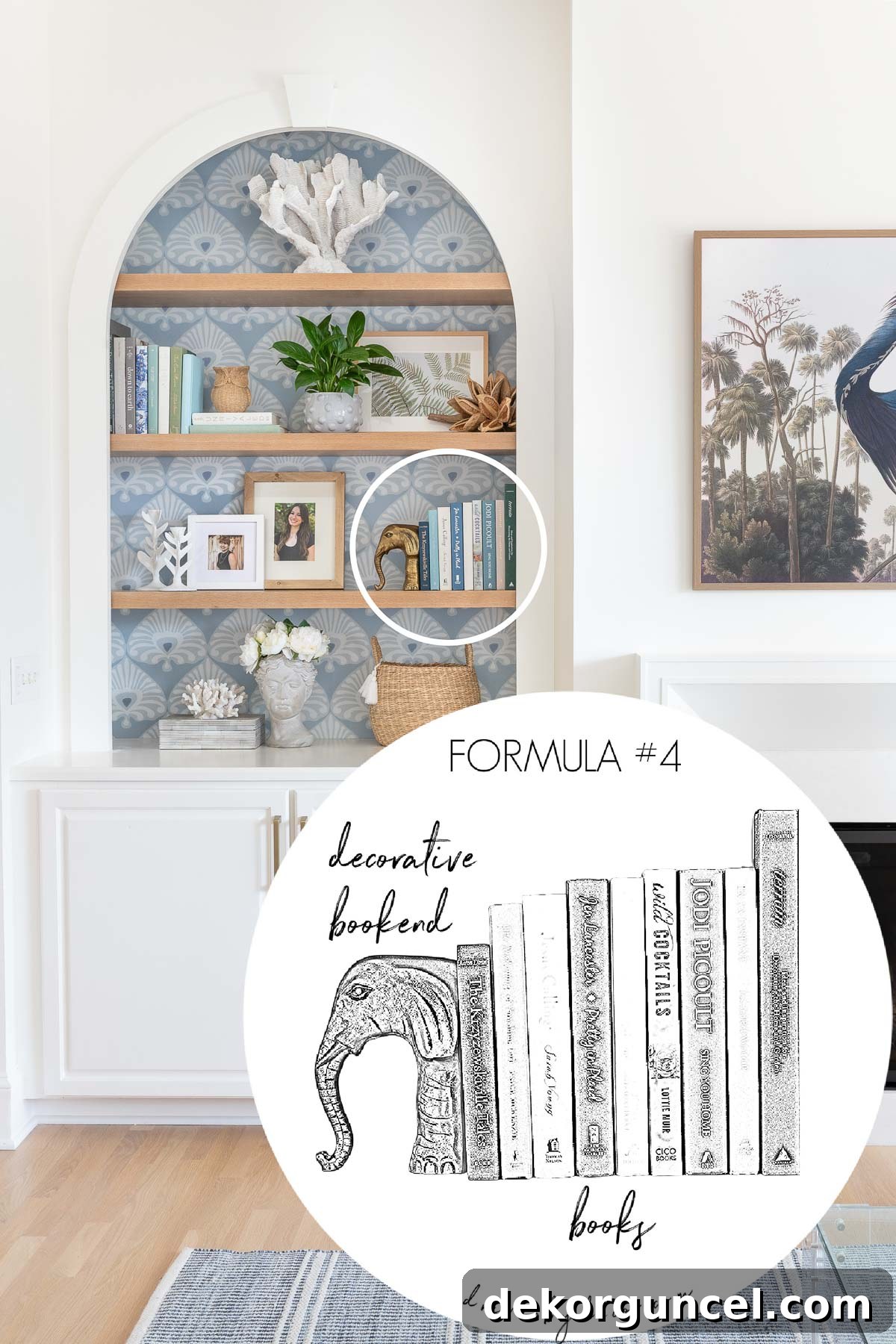
4. Books with Decorative Bookend
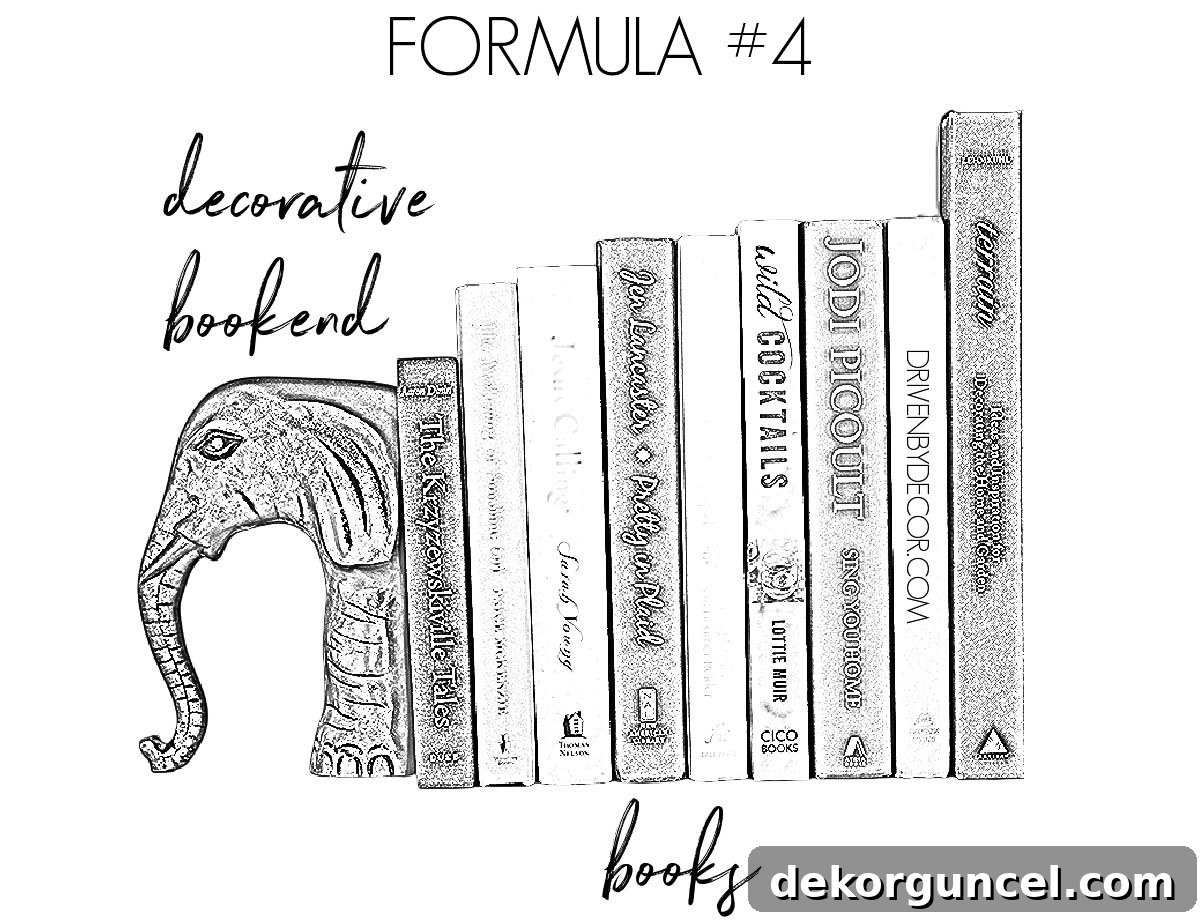
This bookshelf decor formula is elegantly simple yet incredibly impactful. It involves arranging several books, typically ordered by size for a cohesive look, and anchoring them with a distinctive decorative bookend. The true charm of this technique lies in the bookend itself. Instead of opting for a mundane, basic bookend, seize this opportunity to select something truly unique and expressive. This can instantly elevate the aesthetic of your entire shelf, transforming a functional item into a statement piece.
On my shelves, for example, I’ve used vintage brass animal bookends, which add a touch of classic whimsy. However, the possibilities are endless! You can utilize almost any decorative accessory that possesses the right height and sufficient weight to securely support your books. This is an excellent chance to weave in items that hold personal significance for you or your family. For instance, I’m an avid horseback rider, and I’ve previously repurposed my old stirrups as unique and meaningful bookends. Think about incorporating small sculptures, interesting natural elements, or cherished travel souvenirs that tell a story. This formula proves that even functional items can be highly decorative, reflecting your individuality and adding a layer of personal history to your home decor.
5. Decorative Box + Topper + Tall Accessory
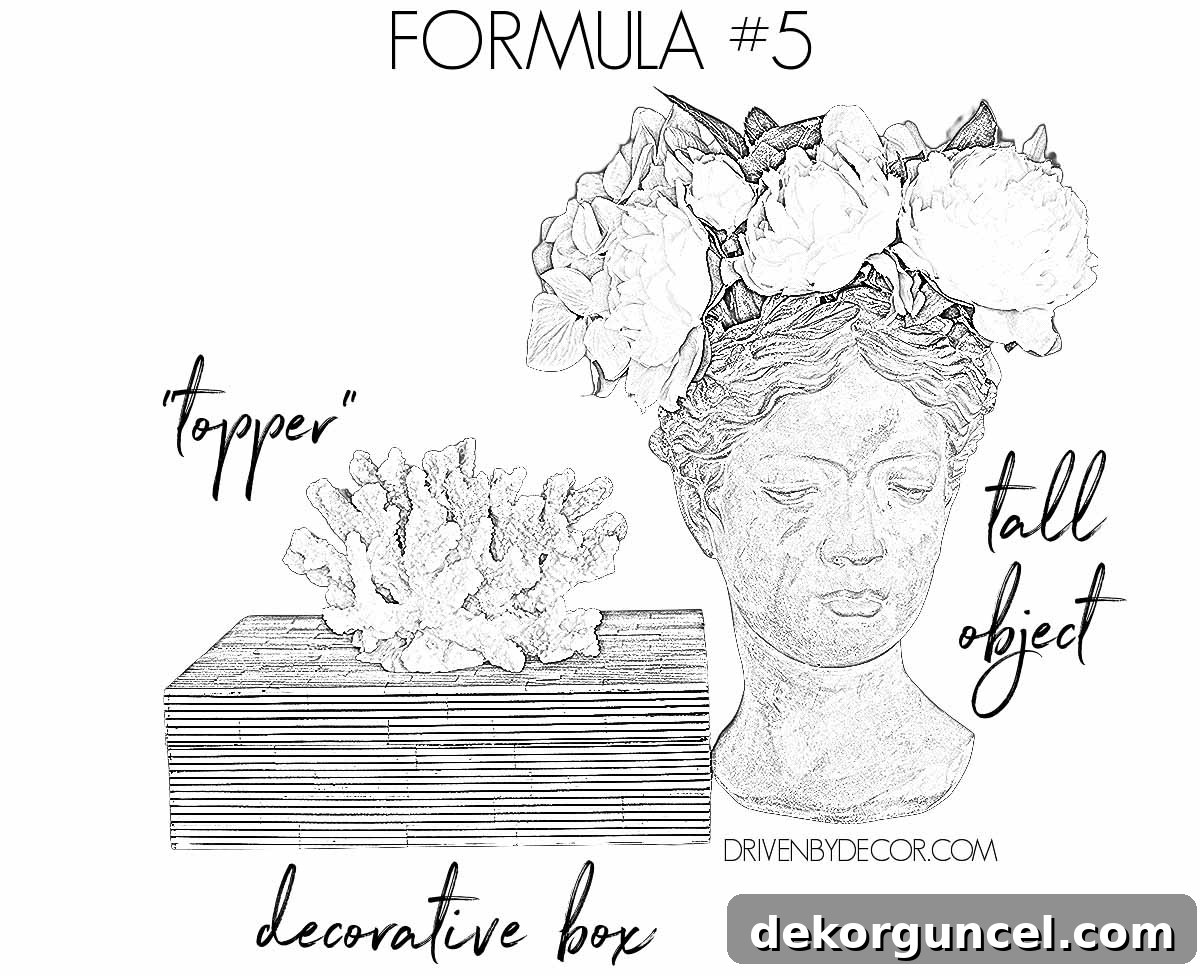
Formula #5 is a go-to favorite because of its incredible versatility and the endless array of looks it can create with different objects. This dynamic grouping involves three key elements: a decorative box, a smaller “topper” placed on top of it, and a tall accessory positioned alongside. The decorative box serves as a strong base, offering both aesthetic appeal and often, practical storage. If you don’t have a suitable box, a neatly stacked pile of books can perfectly substitute for the base.
The “topper,” as we discussed earlier, is a small item that adds a touch of personality and completes the vertical dimension of the box. Think small sculptures, a unique stone, or a tiny framed photo. Adjacent to this, a striking tall accessory introduces vertical drama and balance. This could be anything from an abstract sculpture, an elegant ceramic jar, a slender vase with or without florals, or, as showcased in my example, a charming bust planter adorned with lifelike faux florals. The interplay of heights and forms within this formula ensures a visually rich and balanced display, making it a reliable choice for captivating bookshelf decor.
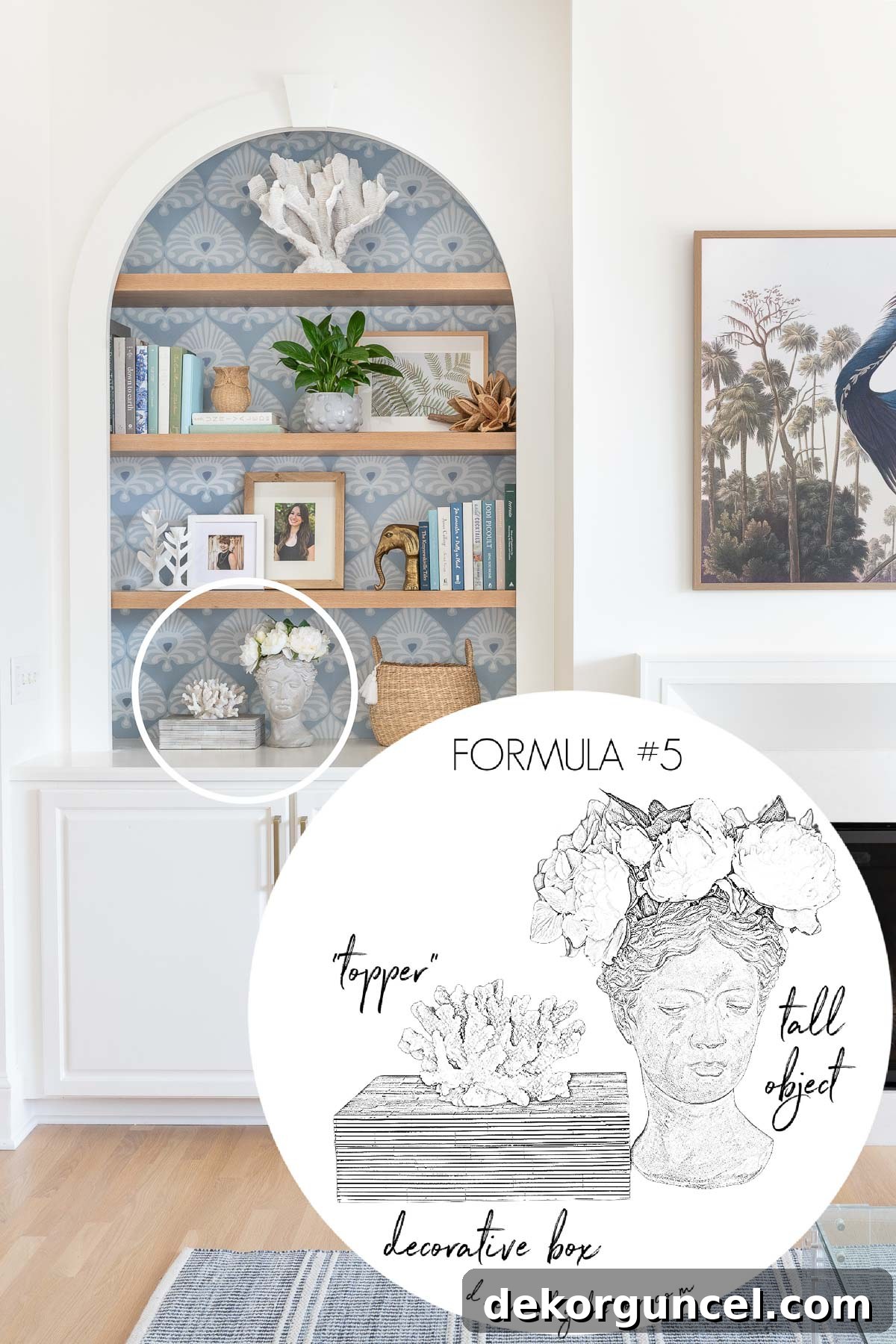
Elevate your bookcases by lining their backs with stylish wallpaper! Explore my comprehensive wallpaper installation guide and discover more inspiring wallpaper ideas to enhance your home decor.
Now, let’s shift our focus to the other bookcase in our family room, where we’ll explore a few more inventive formulas for stunning bookshelf decor:
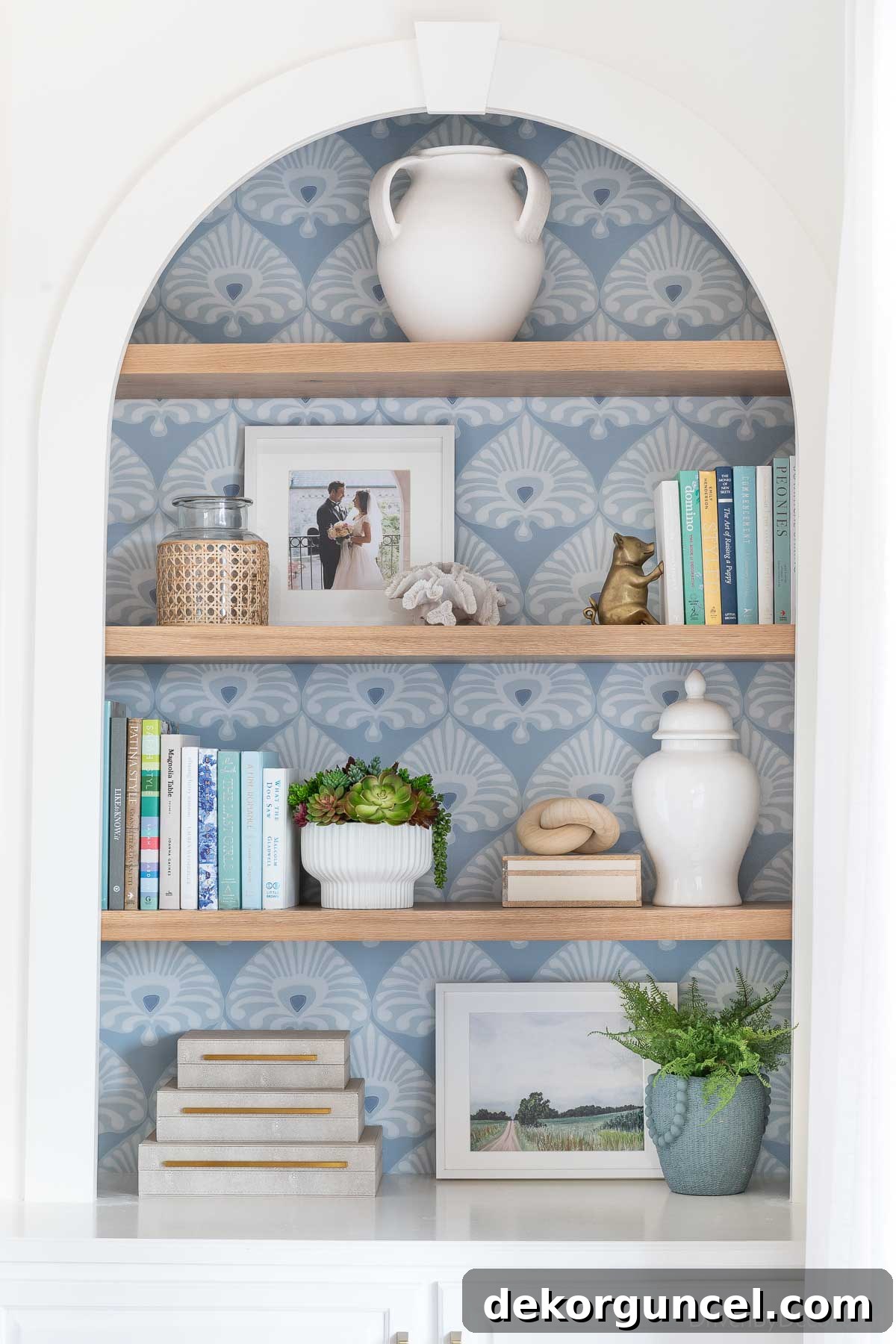
Sources: Large handled vase (medium size) | Cane wrapped vase | 12″ Square white wood frame | Coral | Brass pig bookend | Fluted white bowl | Faux succulents | Wood knot | Wood trimmed box – no longer available | White ginger jar (similar) | Stacked boxes | Landscape art | Blue planter – no longer available
6. Books + Filled Bowl
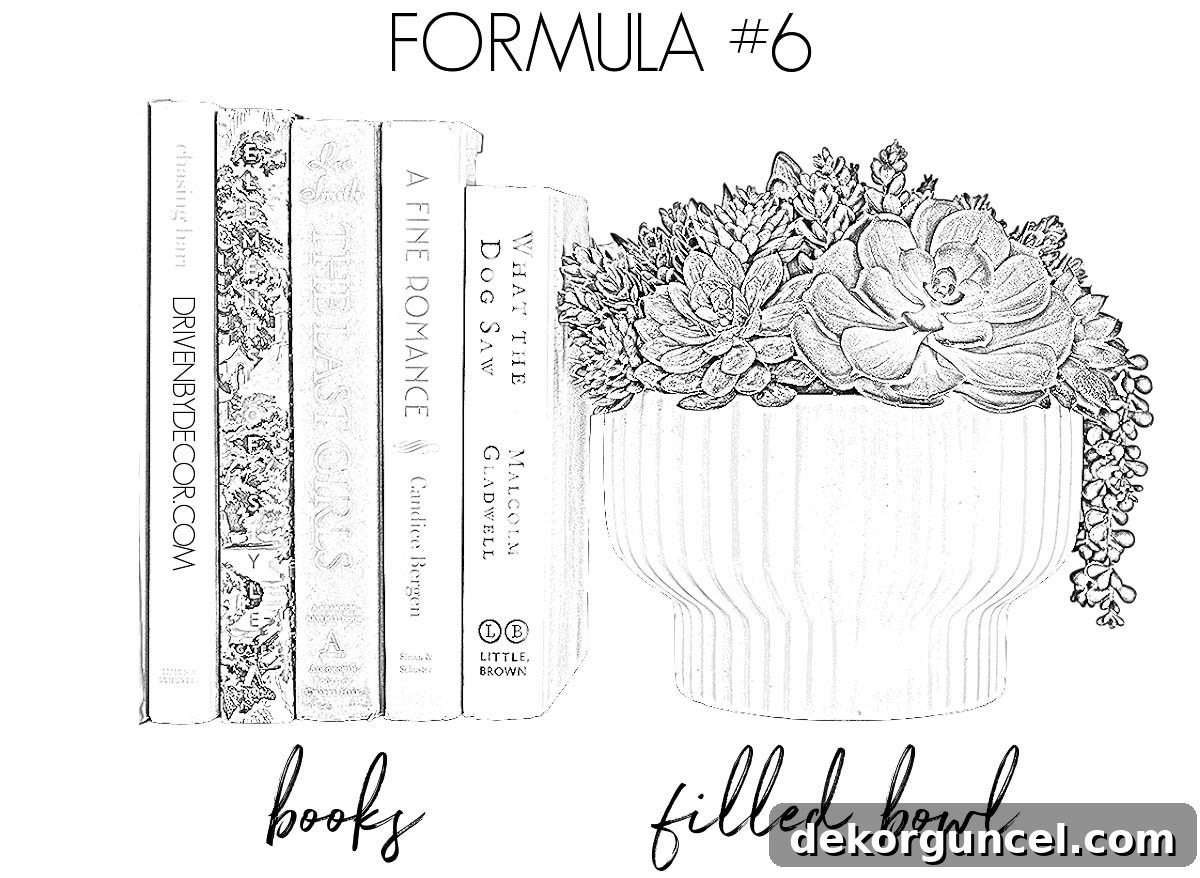
For a beautifully simple yet sophisticated bookshelf display, consider this effortless formula: a series of books artfully arranged next to a decorative bowl filled with interesting objects. This combination creates a sense of curated elegance without feeling overly complicated. On my own shelves, I’ve used a fluted white bowl brimming with realistic faux succulents, which introduces a touch of greenery and texture without the need for maintenance. However, the versatility of this formula allows for endless creative interpretations.
You can experiment with various types of bowls – perhaps a warm wooden bowl, a sleek metal design, or a rustic ceramic piece – each lending a different character to your decor. The real fun comes in selecting your filler! Ceramic balls, natural moss spheres, fragrant pinecones, an assortment of sea shells from a memorable vacation, or even vibrant faux flowers can all work wonderfully. The key is to choose items that complement your existing decor and add a tactile element, enriching the visual landscape of your shelf. This formula is fantastic for adding seasonal touches or personal flair with minimal effort, making your bookshelf decor both attractive and engaging.
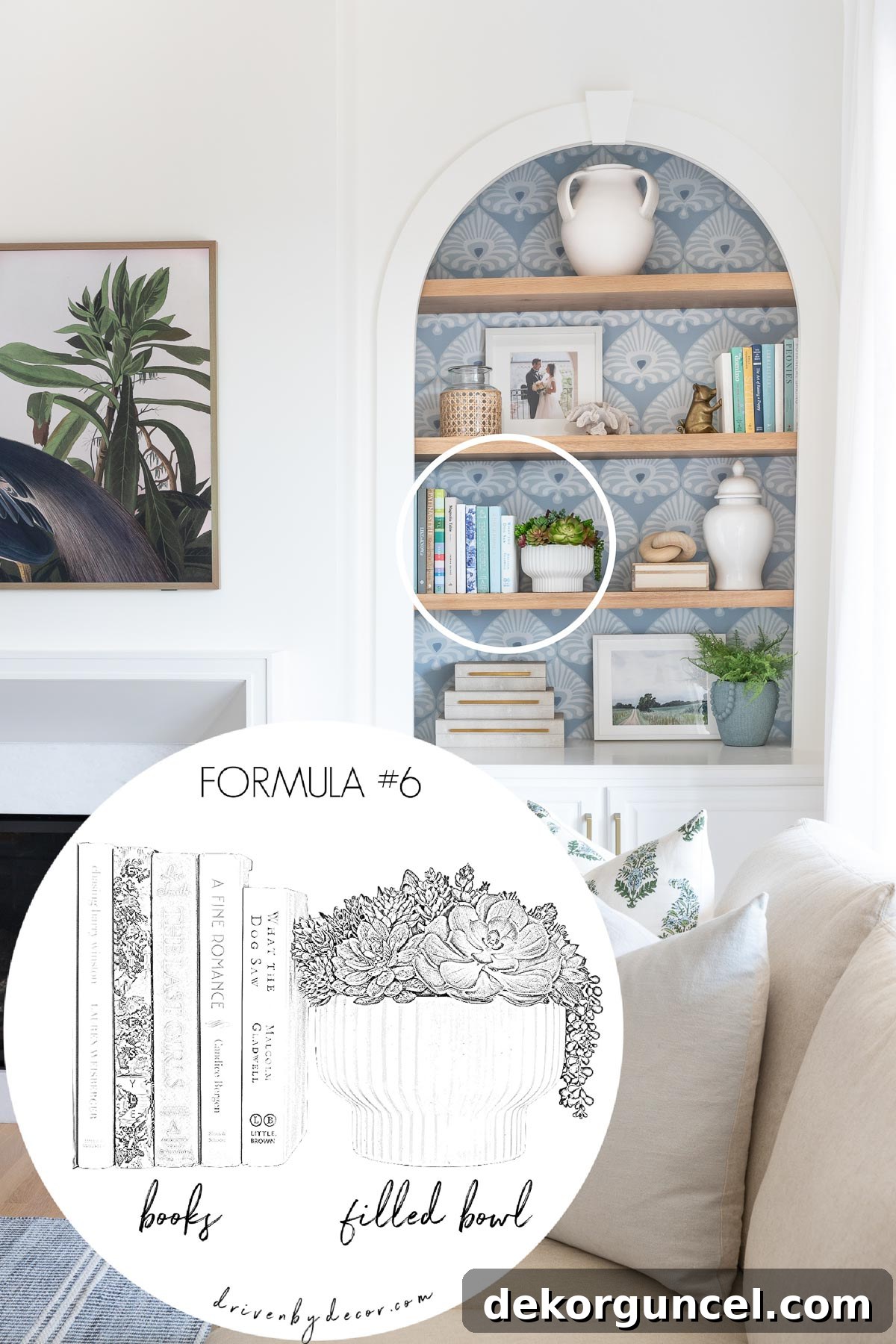
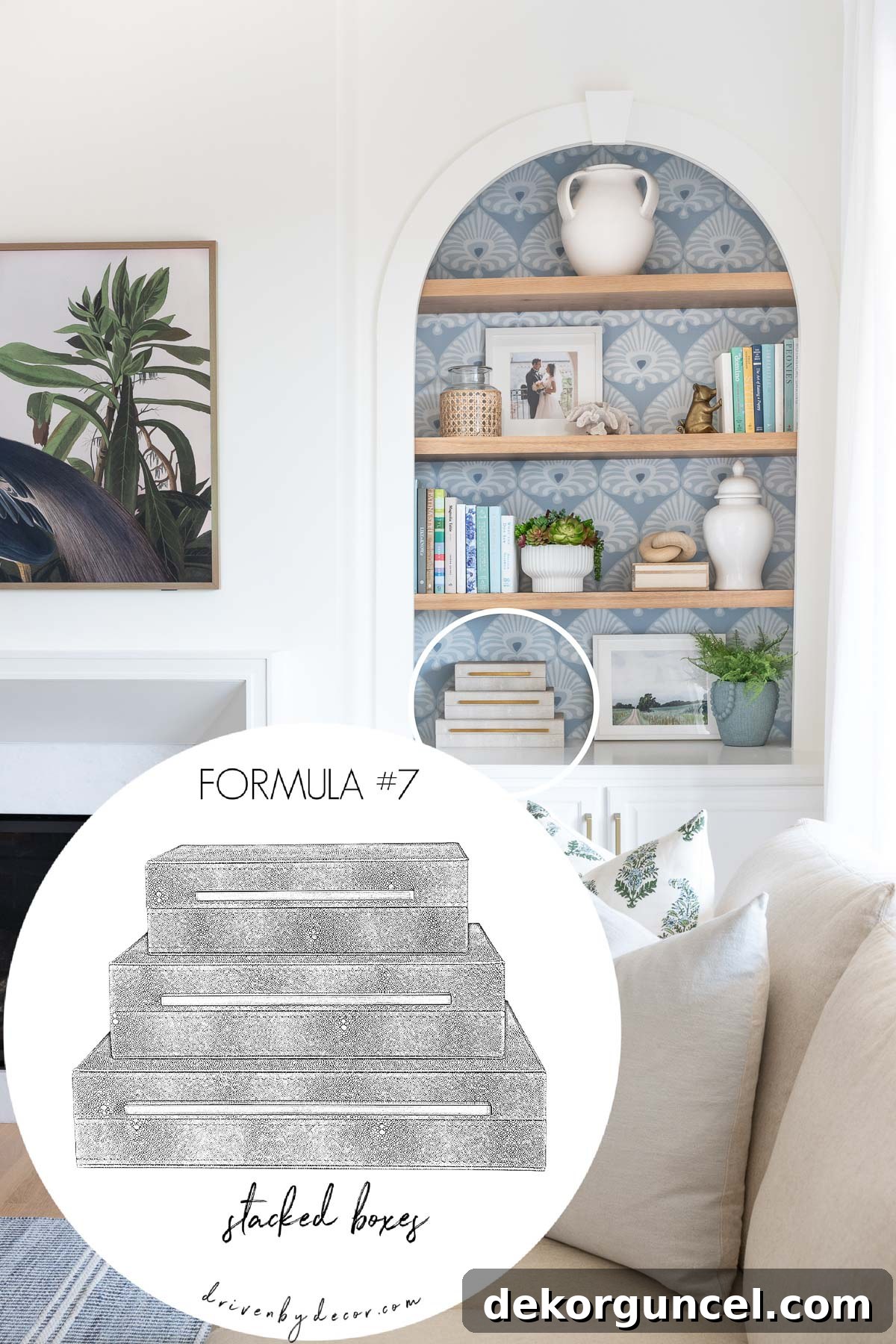
7. Stacked Boxes
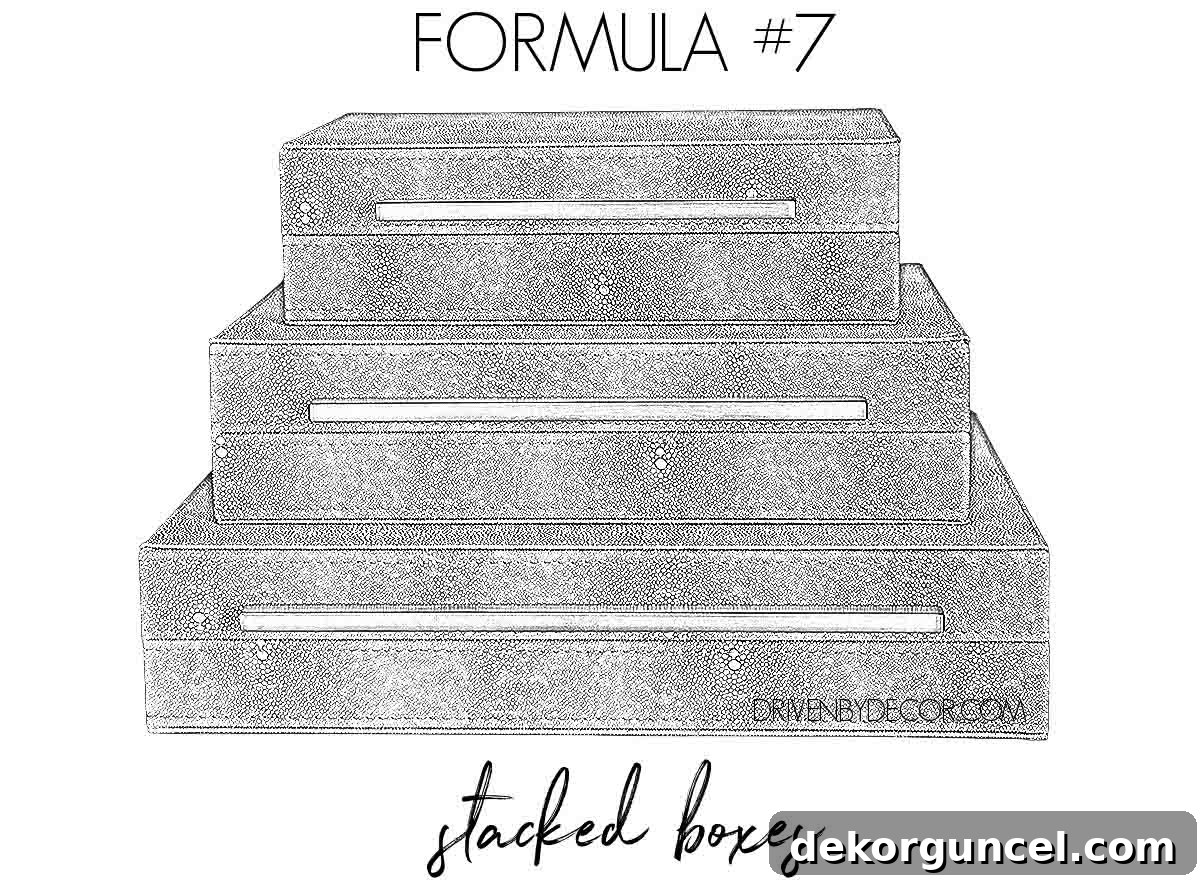
The strategic use of stacked boxes offers a brilliant dual benefit for bookshelf decor: they not only serve as visually appealing elements but also provide invaluable, discreet storage space. A thoughtfully arranged group of two to three decorative boxes can instantly add structure and sophistication to your shelves. The beauty of this formula lies in its flexibility. You can choose to mix and match boxes with different designs, colors, or textures to create an eclectic and layered look.
Alternatively, for a more cohesive and understated aesthetic, you can opt for boxes with the same design but in varying sizes, much like I did on my own shelves. This approach maintains harmony while still introducing height and visual interest. Consider boxes made from different materials – perhaps a rustic wooden box, a luxurious fabric-covered option, or a sleek, modern paperboard design. The ability to tuck away small, everyday clutter within these stylish containers makes them a particularly functional and smart choice for enhancing your bookshelf decor, keeping your space both beautiful and organized.
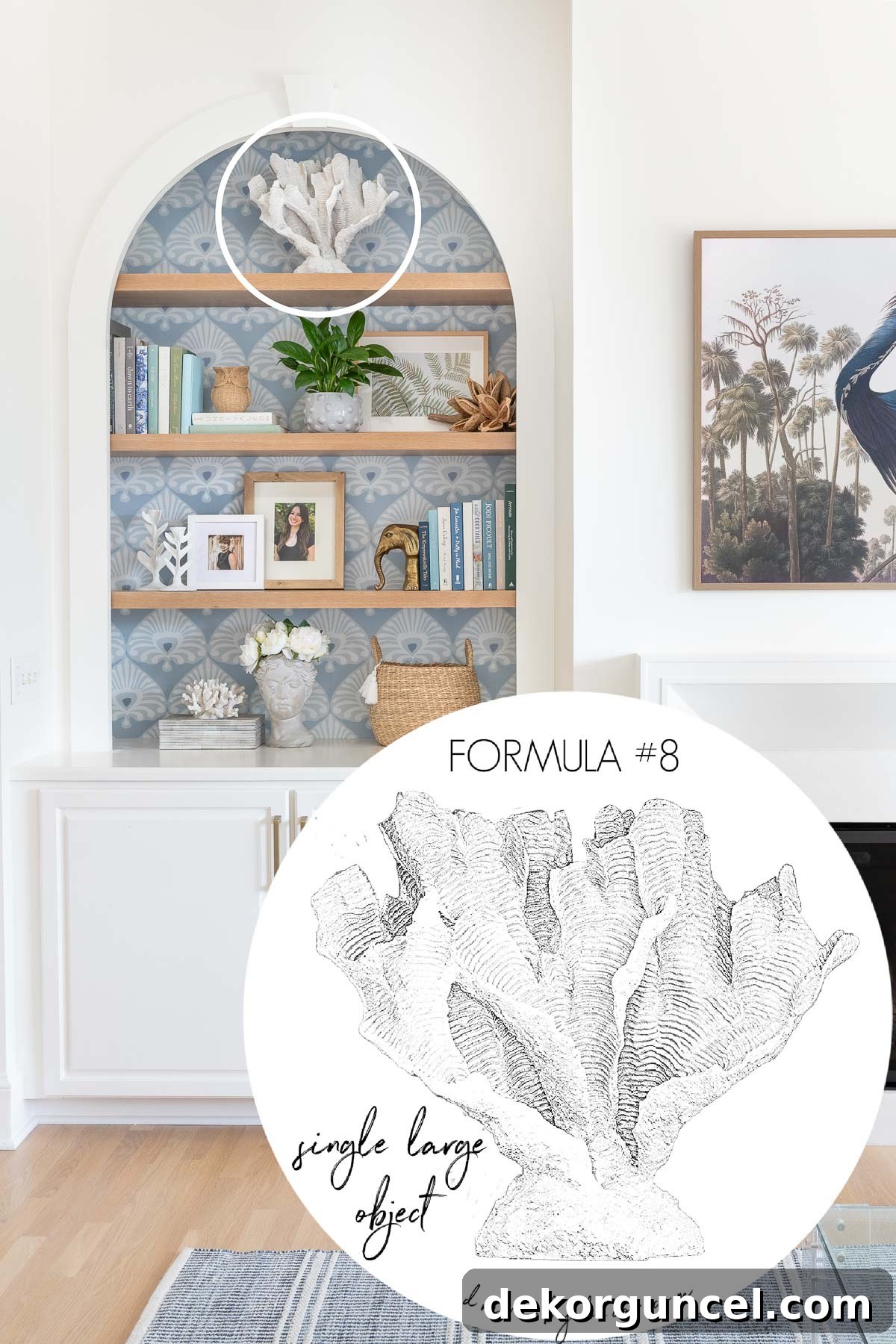
8. Single Standalone Item
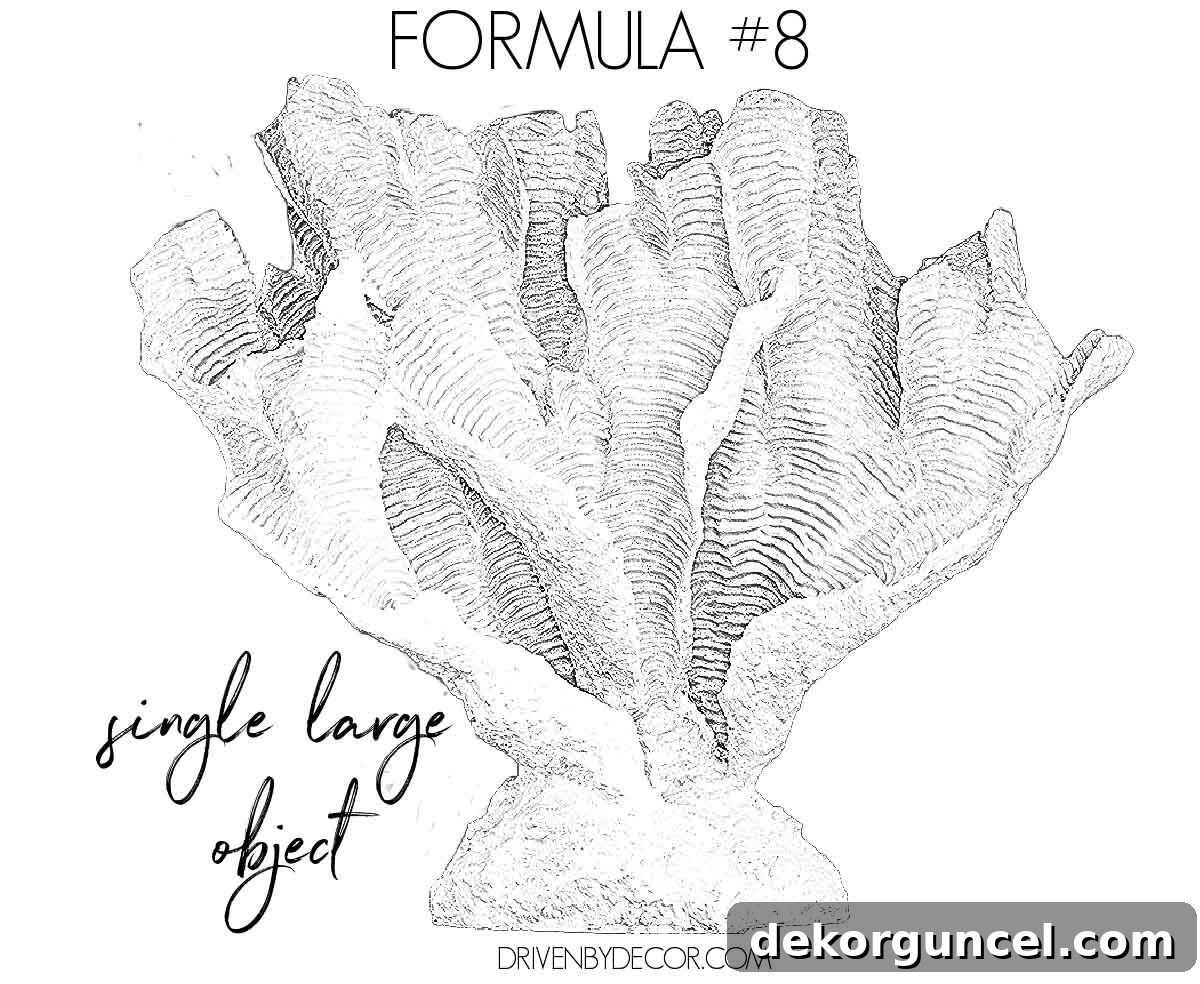
Sometimes, less truly is more, and the power of a single, thoughtfully chosen standalone accessory should never be underestimated. This formula encourages embracing negative space, allowing a prominent item to breathe and truly make a statement. It’s especially effective in situations where shelves aren’t particularly wide, or when you encounter architectural features like an arch over a top shelf that limits complex arrangements. In such cases, a single sizable accessory can be the perfect solution, creating an impactful focal point without clutter.
The key here is scale and visual weight. Choose an object that commands attention and fills the space adequately, but not excessively. For example, on the top shelf of one of my bookcases, I opted for a large, elegant white handled vase, whose simple form and striking presence make a subtle yet strong statement. On another shelf, a substantial piece of natural coral brings organic texture and an element of sculptural art. Other excellent choices for a single standalone item include unique sculptures, large ceramic vessels, intriguing artifacts, or a substantial, beautifully crafted decorative orb. This approach simplifies your bookshelf decor while maximizing visual impact, proving that powerful design doesn’t always require an abundance of objects.
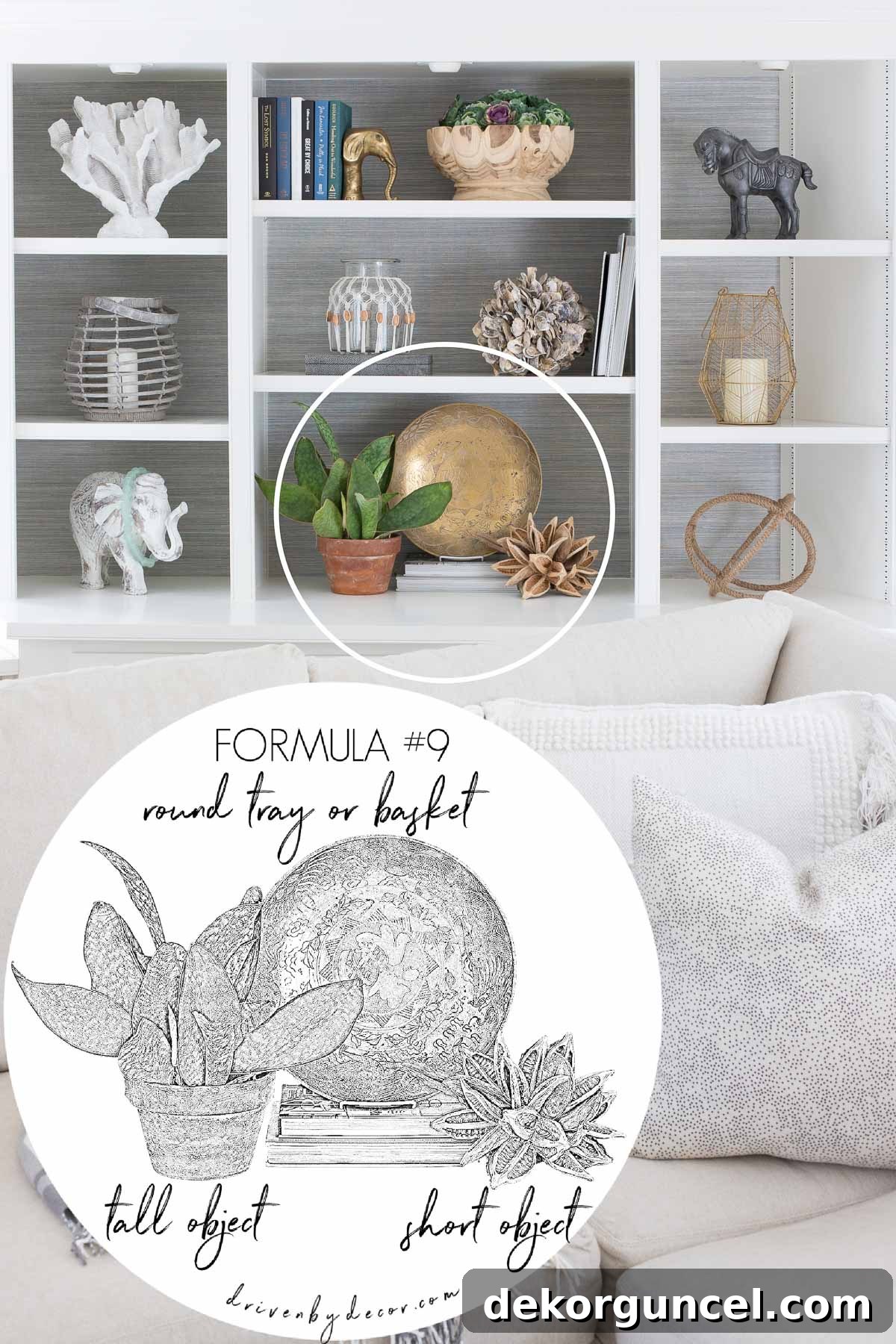
9. Tall Object + Round Tray or Basket + Short Object
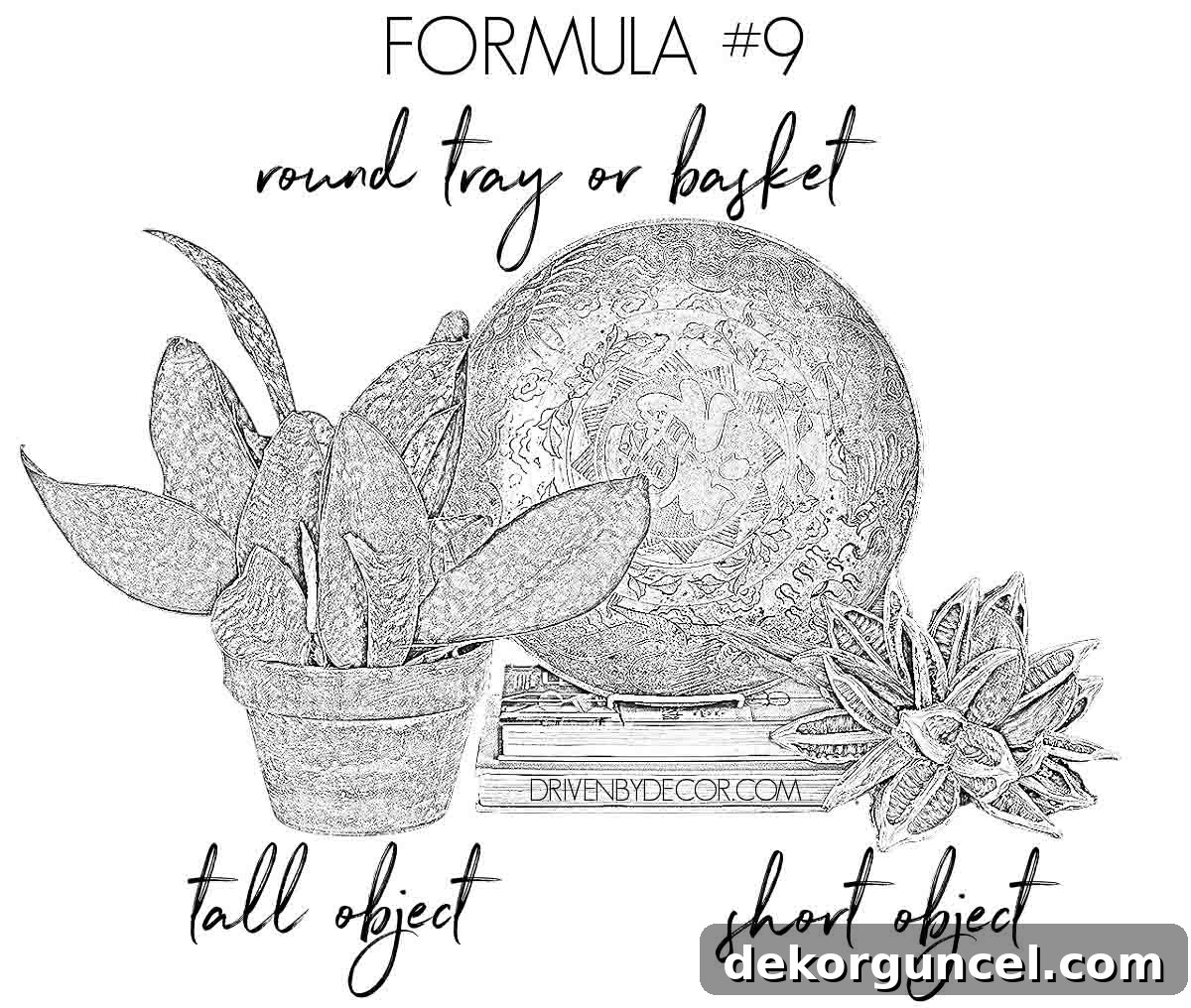
If you’re looking to incorporate a round tray or a shallow basket into your bookshelf decor, this formula offers an elegant and structured approach! Begin by positioning your chosen round element – whether it’s a decorative tray, a stylish mirror, or a charming shallow basket (such as one of these options) – as the central, tallest piece within this grouping. If your round item isn’t naturally the tallest, a clever trick is to place it atop a stack of two or three books to achieve the desired height. The round shape provides a beautiful contrast to the linear nature of the shelves, softening the overall look.
Next, on one side of your round piece, introduce a plant or another tall object that is slightly shorter in height. This creates a gentle visual descent and adds organic texture or architectural interest. On the opposite side, complete the grouping with a decorative object that is the shortest of the three. This strategic arrangement of varying heights and shapes creates a harmonious, visually appealing, and dynamic display. It draws the eye across the arrangement, adding depth and a sense of thoughtful curation to your bookshelf styling.
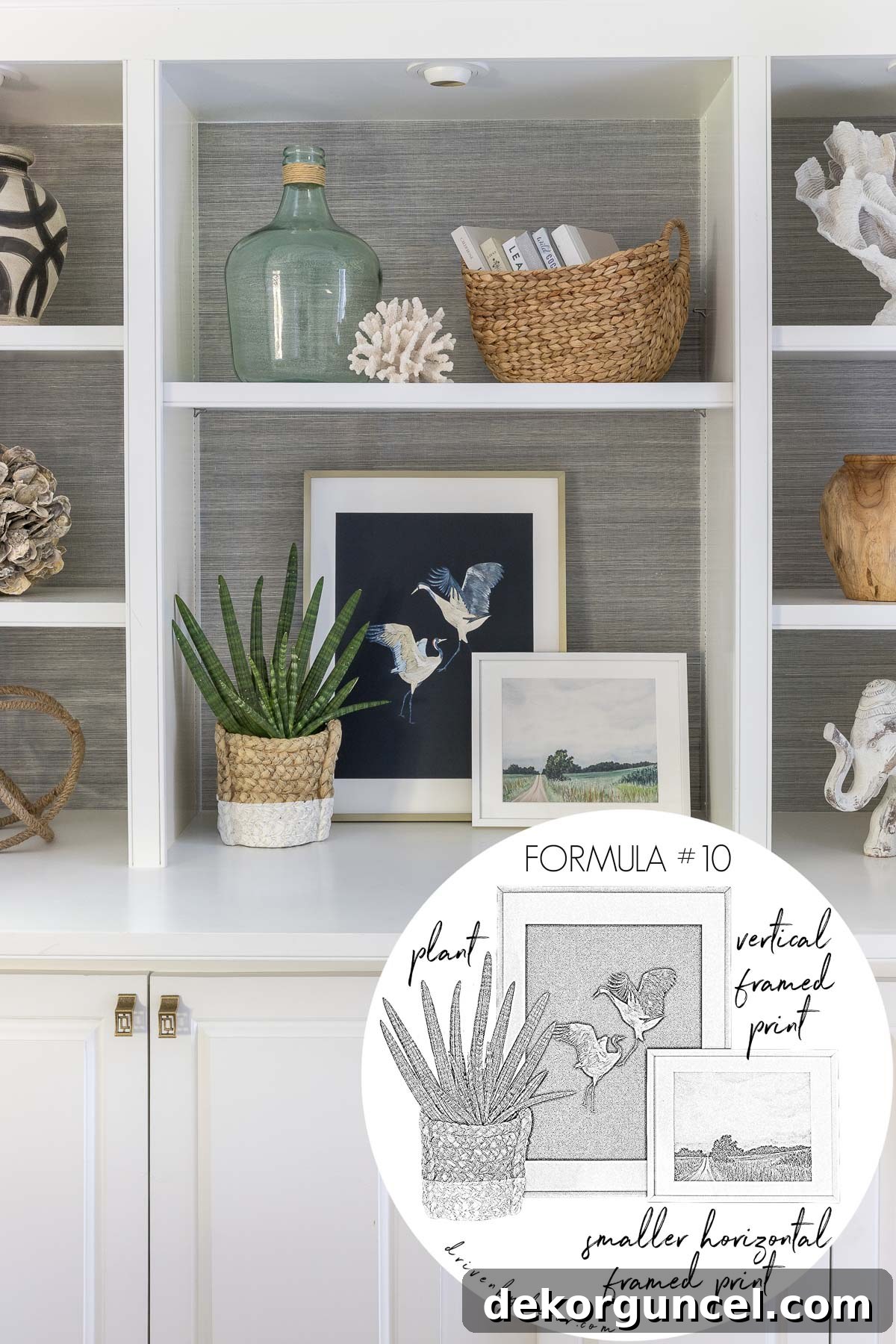
10. Plant + Tall Vertical Frame + Smaller Horizontal Frame
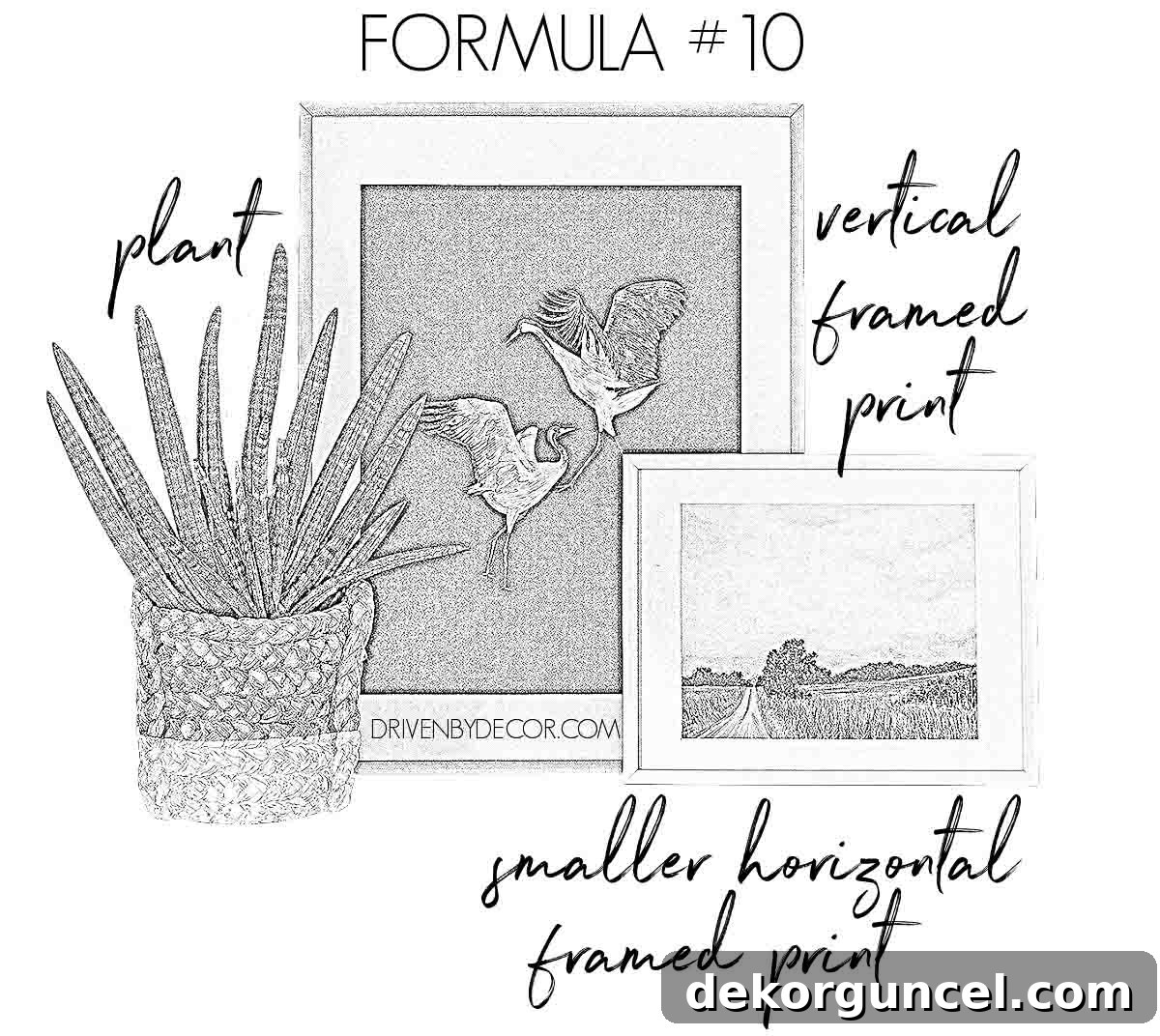
Formula #10 for how to decorate a bookshelf is an ideal solution when you have ample vertical space above your shelf and want to create a grander, more impactful display. This sophisticated arrangement combines the organic beauty of a plant with the artistic elegance of layered frames. At the heart of this grouping is a tall, vertically oriented framed print or photograph, which establishes the primary height and serves as a powerful focal point. In front of this, or slightly overlapping, a smaller horizontally framed print or photo is layered, adding depth and visual intrigue.
To soften the lines of the frames and introduce a living element, a vibrant plant is placed alongside, complementing the art. This formula offers a fantastic opportunity to showcase cherished art pieces, personal photographs, or even abstract prints that resonate with your home’s aesthetic. As a point of reference for sizing, in my previous home’s family room bookcase, I used an 18.5″ x 24.5″ frame for the tall vertical piece and a 15″ x 12″ frame for the smaller horizontal layer. Remember, you can always adjust the frame sizes to best suit the dimensions of your specific space and the scale of your bookshelf, ensuring a harmonious and stunning display of art and nature.
By thoughtfully applying these ten versatile formulas – or even by simply selecting the ones that best resonate with your personal style and existing decor – you’ll find yourself effortlessly decorating all your shelves in no time. These techniques transform daunting empty spaces into beautifully curated displays that reflect your personality and enhance your home’s aesthetic.
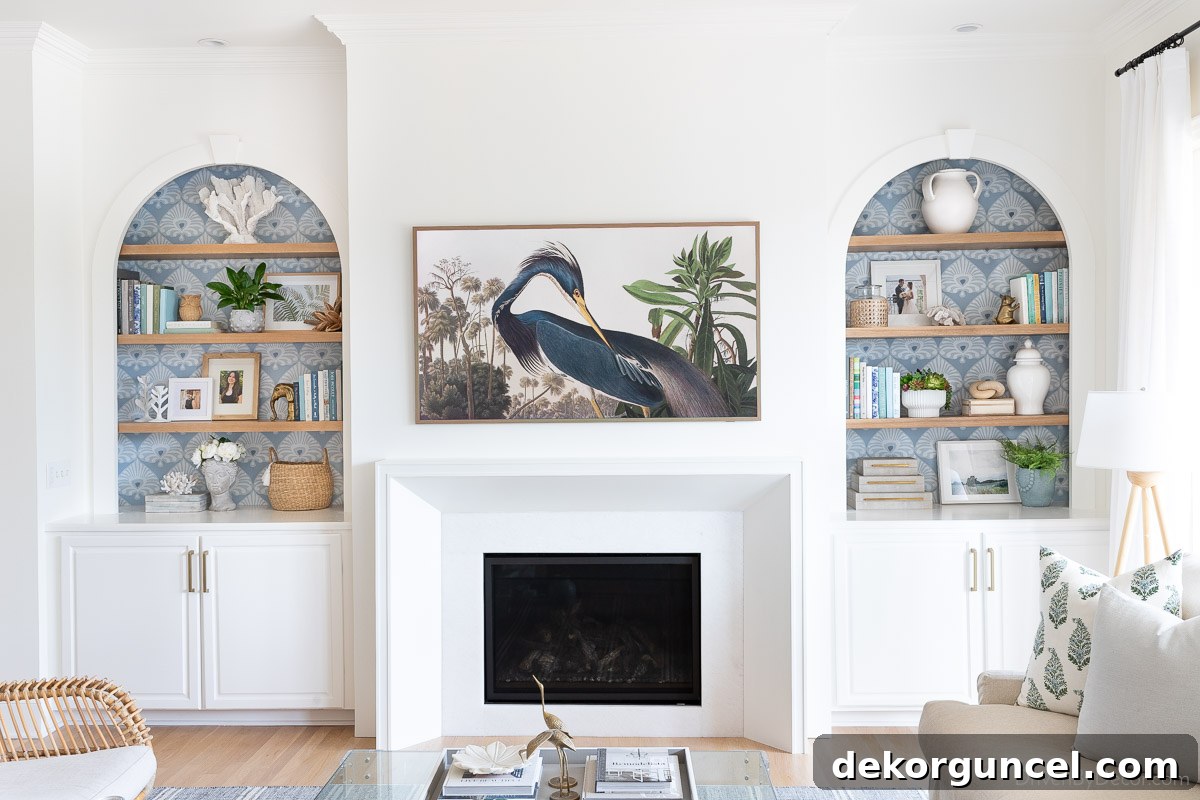
Room Sources: Rug | Rattan chair | Tripod lamp | Block print pillow | Sectional(similar) | Acrylic coffee table (similar) | Coffee table tray | Bookcase wallpaper | Cabinet pulls | Oak shelves | All bookshelf accessories are linked earlier in this post
Ready to continue your home decorating and organizing journey? Become a Driven by Decor subscriber today to receive notifications of our latest posts and exclusive tips, all designed to help you create the home of your dreams. Subscribe for free below:
What other helpful decorating formulas would you love to see explored? Perhaps table centerpiece formulas for effortless entertaining? Or entryway console decorating formulas to make a lasting first impression? Let me know your ideas and questions – your input helps us create the most valuable content for you!
XO,
