

Have you ever found that perfect piece of furniture online, only to hesitate, plagued by doubts about making such a significant purchase sight unseen? The world of online furniture shopping is vastly different from browsing a physical showroom. As a homeowner with over two decades of experience, I’ve certainly had my share of learning curves and regrettable online orders. However, each misstep has been a valuable lesson, transforming me into what I consider a savvy online furniture shopper. I now possess the insights and strategies needed to make confident buying decisions from the comfort of my home.
Today, I’m delighted to share ten essential tips designed to empower you to buy furniture online without succumbing to post-purchase regrets. These comprehensive guidelines will help you navigate the digital marketplace, ensuring that every piece you choose is a perfect fit for your home and lifestyle. (Please note: This post includes affiliate links, which may earn us a small commission at no extra cost to you. Our full disclosure statement is available by clicking here.)
1. Thoroughly Vet the Online Store
When you stumble upon a stunning furniture piece on a website you’ve never encountered before, how do you determine its legitimacy? The internet is rife with less-than-reputable home furnishing sites, making it crucial for smart online shoppers to perform a quick but thorough assessment of a store’s trustworthiness. Using a recent discovery of mine, Coley Home (they truly offer beautiful items!), let’s explore seven critical indicators to help ensure a site is safe and reliable for your purchases:
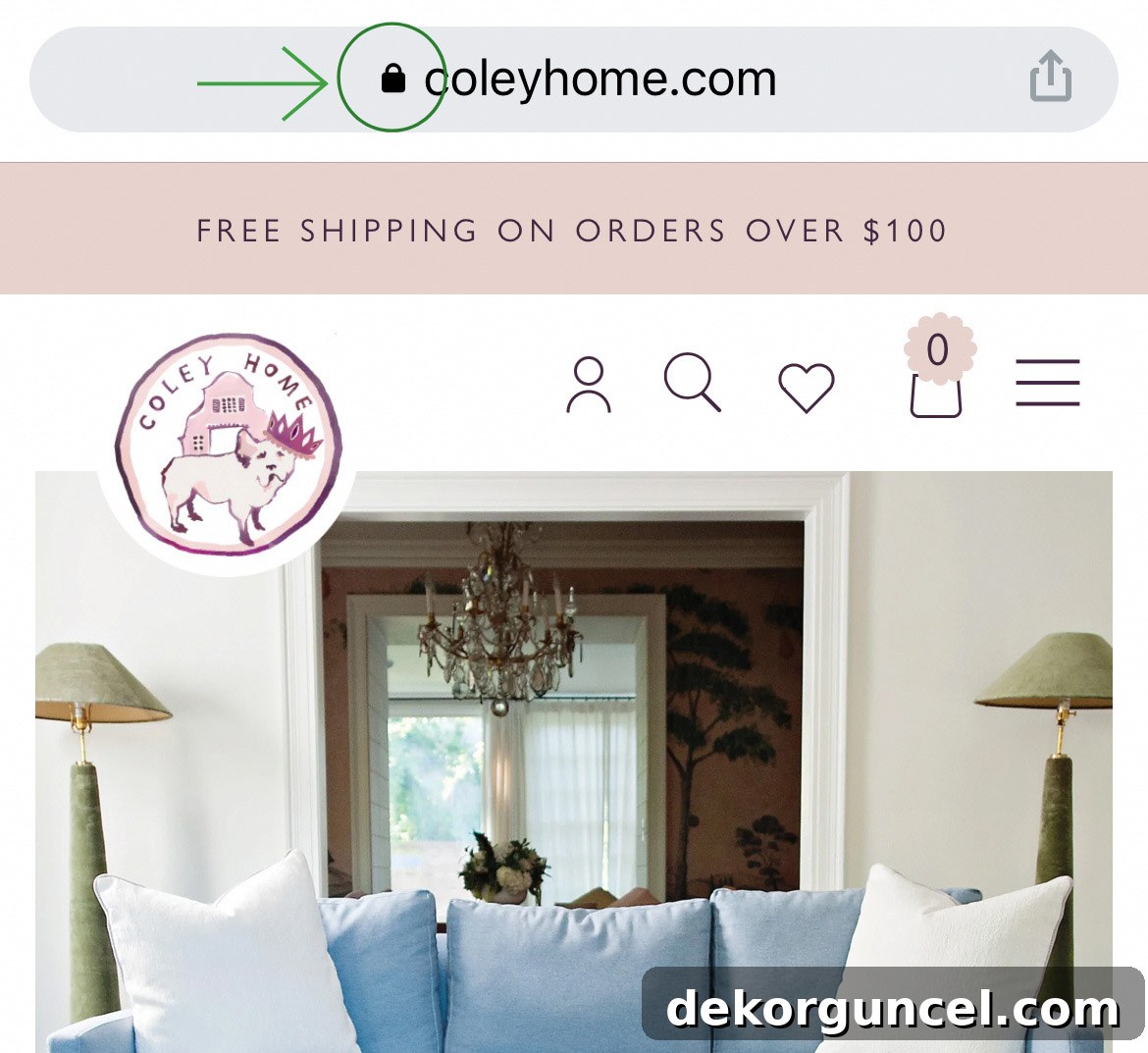
1. Always check for a padlock symbol immediately preceding the website address in your browser’s URL bar. This padlock signifies that the communication between your browser and the website is encrypted and secure (HTTPS). It’s an absolute non-negotiable; never input personal or credit card information on a site that lacks this crucial security feature, as your data could be vulnerable to interception.
2. Navigate to the site’s “About Us” page and meticulously scan for any grammatical errors, misspellings, or awkward phrasing. Many fraudulent or low-quality sites are operated internationally and may attempt to mimic legitimate US-based businesses. Poor grammar and spelling are often tell-tale signs of such operations. Coley Home, for instance, boasts a professionally written “About” page that details the company’s founder, mission, and even provides a timeline of their small business journey, all presented flawlessly.
3. Access the site’s contact page to verify the availability of a phone number. While some legitimate small businesses might primarily rely on email or contact forms, the absence of a phone number can be a red flag, warranting further investigation. A direct line of communication offers a sense of accountability and makes resolving issues much easier. When checking Coley Home’s site, I found multiple contact options, including live chat, phone support, and email, indicating a robust customer service commitment.

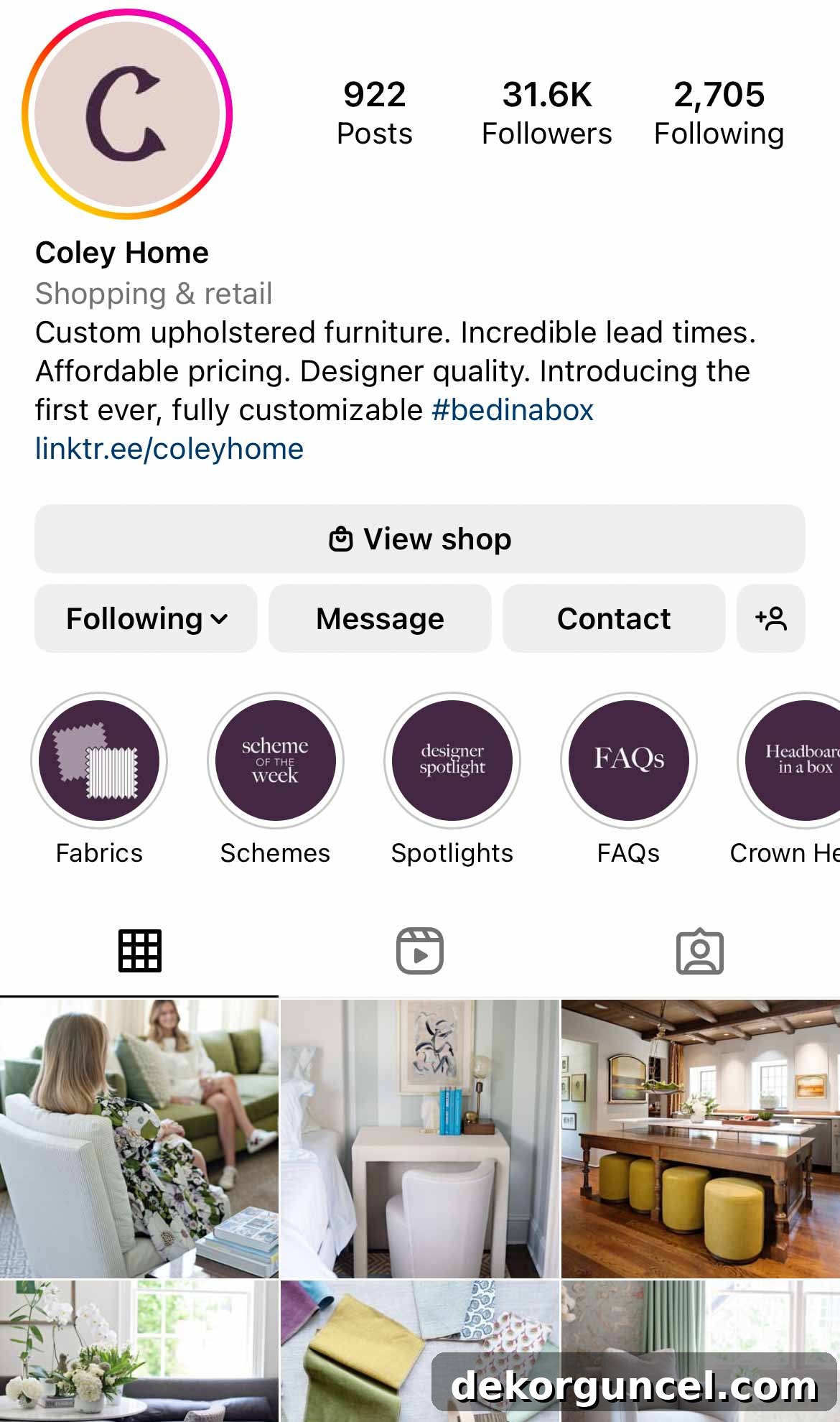
4. Explore their presence on social media platforms like Facebook and Instagram. Observe how long they’ve been consistently posting, assess their follower count, and gauge the level of engagement (likes, comments, shares). Crucially, check if they allow comments on their posts. Accounts that disable comments are a significant warning sign, often indicating a history of unsatisfied customers or an attempt to suppress negative feedback. Coley Home’s Instagram account, for example, passed all these checks, showcasing consistent activity, a respectable following, and open engagement.
5. Determine the age of their website using a reliable domain age checker tool. Simply input the website address and click “check domain age.” Most fraudulent or short-lived scam sites have very recent domain registrations. My check for Coley Home revealed their website has been active for approximately four years, which is a good indicator of stability and establishment.

(A quick note: Sometimes, a domain checker might return “0 years, 0 months” for the domain age. This isn’t necessarily a cause for concern; it simply means the tool couldn’t retrieve the information, rather than indicating a brand-new or suspicious site. Further checks would still be prudent in such a case.)
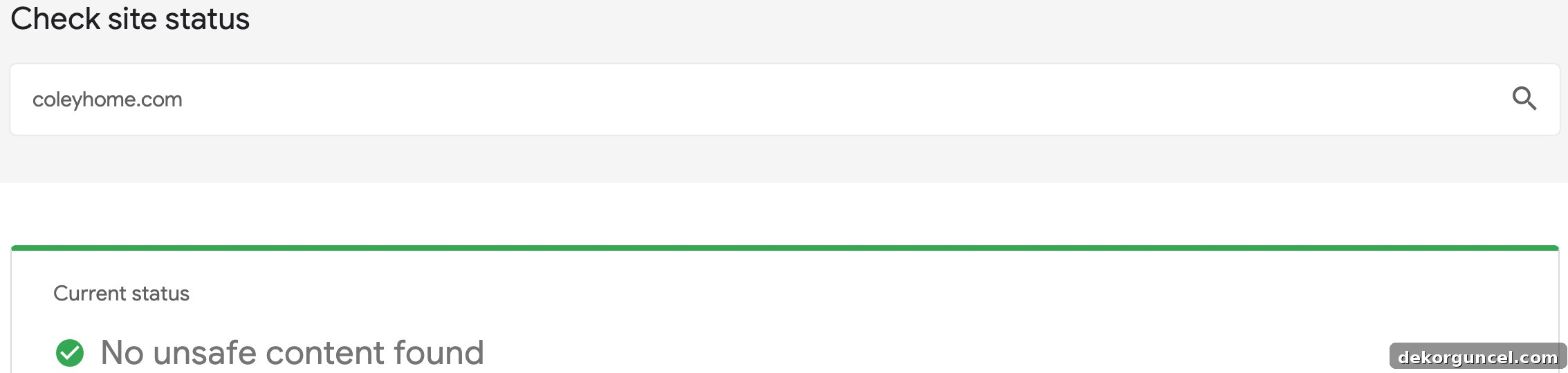
6. Use Google Safe Browsing to check for any known security issues associated with the website. Even legitimate and well-established websites can occasionally be compromised or suffer from security vulnerabilities. Google’s tool provides a quick assessment, ensuring the site is currently safe to browse and transact on.
7. Finally, thoroughly review the return policy to ensure it’s fair and reasonable. I strictly avoid websites that enforce a blanket “no returns accepted” policy, as this leaves you with no recourse if an item doesn’t meet expectations. Coley Home’s return policy is a good example of reasonableness: they don’t accept returns on custom orders unless there are defects, but offer a generous 30-day return window for items like bedding. A clear and equitable return policy demonstrates a company’s confidence in its products and its commitment to customer satisfaction.
After running Coley Home through this rigorous “is this site legit?” test, it passed with flying colors, scoring 7 out of 7. This means it’s a green light for shopping – which, given their exquisite collection, is almost dangerously good news! 😂
2. Dive Deep into Product Reviews
Once you’ve confirmed the legitimacy of an online store, your next step is to evaluate the specific product you’re eyeing. When shopping online, I heavily rely on product reviews from previous purchasers whenever they are available. However, don’t just glance at the star rating; actively read the reviews, paying particular attention to those with 1-3 stars. These critical reviews often provide the most insightful details. You might discover that a low rating stems from an issue unrelated to product quality, such as a problem with the delivery service. Alternatively, you might identify a recurring complaint, like the actual color differing significantly from the website’s description, or consistent feedback regarding poor item quality. This pattern recognition is invaluable for making an informed decision.
I also highly value sites like Wayfair that empower reviewers to upload their own photos. These user-submitted images are gold, as it’s astonishing how different a product can appear in “real life” compared to the professionally styled manufacturer’s photos. Always scrutinize any available reviewer photos to get a more accurate representation of the item.
While I wish every brand featured product reviews on their websites, this isn’t always the case. To help bridge this gap for some of my favorite retailers, I created two dedicated Facebook groups where we can share authentic product reviews for items from Pottery Barn and Serena & Lily. You can join my Pottery Barn Reviews Facebook page here:
and my Serena & Lily Reviews Facebook page here:
The more members who join and contribute reviews on their Serena & Lily and Pottery Barn purchases, the more beneficial these groups become for everyone. So, please help spread the word!
3. Meticulously Double-Check All Measurements
A crucial and often overlooked tip for buying furniture online is the absolute necessity of checking and re-checking every dimension of any item you’re considering. The last thing you want is a “Woah, that looks completely different than I expected!” reaction when your new furniture piece arrives at your door. Accurate measurements are key to avoiding logistical nightmares and ensuring the piece fits perfectly within your designated space, both aesthetically and practically.
One of the most effective ways to visually determine if a product’s size will work in your room is by comparing it to an existing item. For instance, if you’re shopping for a new nightstand lamp, measure a lamp you already own, place it where the new lamp will sit, and then compare its dimensions to the prospective purchase. This simple comparison provides a much clearer sense of scale than simply reading numbers on a screen. Another excellent visualization technique involves using painter’s tape to outline the footprint of the furniture on your floor. This offers a tangible representation of how much space the item will occupy.
Sometimes, physically moving existing furniture around can also provide invaluable insights into ideal sizing. For example, my husband Jeff isn’t aware yet, but later this week, I plan to move this sideboard from our dining room:
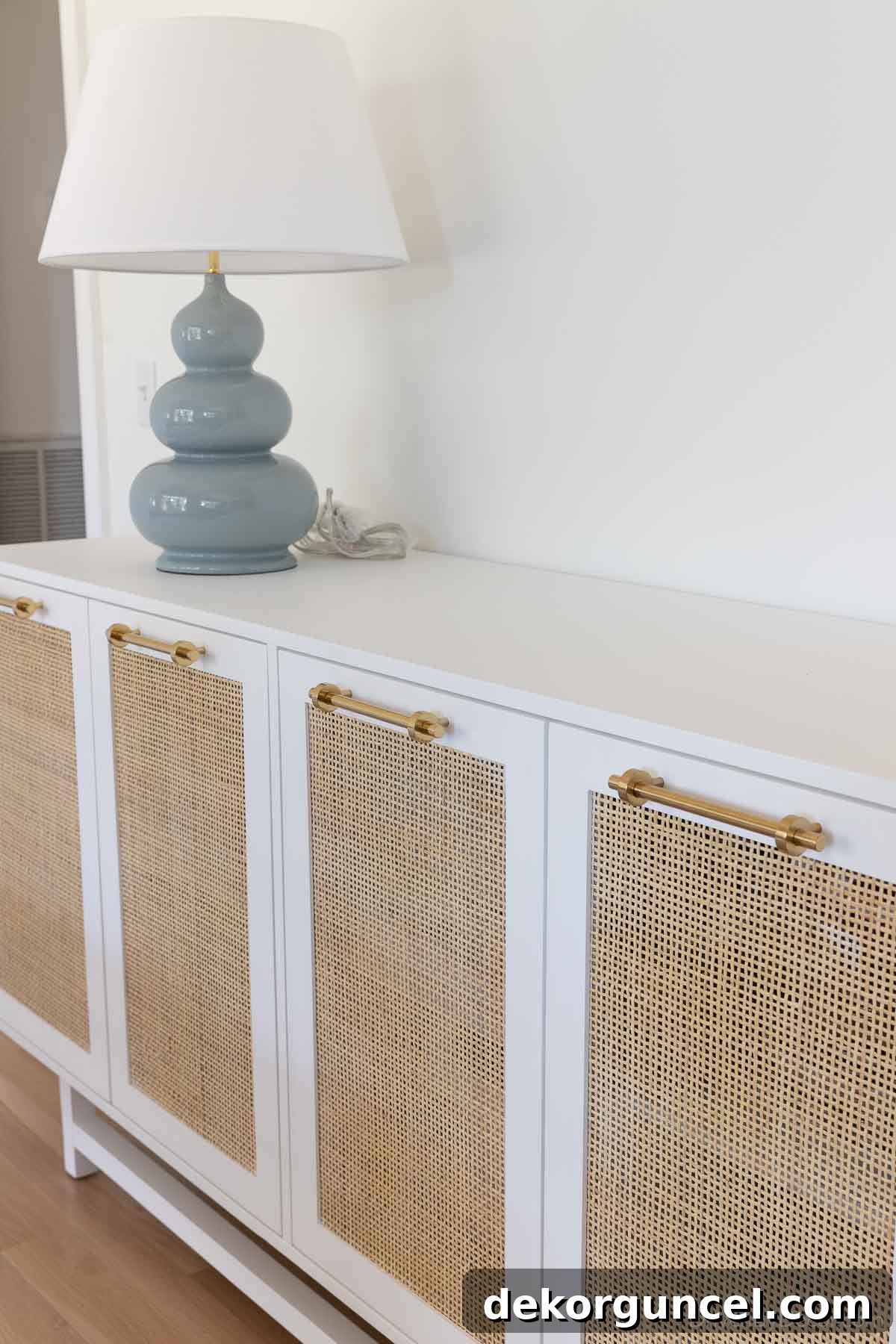
into our “circus room,” which is currently undergoing construction. This will allow me to visualize how a piece of that specific length looks in the space. I’m looking for a console or a long chest of drawers to anchor our longest wall, and testing out the size of an existing piece will give me a solid guide for the ideal length to search for online, preventing costly measurement mistakes down the line.
Want to steer clear of other common measurement pitfalls? Here are a few additional critical measurements to verify before finalizing your purchase:
- **Entryway and Interior Doors:** Ensure that the entryway, as well as any interior doors and hallways your furniture will traverse, are wide and tall enough to accommodate the piece. Early in our marriage, we ordered a sectional but neglected to measure its dimensions against our front door. It barely, and I mean *barely*, squeezed through!
- **Dining Chairs with Arms:** If you’re purchasing dining chairs with arms, confirm that the arm height is sufficiently low to fit comfortably under your dining table. For more detailed tips on measurements to consider when buying dining room chairs, refer to this helpful guide on dining room measurements.
- **Lighting Fixtures:** Be sure to size your light fixture appropriately for the space. An oversized or undersized fixture can throw off the entire room’s aesthetic. This post on choosing light fixtures offers excellent guidelines to ensure perfect proportionality.
- **Living Room Furniture & Rugs:** For tips on selecting coffee tables, end tables, and rugs with the correct measurements to complement your living room layout, be sure to check out this comprehensive guide on living room measurements.
4. Leverage Mood Boards and Mock-Ups
When selecting furniture and accessories online, mood boards and digital mock-ups are incredibly powerful tools. They serve as a visual blueprint, helping you confidently determine if an item’s size, style, and color palette will seamlessly integrate into your existing space. These visual aids eliminate much of the guesswork, allowing you to “try before you buy” in a digital realm.
As a practical example, I developed this mood board for my girls’ bathroom renovation. It was instrumental in helping me visualize and ultimately decide on the perfect wallpaper and lighting fixtures that would create the desired ambiance and functionality:
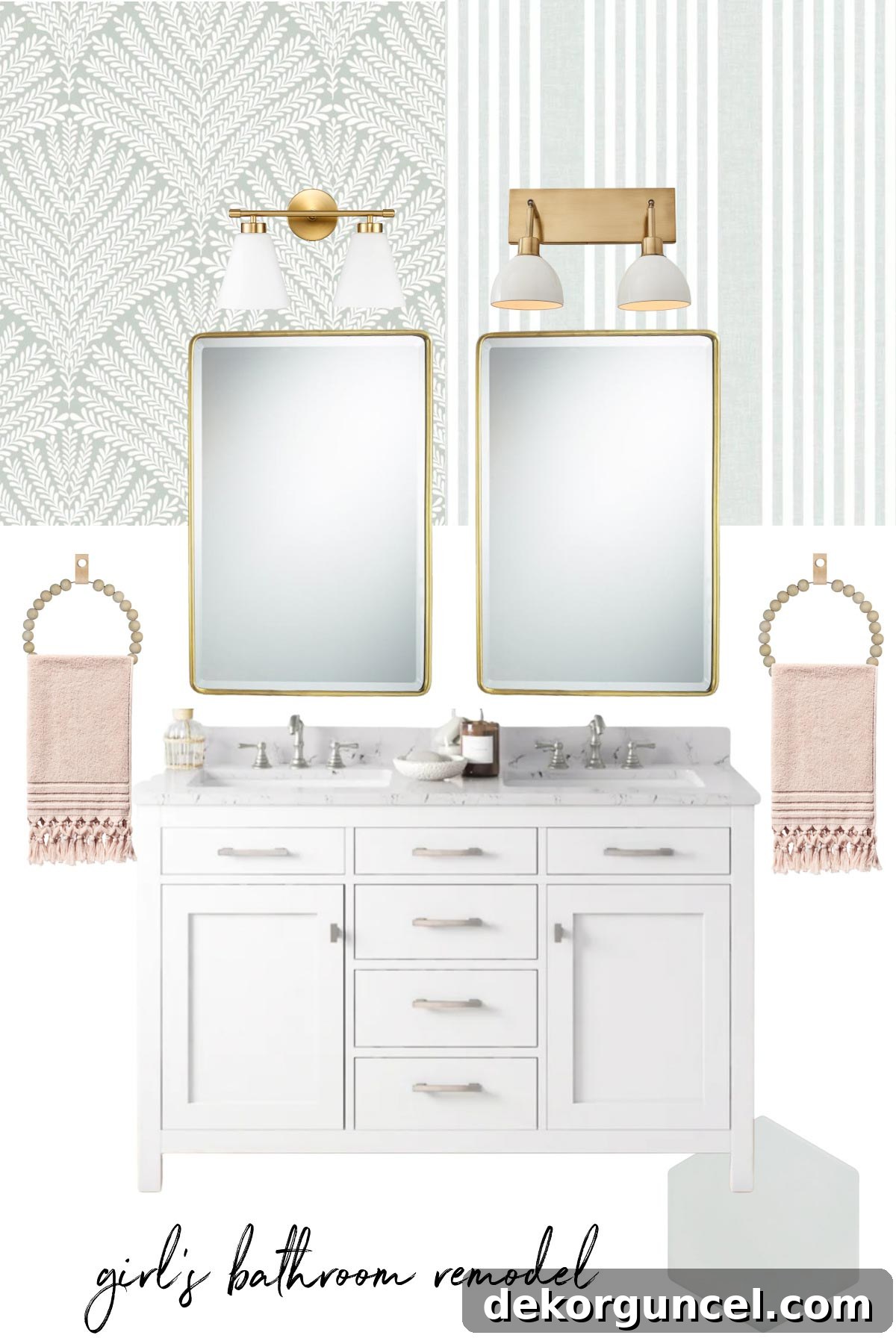
Sources: Beachcomber wallpaper (left) | French linen stripe wallpaper (right) | Vanity light (left) | Vanity light (right) | Medicine cabinet/mirror | Wood bead towel ring | Blush hand towel | 54″ double vanity (explore other size options here) | Floor tile
If you’re interested in learning how to create your own effective interior design mood boards, I share my detailed process and tips in this comprehensive post.
5. Always Request Swatches and Samples
Whenever an online retailer offers the option to order fabric swatches, wallpaper samples, or wood finishes, seize the opportunity! This simple step can eliminate a significant amount of guesswork from your online furniture orders. The way colors, textures, and finishes appear on a screen can be remarkably different from their actual look in your home’s lighting conditions. Investing a small amount of time and money in samples can prevent a costly mistake and the hassle of returns.
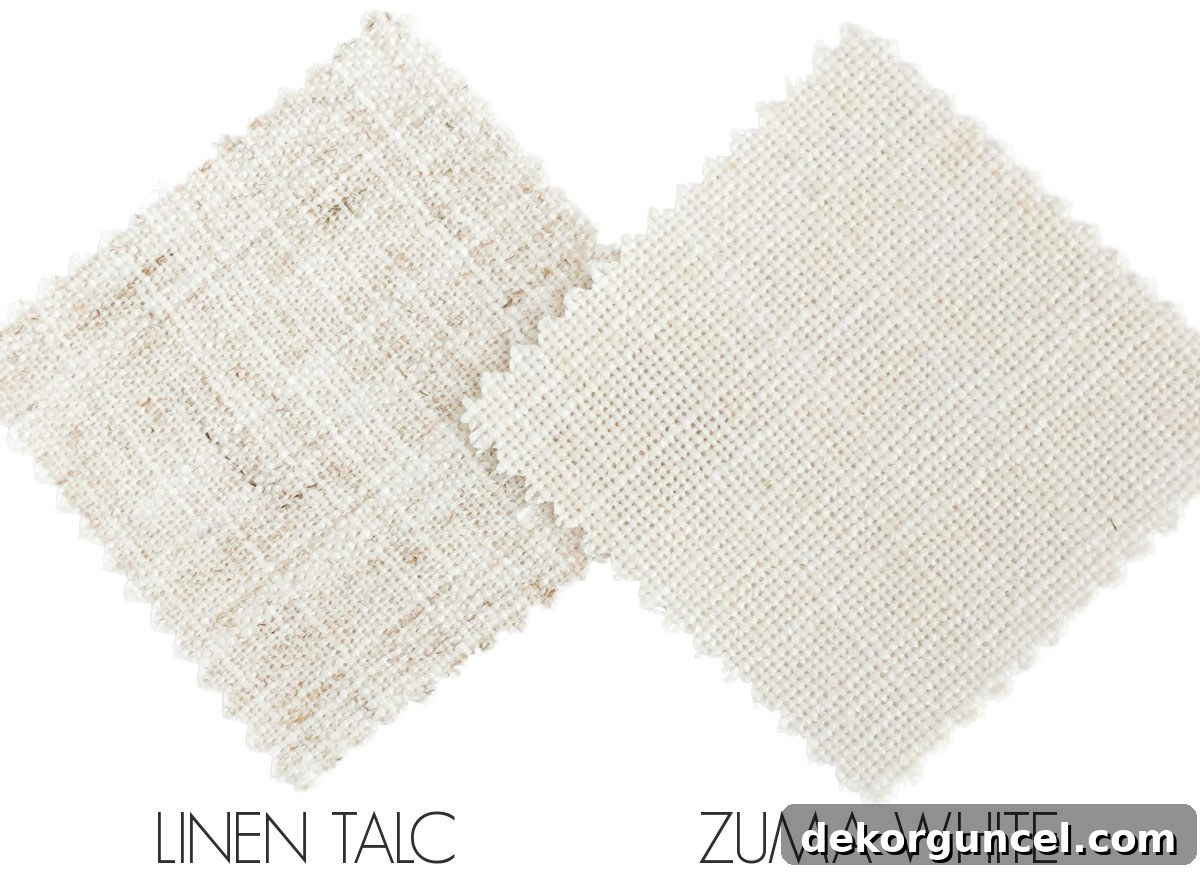
One of my more substantial online furniture purchases involved buying this beautiful upholstered bed for the guest bedroom in our previous home. I felt confident about the purchase after thoroughly reading the online reviews. Initially, I was leaning towards the “Linen Talc” fabric option based on the website’s pictures. However, I wisely decided to order fabric samples to be absolutely certain.
Upon receiving the samples, I discovered that the “Linen Talc” fabric had subtle brownish strands woven into it, a detail I hadn’t perceived online and didn’t particularly love in person. In contrast, the “Zuma White” sample proved to be a perfect creamy-but-not-too-creamy white that beautifully complemented my vision for the room:
Ultimately, I ordered the bed in “Zuma White” and have been exceptionally pleased with my decision! It’s a stunning upholstered bed, offering incredible value for its price, and it harmonizes perfectly with my other neutral home decor elements in this space:
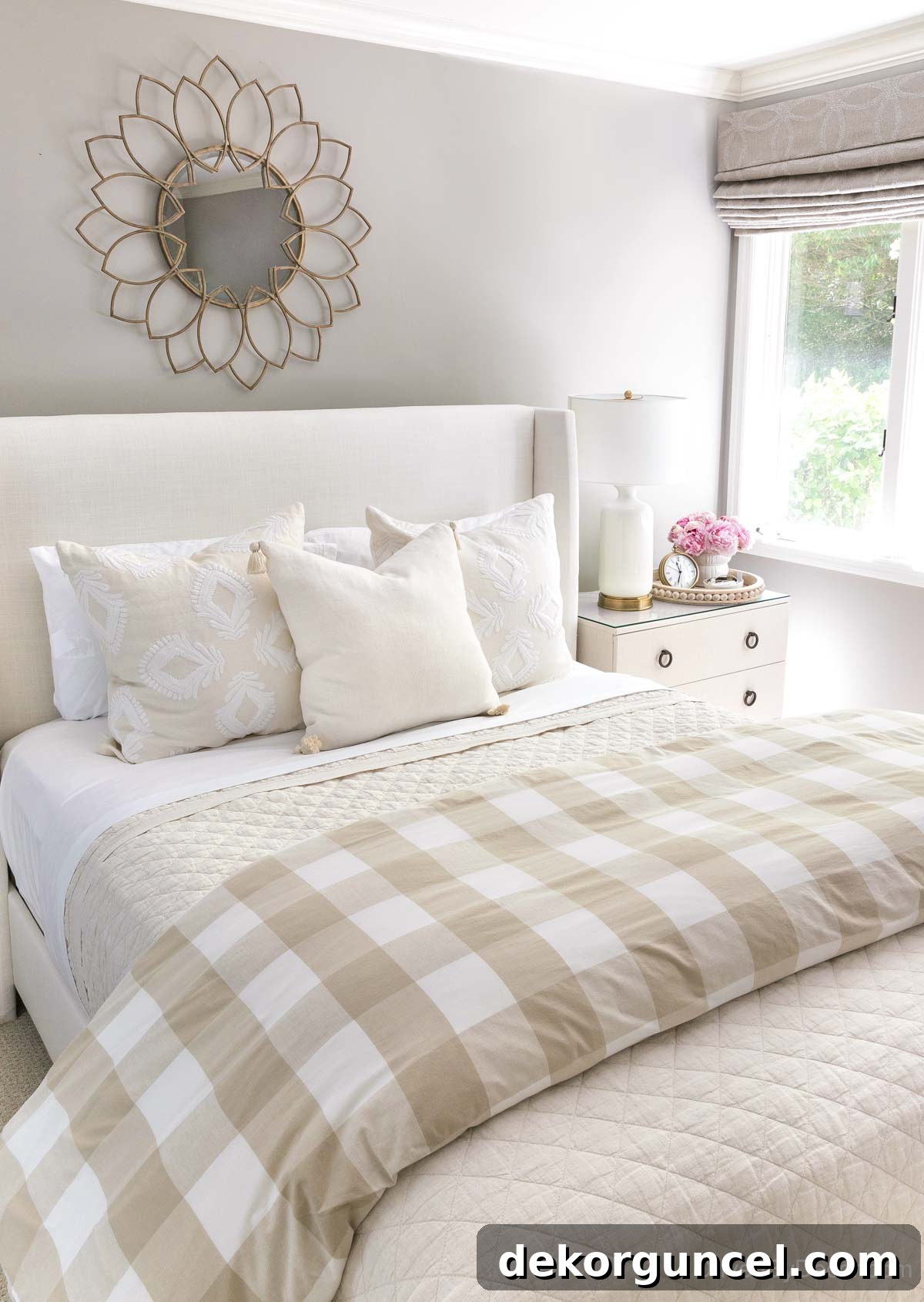
Guest Room Sources: Mirror over Bed | Upholstered Wingback Bed | Quilt | Pillows & duvet cover – no longer available | White Bedside USB Lamps | Round Wood Beaded Tray | Clock | Folding camp stools (similar)
In fact, I loved it so much that I purchased it a second time for the primary bedroom in our current home, which is currently undergoing an exciting makeover – stay tuned for updates on that in a few weeks!
6. Match Your Furniture to Your Lifestyle
It’s incredibly tempting to get swept away by a gorgeous piece of furniture online, especially when it comes with an attractive price tag. However, a “great deal” isn’t so great if the item isn’t practical for how you truly live. A fundamental aspect of buying furniture online without regrets is ensuring your purchase perfectly aligns with your lifestyle, daily routines, and household needs.
For families with young children or pets, prioritizing durability and easy maintenance is paramount. Opt for performance fabrics for upholstered pieces, even if they come with a slightly higher cost. These engineered fabrics are designed to resist stains, fading, and wear, making them a wise long-term investment. If budget is a key concern, consider slipcovered furniture made with machine-washable fabrics. These options offer both style and practicality, allowing you to keep your living space looking fresh and clean without constant worry.
As a fantastic budget-friendly example, I recently discovered this new sofa from IKEA. It boasts excellent contemporary style and offers a choice of three machine-washable slipcovers, all for under $600. This kind of thoughtful design truly caters to a dynamic lifestyle without compromising on aesthetics or affordability:

If any of you have had the chance to try it out in person at an IKEA store, please share your thoughts! There aren’t many online reviews for it yet, and your insights would be incredibly valuable to others considering this option.
7. Scrutinize Construction Quality
Before committing to any furniture purchase online, it’s imperative to thoroughly evaluate the construction quality to determine if it justifies the price. This diligence ensures you’re investing in a durable piece that will stand the test of time, rather than a flimsy item that quickly degrades.
When it comes to wood furniture, the hierarchy of quality is generally as follows: solid wood is the highest standard, offering superior durability and longevity. Veneers, which are thin layers of real wood applied over a less expensive core, represent a mid-grade option. At the lowest end are particle board or composite wood, which are often less durable and prone to damage. For upholstered pieces, key indicators of quality include a robust kiln-dried hardwood frame (avoid soft wood or particle board frames), eight-way hand-tied springs for optimal support and comfort, and joinery methods that utilize dowels and screws (steering clear of construction relying solely on glue, staples, or nails). While you don’t always need to opt for the absolute highest quality, understanding the construction of a piece is vital for assessing if the asking price is reasonable and fair.
It’s also crucial to understand that quality often varies significantly, even within the same online store. For example, I frequently get asked if Wayfair’s furniture is high quality. The reality is that Wayfair sources its products from hundreds of different manufacturers, meaning their inventory spans everything from high-quality, investment pieces to mid-grade options, and unfortunately, some poorly constructed items as well. This variability is equally true for other major retailers like Pottery Barn and Target, who sell their own branded products alongside external brands over whose production they have no direct involvement.
In fact, you can often find identical products listed across several different websites under varying names and price points. A prime example is this elegant blue lamp, marketed as the “Dasher Glass Table Lamp” on potterybarn.com for $309:
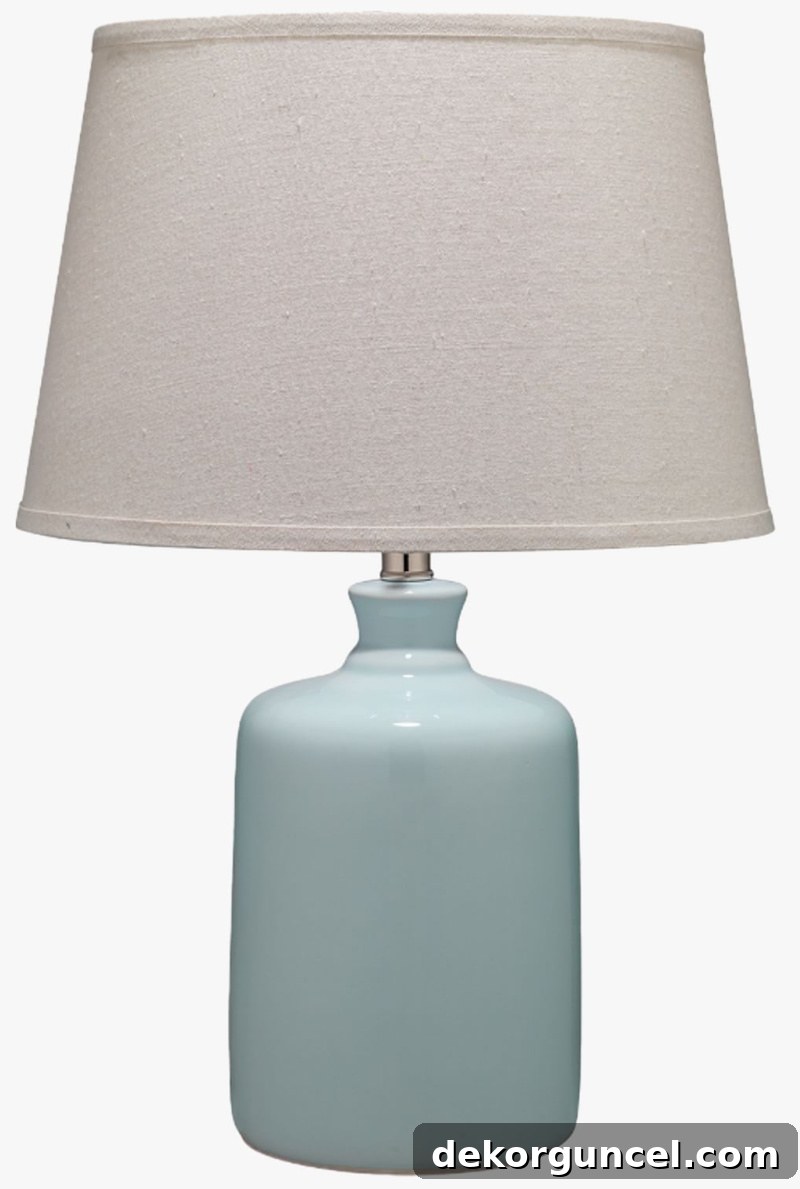
It is precisely the same item as this lamp sold on walmart.com as “Table Lamp with Jug Style Ceramic Base” for $228.97, and also identical to this table lamp offered on target.com as “Milk Jug Table Lamp with Tapered Shade” for $200.99. Always do your research to ensure you’re getting the best value!
8. Understand Assembly Requirements
When browsing furniture online, two words you absolutely must look for in the product description are “assembly required.” This phrase can denote anything from a simple 15-minute task involving attaching legs to a multi-hour, complex construction project, depending on the piece. The best way to gauge the actual difficulty and time commitment is, once again, to read product reviews. Reviewers often share their experiences, indicating how long assembly took and whether specific tools or skills were needed.
For instance, I’ve had my eye on a particular dresser for our guest room, but it’s been continuously backordered. To bridge the gap, I decided to purchase an inexpensive, assembly-required dresser as an interim solution. I even let my oldest daughter help choose it, as the plan is to pass it on to her for her first apartment once she graduates. We settled on this dresser, which fits perfectly in our guest room and offers ample storage:
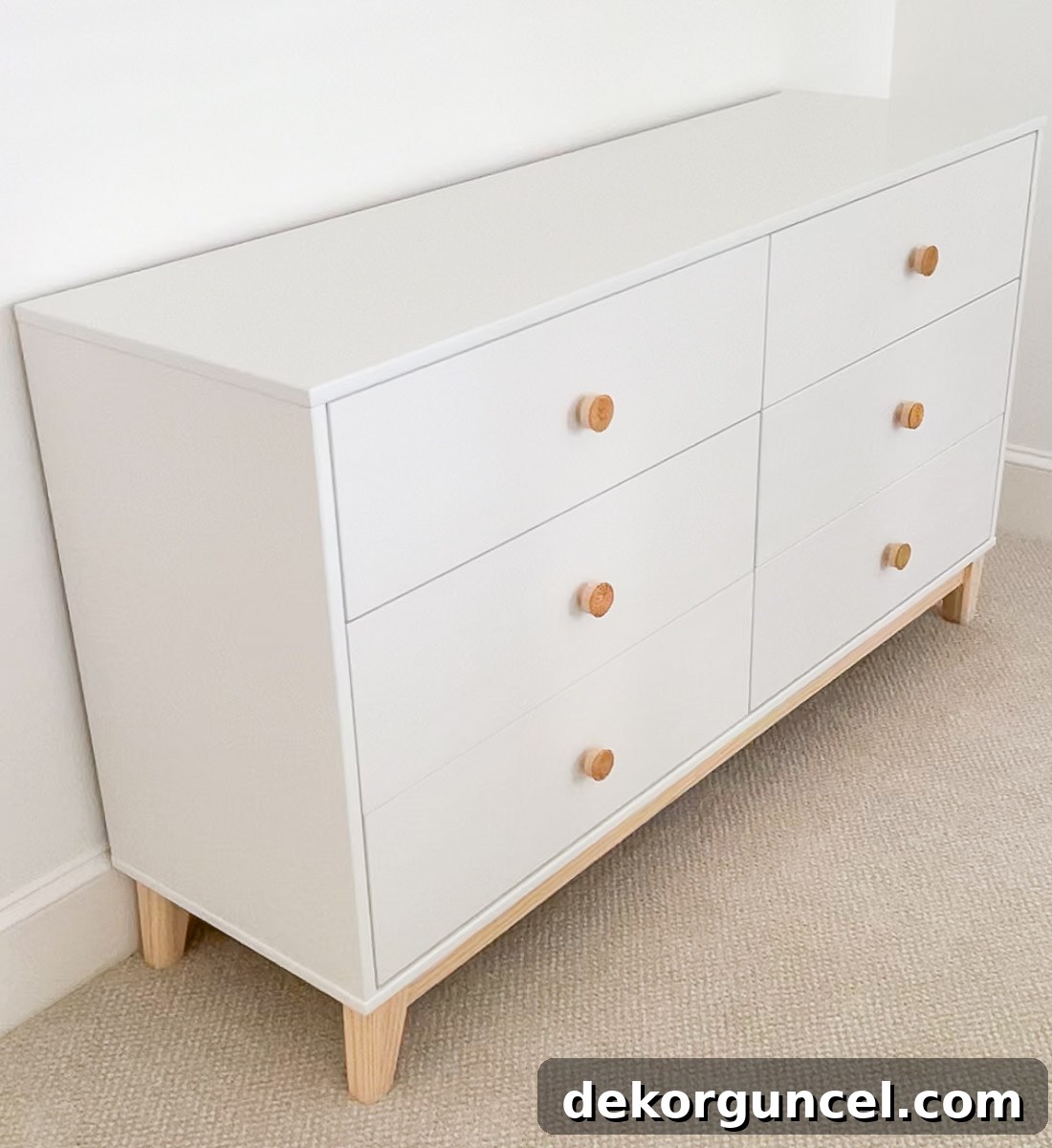
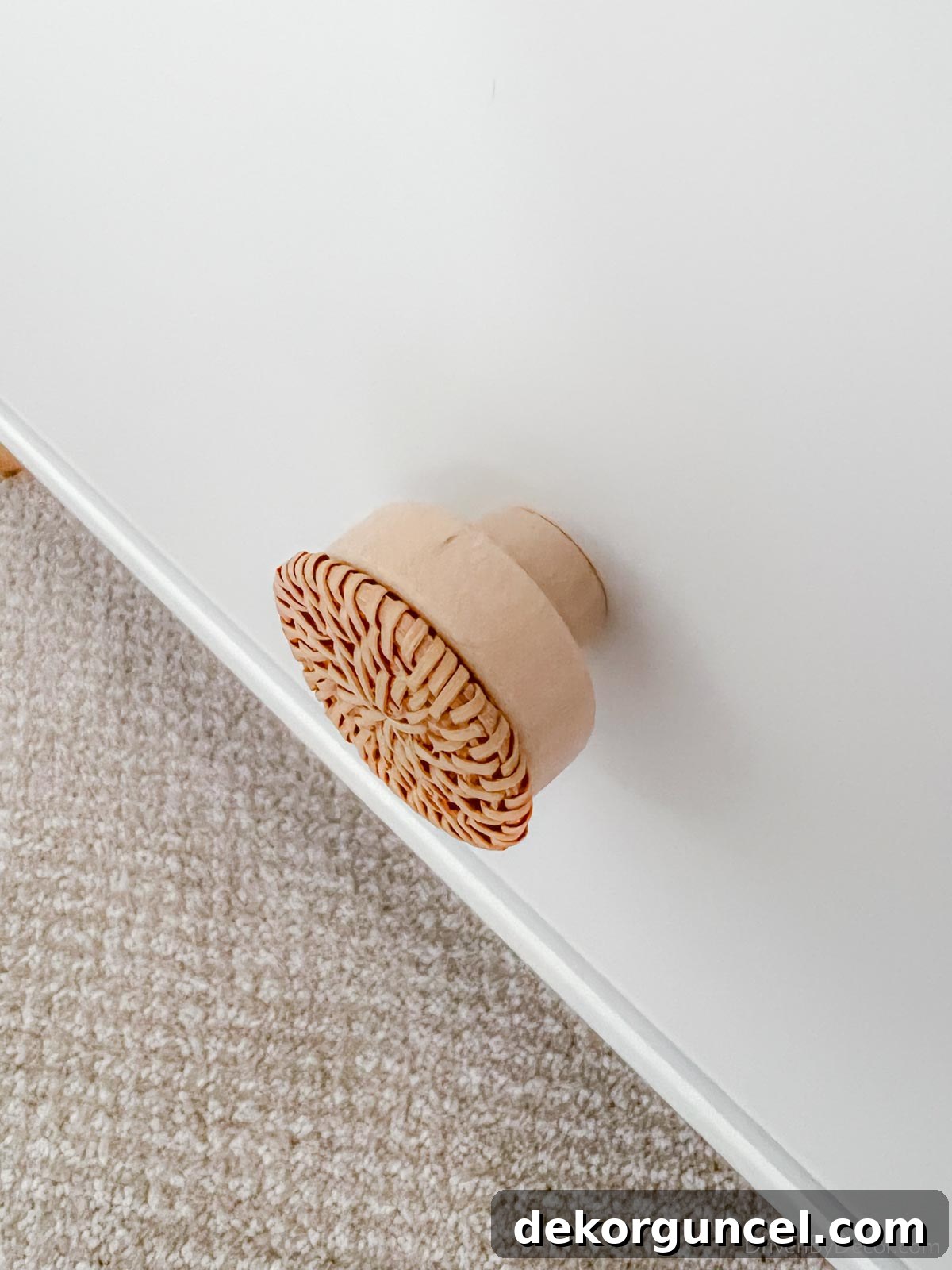
To add a touch of personality and elevate its look, we easily upgraded it by swapping out the generic knobs it came with for these charming, inexpensive rattan knobs:
I confess, I’m one of those rare individuals who actually enjoys assembling furniture; a task that takes a couple of hours doesn’t deter me. However, if you’re not particularly handy or simply prefer not to spend your precious time on assembly, it’s absolutely crucial to know what you’re getting into before you click “order.” Imagine expecting a large, fully assembled piece in a box, only for a flat-packed kit with over 100 components to arrive! One reviewer for this same dresser, presumably less handy than I am, reported it took them a grueling six hours to put it together! 😳 Being aware of assembly requirements beforehand allows you to plan accordingly, whether that means budgeting for professional assembly services or opting for fully assembled pieces when possible.
9. Thoroughly Review the Return Policy
This point cannot be overstressed: understanding the return policy is paramount when purchasing furniture online. It’s one of the most critical factors that can prevent significant post-purchase dissatisfaction. Before you buy, you must know not only *if* you can return an item but also *what* you’ll be charged for return shipping. If this information isn’t readily available on the website, a quick call or email to customer service can provide the clarity you need.
Some online retailers impose exorbitant return shipping fees, making the act of returning an unsatisfactory item almost not worth the effort (a strategy I suspect they rely on). Furthermore, some stores offer free shipping on the initial delivery but will charge you not only for the return shipping but also retroactively for the original shipping costs if you decide to send the item back. These hidden costs can quickly turn a seemingly good deal into a financial headache.
One of the primary reasons I frequently shop at Wayfair is their consistently easy and reasonable return process. Initiating a return typically involves just a few simple clicks online, and the return shipping fees are often much lower than I anticipate. For example, my sister recently ordered a dining chair to test in her home, with plans to order five more if it worked out. Although the chair ultimately wasn’t a good fit, Wayfair’s return shipping cost was a mere $13, which is incredibly reasonable and absolutely worth it for the convenience of trying an item in your own space. In another instance, I returned a pair of lighting sconces last year, and the return shipping amounted to a negligible $5.04.
I also favor ordering online from retailers that have a local physical store where I can return items if they don’t work out, such as Pottery Barn or Anthropologie. However, it’s important to note that this convenience typically doesn’t extend to larger furniture pieces, which usually cannot be returned to a brick-and-mortar store.
When it comes to custom orders, the general expectation is that they are non-returnable due to their personalized nature. However, some innovative online-only brands are challenging this norm! Take Maiden Home, for example. This online-exclusive company specializes in high-quality, direct-to-consumer furnishings, all expertly crafted in North Carolina. They offer an array of truly exquisite sofas and sectionals, including one of my personal favorites, their stunning Dune sectional:
 Their current return policy is remarkably flexible: you can return pieces within 30 days of delivery for a full refund, minus a 10% fee of the purchase price, which covers the cost of pick-up and donation of the item (for complete policy details, please refer to their website here). This level of customer-centric flexibility for custom pieces is truly admirable!
10. Ensure It Checks These Three Essential Boxes
My final, overarching tip for buying furniture—whether online or in-store—is to ensure that every prospective purchase unequivocally checks all three of these fundamental boxes. Adhering to these principles will not only lead to greater satisfaction but also to a more harmonious and financially responsible home environment.
(1) You genuinely love it – It might seem obvious that no one would buy something they don’t love, yet it’s incredibly common to settle for “good enough” when you’re exhausted from endless shopping and simply want to finish furnishing a room. Resist this urge! Patience is a virtue in home decor. Wait for the piece that truly speaks to you, the one that excites you and brings joy. The most beautifully curated rooms are often those where pieces have been collected thoughtfully over time, rather than acquired all at once. If it’s a significant investment, ensure you’ll love it not just today, but for many years to come. For me, this means opting for pieces with classic, timeless designs and versatile, neutral finishes. For example, we purchased these two plush linen swivel chairs approximately 15 years ago, and at the time, they represented the most significant furniture investment we had ever made:

Living Room Sources: Loveseat & ottoman (custom order from Lee Industries) | Linen swivel chairs | Wood floor lamp | Framed leaf art print | Woven ottoman tray | White vase | Faux eucalyptus | Bone beads | Round mirror over fireplace | Vases on mantel – no longer available | Faux flowers in mantel vases
These cherished chairs have journeyed with us through three different homes, and I still adore them as much today as the day we bought them! They are Lee Industries brand chairs, originally purchased from a local store. Fortunately, Serena & Lily began carrying them a few years ago (as their upholstered pieces are also crafted by Lee Industries), so you can now find them available for purchase online here.
(2) It fits your space & lifestyle – As elaborated in Tip #3 (Measurements) and Tip #6 (Lifestyle), these are non-negotiable considerations. A beautiful piece that doesn’t fit physically or functionally will only lead to frustration and regret. Always prioritize practicality and proper scale for a harmonious living environment.
(3) It fits your budget – While seemingly obvious, this point is profoundly important when considering how to buy furniture responsibly. It’s easy to become captivated by the most exquisite piece you’ve ever seen, losing sight of whether you can *easily* afford it. As much as we both appreciate furniture and design, we must agree that there are more critical aspects of life than material possessions. If acquiring an expensive piece of furniture necessitates sacrificing a cherished family vacation, or if it leads to the stress of never-ending interest payments on a high-interest credit card balance, then it is simply not worth it. Instead, exercise patience. Save your money for a few more years and purchase it when it won’t create any financial strain on your household budget. You will undoubtedly enjoy that furniture piece far more when you can buy it with 100% excitement, completely free from stress or compromises to your lifestyle and financial well-being.
And with those comprehensive tips, I’m off to enjoy the remainder of my day! Thank you, as always, for stopping by and engaging with these insights. Happy furniture hunting!
