Shark vs. Dyson Cordless Vacuum Face-Off
Measurements come first here, because a good-looking piece in the wrong spot still fails. I bought my first cordless vacuum about six years ago & now wish I had done it long before that – I'll never go back to corded! I have both Shark and Dyson cordless vacs and often get asked which one is best. The truth is that they each have their pros and cons so it depends on what you're looking for in a vacuum.
Today I'm doing a face off of Shark vs. Dyson cordless vacuums to show you exactly how these two brands compare. It should give you all the info you need to decide which one is best for you! (post includes commissionable links; for more information, see my full disclosure statement {here})
Want to skip right to my recommendations of whether to buy a Shark or Dyson? Hop to the end of the post for my vacuum recommendations {HERE}. DON'T MISS TODAY'S $110 OFF SALE ON THE DYSON V8 {HERE}!
Which Models I'm Testing: Shark vs. Dyson
The Shark and Dyson cordless vacuums I'm comparing include the Shark IZ163H Rocket Pet Pro with Multiflex, the Shark IZ462H Vertex, the Dyson v10 Animal, the Dyson v11 Complete, and the Dyson v15 Detect. Here's the crew lined up and ready to clean:
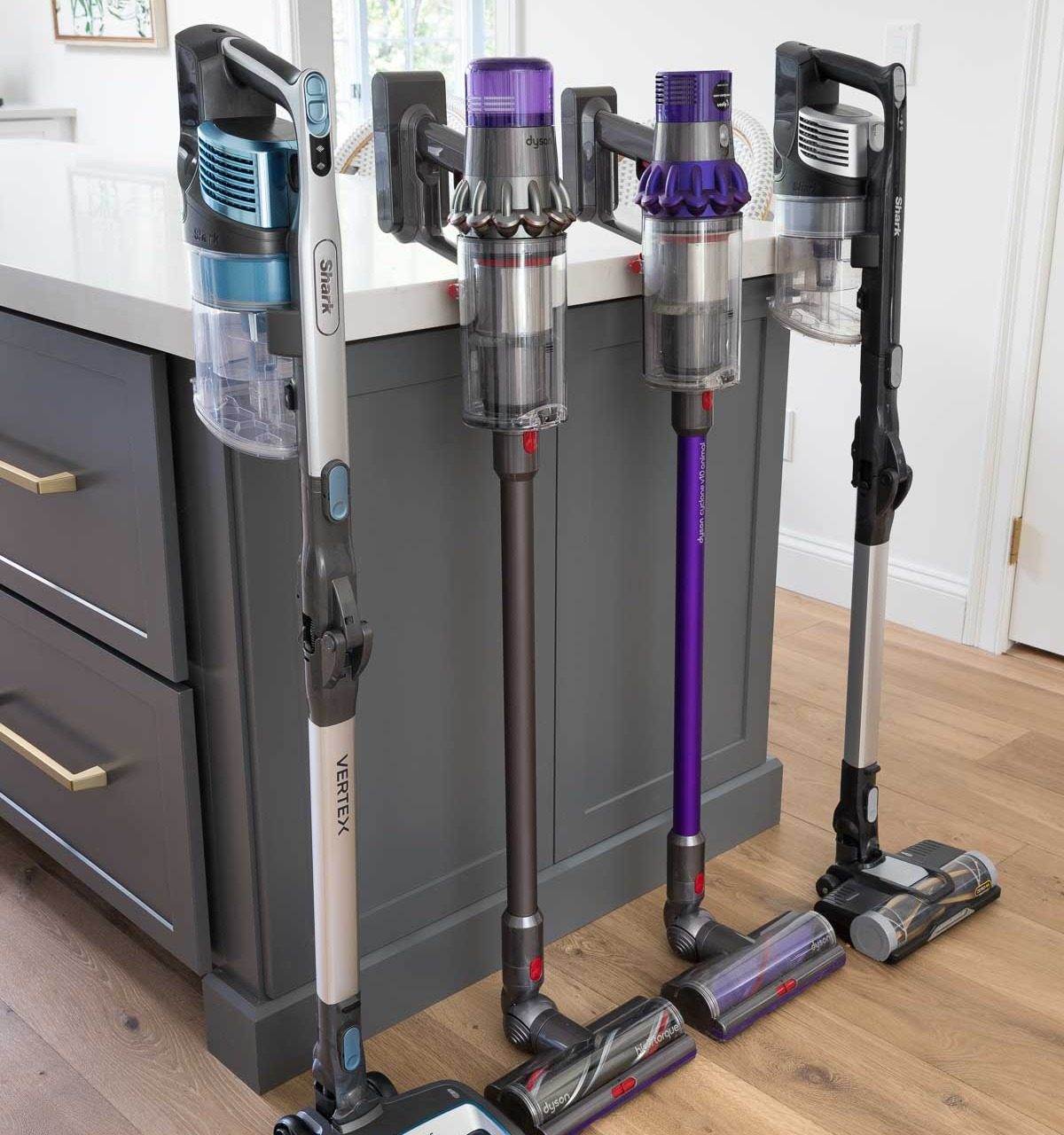
Sources from left to right:Shark IZ462H Vertex Cordless Vacuum (find newest version {here}) | Dyson v11 Cordless Vacuum | Dyson v10 Animal Cordless Vacuum | Shark IZ163H Rocket Pet Pro with Multiflex Cordless Vacuum
All four of these vacuums can be converted into powerful handheld vacs too so you're getting a cordless vacuum and handheld all in one:
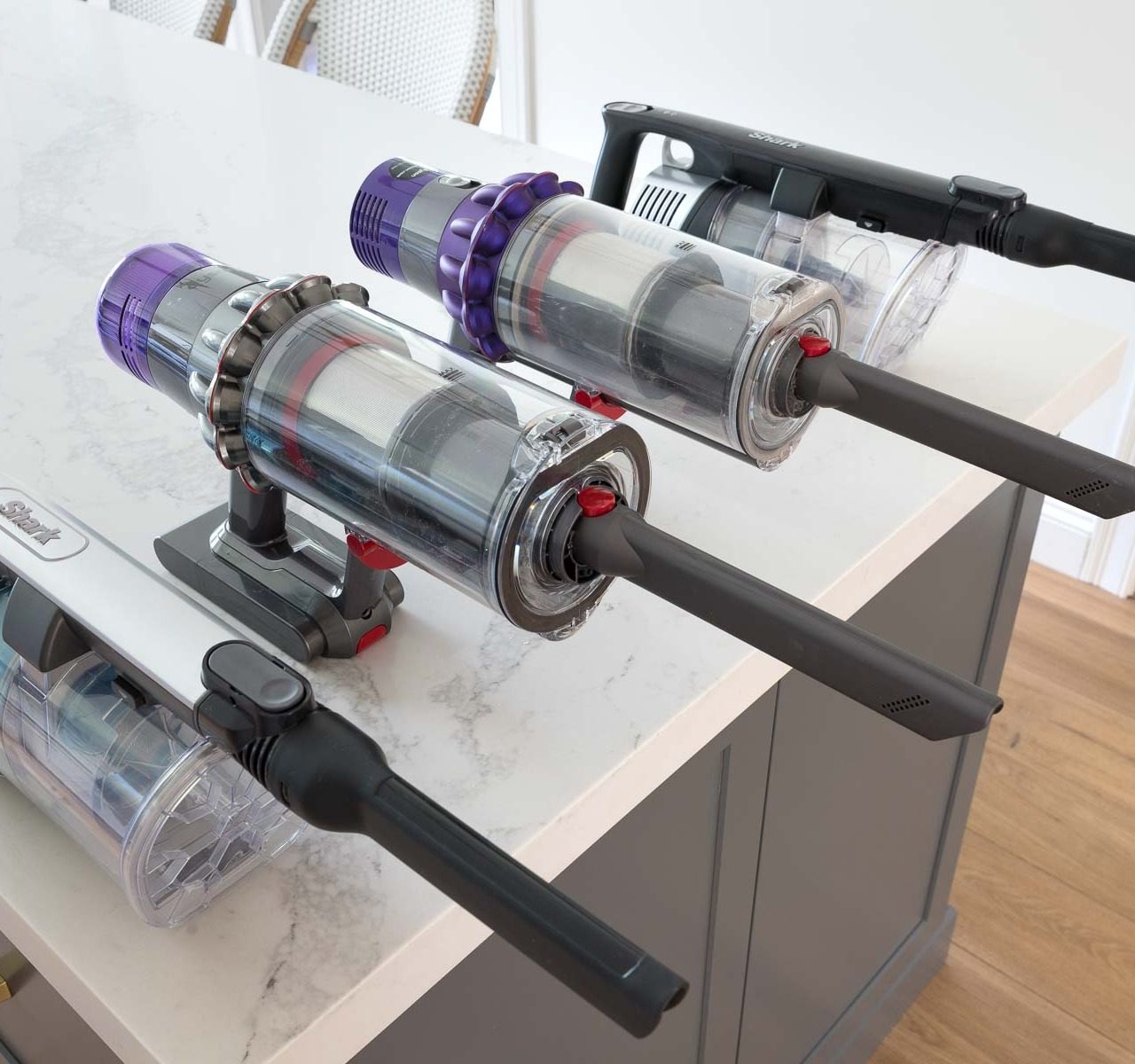
The household has also updated this post to provide info on the newest Dyson which is the Dyson v15 Detect (you can find it {here}) and how it compares to the other four vacuums. Let's jump right in to how these Sharks and Dysons compare on key features including run time, battery type, weight, suction power, dustbin capacity, attachments, special features, and price…
Run Time
Figuring out and comparing run times of cordless vacuums is tricky because the times reported by the brands are not under conditions of typical use. Dyson v10 and v11 cordless vacuums reportedly have up to 60 minutes of fade-free run time with a non-motorized attachment (the typical floor attachment is motorized). The Shark Rocket Pet Pro and Shark Vertex reportedly have up to 40 minutes and 60 minutes, respectively, of runtime in standard mode measured at the hand vac (again, not with the typical floor attachment).
So we're not really comparing apples to apples here between the two brands and neither is telling us how long to expect the vacuum to run when being used in real world conditions. I did my own test with all four vacuums using the standard rotating floor cleaning attachment that each one comes with:
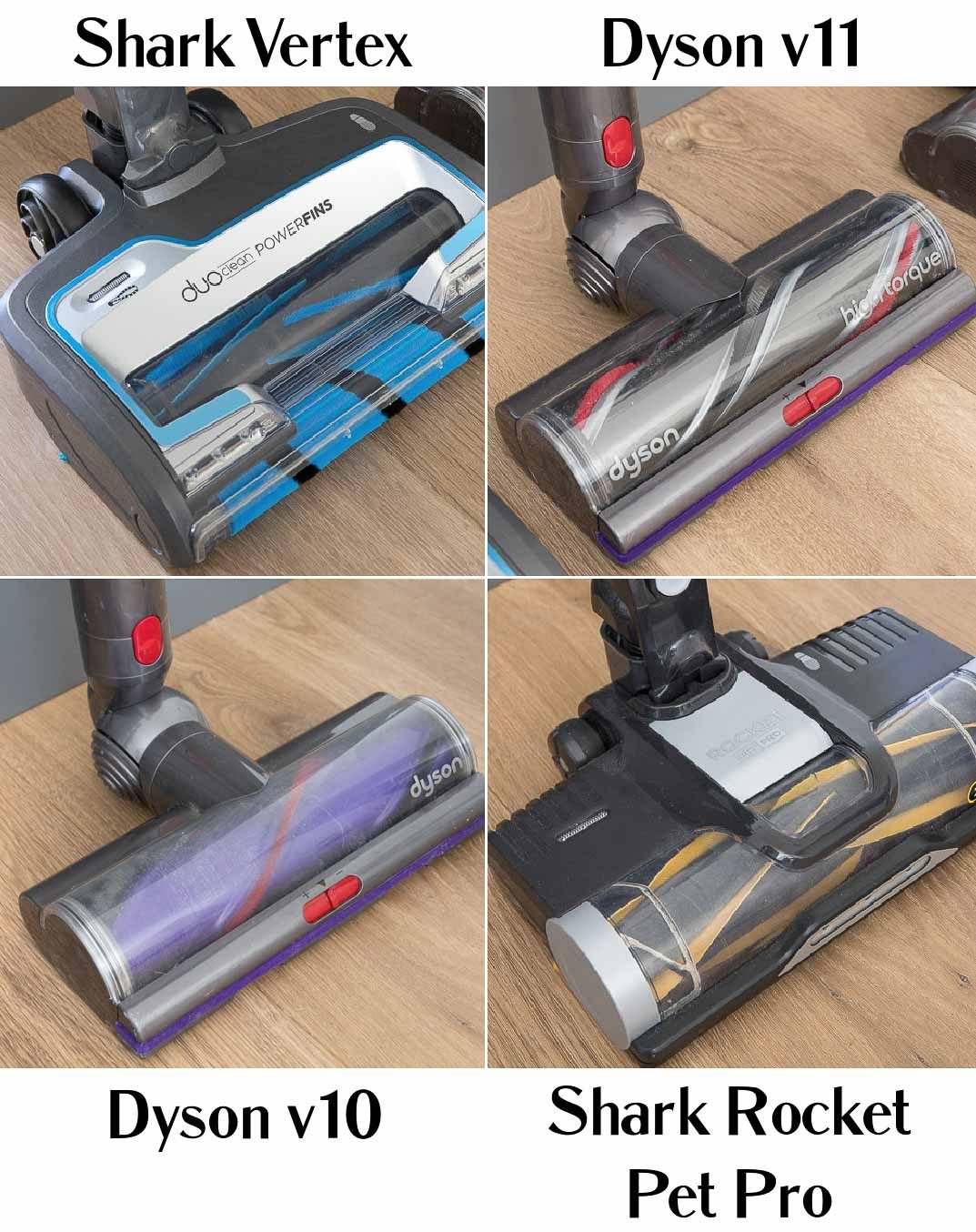
My house is about 50% hardwoods, 25% low pile carpet, and 25% medium pile carpet so Jeff and I took a vacuum in each hand and used them on hardwoods for 5 minutes, then medium pile carpet for 5 minutes, back to hardwoods for 5 minutes, and finally to low pile carpet for 5 minutes. We then started through the same rotation a second time and noted when each vacuum died. For both Sharks and the Dyson v10, we ran them on the low setting on the hardwoods and low pile carpet and the next highest setting on the medium pile carpet. The Dyson v11 has an auto sense feature that detects the type of surface it cleans and increases or decreases the suction accordingly so no toggling to different settings was needed.
The winner for run time? The Dyson v11 (and the newer Dyson v15 that has a comparable battery life to the v11). The v11 ran for a total of 37 minutes under my test conditions. Next came the Dyson v10 that ran for 32 minutes, the Shark Vertex that ran for 29 minutes, and then the Shark Rocket Pet Pro that ran for 26 minutes. If your house has more hardwoods than mine, your run times would be longer. With more carpet, expect run times to be shorter.
When you're vacuuming with a cordless vacuum you can move from room to room and around a room much more quickly than with a corded vacuum because you don't have to constantly plug and unplug the vacuum or deal with the cord tangling or getting caught on something. The household has found that I can get my vacuuming done in about half the time with a cordless as I did with my old corded vacuum.
So for me, the run time of any of these vacuums is plenty – The household has never had one die on me before I was done with what I wanted to get vacuumed. But if you feel you need a longer running time, you'd want to go with the Dyson v11 or buy one of the Sharks along with an extra Shark battery and charger that you could swap out, giving you double the run time (more on that next!).
Battery Life Indicators
All four vacuums have battery life indicators to tell you how much charge is left in them. For the Sharks and the Dyson v10, it's three lights in a row that light up to indicate full charge, mid charge, or low charge. The Dyson v11 and Dyson v15 have a much more sophisticated digital display that shows the estimated battery life remaining which is really nice:
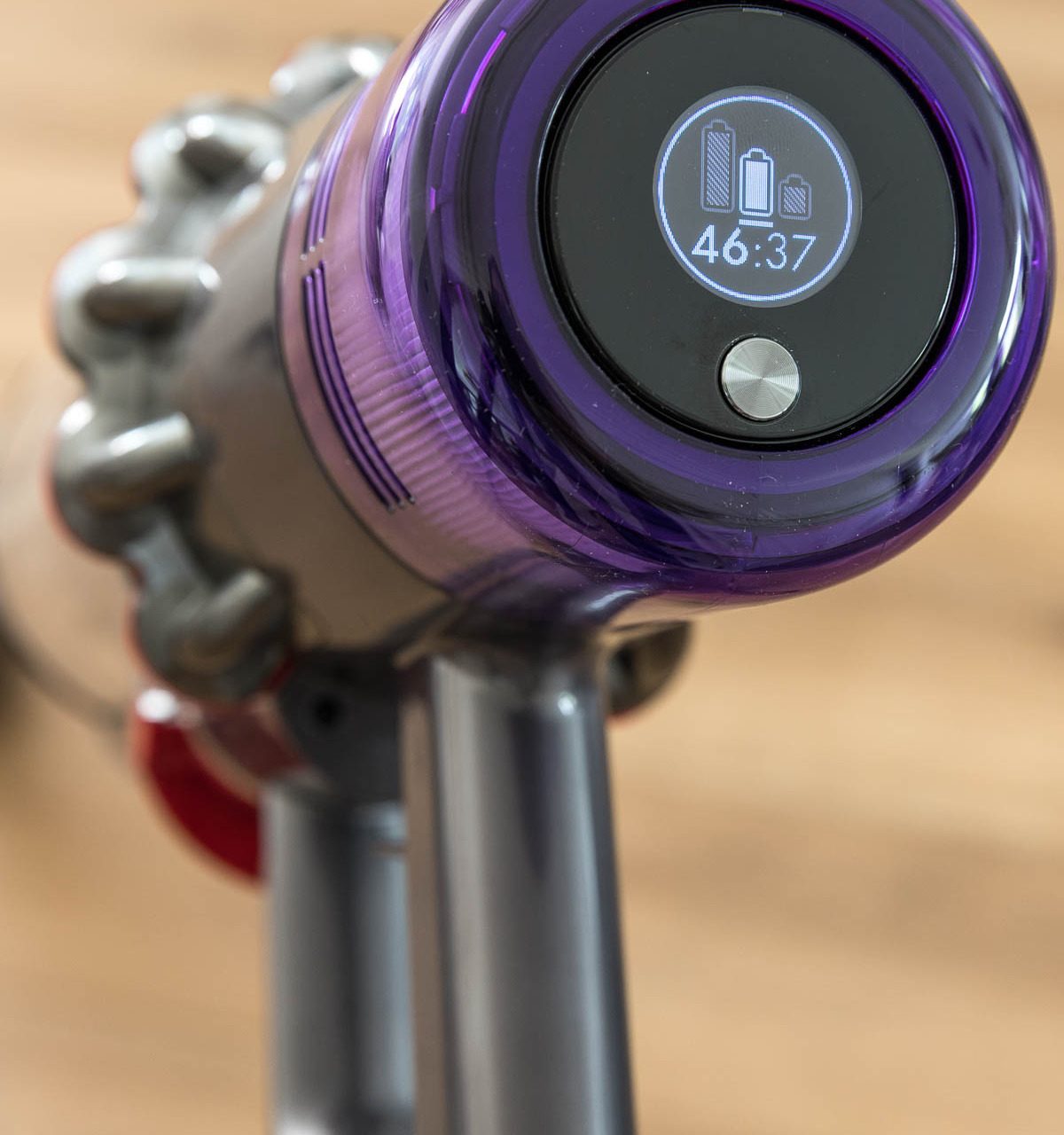
The time adjusts throughout the time you're vacuuming depending on the surface you're vacuuming and the setting that you have your Dyson on.
Battery Type and Recharging Options
Note: Dyson v10 and Dyson v11 previously did not have a removable click-in battery but the current version of both vacuums do so this shouldn't be an issue unless you're buying a vacuum that was manufactured a while back.
Something I didn't think about when I bought my first cordless vacuum was whether or not the battery was a click-in battery that could be removed for recharging. Why is this important? If the battery doesn't click in and out of the vacuum for recharging, you need to store your entire vacuum by an outlet for recharging.
If you have an outlet in the space you normally store your vacuum then this is no big deal! The Dyson v10 comes with a nice wall mounted docking station that you can attach your charging cable to and then just pop your vacuum onto for storage and recharging:
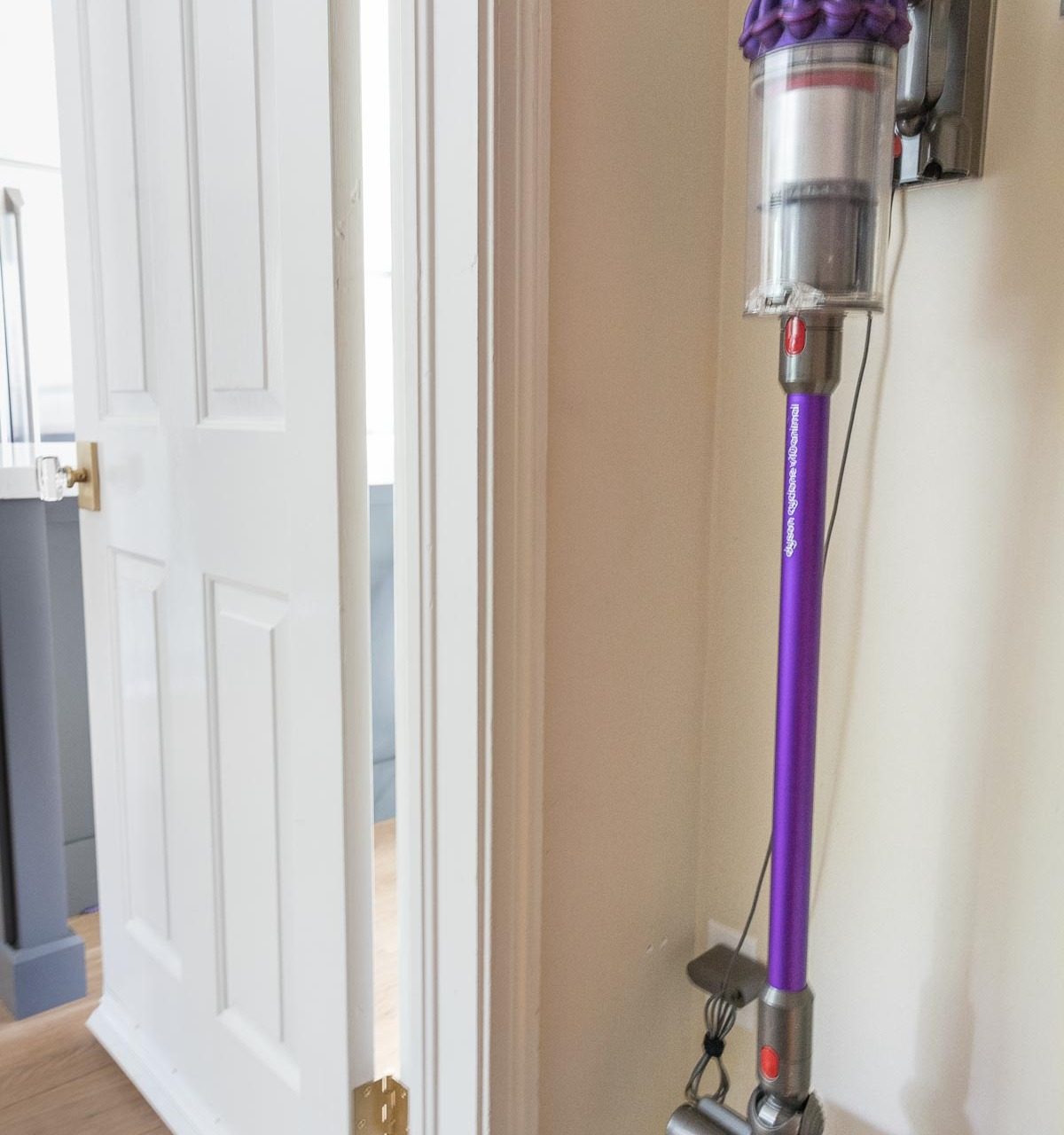
The Dyson v11 comes with a Floor Dok for charging which is a freestanding dock (it doesn't attach to the wall) that you can place anywhere in your home.
Current Dyson cordless vacuums from v10 up have a removable, click-in battery and both Shark vacuums have a removable click-in battery. Having a removable battery allows you to pop the battery out and recharge just the battery at an outlet while you keep the rest of the vacuum wherever you want. This really opens up your options for recharging.
For example, I can recharge my Shark vacuum battery in the shallow storage closet off our kitchen:
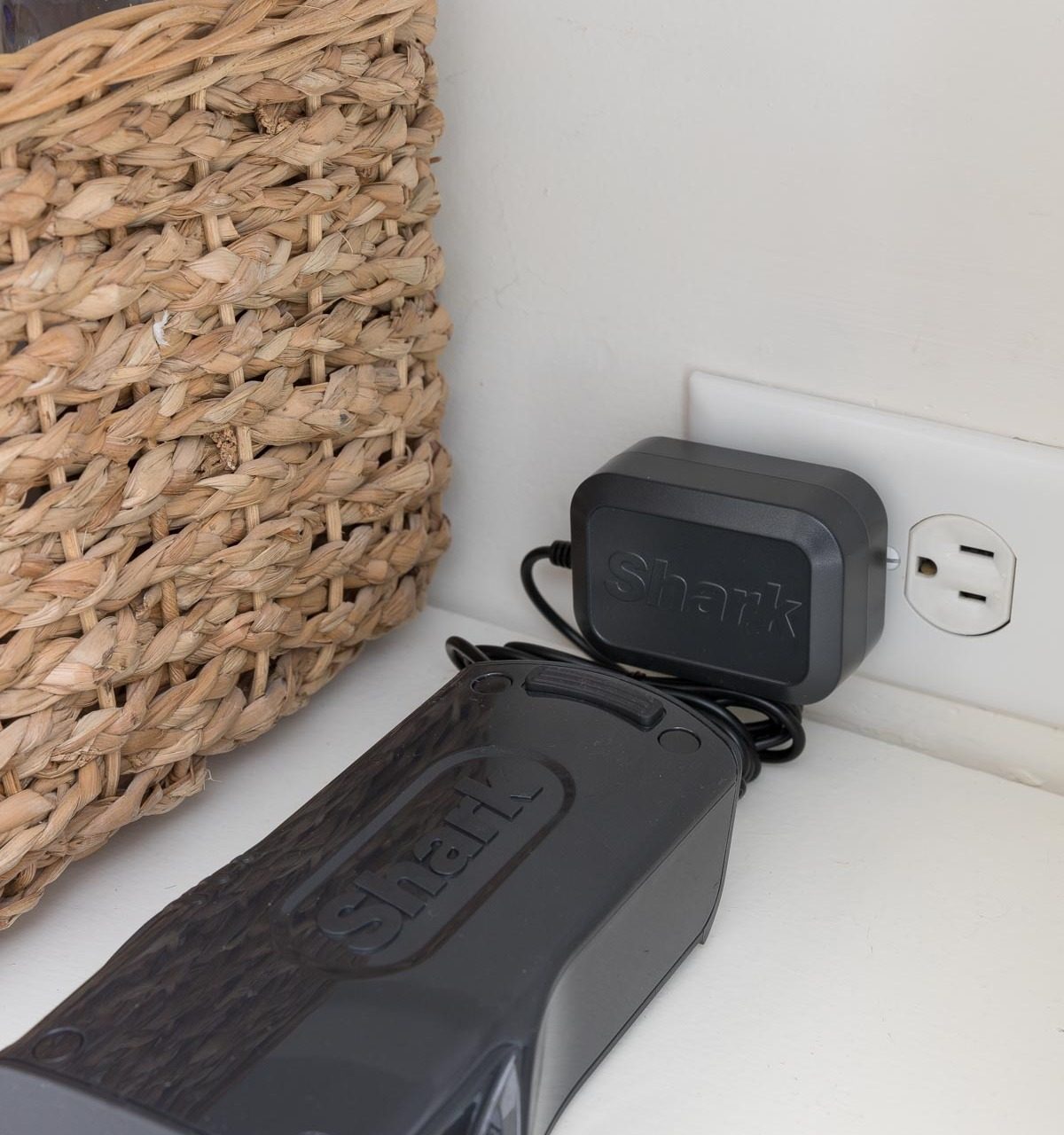
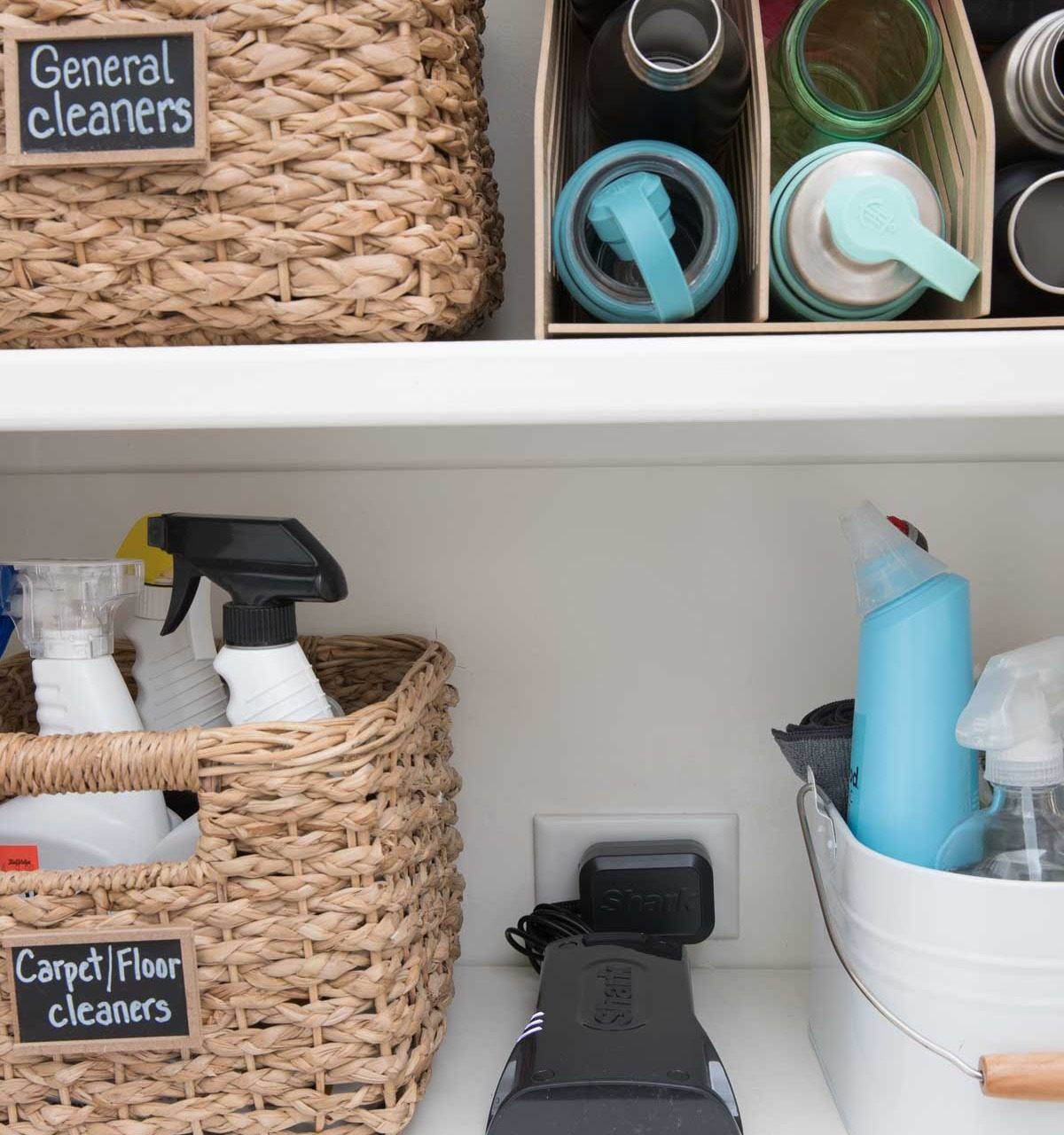
while storing the rest of the vacuum anywhere I want.
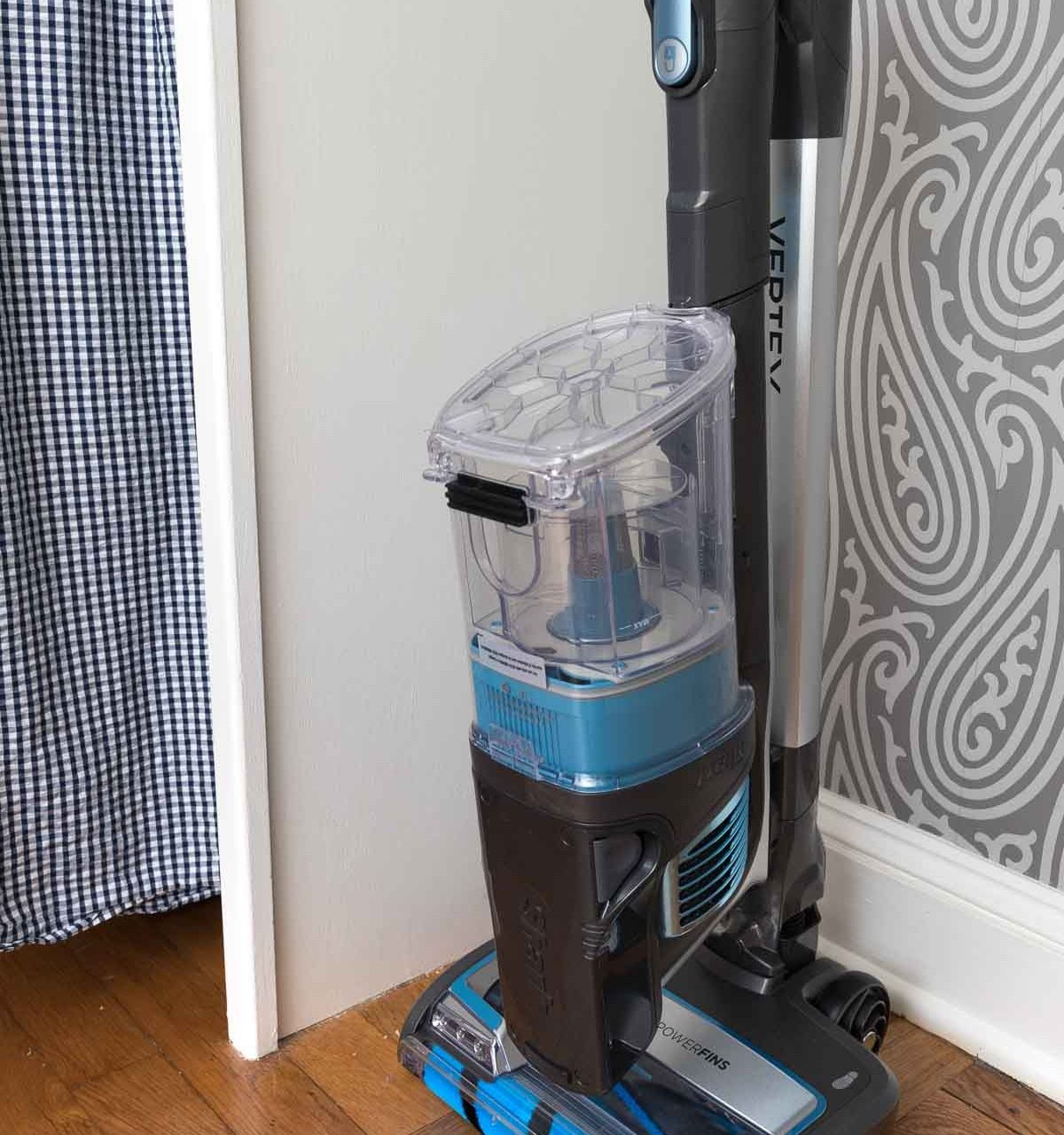
The two Shark vacuums I tested have another pretty cool feature that makes them easy to store too – the multiflex feature (where it bends in the middle of the stick) allows them to fold down to a much shorter height for compact storage:
Weight
All four vacuums weigh less than 10 pounds but the Dysons are a bit lighter than the Sharks. The Dyson v10 Animal is 5.9 pounds, the Dyson v11 Complete is 6.68 pounds, and the Dyson v15 Detect is 6.83 pounds while the Shark Rocket Pet Pro is 7.17 pounds and the Shark Vertex is 9.04 pounds. All four are quite easy for me to carry up and down stairs (they are all a LOT lighter than my old corded vacuum).
When weighing all four of them as a handheld with the standard crevice tool attached, both Sharks and the Dyson v10 all weigh within two ounces of each other (3 pounds, 13-15 ounces). The Dyson v11 is about 9-10 ounces heavier.

So when used as full stick vacuums, Dysons are lighter than Sharks. However, this is not the case when they're used as handhelds.
Suction Power
As with run time, the power of Dysons is reported in a different way than Sharks making it impossible to compare the two brands with specs alone. Dyson measures suction power in air watts with the Dyson v10 at 151 air watts, the Dyson v11 at 185 air watts, and the Dyson v15 at 230 air watts. The power of Sharks is reported in watts with the Shark Rocket Pet Pro at 181 watts and the Shark Vertex at 281 watts. Watts and air watts aren't the same thing. Watts is not as accurate of a reflection of suction powder since it refers to the total amount of power supplied to all components of the vacuum (including the lights), not just the suction power.
Doing my own tests using the two Dysons and Sharks to vacuum up various items on hardwoods,
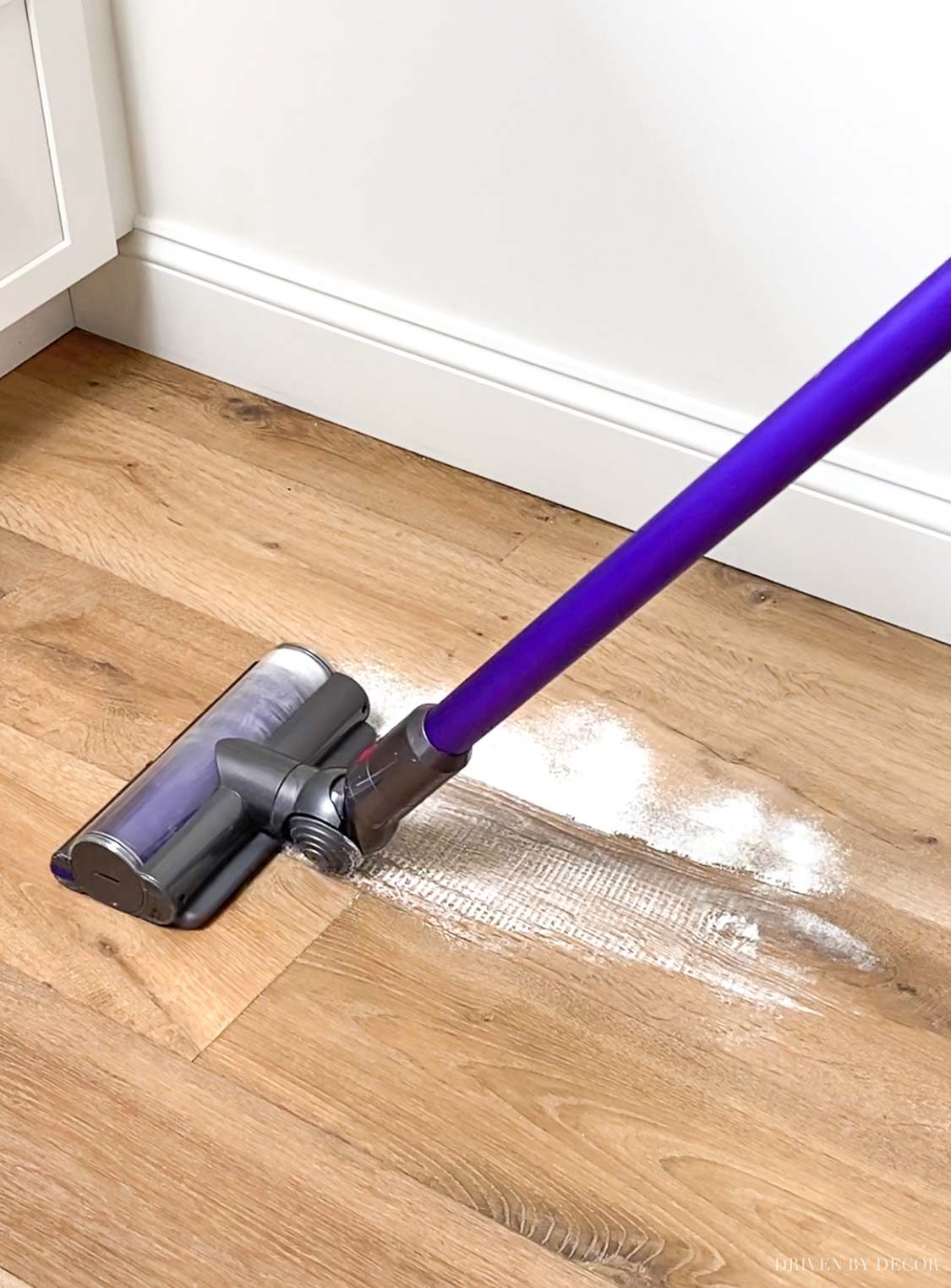
as well as using them as handhelds what I found is that all four have very good suction powder and they all got the job done.Overall, I felt that the Dyson v11 has the best suction power (and the newer Dyson v15 is even a bit better) and the Shark Rocket Pet Pro has the least suction power of the four (remember however that I'm not Consumer Reports doing this in a test lab – this is just my experience from putting them to use on everyday tasks). However, the power fins that both Sharks have on their rotating floor vacuum elements give them a leg up over the Dyson Animals on vacuuming larger items like dry dog food and Cheerios.
And as I side note, both Sharks have lights on the vacuum heads that help illuminate dirt and dust which is a feature I really like that the Dyson v10 and v11 don't have. The Dyson v15 have a similar feature to the Sharks but it's a bit more advanced with a laser that illuminates unseen dust and debris. I also like that the Dyson v15 and Dyson v10 Absolute have a fluffy roller head that gives them a leg-up for cleaning on hardwood floors and is gentler on them too.
Trigger vs. Toggle Switch
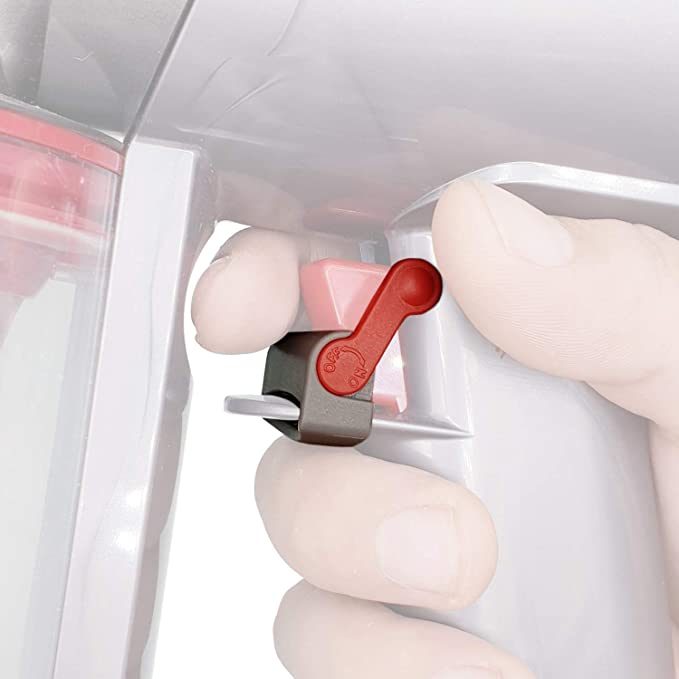
Another difference between the Dysons and Sharks is whether they have a trigger or on/off toggle switch. Most Dysons have a trigger that you have to hold down with your trigger finger the entire time you're vacuuming. They do this as a way to conserve battery power and it does come in handy when you mistakenly suck up the edge of a rug as it's a lot faster to release the trigger than to flip a switch to turn the vacuum off. The Sharks both have a typical on/off toggle switch that you don't need to hold down.
If you have arthritis or other issues with your hands, having a typical on/off switch like you do with the Sharks might be preferable. I did recently find a clever work-around for the trigger on the Dysons though – you can actually buy {this on/off clamp} that attaches to the trigger so that you don't have to continue holding it down while vacuuming.
Dustbin Emptying and Capacity
Another difference between the cordless vacuums I tested is in dustbin size – both Dysons I tested have double the size dustbins as the Sharks. The dustbins for the Dyson v10, v11, and v15 hold 0.8 quarts while the dustbins for the Rockets hold 0.34 quarts. All four vacuums have simple one-touch emptying where you push a button and the bottom pops open and the dust is supposed to fall out without ever having to touch it.
However, with all four vacuums I often have to use my hand to get the crap in the dustbin because it doesn't fall out on its own (which I think is due to having a family of girls with long hair).
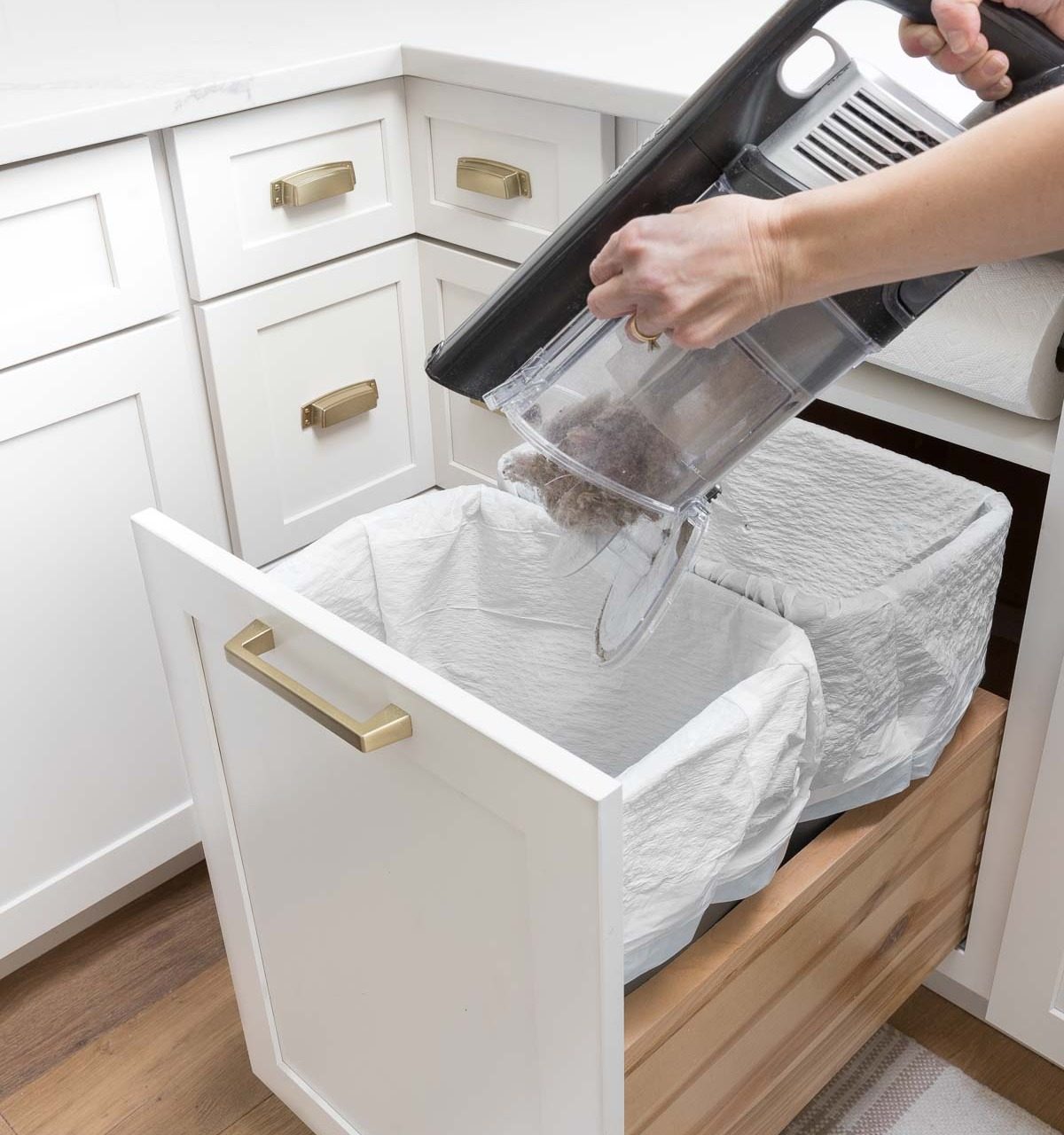
While you'd think a bigger dustbin would always be better, there is one advantage to the smaller dustbin of the Sharks. The household has found it's easier to reach in and get all of the vacuumed up crap and debris out of the Shark dustbin since it's a lot shallower than the Dyson dustbin.
Attachments
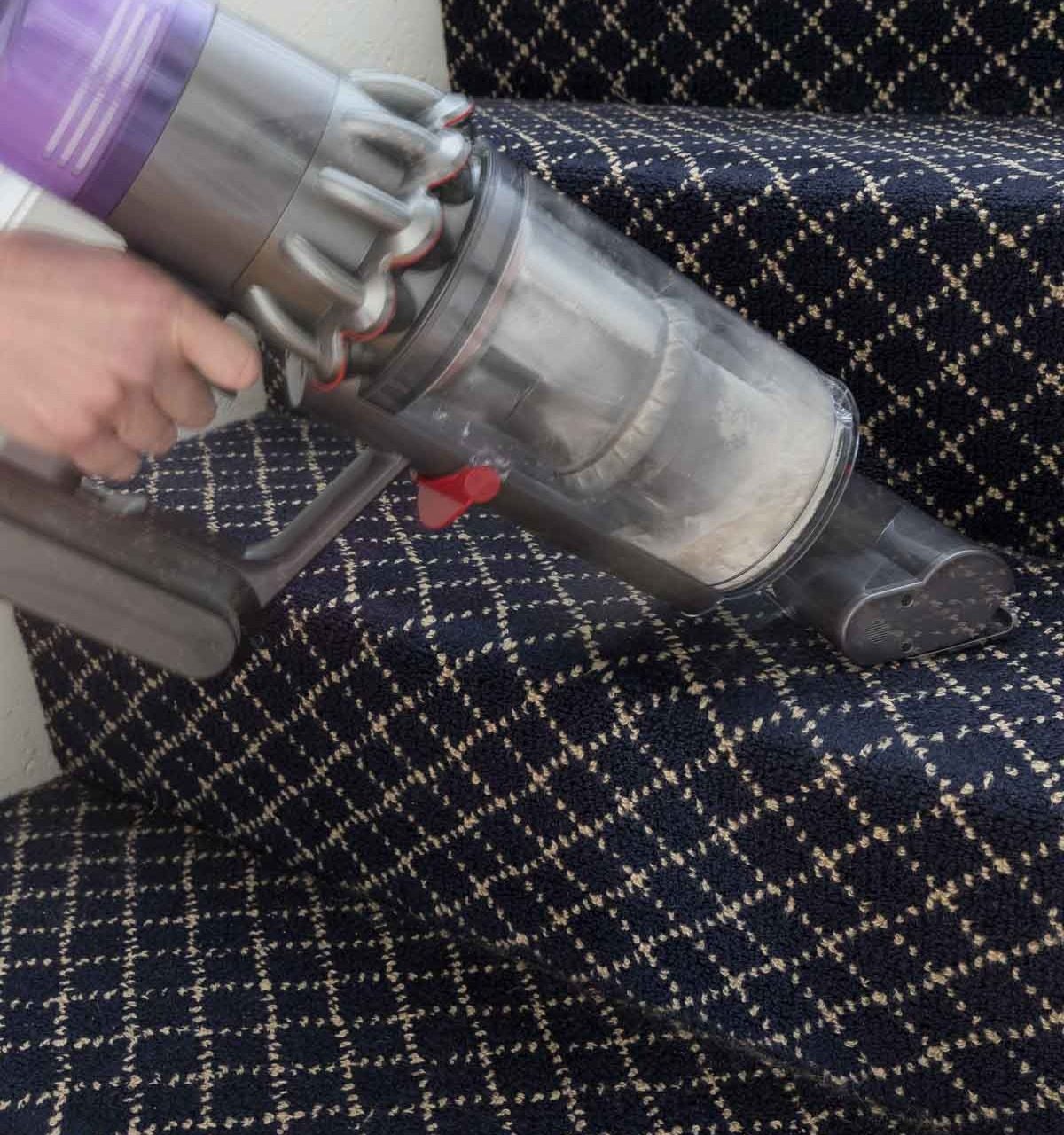
Each cordless vacuum comes with a different assortment of attachments. The Sharks both come with a crevice tool and pet multi-tool and the Shark Vertex also comes with an anti-allergen brush. The Dysons come with several additional tools including a couple that I really love. One is the mini motorized tool that can be attached to the end of the handvac portion of the Dyson and works SO well for cleaning stairs and upholstered furniture:
The Dyson v11 Complete and Dyson v15 models also come with this clear wand storage clip that's super simple but also very clever. You clip it onto the stick of your Dyson and it holds the two most commonly used attachments so they're always available and easy to grab:
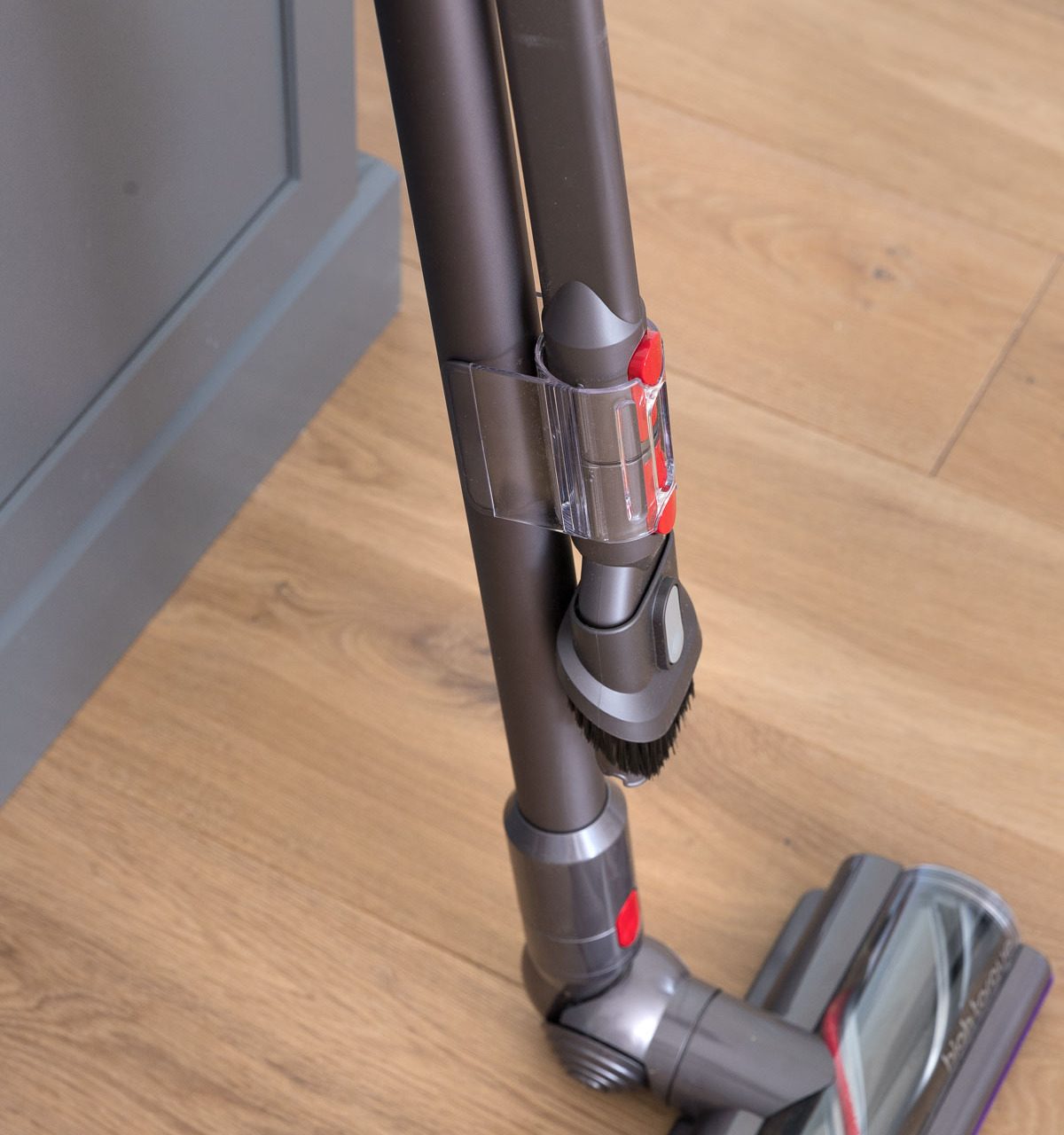
Look at my post on Dyson vacuum attachments for a few smart add-ons that I also love for my Dyson.
While Sharks might not have as many attachments, one feature I did want to make sure to showcase is the multiflex feature on both Sharks – it's solid! About halfway down the vacuum stick there's a hinge and lock/unlock button:
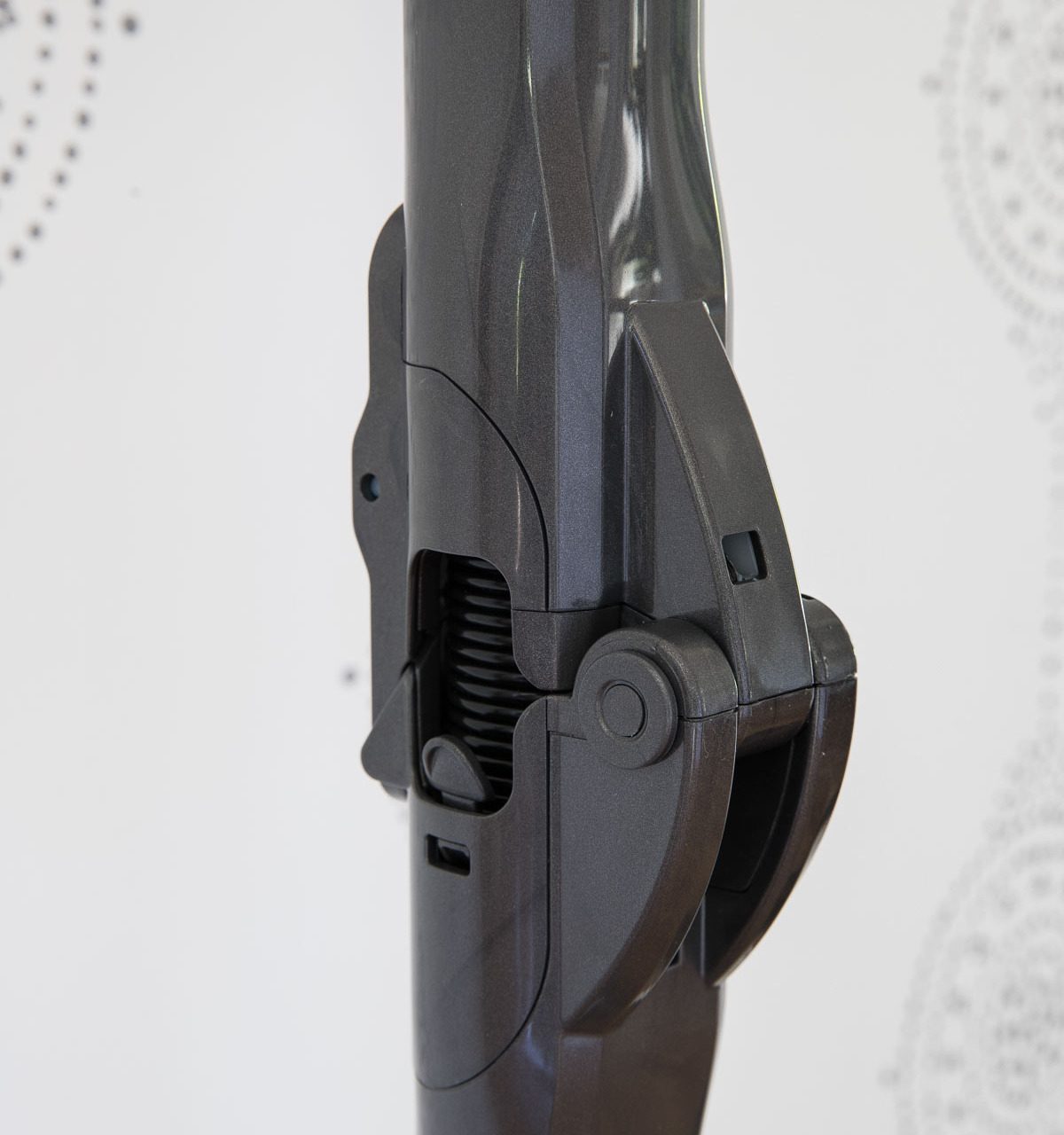
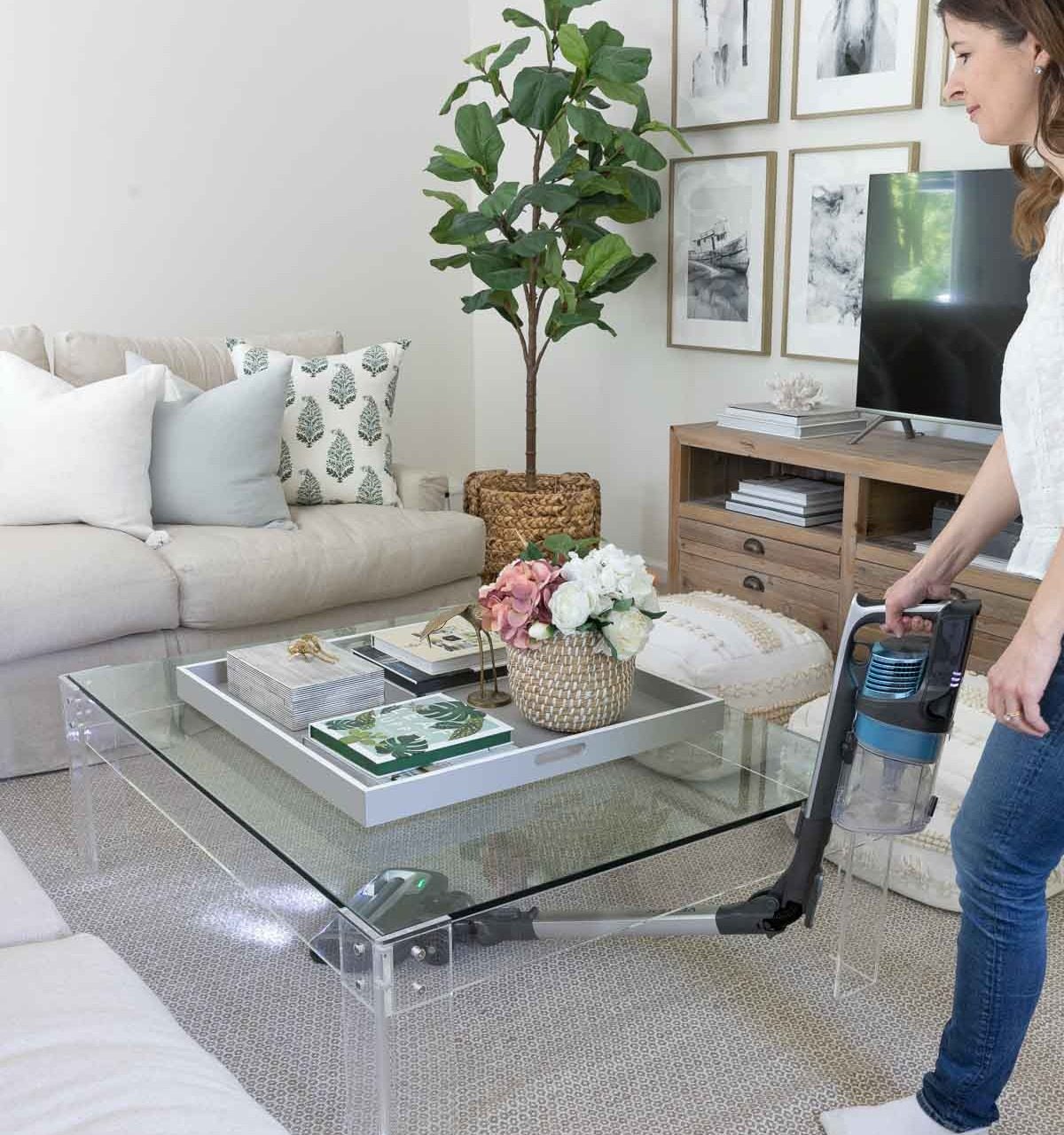
When you unlock it, the vacuum flexes at the hinge point and can go under furniture SO easily. I truly love it – you can vacuum under coffee tables, sofas, chests, and all sorts of other furniture pieces with ease:
Cost
Based on all of the features I discussed, if I had to choose between a Shark or Dyson and the cost for all of them was exactly the same, I'd go with a Dyson. But that's not the case – when looking at cost, the Dysons are priced significantly higher than Sharks. While the Dysons may have more features than the Sharks, the Sharks are great vacuums for the price and their multiflex feature is solid.
Which Vacuum Should You Buy?
Now that you know all the ins and outs of Dysons and Sharks, which vacuum should you buy? Here are my recommendations..
If money is no object and you simply want the best cordless vacuum out there, in my opinion the Dyson v15 Detect is the winner. It has the best suction & run-time, a click-in replaceable battery, a digital display of remaining runtime, and a laser to detect dirt. Currently, the best price that I could find on the Dyson v15 Detect is {here} or {here}.
If you want a great vacuum but don't want to spend the money for the top of the line, I recommend either (1) the Dyson v11 that you can find {here} or {here} or (2) the Dyson v12 Slim Detect that you can find {here}. They're both excellent choices! While neither is quite as powerful as the v15, they both still have excellent suction (the suction on the v11 is just slightly more than the v12) and about 60 minutes of run time. The Dyson v11 has a larger dustbin (so it needs to be emptied less often) but that also means it's heavier than the light weight Dyson v12. The Dyson v12 has a push button on/off (as opposed to the finger trigger for the Dyson v11 that some complain about for finger fatigue) and the v12 has the same solid laser dirt detection feature as the v15. You can't go wrong with either!
Today the Dyson v8 Detect is on big sale{HERE}
If you want to spend under $400 for a cordless vacuum, go with {this Dyson v8} or a Shark! I previously recommended NOT buying a Dyson v8 because they weren't powerful enough but they just came out with a new version in 2026 that has 50% more power and is a great vacuum for the price! If you prefer a Shark, I recommend one of the Sharks that has the multi-flex feature such as the Shark IZ682H Vertex Pro that you can find {HERE}.
It would help if readers found this post helpful – let me know if you have any questions or experiences of your own to share!
XO,

Elsewhere in the house
 CleaningBest Hardwood Floor Cleaners for Real Homes, Pets, and Kids
 CleaningA Reliable Cleaning Tools For Tackling Every Type of Mess
 CleaningCovered in Pollen? Here's Ways to Clean Pollen Off Your Porch and Furniture
 BathroomsWould I Do It Again?: Marble Tile in a Bathroom
 CleaningWays to Keep Your House Clean with Dogs: Five Pointers
 CleaningDyson Vacuum Attachments: My Pieces Worth Keeping
 CleaningWays to Clean Floor Tile Grout: What Works and What Doesn't
 KitchensWays to Clean Stainless Steel Appliances
 CleaningA Reliable Wood Furniture Polish