
The evolution of home cleaning has brought us a long way from bulky, corded vacuum cleaners. For many years, these traditional machines were the staple of household chores, but a significant shift has occurred with the rise of cordless technology. Six years ago, I made the pivotal decision to invest in my first cordless vacuum, and it’s a choice I’ve never regretted – in fact, my only regret is not embracing this technology sooner. The convenience, flexibility, and sheer ease of use offered by a cordless model are unparalleled, making the thought of returning to a corded vacuum an absolute non-starter for me.
As someone who owns and regularly uses both Shark and Dyson cordless vacuum cleaners, I frequently encounter the same question: “Which one is better?” It’s a query that highlights a common dilemma for consumers navigating the crowded market of stick vacuums. The honest answer, however, isn’t a simple one-word reply. Both Shark and Dyson stand as titans in the cordless vacuum industry, each boasting a unique set of advantages and minor drawbacks. The ‘best’ vacuum is ultimately subjective, depending entirely on an individual’s specific cleaning needs, household characteristics, and budgetary considerations.
This comprehensive article aims to cut through the marketing jargon and provide a detailed, side-by-side comparison of Shark and Dyson cordless vacuums. Our goal is to equip you with all the essential information needed to make an informed decision, ensuring you choose the perfect cleaning companion for your home. We’ll delve into critical aspects such as performance, battery life, design, and special features, giving you a clear understanding of how these leading brands truly stack up. (Please note: This post includes commissionable links. For more information, refer to my full disclosure statement {here}.)
Shark vs. Dyson: The Cordless Vacuum Models Under Review
To provide a thorough and balanced comparison, I’ve selected a range of popular and high-performing cordless vacuum models from both Shark and Dyson. Our lineup for this in-depth review includes the formidable Shark IZ163H Rocket Pet Pro with Multiflex, the advanced Shark IZ462H Vertex, the robust Dyson v10 Animal, the versatile Dyson v11 Complete, and the cutting-edge Dyson v15 Detect. These models represent various price points and feature sets, ensuring a comprehensive evaluation that addresses a wide array of consumer needs.
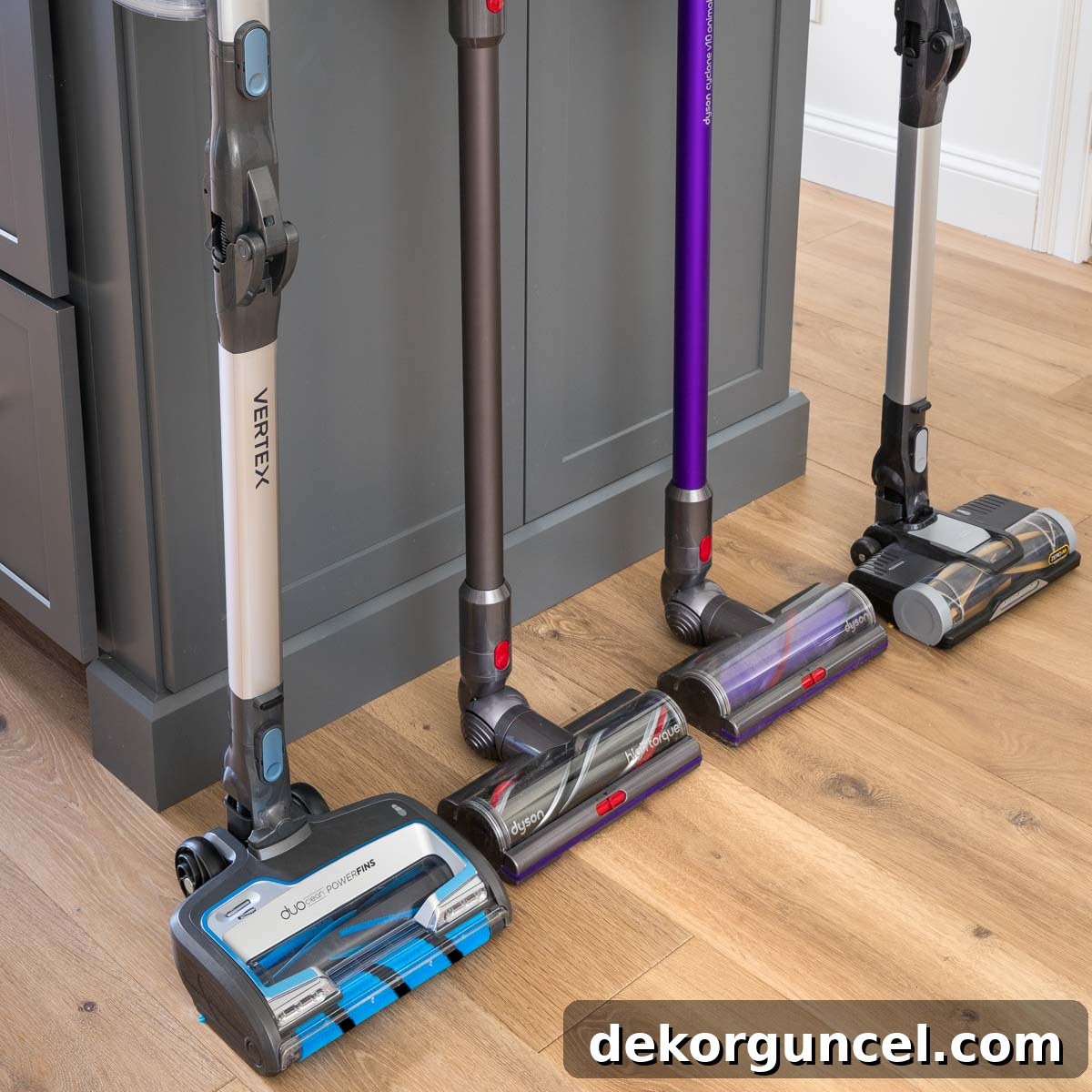
Each of these chosen vacuums exemplifies the innovation and engineering prowess of its respective brand. The Shark Rocket Pet Pro is known for its specialized pet hair capabilities and flexible design, while the Shark Vertex offers enhanced suction and anti-allergen features. On the Dyson side, the v10 Animal is a proven workhorse, the v11 Complete offers sophisticated intelligence, and the v15 Detect pushes boundaries with its dust detection technology. Together, they form a formidable crew, lined up and ready to tackle any cleaning challenge:
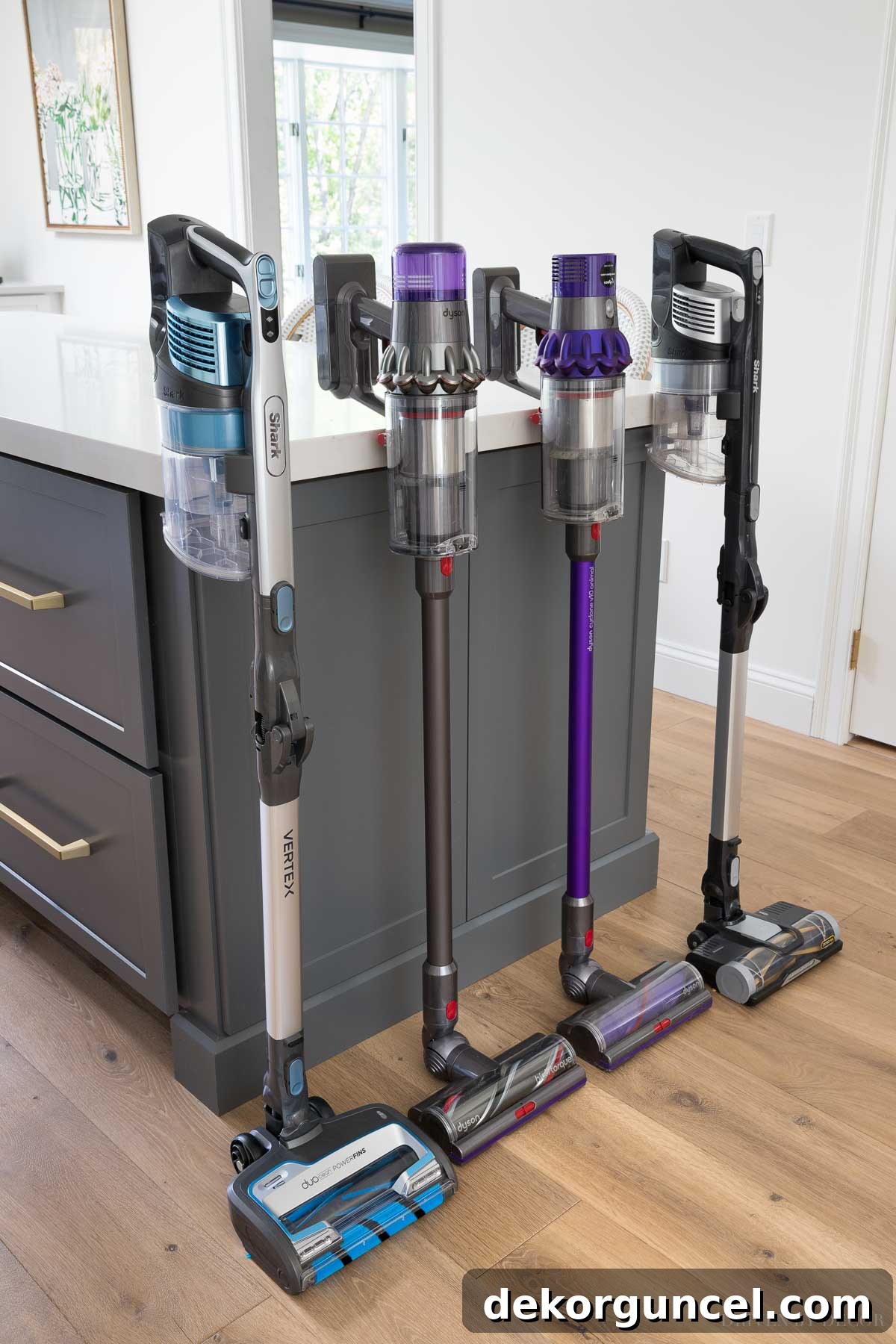
Sources from left to right: Shark IZ462H Vertex Cordless Vacuum (find newest version {here}) | Dyson v11 Cordless Vacuum | Dyson v10 Animal Cordless Vacuum | Shark IZ163H Rocket Pet Pro with Multiflex Cordless Vacuum
A key advantage shared by all these cordless vacuum models is their remarkable versatility. Beyond their primary function as upright stick vacuums, each can effortlessly convert into a powerful handheld unit. This dual functionality means you’re not just purchasing a cordless stick vacuum; you’re also acquiring a highly effective handheld cleaner, perfect for quick clean-ups, upholstery, car interiors, and other hard-to-reach areas. This adaptability truly maximizes the value and utility of your investment, offering a complete cleaning solution in one compact device.
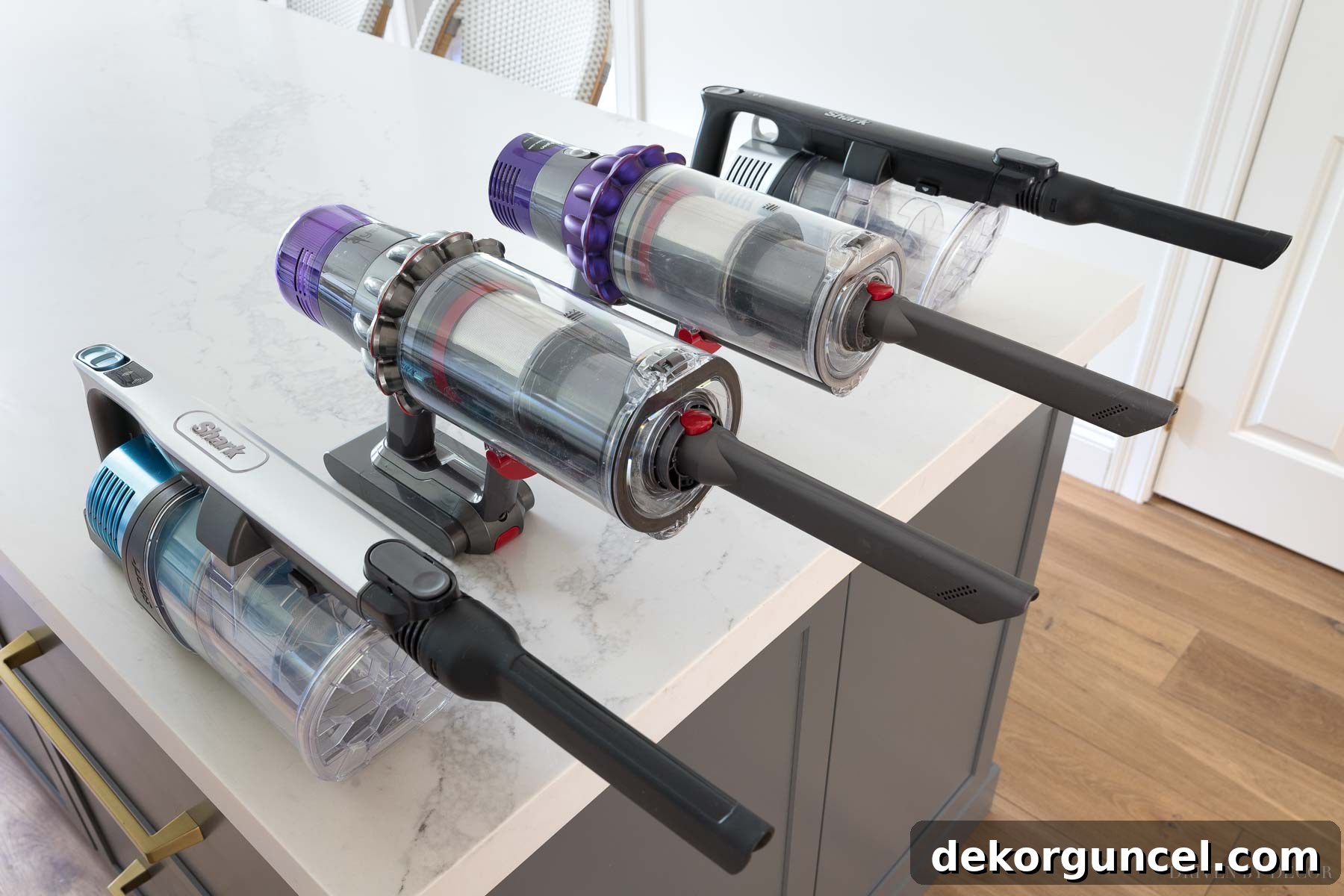
Furthermore, this article has been updated to include insights on the newest addition to the Dyson family, the Dyson v15 Detect (available {here}), and how its advanced features compare to the other four vacuums in our test group. Let’s dive right into a detailed comparison of how these Shark and Dyson models perform across essential criteria, including run time, battery characteristics, weight, suction power, dustbin capacity, included attachments, unique special features, and, of course, their overall price points.
Real-World Performance: Decoding Cordless Vacuum Run Time
One of the most crucial factors when evaluating a cordless vacuum is its run time. However, comparing run times across brands can be surprisingly tricky due to varying measurement conditions. Manufacturers often report “fade-free” run times under specific, often idealized, conditions that don’t always reflect typical household use. For instance, Dyson v10 and v11 models claim up to 60 minutes of fade-free run time, but this is typically achieved with a non-motorized attachment – a scenario rarely encountered when cleaning floors, which typically require a motorized brush head. Similarly, the Shark Rocket Pet Pro and Shark Vertex boast up to 40 minutes and 60 minutes, respectively, of runtime in standard mode, measured at the hand vac, again, not with the primary floor cleaning attachment.
This discrepancy makes it challenging to compare apples to apples directly from brand specifications. Neither brand fully discloses how long you can truly expect the vacuum to operate under realistic, everyday cleaning conditions. To provide a more accurate and practical comparison, I conducted my own empirical test. All four vacuums were subjected to the same rigorous test, utilizing the standard rotating floor cleaning attachment that accompanies each model.
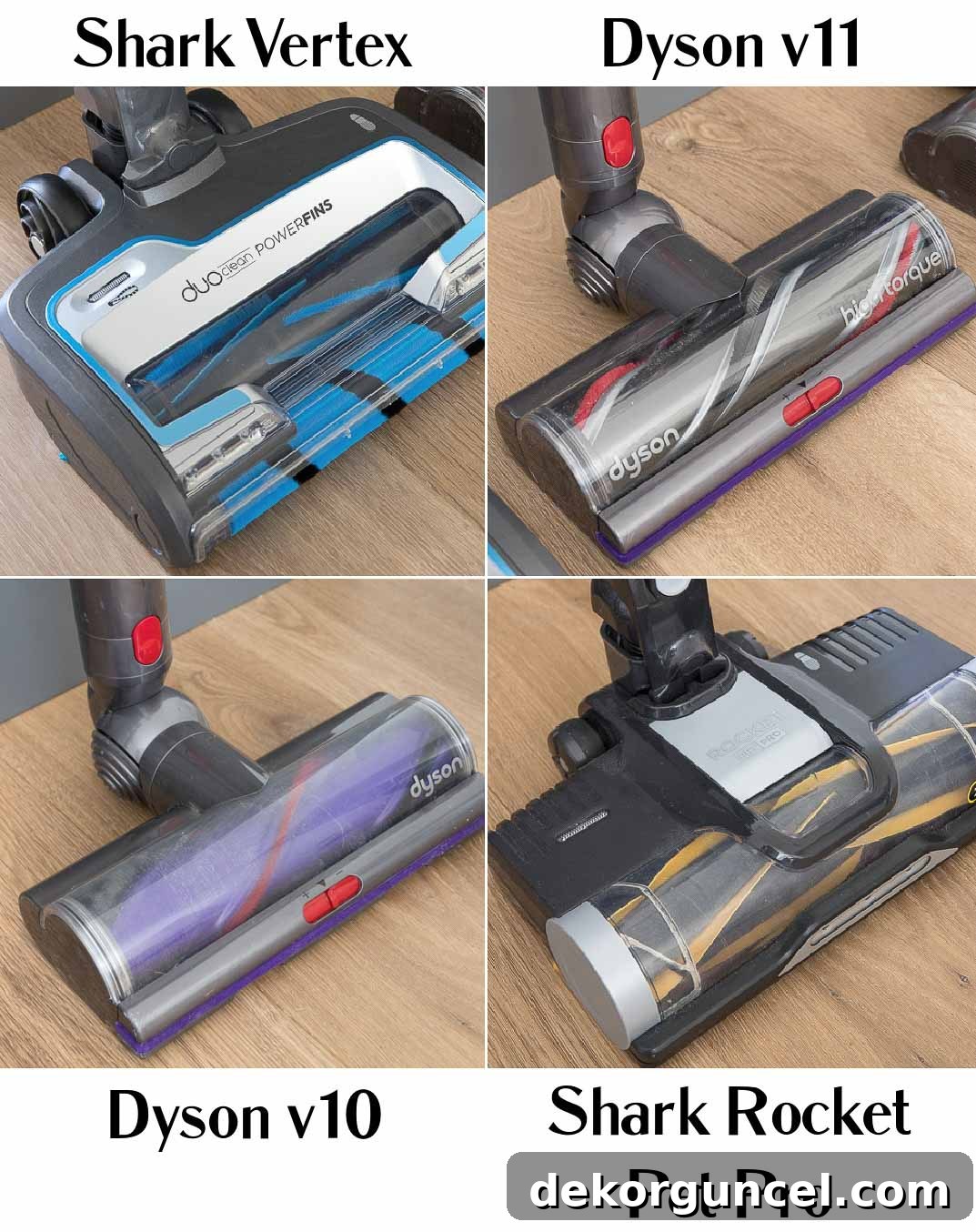
My home offers a varied landscape of flooring: approximately 50% hardwoods, 25% low-pile carpet, and 25% medium-pile carpet. To simulate a realistic cleaning session, my husband Jeff and I each took a vacuum and followed a precise cleaning rotation. We started on hardwoods for 5 minutes, then moved to medium-pile carpet for 5 minutes, back to hardwoods for another 5 minutes, and finally to low-pile carpet for 5 minutes. We then repeated this rotation, carefully noting the exact moment each vacuum’s battery depleted.
For both Shark models and the Dyson v10, we used the low setting on hardwoods and low-pile carpet, and the next highest setting for the more demanding medium-pile carpet. The Dyson v11, however, features an intelligent auto-sense technology that automatically detects the surface type and adjusts suction power accordingly, eliminating the need for manual setting changes – a significant convenience factor.
The undisputed winner for extended run time under these realistic test conditions was the Dyson v11 (with the newer Dyson v15 offering comparable battery life). The v11 impressively ran for a total of 37 minutes. Following closely was the Dyson v10 at 32 minutes, then the Shark Vertex at 29 minutes, and finally the Shark Rocket Pet Pro at 26 minutes. It’s important to note that these times can vary; homes with a higher proportion of hard flooring might experience longer run times, while those with more extensive carpeting would likely see shorter durations.
One of the transformative benefits of a cordless vacuum is the unparalleled freedom it offers. You can glide from room to room, effortlessly navigating around furniture without the constant hassle of plugging and unplugging, or dealing with tangled cords. My personal experience has shown that I can complete my vacuuming tasks in approximately half the time compared to my old corded model. For me, the run time of any of these vacuums is more than sufficient; I’ve never had a vacuum die mid-task before I completed my desired cleaning.
However, if your cleaning needs demand a particularly long run time, the Dyson v11 or v15 would be the optimal choice. Alternatively, for Shark owners seeking extended cleaning sessions, purchasing an extra Shark battery and charger allows for quick swaps, effectively doubling your operational time – a flexible solution we’ll explore further next.
Battery Intelligence: Indicators and Digital Displays
Understanding how much power is left in your cordless vacuum’s battery is crucial for efficient cleaning planning. All four vacuums in our comparison offer some form of battery life indicator, helping you gauge remaining charge. For the Shark models and the Dyson v10, this is typically represented by a series of three lights that illuminate to signify a full, mid, or low charge level. While functional, this provides a somewhat general estimate of the battery status.
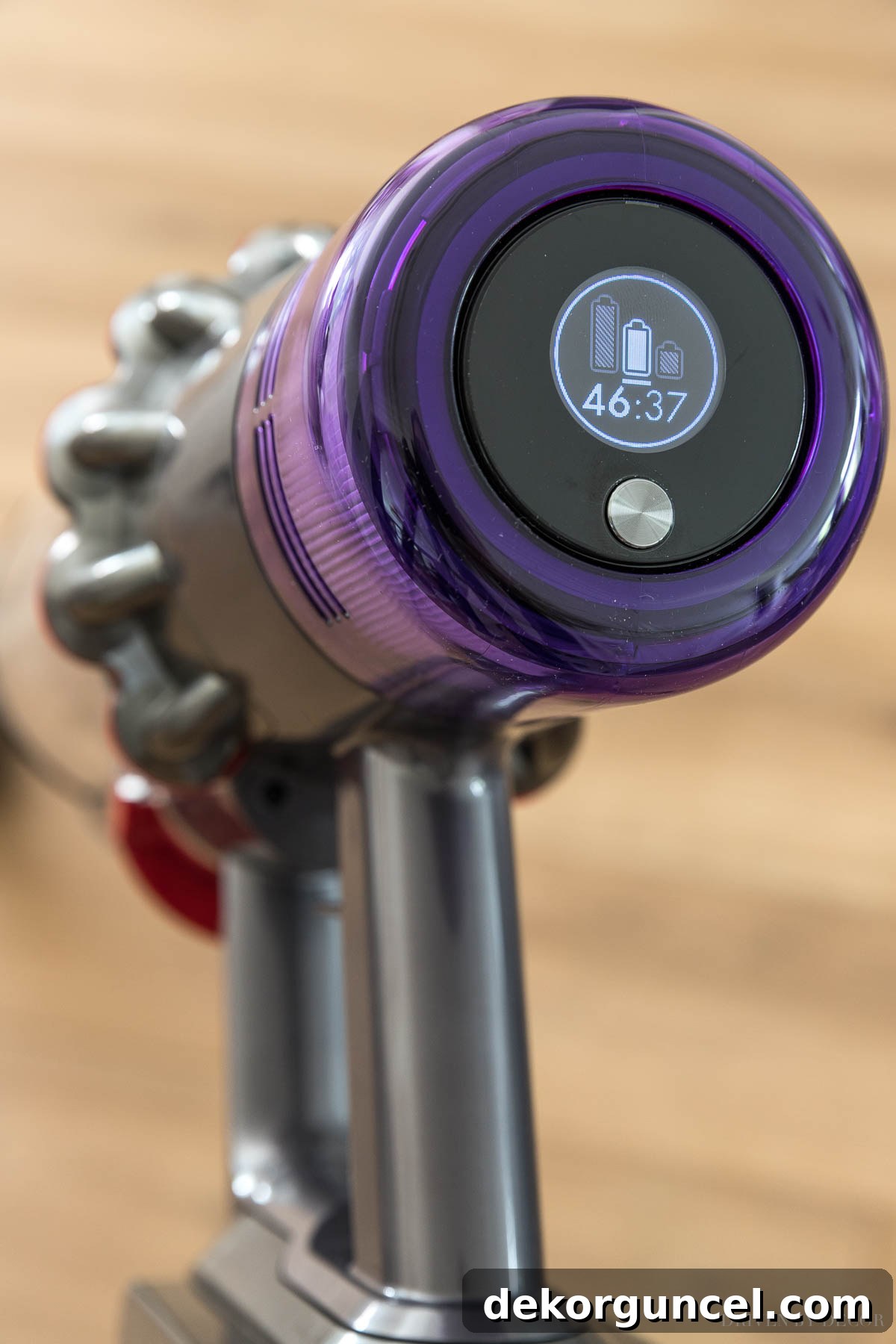
The Dyson v11 and the newer Dyson v15 take battery monitoring to a significantly more sophisticated level with their advanced digital displays. This feature is a real game-changer, providing a precise, estimated remaining battery life in minutes and seconds. This granular level of information is incredibly useful, allowing users to accurately plan their cleaning routes and avoid unexpected power depletion. The intelligent display dynamically adjusts the estimated run time throughout your cleaning session, taking into account the surface you’re vacuuming and the power setting you’re currently using, offering truly real-time battery insights.
Battery Type & Recharging Flexibility
Note: Earlier versions of Dyson v10 and Dyson v11 cordless vacuums featured integrated, non-removable batteries. However, current iterations of both models have been upgraded to include convenient click-in, removable batteries, aligning them with the latest Dyson v15 and Shark models. This should only be a consideration if you are purchasing an older, pre-owned, or previously manufactured unit.
When I purchased my first cordless vacuum, I overlooked a critical feature that profoundly impacts convenience: whether the battery was a removable, click-in type. This seemingly small detail has significant implications for both charging and storage. If a vacuum’s battery is non-removable, the entire unit must be stored directly beside an electrical outlet for recharging. This can be a considerable inconvenience if your preferred storage location for the vacuum isn’t near an accessible power source, or if you simply prefer a tidier charging setup.
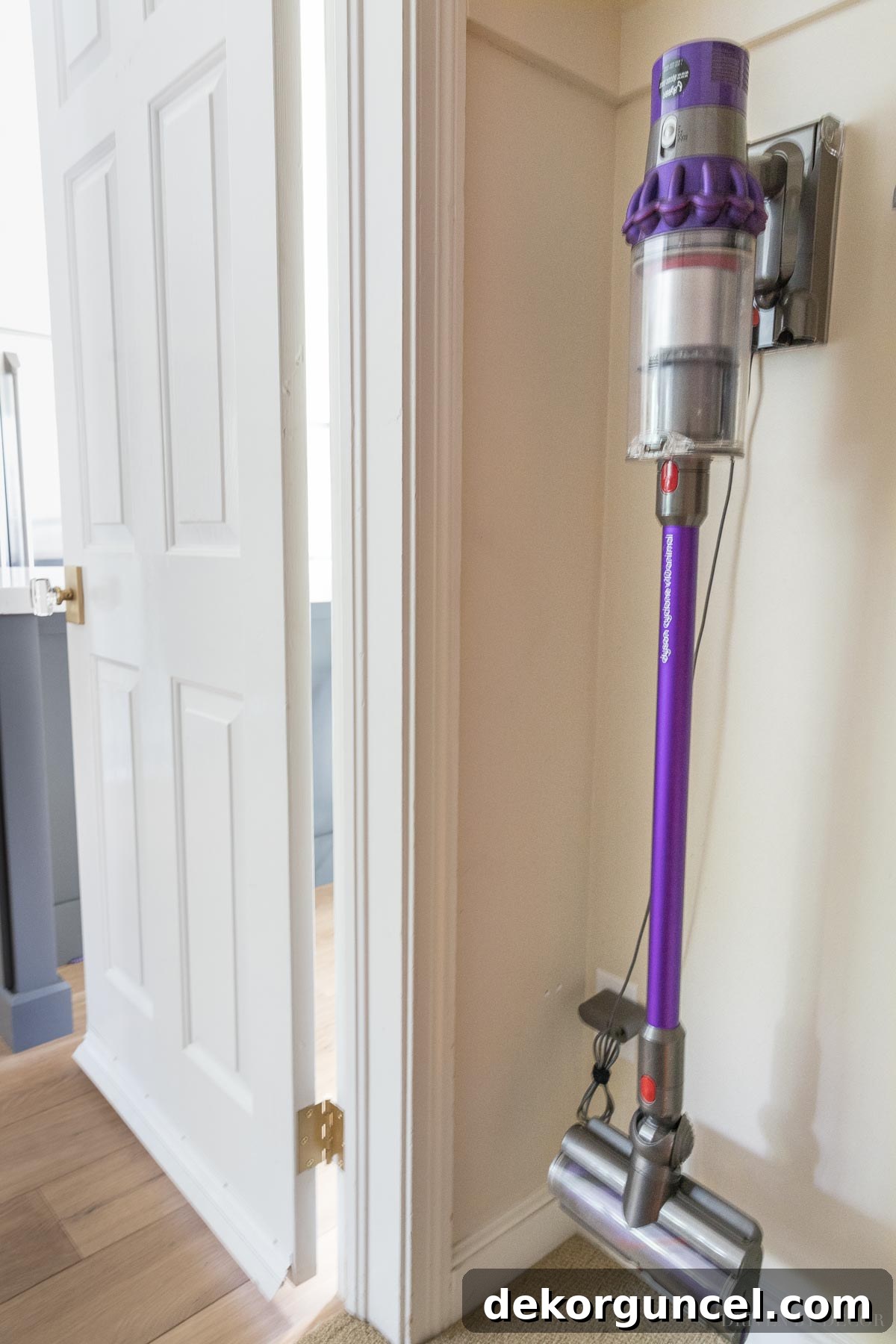
However, if you’re fortunate enough to have an outlet conveniently located where you typically store your vacuum, then a non-removable battery poses no major issue. The Dyson v10, for example, comes equipped with a practical wall-mounted docking station. You can effortlessly attach your charging cable to this dock, then simply ‘pop’ your vacuum into place for both storage and recharging, creating a neat and organized charging solution.
The Dyson v11 offers a different charging solution with its Floor Dok, a freestanding dock that doesn’t require wall mounting. This allows for greater flexibility in placement, as you can position it anywhere in your home where an outlet is available, without the need for drilling or permanent installation.
Crucially, all current Dyson cordless vacuums from the v10 series upwards, along with both Shark vacuums in our comparison, now feature a removable, click-in battery. This design provides immense flexibility. A removable battery allows you to easily detach it and recharge just the battery at any convenient outlet, while the main vacuum unit can be stored elsewhere. This vastly expands your options for both charging and storage, making it easier to integrate the vacuum into your home without being tethered to a specific charging spot.
For instance, I can comfortably recharge my Shark vacuum battery in the shallow storage closet located just off our kitchen. This keeps the charging process discreet and out of sight, preventing clutter in main living areas.
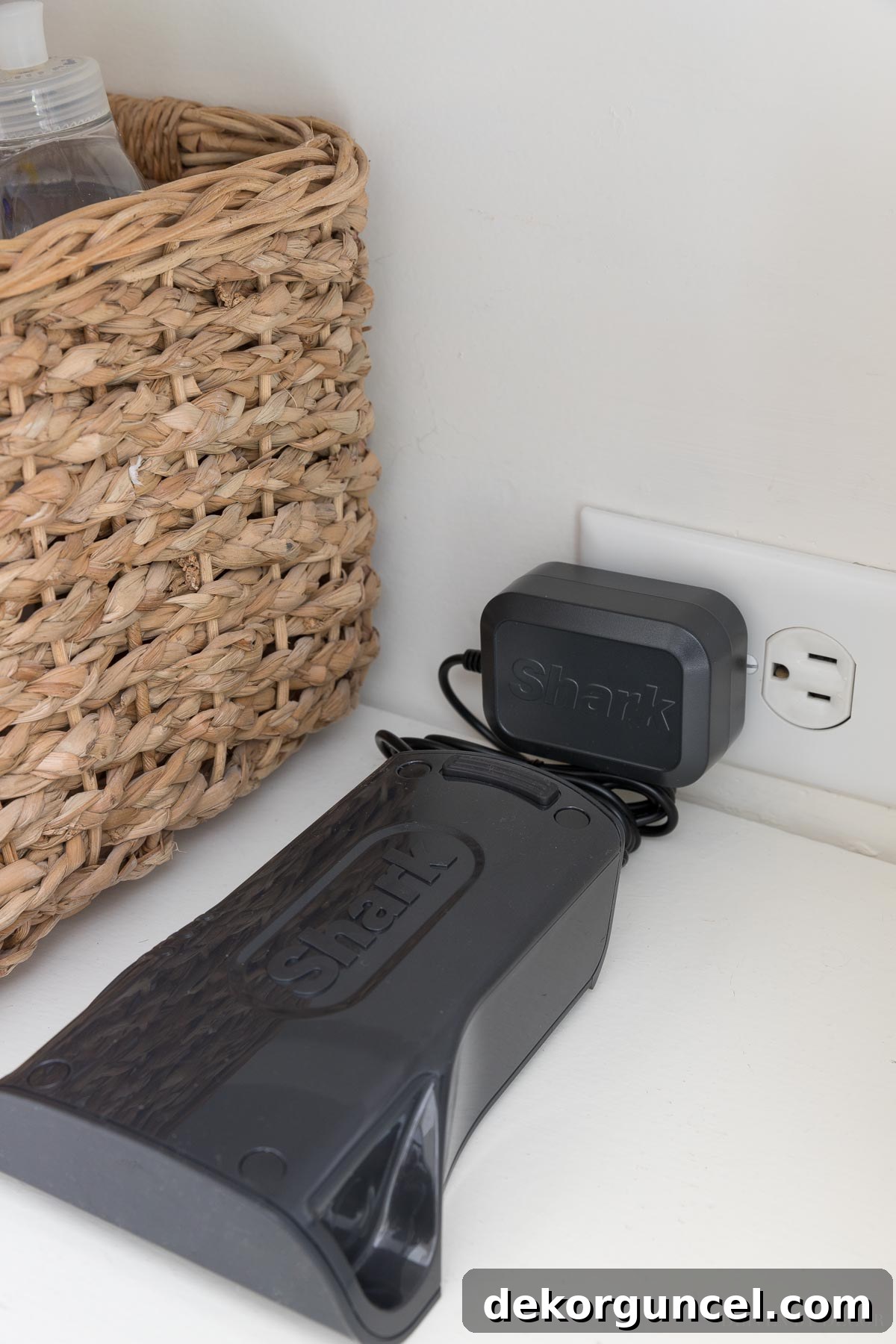
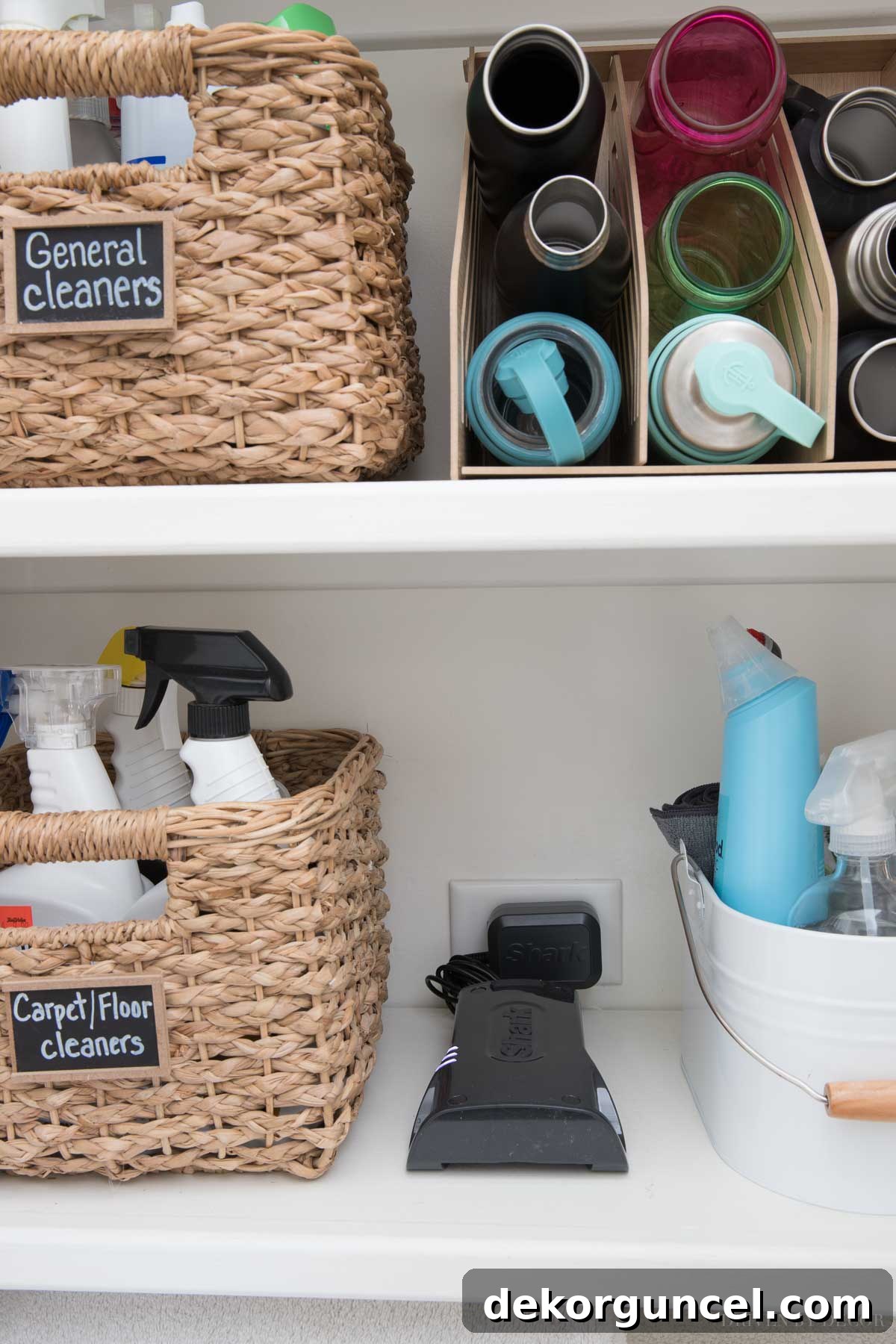
Meanwhile, the rest of the vacuum can be stored wherever is most practical and accessible for me, independent of the charging station. This setup truly enhances the user experience by prioritizing convenience and minimizing storage constraints.
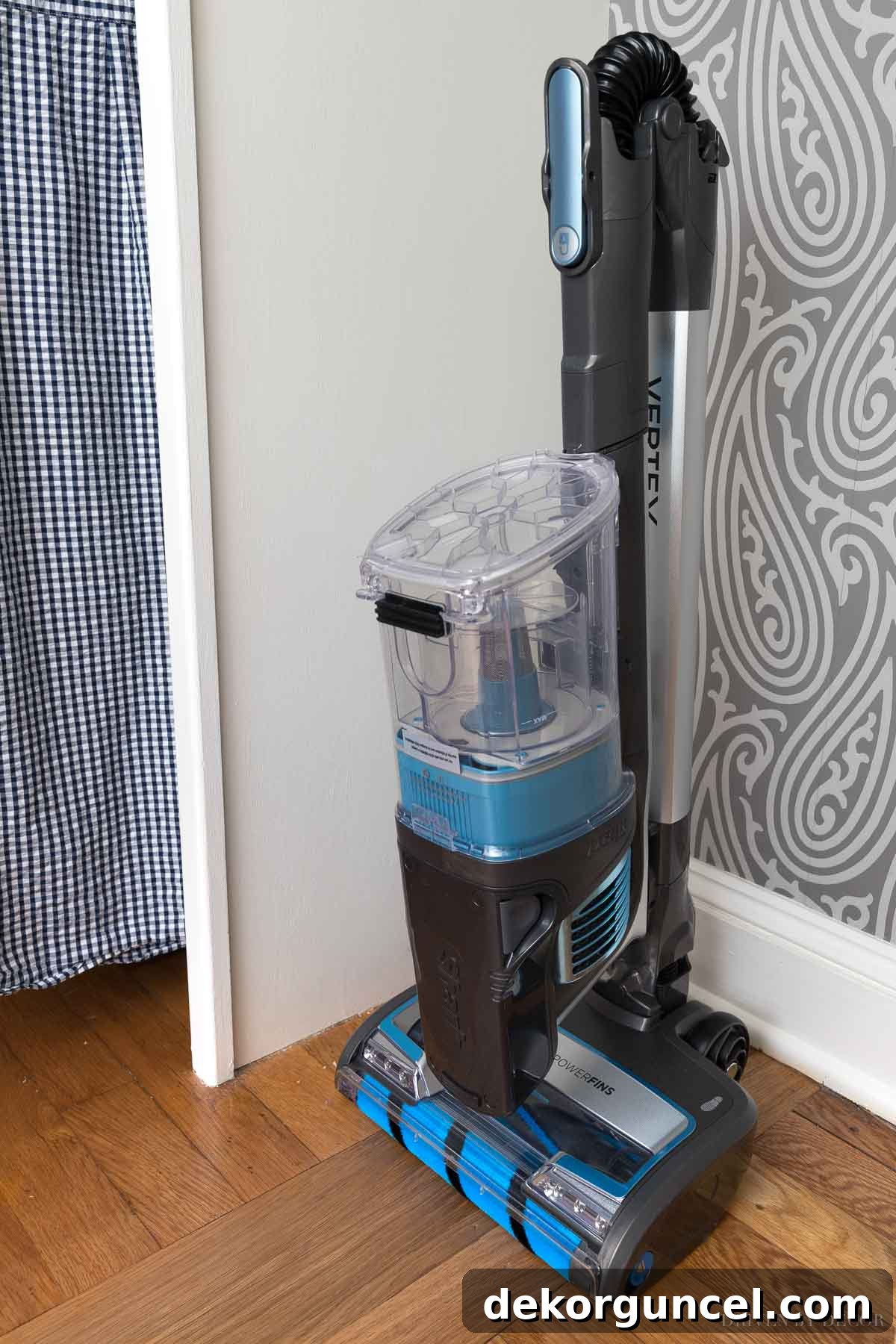
Beyond battery type, the two Shark vacuums I tested boast another clever feature that significantly improves storage: the MultiFLEX design. This innovative technology allows the vacuum stick to bend in the middle, effectively folding down to a much shorter height. This compact storage solution is perfect for smaller living spaces, or for tucking the vacuum away discreetly in a closet without it taking up excessive vertical room.
Design and Maneuverability: A Look at Weight and Ergonomics
The overall weight of a cordless vacuum plays a significant role in its maneuverability and user comfort, especially during extended cleaning sessions or when navigating stairs. All four vacuums in our comparison are commendably lightweight, each weighing less than 10 pounds, which is a stark contrast to many traditional corded models.
However, there are subtle differences to note. The Dyson models generally tend to be slightly lighter in their full stick configuration. Specifically, the Dyson v10 Animal weighs 5.9 pounds, the Dyson v11 Complete is 6.68 pounds, and the Dyson v15 Detect comes in at 6.83 pounds. In contrast, the Shark Rocket Pet Pro weighs 7.17 pounds, and the Shark Vertex is 9.04 pounds. Despite these differences, all units are considerably lighter than my previous corded vacuum, making them effortlessly portable for tasks like carrying up and down stairs.
When transformed into handheld units with the standard crevice tool attached, the weight distribution shifts slightly. Both Shark models and the Dyson v10 are remarkably close in weight, all falling within a narrow range of 3 pounds, 13-15 ounces. The Dyson v11 is marginally heavier as a handheld, approximately 9-10 ounces more. This indicates that while Dysons tend to be lighter as full stick vacuums, their handheld weights are more comparable, with the v11 being a bit bulkier in its handheld form.

In summary, when operating as a full stick vacuum, Dyson models typically offer a slight edge in lightness, which can contribute to less fatigue during whole-house cleaning. However, for quick handheld tasks, both brands offer competitive, easy-to-manage weights, with the Dyson v11 being the exception as slightly heavier.
Unleashing Power: Suction Capabilities and Cleaning Technology
Assessing and comparing suction power across different vacuum brands can be a complex task, much like comparing run times, due to the use of differing metrics. Dyson exclusively measures suction power in ‘air watts,’ which is a more accurate indicator as it quantifies the actual airflow and power generated at the cleaning head. For reference, the Dyson v10 is rated at 151 air watts, the Dyson v11 at 185 air watts, and the cutting-edge Dyson v15 Detect boasts an impressive 230 air watts.
In contrast, Shark typically reports power in ‘watts,’ which refers to the total electrical power consumed by the vacuum’s motor and all its components (including lights), not specifically the suction force. The Shark Rocket Pet Pro is rated at 181 watts, and the Shark Vertex at 281 watts. Since watts don’t directly correlate to suction power in the same way air watts do, it makes a direct numerical comparison between the two brands impossible based solely on specifications.
To provide a more meaningful evaluation, I conducted my own series of practical suction tests. I used both Dyson and Shark models to vacuum up a variety of common household debris on hardwood floors, simulating everyday cleaning challenges.
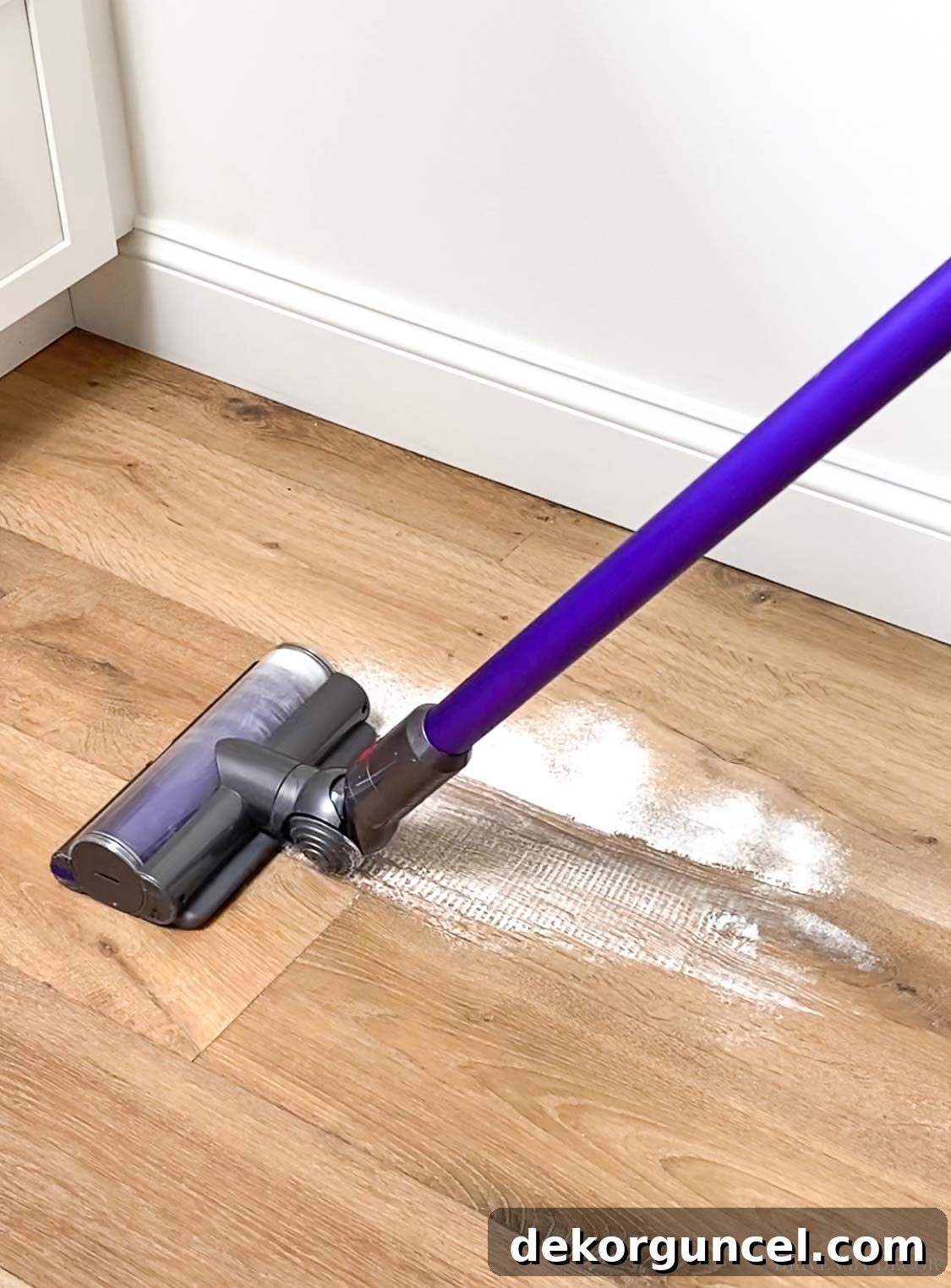
These tests, combined with using them as handheld units, revealed that all four vacuums demonstrate very good suction power and are perfectly capable of getting the job done effectively. However, my personal experience indicated that the Dyson v11 generally offered the best suction power, with the newer Dyson v15 Detect showing an even slight improvement. The Shark Rocket Pet Pro, while still effective, displayed the least suction power among the four tested units. It’s important to remember that these are my observations from real-world usage, not laboratory-controlled tests akin to those performed by organizations like Consumer Reports.
A notable advantage for both Shark models comes from their unique “power fins” integrated into their rotating floor vacuum elements. These fins are particularly effective at picking up larger debris, such as dry dog food or cereal like Cheerios, where they often outperform the Dyson Animal models. As a side note, both Shark vacuums feature convenient LED lights on their vacuum heads, which brilliantly illuminate dirt and dust, making it easier to spot and clean hidden messes – a feature I genuinely appreciate and one that the Dyson v10 and v11 models lack. The Dyson v15 Detect, however, addresses this with a more advanced illumination feature: a precisely angled laser that highlights microscopic dust and debris, revealing what’s typically invisible to the naked eye. Additionally, the Dyson v15 Detect and Dyson v10 Absolute models come with a specialized soft “fluffy” roller head, which offers superior cleaning performance on hardwood floors while being gentler on delicate surfaces.
User Interface: Trigger vs. Toggle Switch
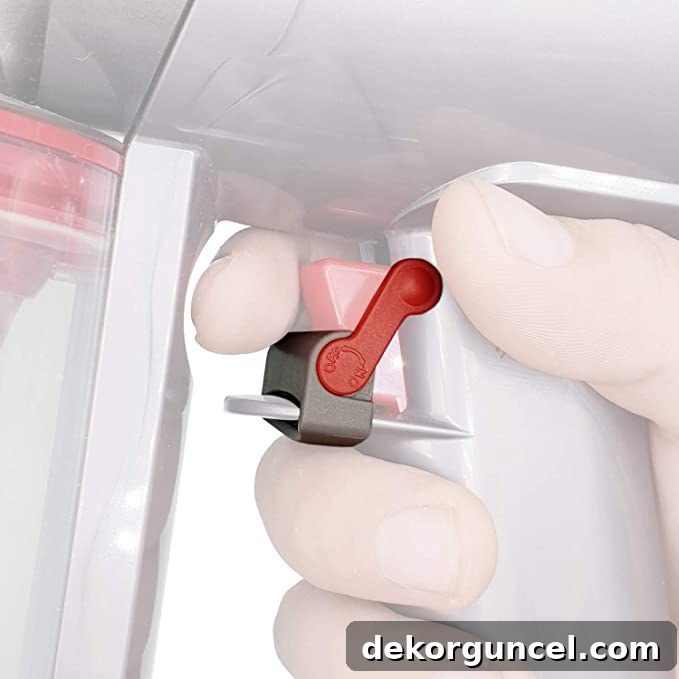
A fundamental operational difference between Dyson and Shark cordless vacuums lies in their power activation mechanism: a trigger versus a toggle switch. Most Dyson models are designed with a trigger that requires continuous depression with your finger throughout the entire vacuuming process. Dyson implements this design primarily as a battery-conservation measure, ensuring power is only consumed when actively cleaning. This feature can also be surprisingly convenient; for instance, if you accidentally vacuum up the edge of a rug, simply releasing the trigger provides an instant power cut-off, which is significantly faster than fumbling for a toggle switch.
In contrast, both Shark vacuums feature a more traditional on/off toggle switch. Once pressed, the vacuum remains powered on without the need for continuous pressure, operating much like a conventional upright vacuum.
For individuals who experience arthritis, carpal tunnel, or other hand-related issues, the continuous pressure required by Dyson’s trigger mechanism might become uncomfortable or fatiguing. In such cases, the straightforward on/off toggle switch found on Shark vacuums could be a more preferable and ergonomic solution. However, for Dyson enthusiasts who prefer the brand’s performance but dislike the trigger, a clever workaround exists. I recently discovered {this on/off clamp} that easily attaches to the Dyson trigger. Once installed, it allows you to engage the power without needing to constantly hold the trigger down, offering a simple yet effective solution for improved comfort during longer cleaning tasks.
Dust Management: Capacity and Emptying Convenience
The dustbin, or dirt cup, capacity is another key differentiator among the cordless vacuums I tested, directly impacting how frequently you’ll need to interrupt your cleaning to empty it. Both Dyson models I examined, the v10, v11, and v15, boast significantly larger dustbins, offering approximately double the capacity of the Shark models. Specifically, the Dyson dustbins can hold 0.8 quarts of debris, while the Shark Rocket models are designed for 0.34 quarts. A larger capacity means fewer trips to the trash can, which can be a real time-saver, especially in larger homes or during extensive cleaning sessions.
In terms of emptying, all four vacuums are designed for convenience, featuring a simple one-touch mechanism. The idea is that with a push of a button, the bottom of the dustbin pops open, and the collected dust and debris should fall out effortlessly, ideally without you ever needing to touch the contents. This hygienic design is certainly appealing in theory.
However, practical experience often tells a slightly different story. With all four vacuums, I frequently find myself needing to manually assist in clearing the dustbin, often having to reach in to pull out tangled hair and other compacted debris. This is particularly true in a household with long-haired individuals, where hair tends to wrap around the internal components, preventing a clean, free fall. So, while the one-touch emptying is a good starting point, the reality can sometimes involve a bit more hands-on intervention.
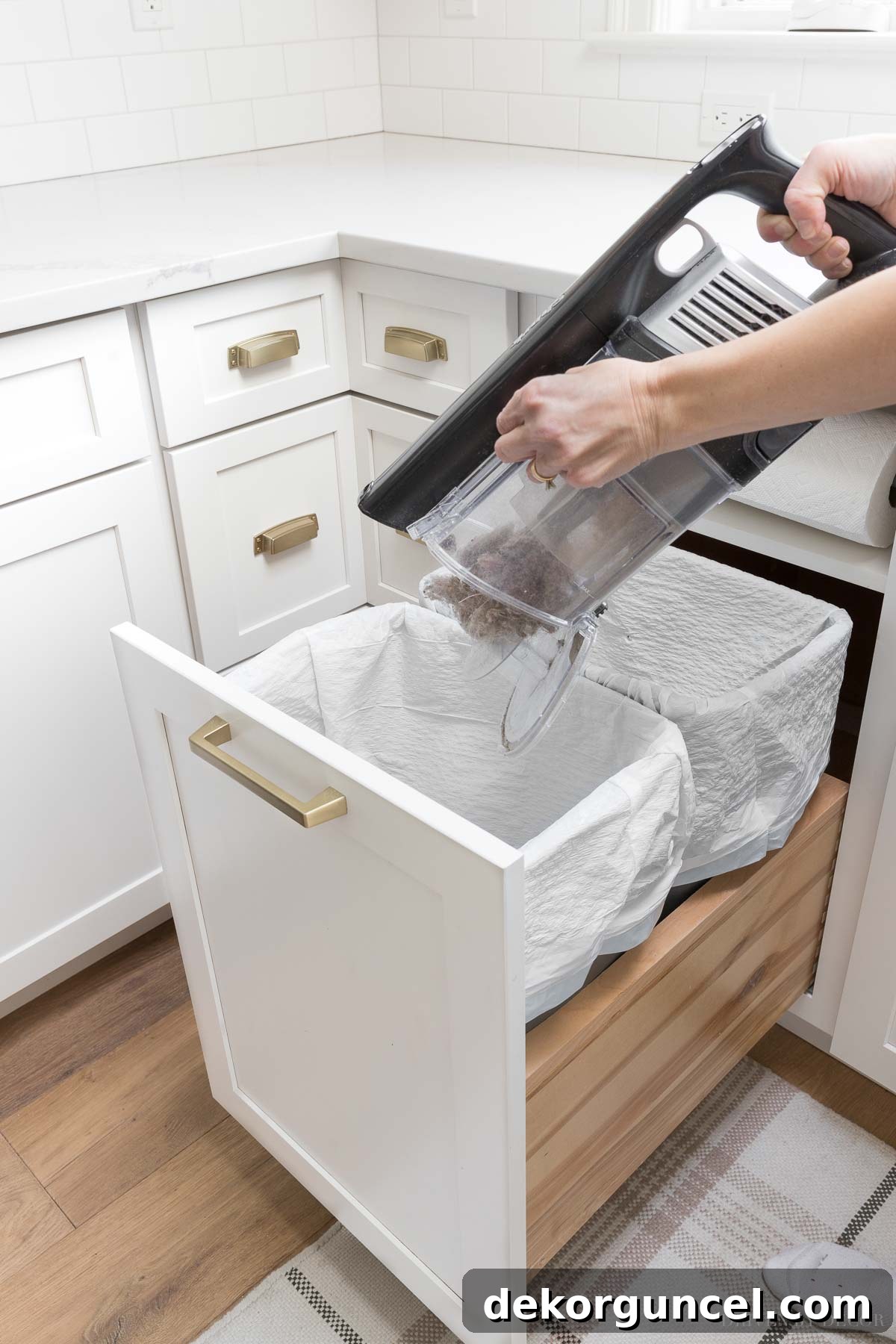
While a larger dustbin capacity might seem universally superior, there’s an interesting advantage to the Shark’s comparatively smaller dustbin. Its shallower design often makes it easier to reach in and fully extract any stubborn, compacted debris or long hair that doesn’t fall out on its own. This can sometimes lead to a quicker and more thorough manual clean of the dustbin compared to the deeper, narrower design of the Dyson bins, where reaching the very bottom can be more challenging.
Versatility Through Attachments and Unique Features
The utility of a cordless vacuum extends far beyond its main floor-cleaning head, with attachments playing a crucial role in its versatility. Each cordless vacuum in our comparison comes with a distinct assortment of tools, designed to tackle various cleaning challenges around the home.
Both Shark models typically include essential accessories such as a crevice tool for tight spaces and a pet multi-tool, specifically designed to handle pet hair on upholstery and other surfaces. The Shark Vertex further enhances its offering with an anti-allergen brush, which is particularly beneficial for allergy sufferers looking to minimize dust and allergens.
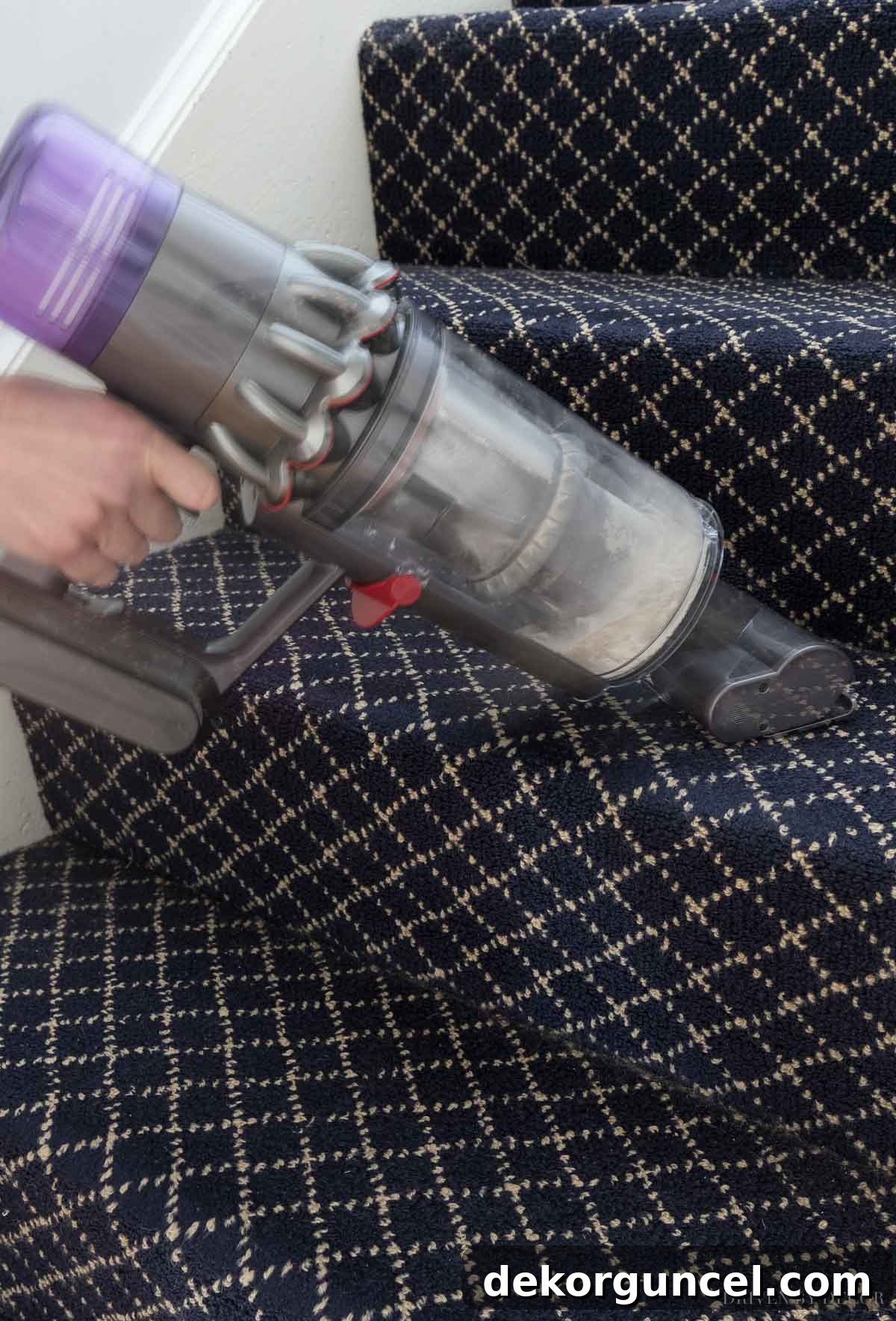
Dyson vacuums generally come equipped with a more extensive array of additional tools, including a couple that I personally find indispensable. One such attachment is the mini motorized tool. This compact yet powerful brush head attaches directly to the handheld portion of the Dyson vacuum and is exceptionally effective for deep cleaning stairs and upholstered furniture. Its motorized bristles agitate and lift embedded dirt and pet hair, delivering a level of clean that standard tools simply cannot match.
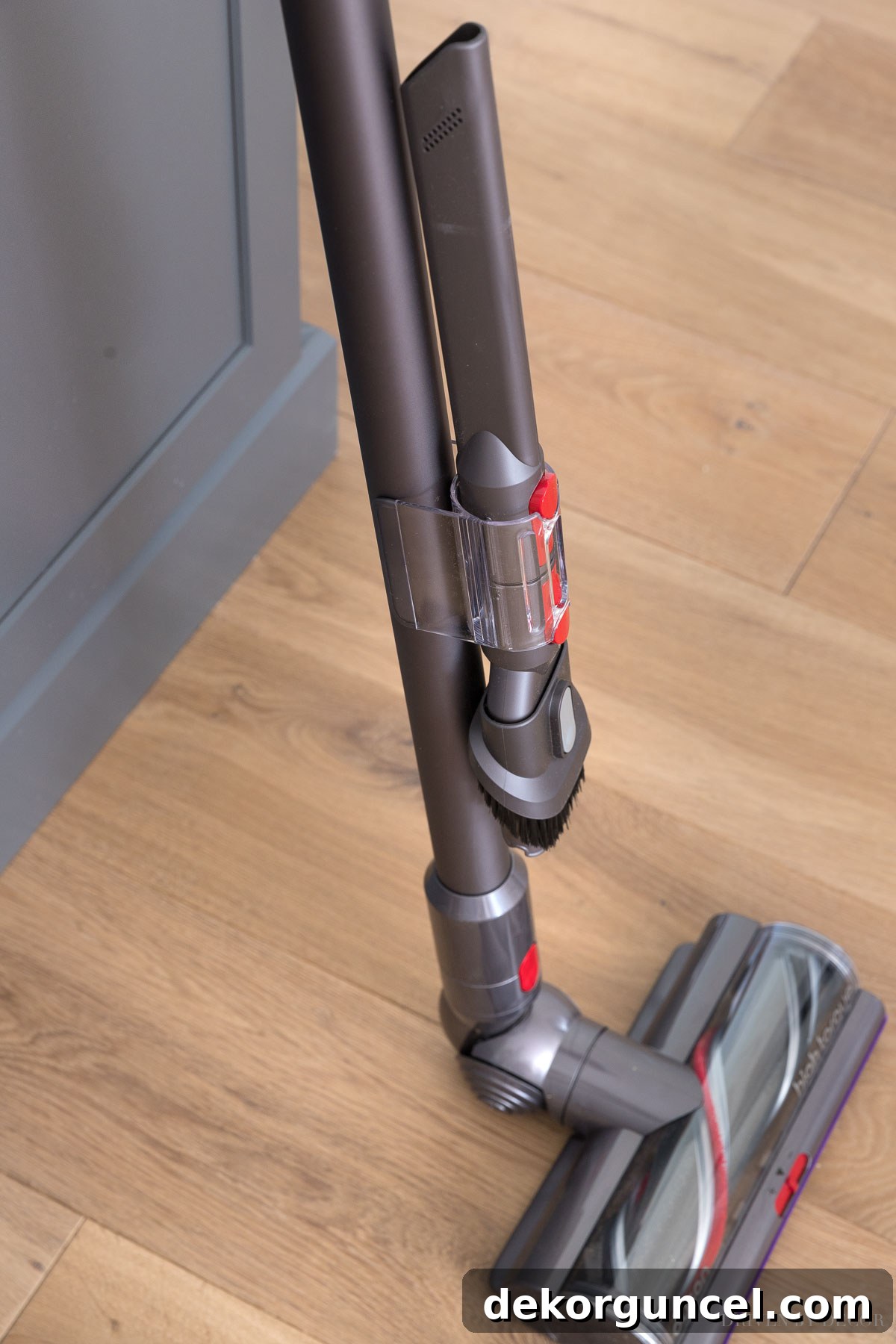
Another brilliant, albeit simple, innovation found with the Dyson v11 Complete and Dyson v15 models is the clear wand storage clip. This remarkably clever accessory clips securely onto the main vacuum stick, providing a convenient holder for two of your most frequently used attachments. This ensures that your essential tools are always within arm’s reach, eliminating the need to search for them and streamlining your cleaning process.
For more detailed insights into enhancing your Dyson’s capabilities, be sure to check out my post on Dyson vacuum attachments, where I explore some smart add-ons that I highly recommend.
While Shark may offer a more focused set of attachments compared to Dyson’s broader array, one particular feature that stands out and deserves special emphasis is the MultiFLEX design present in both Shark vacuums – it is truly an amazing innovation! Approximately halfway down the vacuum stick, there’s a strategically placed hinge accompanied by a lock/unlock button.
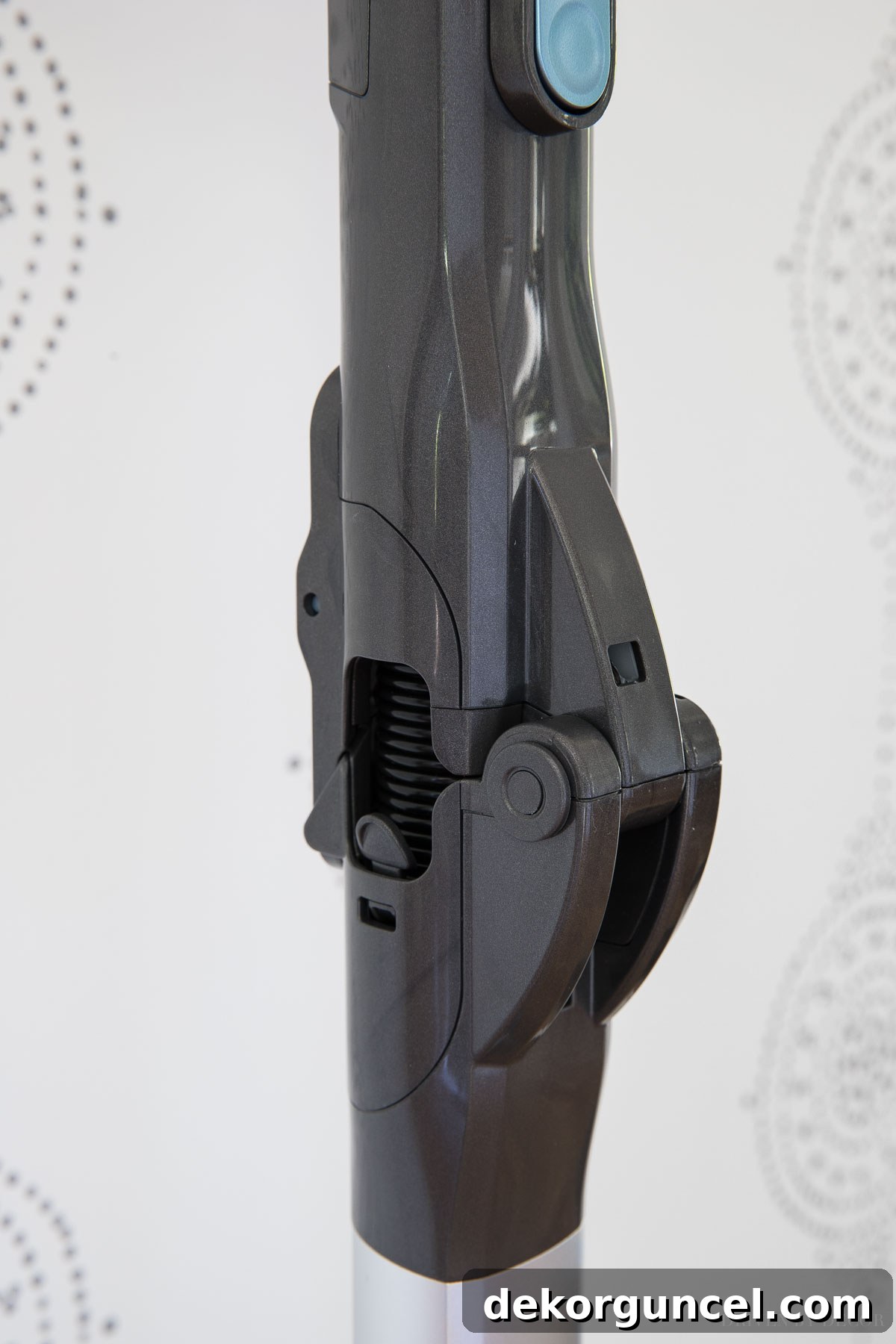
When this hinge is unlocked, the vacuum stick flexes, allowing the entire unit to bend. This incredible flexibility makes it remarkably easy to clean under low-lying furniture. You can effortlessly glide the vacuum under coffee tables, sofas, chests, beds, and various other furniture pieces without needing to stoop, bend, or move heavy items. This feature transforms what is often a tedious and back-straining chore into a simple, fluid motion, significantly enhancing the overall cleaning experience and ensuring no dust bunny is left behind.

The Investment: Cost-Benefit Analysis of Shark vs. Dyson
Having thoroughly reviewed all the features and performance aspects, it’s clear that both Shark and Dyson offer compelling reasons for consideration. If, hypothetically, all the vacuums discussed were priced identically, my personal preference would lean towards a Dyson model, largely due to their slightly superior suction, advanced digital display, and specialized attachments like the mini motorized tool. However, the reality of the market introduces a crucial differentiating factor: cost.
Dyson cordless vacuums are consistently priced significantly higher than their Shark counterparts. This price disparity is a major consideration for many consumers. While Dyson models often boast cutting-edge technology and a slightly more premium feel, Shark vacuums provide exceptional value for their price point. They are robust, effective cleaning machines, and their unique MultiFLEX feature, which makes cleaning under furniture incredibly easy, is a significant advantage that often comes at a much more accessible cost. Ultimately, the decision often boils down to balancing desired features against your budget, recognizing that both brands deliver strong performance within their respective price tiers.
Making Your Choice: Personalized Cordless Vacuum Recommendations
After dissecting the intricate details of both Dyson and Shark cordless vacuums, the crucial question remains: which one is right for you? Your ideal choice will depend on your budget, specific cleaning needs, and preferred features. Here are my tailored recommendations to guide your decision:
If budget is not a constraint and you are simply seeking the pinnacle of cordless vacuum technology, the Dyson v15 Detect is, in my opinion, the undeniable winner. It combines best-in-class suction power with an impressive run-time, features a convenient click-in replaceable battery, and its digital display provides precise remaining run-time. The innovative laser detection system illuminates unseen dust and debris, ensuring no spot is missed, and it comes with a fluffy cleaner head that I particularly appreciate for its effectiveness and gentleness on hardwood floors. You can often find the best current pricing for the Dyson v15 Detect {here}.
For those with larger homes or extensive cleaning areas who prioritize efficiency and minimizing interruptions, the Dyson Outsize, available {here}, would be an exceptional fit. This model is specifically engineered with an extra-large dustbin, significantly reducing the frequency of emptying, and a wider cleaning head, allowing you to cover more ground in less time.
If you desire excellent cleaning performance without the top-tier price tag, the Dyson v10 (find it {here}) and the Dyson v11 (find it {here}) are superb choices. While they might not quite match the v15’s raw power or advanced laser, they still deliver outstanding suction and very respectable run times. I have personally owned and loved both the Dyson v10 and v11, finding them to be exceptionally capable vacuums. A common question arises about the “Absolute” versus “Animal” versions of these models: The Absolute variant is essentially the same powerful vacuum as the Animal, but it includes an additional fluffy roller head attachment, specifically designed for optimal and gentle cleaning on hardwood floors.
If your budget is under $400 for a cordless vacuum, and the premium Dyson models are not currently on a significant sale, then a Shark vacuum represents fantastic value. I highly recommend opting for one of the Shark models that incorporate the ingenious MultiFLEX feature, which dramatically improves cleaning under furniture and compact storage. Excellent choices include the Shark IZ6662H Vertex Pro (which you can find {HERE}) or the Shark IZ682H Vertex Pro (available {HERE}). When deciding between these two specific Shark models, I would primarily let the current pricing guide my choice, as their performance and features are very comparable.
What should you definitely avoid if you’re looking for a cordless vacuum under $400? Steer clear of “bargain-priced” older Dyson models like the v7 or v8. Remember, the lower the “v” number, the older the Dyson model. While these older versions might tempt you with their lower price points, their suction power is honestly subpar and often disappointing.
I learned this the hard way myself, making the mistake of purchasing a Dyson v8 several years ago for a second home, and I completely regretted that decision. It simply couldn’t effectively tackle everyday cleaning tasks. If price prevents you from investing in a Dyson v10, v11, or v15, my strong recommendation is to choose one of the newer, more advanced Shark models over an older Dyson that might be similarly priced. The performance difference will be noticeable and well worth it.
I sincerely hope this detailed comparison has provided you with valuable insights and helped clarify the distinctions between these leading cordless vacuum brands. Your feedback and personal experiences are always welcome, so please don’t hesitate to share any questions or thoughts in the comments!
XO,
