
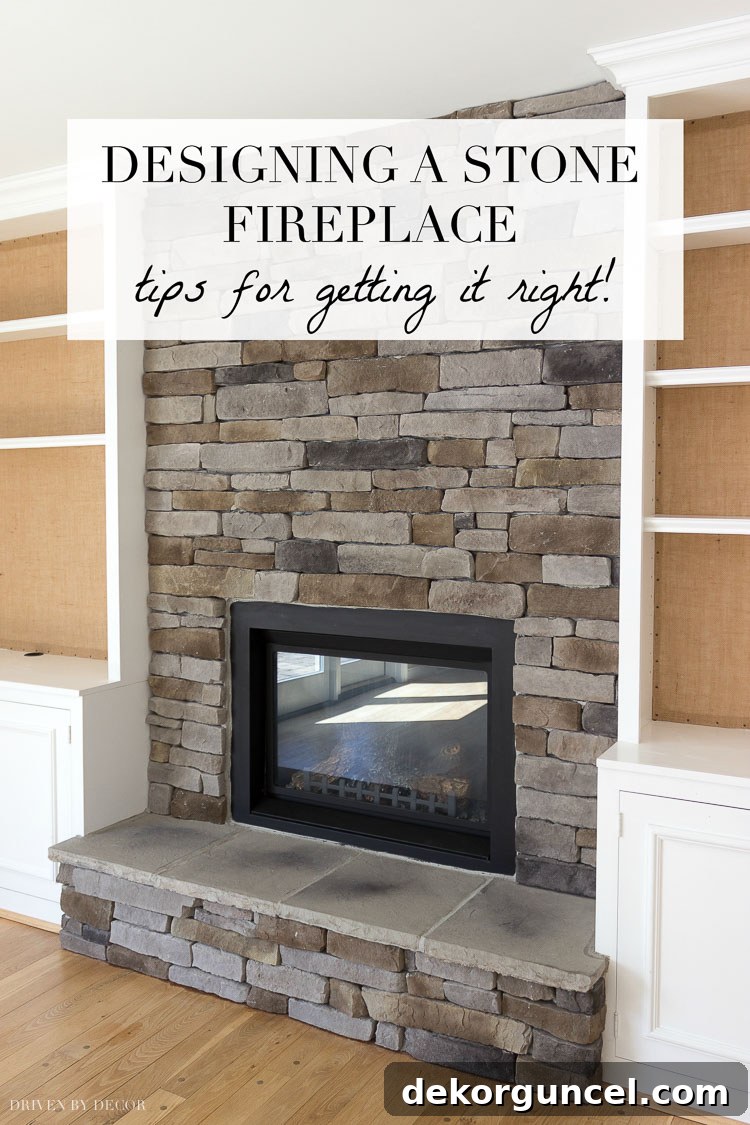
Searching for the perfect inspiration to design a captivating stone fireplace? Explore our comprehensive guide filled with expert insights and stone fireplace ideas to transform your living space!
The allure of a stone fireplace is undeniable, offering a timeless blend of warmth, character, and sophisticated elegance to any home. Whether your style leans towards rustic charm, modern minimalism, or classic grandeur, a stone fireplace can become the undisputed focal point of your living room, family room, or even master bedroom. It’s more than just a heating element; it’s a statement piece, a gathering spot, and a significant investment in your home’s aesthetic and value. A well-designed stone fireplace can elevate an entire room, creating an inviting atmosphere that is both cozy and visually stunning.
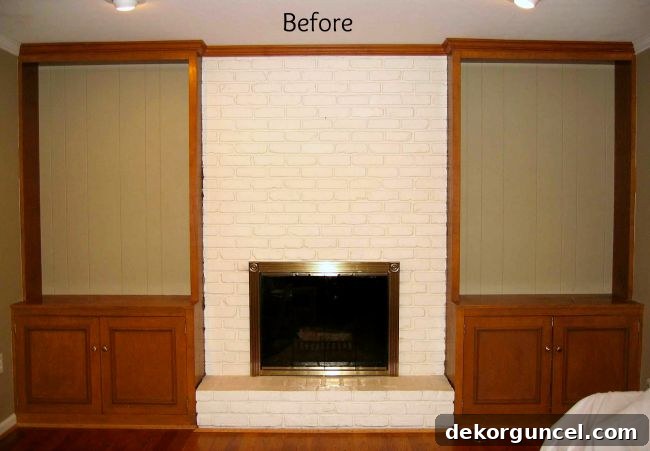
Not long ago, we embarked on our own journey to rejuvenate our living space, focusing intensely on the central hub: our fireplace and its surrounding built-in shelves. Initially, our fireplace presented a rather dated appearance, typical of many homes before a thoughtful renovation. It looked something like this:
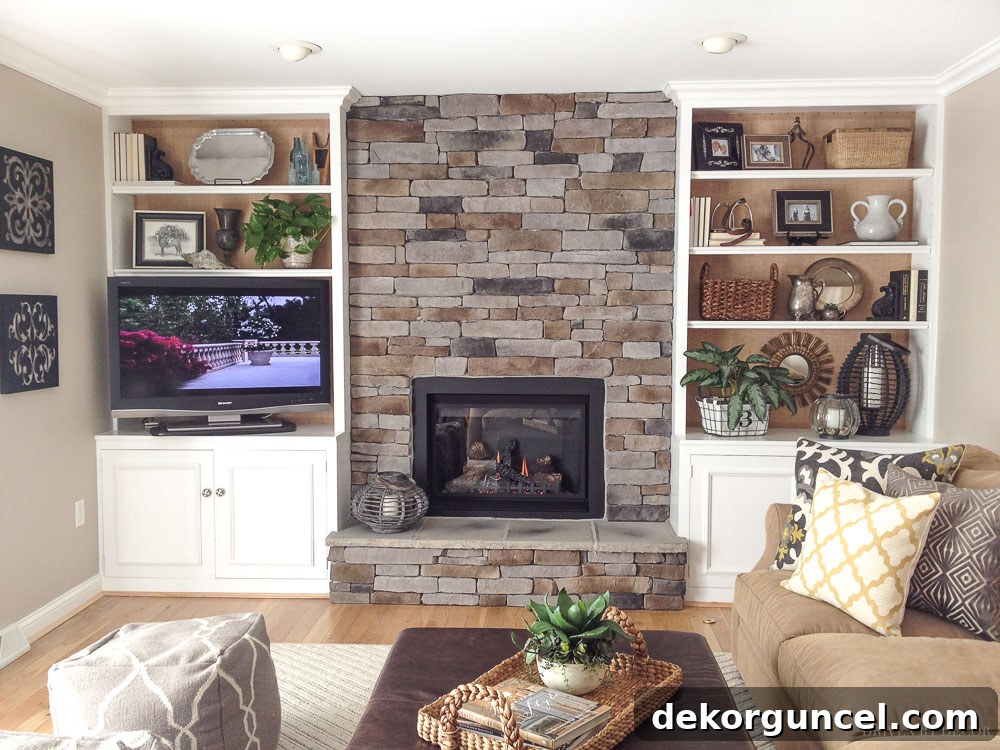
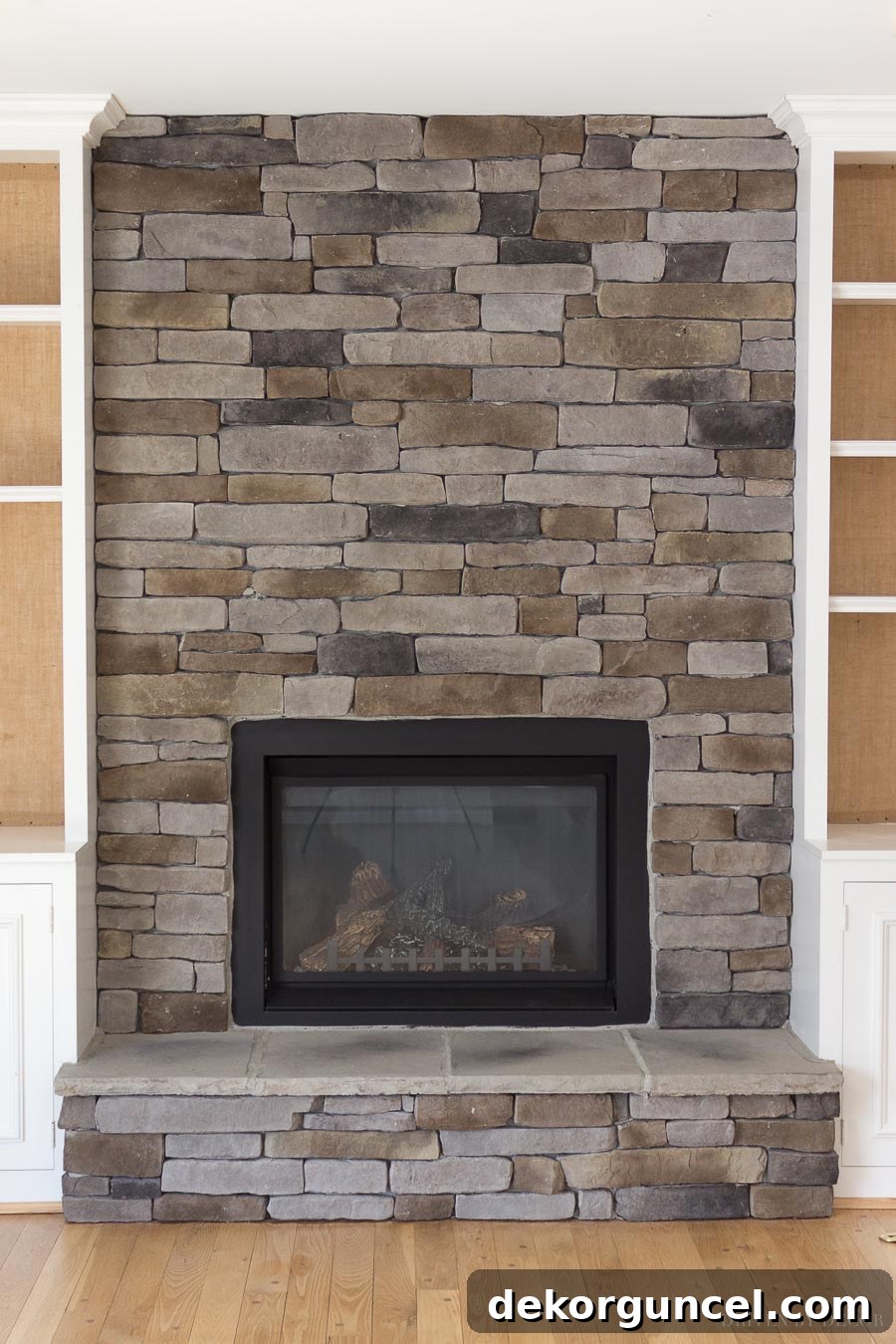
After careful planning and execution, which involved a fresh coat of paint for the adjacent bookcases and a complete transformation of the once-brick fireplace with stunning stone veneer, we achieved a remarkable result. The space was revitalized, featuring a gorgeous stacked stone fireplace that we absolutely adore. The transformation was dramatic, elevating the entire room’s ambiance and creating a cohesive, modern rustic feel:
Initially, I approached our fireplace remodel with a naive optimism, assuming it would be as simple as visiting a showroom, selecting a stone, and scheduling installation. However, this seemingly straightforward task quickly unveiled itself as a complex, frustrating, and incredibly time-consuming endeavor. The sheer volume of choices—from stone types and colors to trim details and hearth designs—and the lack of clear, consolidated guidance were overwhelming. This challenge could have been significantly minimized, or even entirely avoided, had I possessed crucial information about the design decisions required and some expert advice on how to navigate them.
It is precisely to prevent similar frustrations that I’ve curated this comprehensive guide. My primary goal with this post is to simplify the stone fireplace design and remodel process for anyone embarking on a similar home improvement project. Drawing from my own experience and extensive research, I’ve compiled five essential stone fireplace ideas and considerations that will empower you to make informed decisions and achieve the fireplace of your dreams. This guide aims to be your trusted companion, helping you confidently select materials, styles, and features that perfectly complement your home and personal taste.
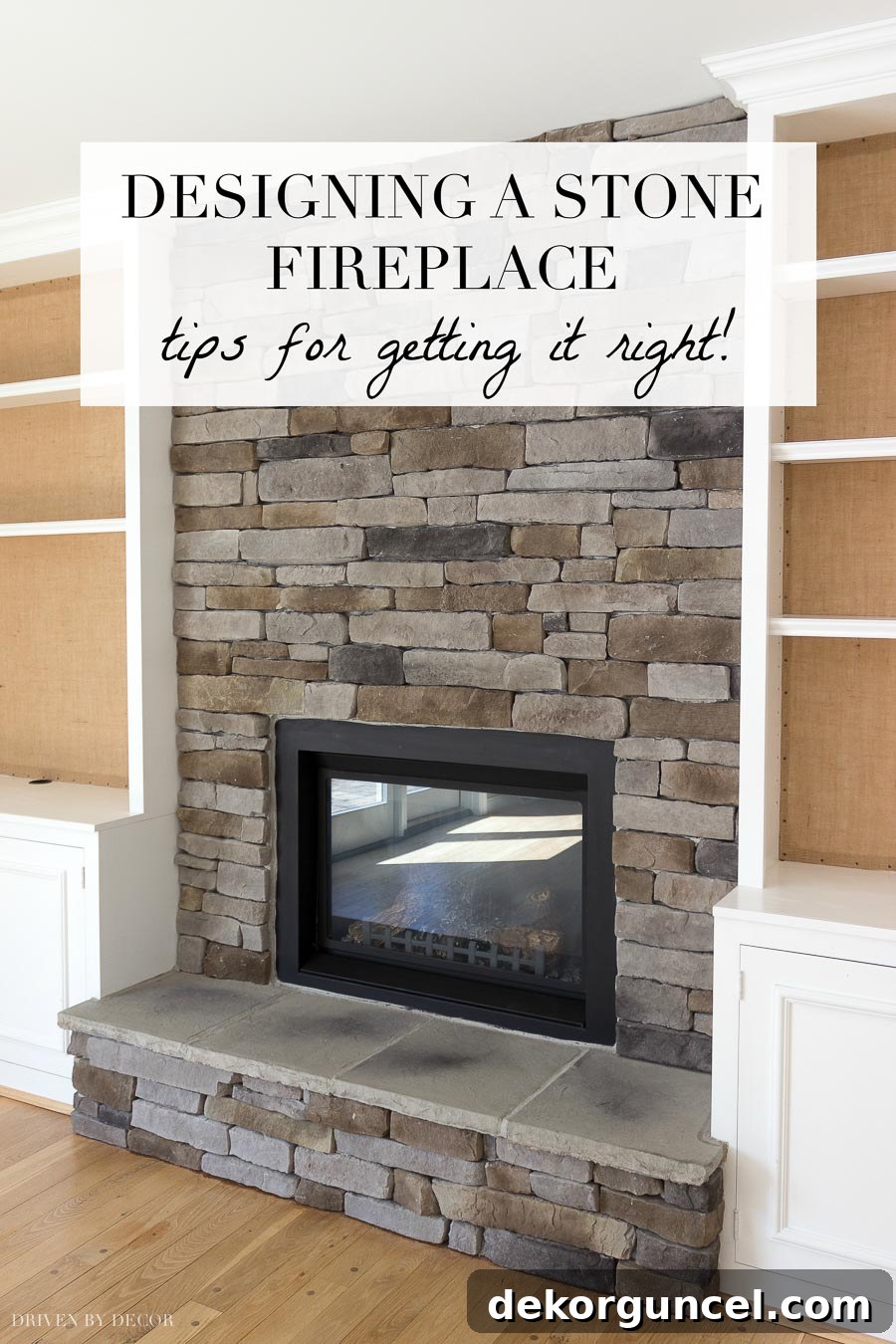
1. Manufactured vs. Natural Stone Veneer: Making the Right Choice for Your Fireplace
One of the foundational decisions you’ll face when designing a stone fireplace is whether to opt for manufactured stone veneer or natural stone. Each option comes with its unique set of advantages, influencing aesthetics, cost, and installation. Understanding these differences is key to selecting the best material for your specific project and budget, ensuring your stone fireplace project is both beautiful and practical.
Manufactured Stone Veneer (Cultured Stone): This popular option is created from concrete, aggregates, and pigments, molded to replicate the texture, shape, and color of natural stone. Modern manufacturing techniques have vastly improved the realism and variety of cultured stone, making it a compelling alternative. Its primary advantages include:
- Cost-Effectiveness: Manufactured stone is significantly more affordable than natural stone, both in material cost and often in installation expenses. This makes it an excellent choice for budget-conscious homeowners looking for a high-impact transformation without breaking the bank. The production process is less labor-intensive than quarrying and cutting natural stone, contributing to its lower price point.
- Lighter Weight: Being considerably lighter than natural stone, manufactured veneer typically doesn’t require additional structural support or a concrete footing. This simplifies the installation process, making it suitable for existing structures and often translating to quicker installation times and lower labor costs.
- Design Uniformity and Variety: While designed to look natural, manufactured stone offers more consistency in size, shape, and color batches, which can be advantageous for achieving a predictable aesthetic across a larger surface. It also comes in a wider array of pre-designed patterns and colors, offering greater creative flexibility.
- Ease of Installation: Its lighter weight and uniform backs make it easier for skilled installers to work with, often resulting in a faster and more straightforward project completion compared to the intricate fitting required for natural stone.
- Sustainability Considerations: Some manufactured stone products incorporate recycled materials, and their local production can reduce transportation emissions compared to natural stone sourced from distant quarries.
- Durability: High-quality manufactured stone is durable, color-fast, and resistant to typical wear and tear, making it a long-lasting finish for your fireplace.
Natural Stone Veneer: Sourced directly from quarries, natural stone veneer is cut or split into thin pieces, preserving its inherent beauty and geological characteristics. This option is often favored for its authentic, raw appeal. Its undeniable appeal lies in:
- Authentic Beauty and Uniqueness: The unparalleled beauty of natural stone comes from its genuine variations in color, texture, and pattern. Each piece is unique, offering a depth, character, and tactile quality that manufactured stone strives to imitate but rarely fully replicates. This inherent variation creates a truly bespoke and luxurious finish, with subtle shifts in light and shadow that are difficult to artificialize.
- Durability and Longevity: Natural stone is renowned for its incredible durability, resilience, and resistance to wear and tear, ensuring your fireplace will stand the test of time, both aesthetically and structurally. It can withstand significant heat exposure and retains its beauty for generations.
- Increased Home Value: The use of natural materials often contributes to a higher perceived value and appeal for potential homebuyers, making it a sound long-term investment that offers a tangible connection to the earth’s natural beauty.
- Timeless Appeal: Natural stone has been used in construction for centuries, possessing a timeless quality that transcends trends and ensures your fireplace will remain elegant for decades to come.
If your budget allows for a higher investment, natural stone is undoubtedly a magnificent choice, delivering an authentic, high-end finish that speaks volumes of luxury and craftsmanship. However, for those, like me, who need to stay within a more defined budget, manufactured stone veneer presents a highly compelling alternative. The advancements in manufacturing techniques have led to products that incredibly closely mimic the appearance of real stone, offering stunning realism at a fraction of the cost. Considering the substantial savings and the stunning, realistic look of our manufactured stone veneer, I remain exceptionally pleased with our decision. It’s a testament to how far manufactured stone has come in offering both beauty and practicality without compromise.
2. Choosing the Style and Color of Fireplace Stone: Crafting Your Vision
Once you’ve decided between manufactured and natural stone, the next exciting step is to dive into the vast world of styles and colors. This decision will significantly influence the overall aesthetic and mood of your room. The array of options can be dizzying, but with a systematic approach, you can narrow down the choices to find the perfect stone fireplace design that harmonizes with your home’s existing decor and your personal style.
Common stone styles include:
- Fieldstone: Characterized by irregular shapes and sizes, often with rounded edges, fieldstone offers a rustic, organic, and traditional look. It’s frequently used to evoke a farmhouse, country, or old-world cottage aesthetic.
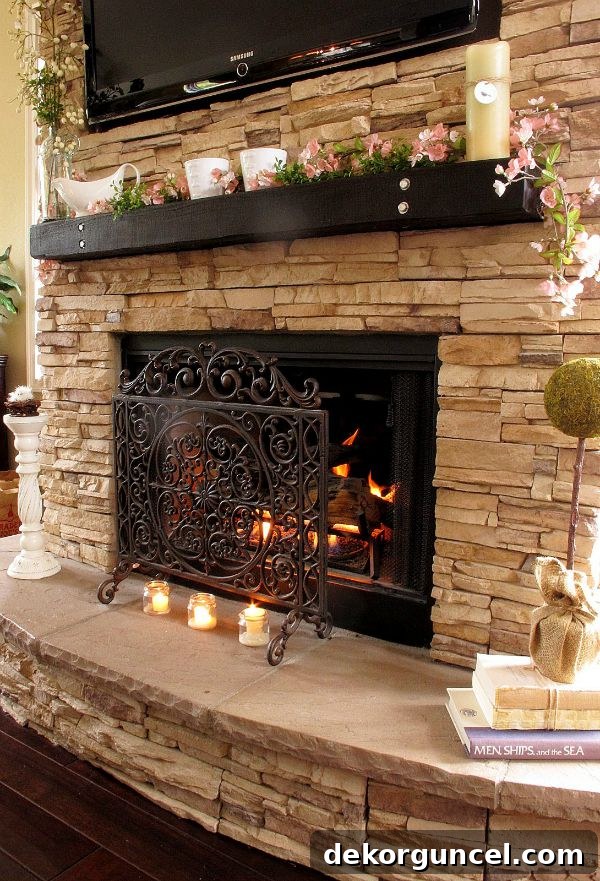
- Stacked Stone: This highly popular style features elongated, often rectangular stones laid tightly together with minimal or no visible mortar lines. It creates a sleek, contemporary, or modern rustic feel, emphasizing the stone’s texture and natural variation. Below is a beautiful example of a stacked stone fireplace, showcasing its elegant simplicity and the striking visual impact it can create:
- River Rock: Smooth, rounded stones, often in varied sizes and colors, create a softer, natural, and often cottage-like or craftsman-style appearance, reminiscent of riverbeds. This style can bring a serene, organic feel to a space.
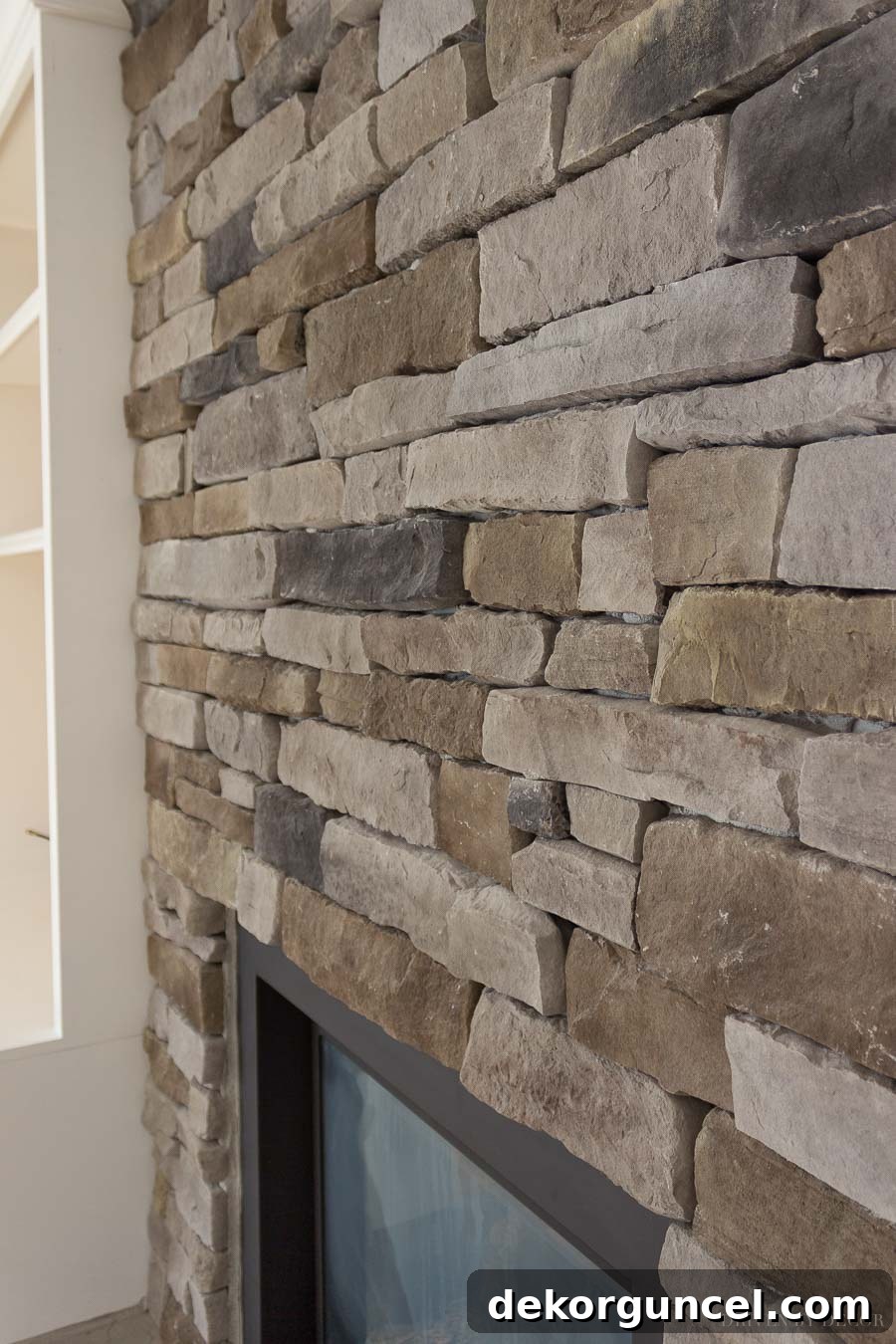
- Ledgestone: Similar to stacked stone but often with more varied textures, irregular thicknesses, and sometimes a more pronounced relief, ledgestone creates a rugged, multidimensional, and dynamic look. This is the style I ultimately chose for our fireplace (StoneCraft Industries’ Ledgestone in a warm “Pennsylvania” color palette of grays and tans), and its character is truly captivating, adding depth and visual interest to the room:
Beyond these, you might encounter cut stone (uniform, rectangular pieces for a formal look), ashlar (rectangular stones of varied lengths and heights), cobblestone, and various pre-blended patterns designed to mimic specific regional stone types. Many manufacturers also offer the option to combine two different types of stone, such as fieldstone and ledgestone, to create a unique, custom look. Each style is available in a multitude of color options – from cool grays and earthy browns to rich reds, creamy whites, and variegated multi-tones – making the range of choices genuinely vast and potentially overwhelming.
Practical Steps for Selection:
- Visit Showrooms with Large Displays: The absolute best way to visualize your options is to visit several showrooms that display fireplaces with various stone applications. Seeing large samples or even full installations in person provides a much better sense of the stone’s true appearance, texture, and how light interacts with it, compared to small swatches.
- Consider Your Home’s Palette and Style: Take clear photos of your room, existing furniture, wall colors, and overall decor. This will help you narrow down options that complement your current aesthetic. Do you have warm or cool tones? Is your home modern, traditional, industrial, or farmhouse? The stone should harmonize with these elements, acting as an anchor rather than a jarring contrast.
- Borrow Samples Extensively: Once you’ve shortlisted a few favorites, ask to borrow sample boards or, failing that, a generous variety of individual stone pieces (ensure a good mix of sizes and colors) for each contender. Do not underestimate the importance of this step.
- Test at Home, in Different Lights: This step is critical. Arrange the samples in the exact location where the fireplace will be, observing them in your home throughout the day and night, under both natural and artificial lighting. Stone colors can appear drastically different depending on the light source, the time of day, and surrounding colors. What looks perfect under the bright, artificial lights of a showroom might look completely different, or even unappealing, in the natural light of your living room.
Stacked Stone Specifics: Mortar vs. Dry Stacked
If you’re drawn to the elegant and popular stacked stone style, you’ll also need to decide on the mortar treatment. Do you prefer a “dry stacked” look, where stones are fitted tightly together with virtually invisible mortar lines, creating a very clean, contemporary, and often seamless appearance? This style emphasizes the individual stones and their textures. Or do you prefer a look with visible mortar joints, which can lend a more traditional, robust, or rustic feel, depending on the mortar color and joint style? Mortared joints can also add a sense of depth and dimension. This image effectively illustrates both styles, showing stacked stone with visible mortar at the top and the “dry stacked” technique below:
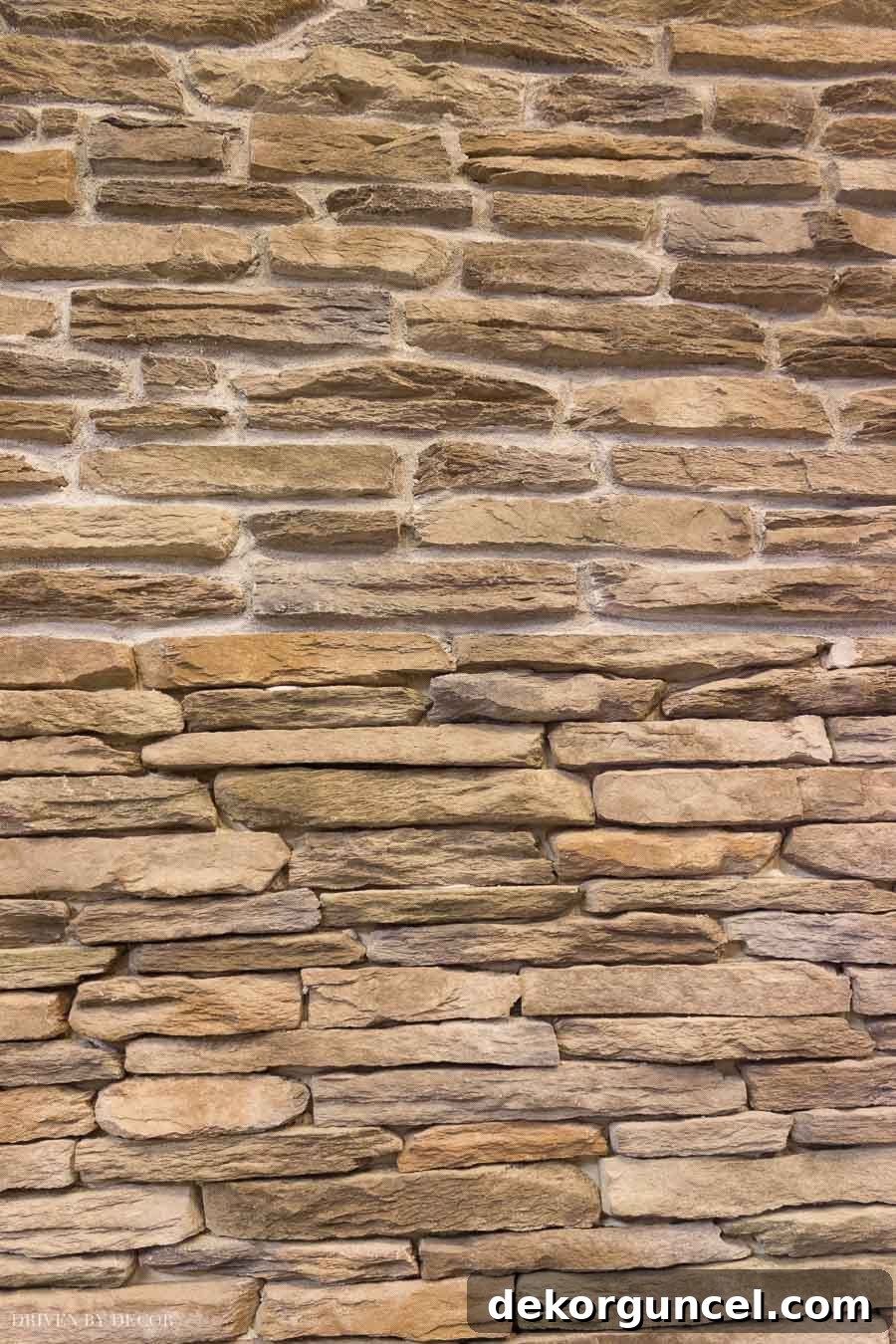
The choice between these two approaches significantly impacts the final texture and character of your stacked stone fireplace. A well-chosen style and color palette will elevate your fireplace from a simple fixture to a truly exceptional work of art, a focal point that defines your living space.
3. Consider Keystones or Other Stone Trim: Adding Architectural Detail
Beyond the main body of the stone, architectural details like keystones, lintels, and other stone trims can profoundly impact the character, formality, and perceived age of your fireplace. These elements, though subtle, can transform a simple stone facade into a masterpiece of design, adding depth, historical reference, or a touch of modern flair. The best way to determine if and how to incorporate these features into your stone fireplace design is to immerse yourself in visual inspiration and consult with experienced professionals.
Where to Find Inspiration:
- Online Galleries and Design Platforms: Websites like Pinterest, Houzz, and Instagram are treasure troves of fireplace designs. Search for various styles (e.g., “rustic stone fireplace with keystone,” “modern fireplace stone trim”) to see how keystones and trim are used across different aesthetics.
- Fireplace Showrooms: Many showrooms display fireplaces with different architectural embellishments, offering a tangible sense of their effect. You can observe the scale, proportion, and integration of these elements in person.
- Architectural Digests and Design Magazines: High-end design publications often feature custom fireplace designs with intricate stone details, showcasing how these elements can be used to create sophisticated and unique looks.
While I opted for a clean, basic layout without keystones or prominent stone trim for our fireplace, there are numerous ways to integrate these elements to achieve a desired aesthetic, each imparting a distinct personality to your stone fireplace:
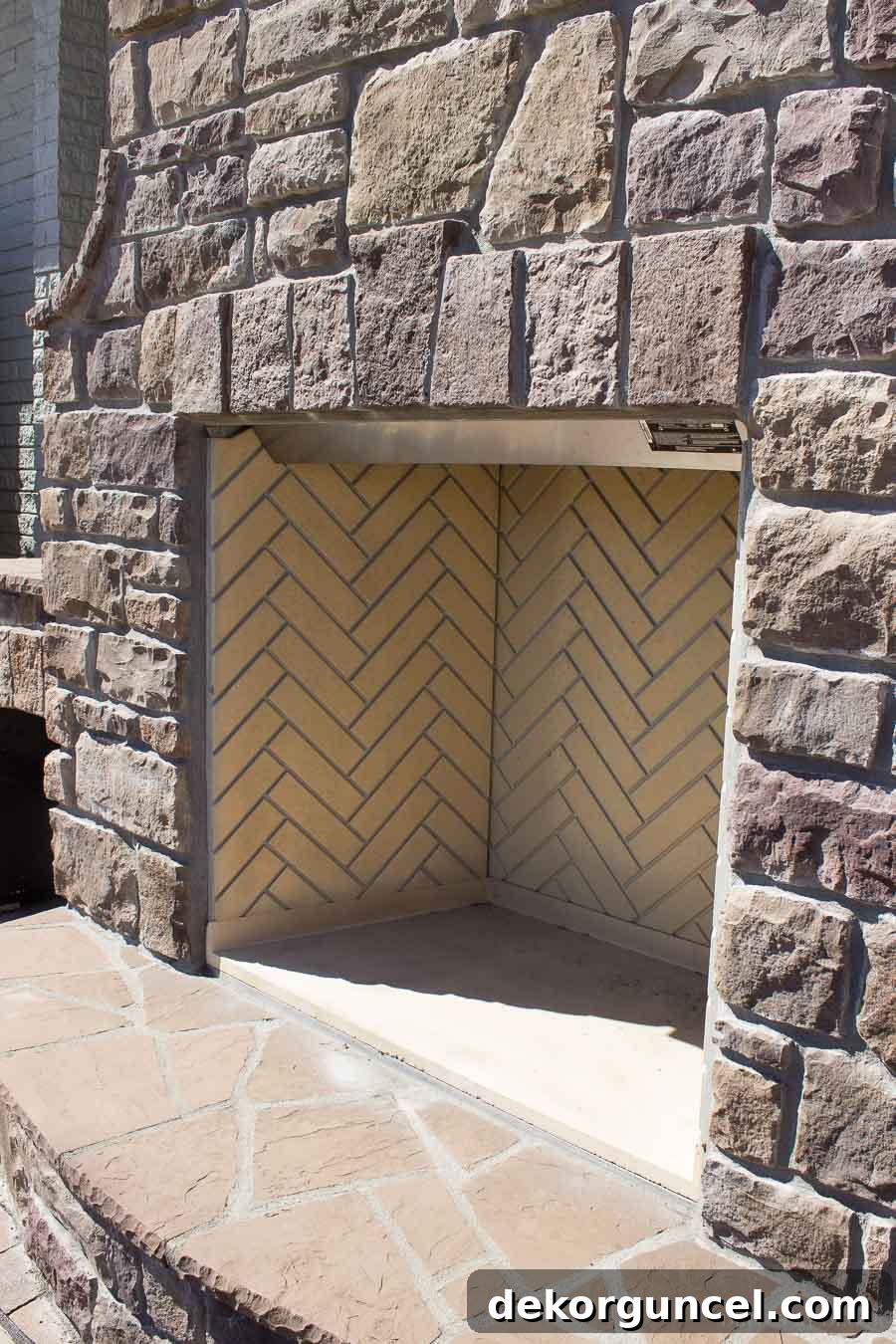
- The Classic Keystone: A keystone, traditionally placed at the apex of an arch, provides both structural support and a strong visual focal point. Above a rectangular fireplace opening, a keystone can be integrated with a flat lintel, often accompanied by a row of accent stones or a contrasting stone pattern. This design often imparts a sense of traditional elegance, stately grandeur, or a rustic, hand-crafted authenticity. Observe how a keystone combined with a herringbone firebox creates a truly stunning effect here, demonstrating sophisticated detailing:
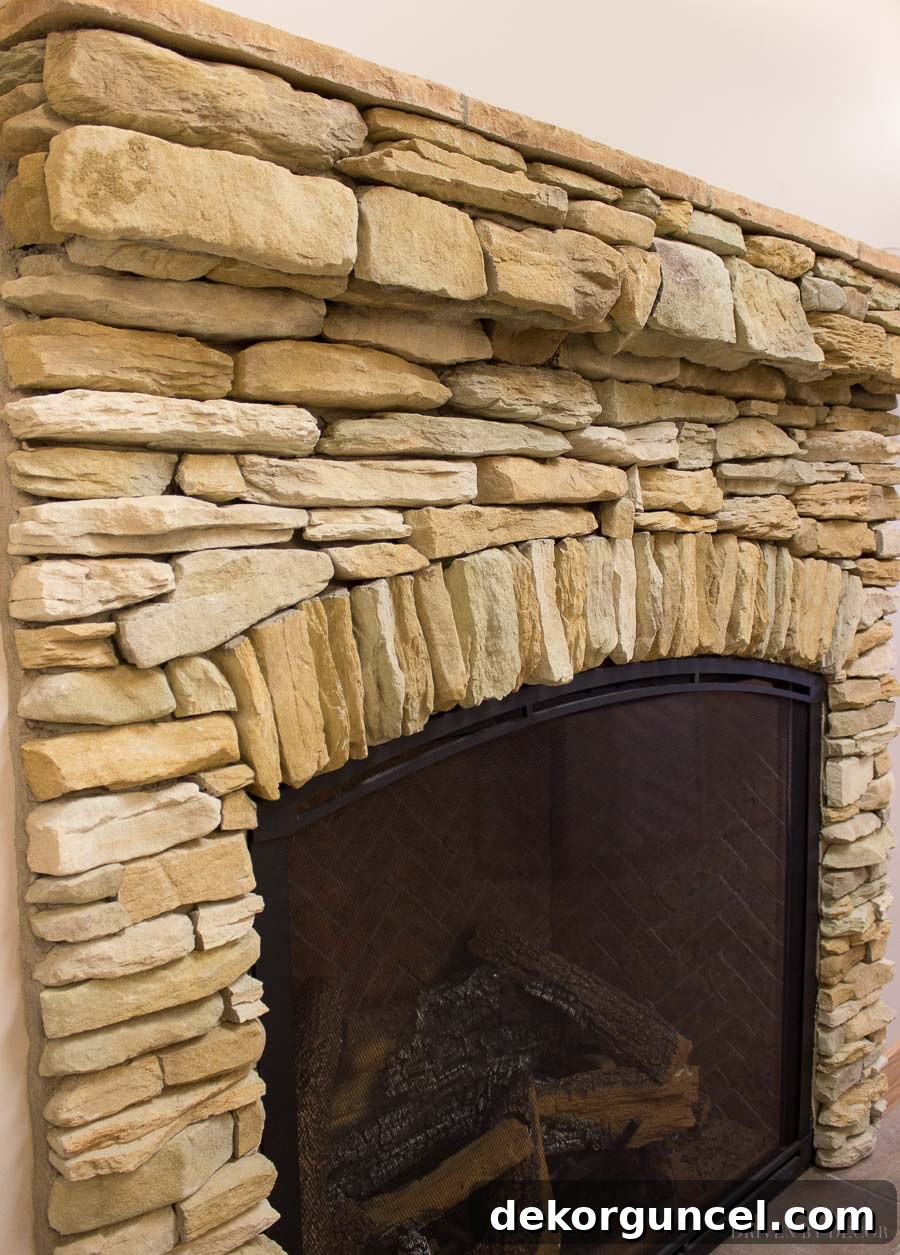
- Simple Arch Design: An arch, whether subtle or pronounced, softens the hard lines of a fireplace opening and introduces a touch of classical, Mediterranean, or rustic charm. An arched stone accent can create a beautiful focal point, drawing the eye upwards and adding architectural fluidity, as seen in this elegant stone veneer fireplace:
- Single Long Stone (Lintel): A single, substantial stone slab spanning the fireplace opening serves as a rustic or minimalist lintel. This design offers a robust, understated, and often very clean look. It can be particularly striking with larger, bolder stone styles, emphasizing their inherent strength and natural beauty.
- Accent Bands and Corner Details: Consider adding bands of contrasting stone (either a different color, texture, or cut) horizontally or vertically. Using a distinct type of stone for the corners of the fireplace surround can also add visual definition and a custom feel. These subtle details can add depth, visual interest, and a bespoke touch without overwhelming the overall design.
While the possibilities for trim stone designs are endless, my advice generally leans towards simplicity. An overly intricate or busy trim can detract from the natural beauty of the main stone application. A well-chosen keystone, a graceful arch, or a minimalist lintel can provide significant architectural impact without becoming a distraction. Always discuss these options with your stone veneer dealer or installer, as they can often provide valuable insights into what designs are feasible, structurally sound, and aesthetically pleasing with your chosen stone type and overall vision for your fireplace remodel.
4. Mantel or No Mantel and, If So, What Type? Defining Your Fireplace’s Crown
The decision of whether to include a mantel, and what style it should take, is a pivotal one that profoundly influences both the functionality and aesthetic of your stone fireplace. The mantel serves as a significant visual element and typically, its design and installation should be carefully coordinated with the stone veneer process for a seamless and integrated finish, ideally planned from the project’s outset.
A fireplace mantel serves multiple, invaluable roles in your home’s interior design:
- Aesthetic Anchor: It acts as a visual break between the stone and the wall above, providing a horizontal line that can balance the verticality of a tall fireplace. It frames the firebox, giving the fireplace a sense of completion and a natural point for decor.
- Display Surface: Perhaps its most popular function, a mantel offers a prime location for decorative items, cherished artwork, family photographs, and seasonal holiday decorations. This allows you to personalize your space, reflect your style, and seasonally refresh its look with ease.
- Architectural Feature: Mantels can embody various architectural styles, from simple rustic beams to intricately carved traditional pieces, further defining the room’s character and contributing to the overall design narrative. It can reinforce whether your stone fireplace leans modern, traditional, or farmhouse.
Mantel Material Options: The material you choose for your mantel can drastically change its appearance, feel, and the statement it makes:
- Stone: A matching or contrasting stone mantel can create a monolithic, grand, or very rustic look. It offers superb durability and often excellent integration with the stone surround, providing a cohesive and enduring aesthetic.
- Painted Wood: For a more classic, traditional, or formal aesthetic, a painted wood mantel (often white or a color matching your room’s trim) provides a crisp contrast to the textured stone. This option delivers a clean, finished appearance that can brighten the space.
- Natural or Stained Wood: A natural wood mantel, whether a rough-hewn beam or a finely finished piece, brings warmth, texture, and an organic element to the design. Reclaimed wood mantels are particularly popular for their character, history, and unique imperfections, fitting beautifully into farmhouse, rustic, industrial, or even transitional decors. The stain can be chosen to match other wood elements in the room, tying the design together.
- Concrete: For modern, minimalist, or industrial aesthetics, a concrete mantel offers a sleek, clean-lined, and highly durable option. It can be polished for a refined look or left raw for an urban edge.
- Metal: Less common but capable of making a striking statement, a metal mantel (e.g., steel, blackened iron, or hammered copper) can introduce an industrial edge, a touch of contemporary flair, or a bold architectural element.
In our own fireplace design, we ultimately decided against a mantel. This choice was largely influenced by the extensive built-in shelving already flanking the fireplace, which provided ample display space. The absence of a mantel creates a very streamlined, continuous stone surface, which I generally appreciate for its minimalist appeal and unobstructed view of the stone. However, I often find myself contemplating how lovely it would be to have a mantel to adorn with festive decorations during the holidays. This personal dilemma highlights that the “perfect” choice often depends on your specific needs, existing room elements, and decorative preferences, balancing practicality with desired aesthetics.
When making your mantel decision, consider these key aspects:
- Existing Decor: Will a mantel complement or compete with other prominent features in the room? Ensure it enhances, rather than detracts from, your overall interior design.
- Functionality: Do you genuinely need a surface for decor, or is your primary goal a clean, architectural look? If you have ample shelving nearby, a mantel might be redundant.
- Scale and Proportion: Ensure the mantel’s size, projection, and height are proportionate to the fireplace itself and the overall room. An undersized mantel can look insignificant, while an oversized one can feel overwhelming.
Collaborate closely with your installer or designer to ensure that your chosen mantel style can be safely and securely integrated with the stone veneer and firebox, adhering to all local building codes and safety regulations.
5. Decide on the Design of Your Hearth: Grounding Your Fireplace
The hearth, which encompasses both the floor of the fireplace (the firebox floor) and the non-combustible area directly in front of it, is a critical component of your stone fireplace design. It not only provides a safe, protective surface essential for fire safety but also contributes significantly to the overall aesthetic, grounding the entire structure within the room. Just like the stone veneer, the hearth offers a wide range of material, style, and design possibilities that warrant careful consideration.
Hearthstone Materials: The material you select for your hearth can greatly impact the fireplace’s final look and feel:
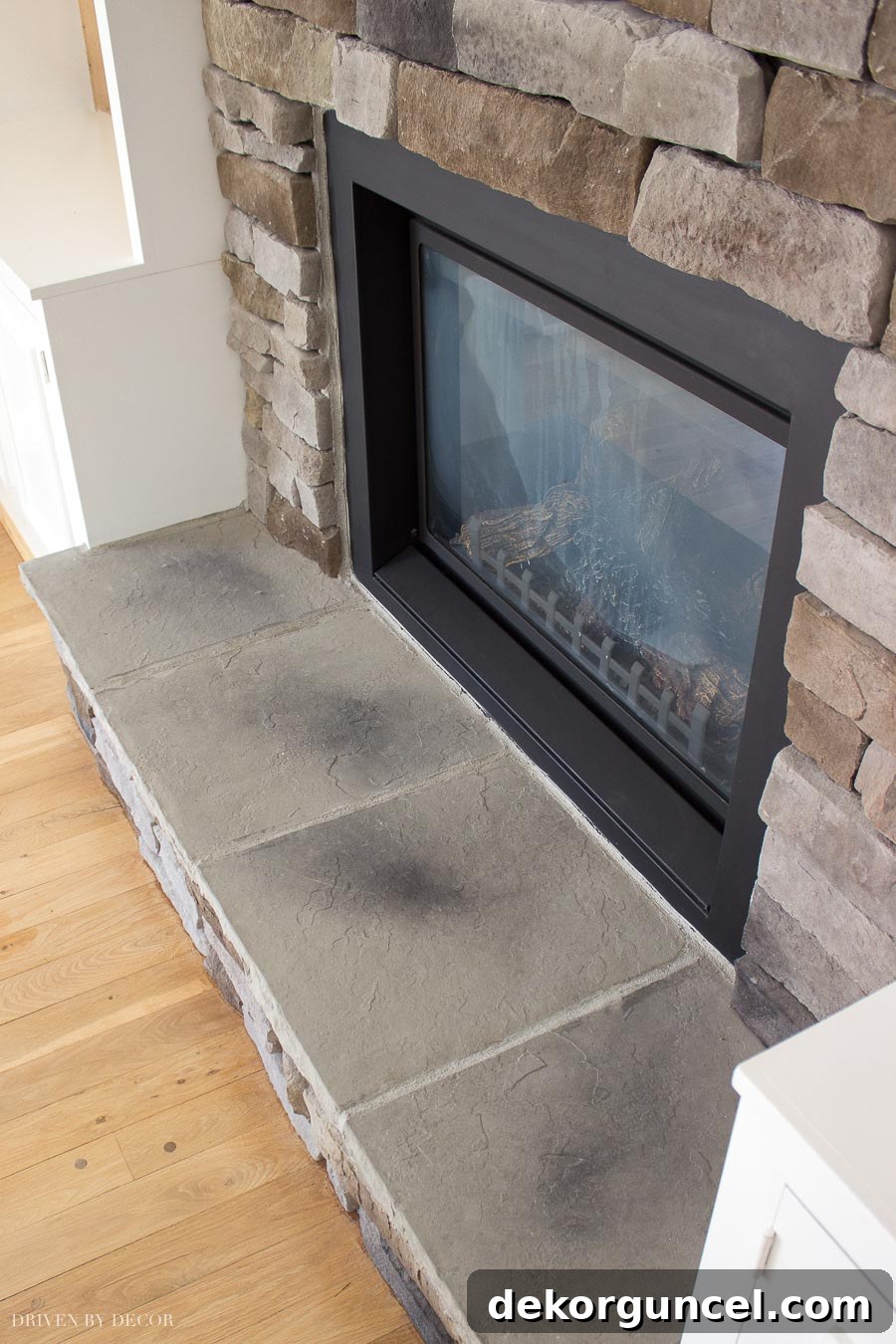
- Coordinating Manufactured Hearthstones: Most stone veneer manufacturers offer hearthstones designed to visually complement their stone veneer lines. These are typically cast from the same materials and pigments, aiming for a seamless match. However, a word of caution from personal experience: don’t assume that these coordinating hearthstones will automatically match the quality and authentic aesthetic of your chosen stone veneer. In my case, the hearthstones meant to go with my chosen veneer looked disappointingly fake, lacking the authentic texture and depth of the veneer itself. The crucial lesson here is to always request to see the coordinating hearthstones in person, ideally alongside your veneer samples. If they don’t meet your expectations for realism and quality, don’t hesitate to shop around! I successfully found attractive hearthstones from a different manufacturer that perfectly complemented our stacked stone fireplace, as shown here, demonstrating that a little extra effort can yield superior results:
- Natural Stone Slabs: Even if you choose manufactured stone veneer for the fireplace surround, consider a natural stone slab for the hearth. Materials like bluestone, granite, slate, marble, soapstone, or limestone offer unparalleled beauty, durability, and a luxurious feel. These materials provide a genuine, robust surface that can withstand heat and daily wear. While natural stone typically costs more than manufactured hearthstones, the hearth area is generally not very large, so the difference in overall cost might be quite manageable and a worthwhile upgrade for the significant visual impact and longevity it provides.
- Tile: Durable ceramic, porcelain, or natural stone tiles (such as slate or terracotta) can also be used for a hearth. This option offers a vast array of colors, patterns, textures, and sizes, allowing for creative designs and easy maintenance.
- Brick: For a traditional or rustic look, brick can be an excellent and durable choice for a hearth, often chosen to match or complement interior brick elements.
Hearth Design and Laying Styles: The way your hearthstones or tiles are laid can further define the fireplace’s character:
- Typical Laying Pattern (Continuous): Most hearthstones are laid in a conventional, flush pattern, creating a smooth, continuous surface. This is the approach I took, providing a clean, classic, and understated look that allows the stacked stone veneer to be the primary focus.
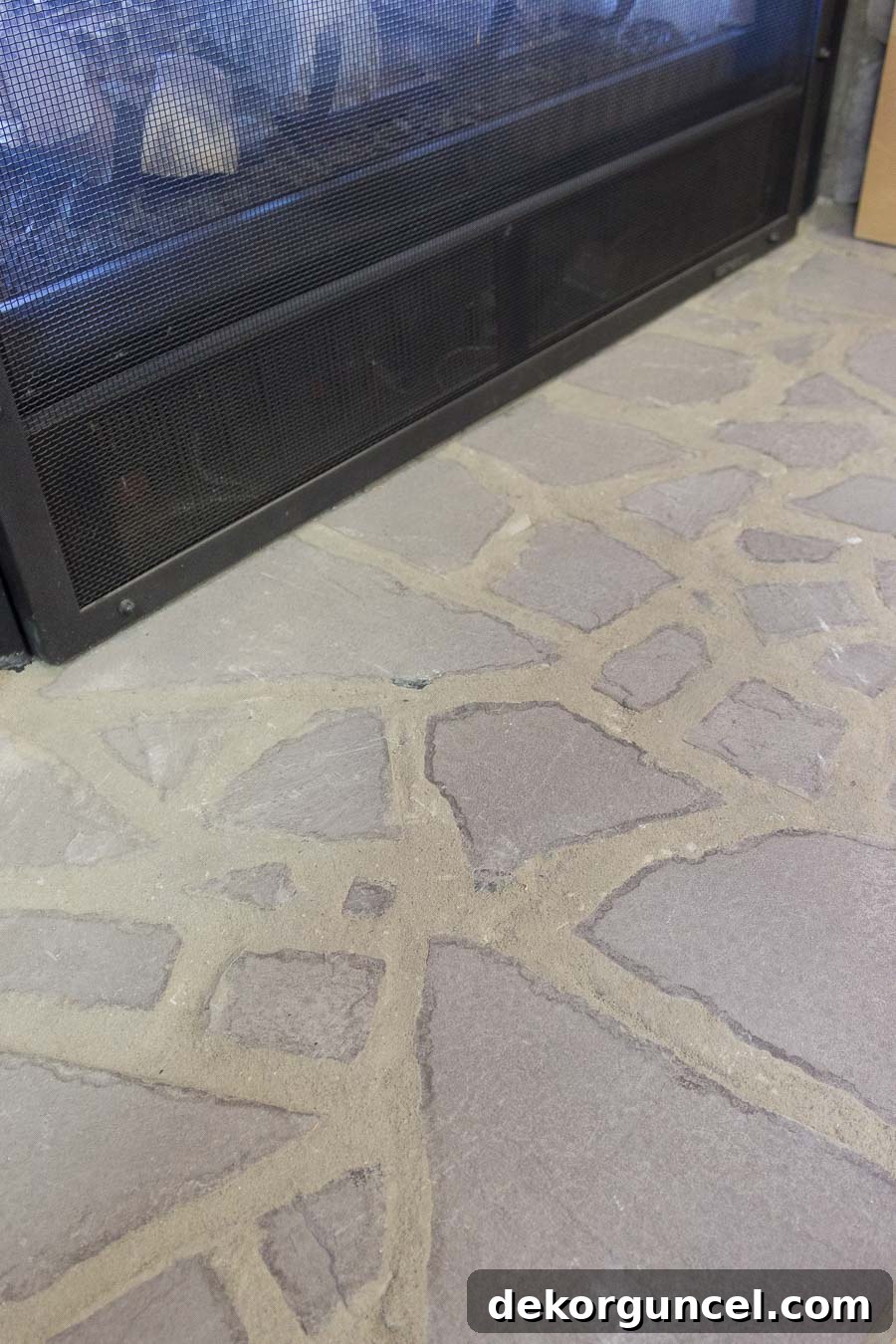
- Broken Up with Mortar Joints: Alternatively, you can choose to have hearthstones or tiles laid with distinct, visible mortar joints between the pieces. This can add a rustic, artisanal, or even a more casual, tiled feel, depending on the stone, tile, and mortar color chosen. This style is effectively illustrated below, showcasing how mortar joints can contribute to the overall texture and design:
Type of Hearth: The physical construction of the hearth also offers design variations:
- Flush Hearth: Sits level with the finished floor, creating a seamless transition that enhances a modern or minimalist aesthetic.
- Raised Hearth: Elevates the hearth area above the floor, providing a more traditional look. It can also offer additional seating or a distinct visual separation from the rest of the room.
- Extended Hearth: Projects further into the room than required, creating a larger functional space, perhaps for seating, displaying decorative items, or storing firewood, making the fireplace a more integrated part of the living area.
Remember to always check local building codes and safety regulations for hearth dimensions, material requirements, and clearances from combustible materials. These codes are essential for ensuring the safety of your fireplace. A thoughtfully designed hearth completes the fireplace, anchoring it within the room and enhancing both its beauty and essential safety functions.
For those of you about to embark on an exciting stone fireplace remodel project, I sincerely hope this detailed guide has provided you with invaluable insights and practical advice. Designing a stone fireplace can be a complex undertaking, but armed with the right information and a clear vision, you can navigate the myriad choices with confidence and create a stunning focal point for your home that brings warmth, character, and lasting beauty. If your fireplace, like ours, is flanked by built-in shelving, you might also find great benefit in exploring our guide on how to decorate a bookshelf, offering creative ideas to style those adjacent spaces beautifully and cohesively with your new stone fireplace.
